Ammar Sabilarrohman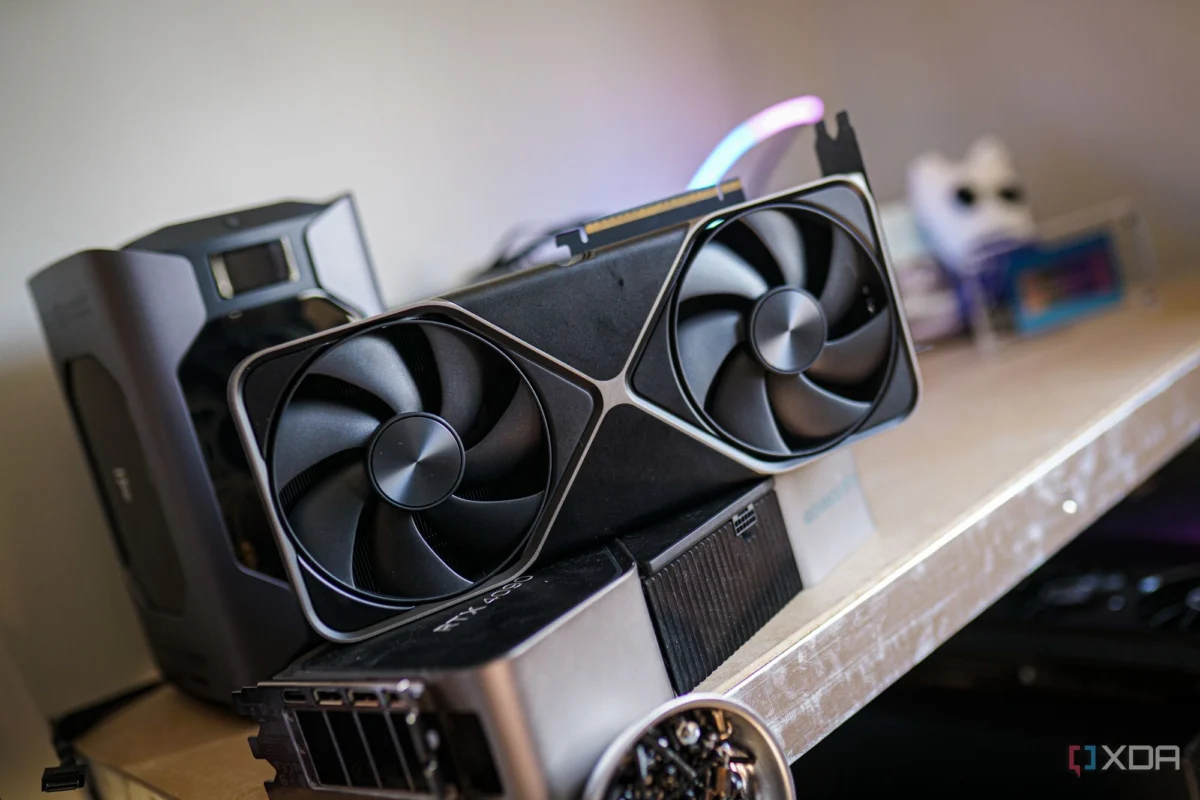
By Hamlin Rozario
Published June 21, 2026
In the rapidly evolving landscape of PC hardware, the lifecycle of a flagship graphics card is typically short-lived. Enthusiasts are conditioned to upgrade every two years, chasing the incremental gains of new silicon. However, the release of Nvidia’s RTX 5090 has disrupted this cycle, not necessarily through technological brilliance, but through a brutal combination of market economics and the unexpected longevity of previous-generation hardware. As someone who has spent seven years covering the tech industry, I find myself in a rare position: choosing to keep my trusty RTX 4090 rather than succumbing to the allure of the new flagship.
The Economics of a "Modest" Upgrade
When the RTX 5090 hit the market last year, the initial MSRP of $2,000 was a bitter pill, yet one that felt somewhat familiar to those of us who paid a premium for liquid-cooled 4090s back in 2022. It was a steep entry price, but in the realm of high-end enthusiasts, it was considered a "standard" tax for the best performance available.
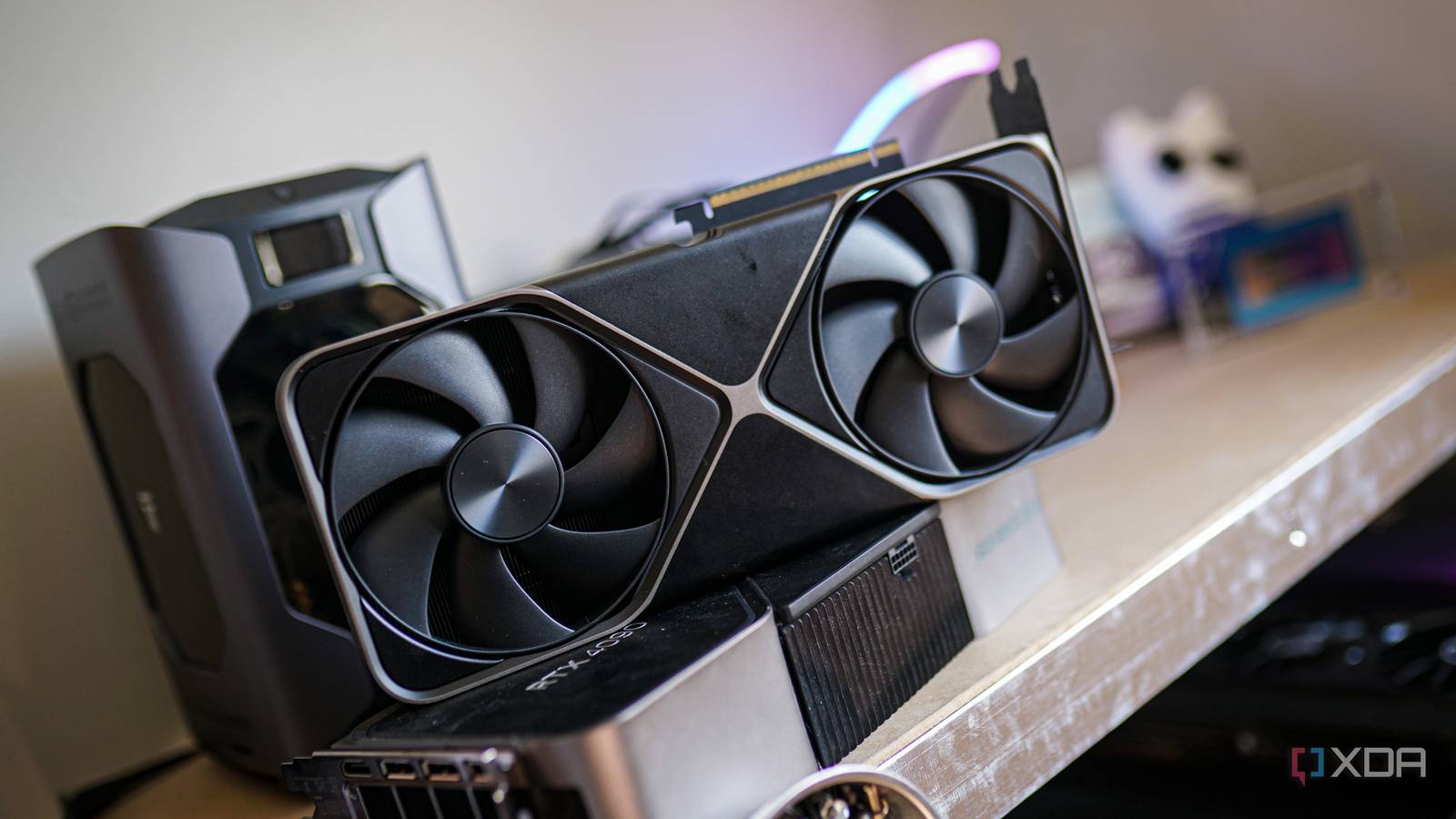
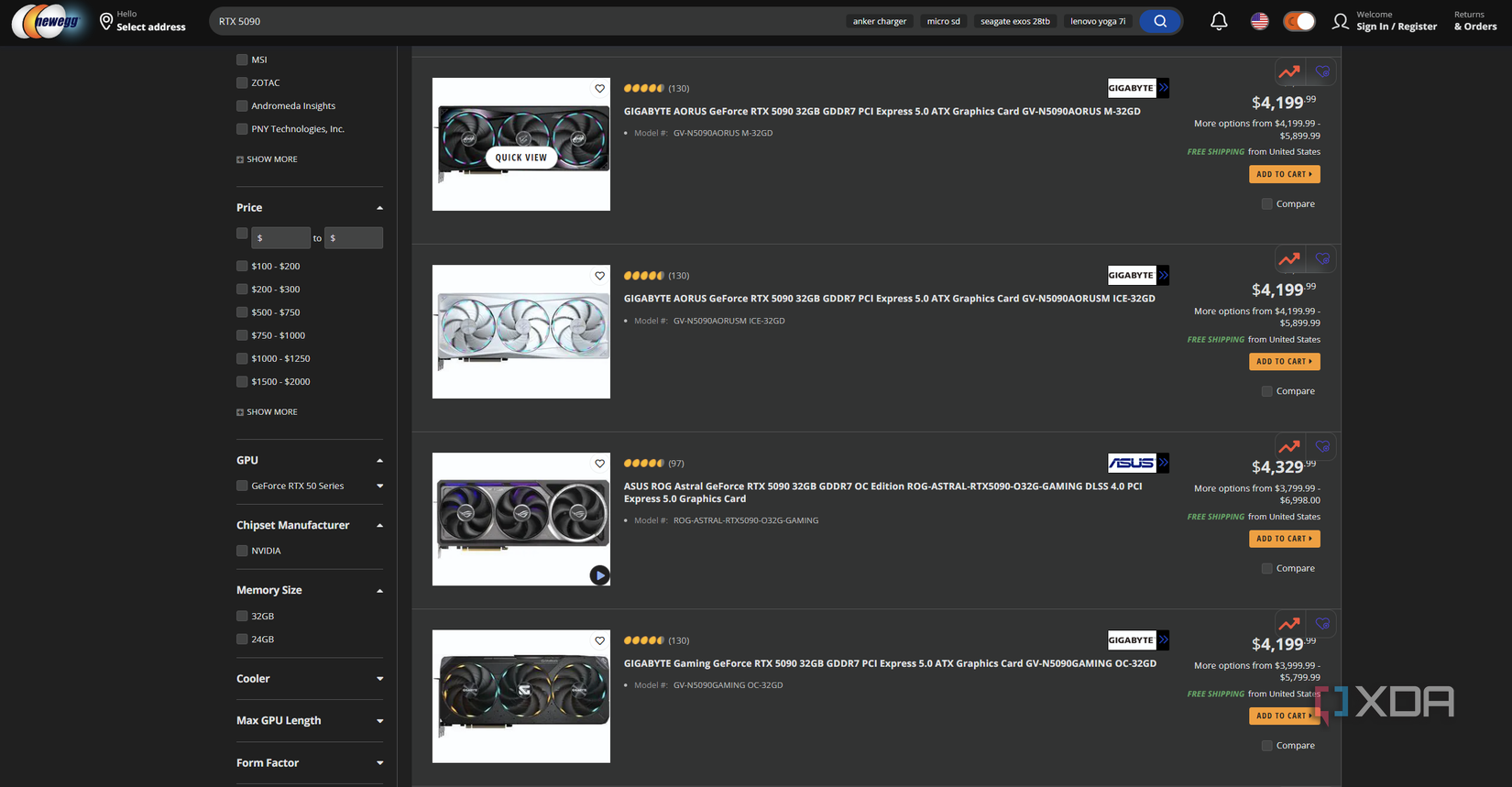
However, the real shock came weeks after launch. As demand surged and supply chains struggled to keep pace, "street prices" skyrocketed. Retailers and third-party vendors began listing the cards at upwards of $4,000—effectively double the suggested retail price. For a card that offered a performance uplift of roughly 30% over its predecessor, this price point transformed the RTX 5090 from a luxury purchase into a financial outlier. When the cost of a single component exceeds the price of an entire high-end gaming PC from just a few years ago, the value proposition vanishes entirely.
Chronology of the RTX 5090 Launch
To understand why the market has reached this point, we must look at the timeline of the rollout:
- Early 2025: Rumors of the RTX 50-series began to dominate tech forums. Expectations were high, with promises of significant advancements in path tracing and AI-driven frame generation.
- Launch Day (2025): The RTX 5090 was unveiled with an MSRP of $2,000. While critics noted the lack of a true competitor from AMD at the ultra-high end, early adopters prepared for the purchase.
- The Post-Launch Vacuum: Within three months, stock issues led to massive scalping and retailer price-gouging. The card became a status symbol rather than a practical tool for gamers.
- Mid-2026: As of today, the market has stabilized at these inflated prices, forcing many enthusiasts to either pay the "premium" or pivot to older hardware.
The Software Revolution: Why the RTX 4090 Still Thrives
The primary reason I—and many others—are refusing to upgrade is that the RTX 4090 has aged like fine wine, largely due to Nvidia’s aggressive software support. In the past, hardware felt obsolete the moment a new series launched because the proprietary features were locked behind new silicon. Today, that narrative has shifted.

DLSS 4 and 4.5: Closing the Gap
For years, I was a purist who avoided DLSS, viewing it as a "softening" filter that compromised visual fidelity. However, the evolution of DLSS 4 and the subsequent 4.5 update has been nothing short of transformative. These updates have refined the upscaling process to a point where the difference between native 4K and upscaled 4K is nearly indistinguishable to the naked eye. In some instances, with TAA (Temporal Anti-Aliasing) enabled, the AI-upscaled image actually provides better edge stability and temporal consistency than native rendering.
By utilizing DLSS "Balanced" mode, I can achieve frame rates that make modern, demanding AAA titles perfectly playable at 4K. When the software provides a "free" performance boost through driver updates, the necessity of buying new hardware becomes less of a technical requirement and more of a luxury choice.
Supporting Data: Performance vs. Cost
The math simply does not support an upgrade at current market rates. While the 30% FPS improvement offered by the 5090 is objectively better, it is not transformative.
- Cost-per-Frame Analysis: At an MSRP of $2,000, the 30% gain is a hard sell. At the current street price of $4,000, the cost-per-frame ratio is objectively the worst in the history of the GeForce lineup.
- The "Coping" Strategy: Through the use of tools like the DLSS Enabler (a community-driven modding solution), owners of 40-series cards have found ways to access features—such as multi-frame generation—that were once thought to be exclusive to the 50-series. While these workarounds can introduce latency, they are more than sufficient for the single-player, narrative-driven experiences that dominate my gaming time.
Official Responses and Market Implications
Nvidia has remained relatively quiet regarding the street prices of their GPUs, attributing the volatility to market demand and limited manufacturing capacity. Industry analysts, however, point to a broader trend: the "premiumization" of the PC gaming sector.
By failing to introduce a credible, price-competitive alternative, Nvidia has effectively created a monopoly at the top of the performance stack. This has led to a stagnant market where innovation is incremental, but pricing is exponential. The implication for the average gamer is clear: unless you are a professional content creator or an absolute performance-obsessed enthusiast, the "value" of the RTX 50-series is currently tethered to the artificial scarcity of the market rather than the hardware’s intrinsic utility.
Multi-Frame Generation: The Final Frontier
I have experimented extensively with Multi-Frame Generation, the flagship feature of the new series. It is undeniably impressive. Watching frame rates triple or quadruple is a spectacle, and Nvidia’s Dynamic Multi-Frame Generation—which scales frames based on target performance—is a clever engineering feat.
However, after putting it through its paces, I found that for my gaming habits, the added latency and the "feel" of the input were not worth the trade-off. I am not playing competitive shooters at 240Hz; I am playing titles like Cyberpunk 2077 and Assassin’s Creed: Shadows at 60 to 100 FPS. The 4090 delivers this reliably, and with the help of current driver-level optimizations, it does so with a visual quality that leaves little to be desired.
The Verdict: Patience as a Strategy
For the first time in my decade-plus career as a tech journalist, I am advising my readers to hold. We are in a period where software innovation has outpaced the need for hardware turnover. The RTX 4090 is still, by any metric, the second-fastest GPU on the planet. It remains a beast that handles 4K path tracing with grace, provided you are willing to embrace the latest upscaling technologies.
When the dust settles on the 50-series generation, we will likely look back at this as the moment the market finally pushed too hard against the consumer. By choosing to skip this generation, I am not missing out on the future of gaming; I am simply waiting for the hardware industry to return to a state where an upgrade is justified by necessity rather than desperation. For now, my 4090 stays in the rig—and I couldn’t be happier with the decision.

 Nana Muazin
 Siti Muinah