

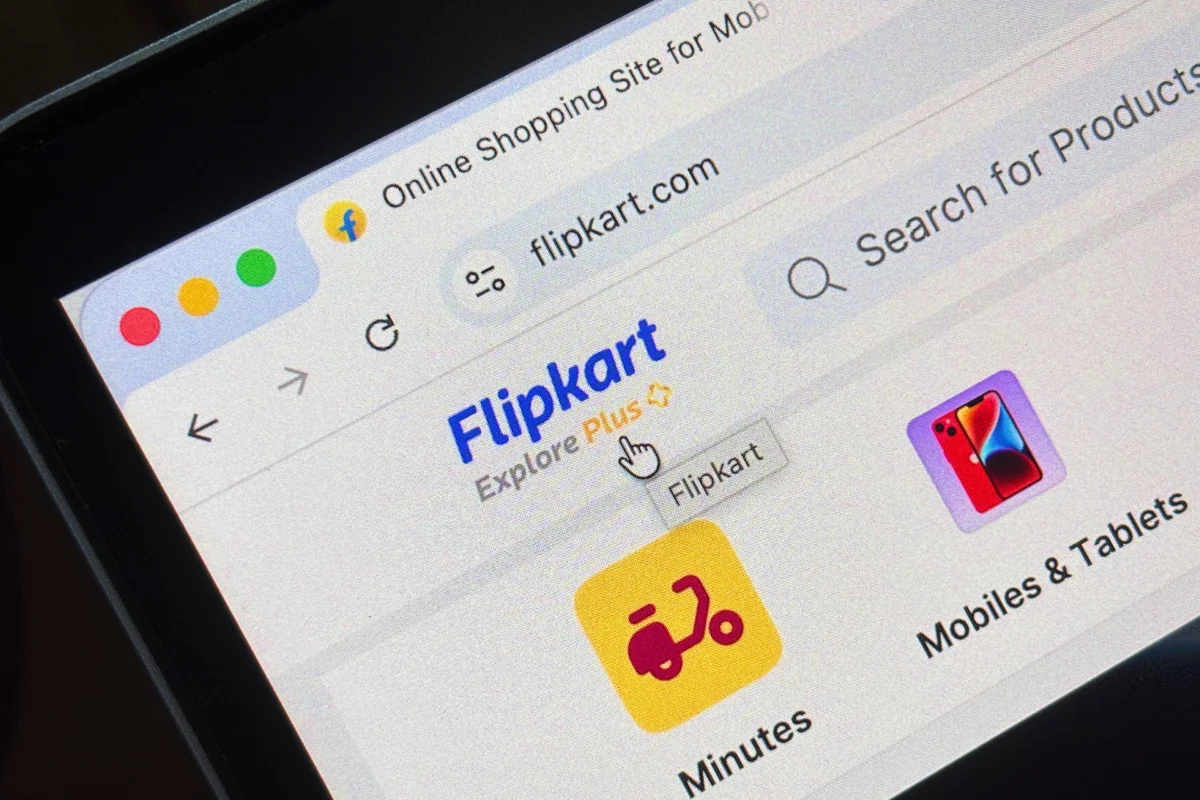
India’s retail landscape is undergoing a seismic shift. Once defined by the leisurely pace of traditional e-commerce and the neighborhood kirana store, the nation has rapidly transformed into the world’s most aggressive battleground for "quick commerce"—a high-stakes logistical race to deliver everything from farm-fresh produce to high-end electronics in under 20 minutes.
On Wednesday, Walmart-backed Flipkart announced a significant operational milestone: its rapid-delivery service, "Minutes," has established a network of 1,000 micro-fulfillment centers (MFCs) less than two years after its inception. This aggressive infrastructure buildout signals that the battle for India’s digital wallet is no longer just about range or price, but about the sheer speed of proximity.
The State of Play: A New Infrastructure Arms Race
The quick-commerce sector, once dismissed by skeptics as a cash-burning experiment, has matured into a fundamental pillar of the Indian consumer economy. Flipkart’s recent announcement of 1,000 active MFCs puts it on a collision course with entrenched incumbents like Blinkit (owned by Zomato), Zepto, and Swiggy Instamart.
According to data from the investment firm Jefferies, Blinkit currently leads the pack with 2,243 dark stores. However, Flipkart’s trajectory is nothing short of vertical. The company has publicly committed to expanding its network to 1,500 centers by the end of 2026. This is not merely a quantitative expansion; it represents a strategic pivot toward "hyper-local" dominance, ensuring that no matter the neighborhood, a Flipkart warehouse is within a short radius of the consumer.
Amazon, the titan of global e-commerce, is also playing its cards with characteristic precision. Through its "Amazon Now" initiative, the company is aggressively scaling its infrastructure, currently operating over 500 MFCs across 15 cities. Amazon’s roadmap is equally ambitious: it aims to scale its network to 1,000 centers across 100 Indian cities, diversifying its catalog beyond groceries into high-margin electronics, fashion, and home goods.
A Chronology of the Rapid-Delivery Evolution
The evolution of quick commerce in India did not happen overnight. It is the culmination of years of supply chain innovation and changing consumer behavior:
- 2021–2022 (The Rise of the Dark Store): The initial wave saw platforms like Blinkit and Zepto emerge, proving that urban Indians were willing to pay a premium for 10-minute grocery delivery.
- August 2024 (Flipkart Enters the Fray): Flipkart officially launched "Minutes," marking a formal entry into the 10-minute delivery market. This move signaled that traditional e-commerce giants could no longer ignore the shift in consumer expectations.
- Late 2024–Early 2025 (Expansion Beyond Metros): The competition shifted from Tier-1 hubs like Bengaluru and Mumbai to Tier-2 cities. Companies began realizing that smaller cities like Patna, Guwahati, and Siliguri were hunger-driven markets where digital infrastructure was severely lacking.
- Present (The Diversification Phase): The narrative has shifted from "necessities" to "convenience-at-large." Today, customers are as likely to order a smartphone charger or a beauty serum as they are a bag of onions, forcing logistics companies to rethink their warehouse inventory mix.
Supporting Data: The Metrics of Velocity
The growth figures coming out of these firms are staggering. Kunal Gupta, the head of Flipkart Minutes, reports that orders on the platform have surged 400% year-over-year. More importantly, customer retention has seen a 20% uptick, suggesting that the "quick commerce habit" is sticky.
The most compelling data point, however, lies in the geographic shift. Flipkart’s expansion into 90 new cities resulted in a 4,000% growth in those markets compared to the previous year. This indicates that the demand for instant gratification is not a luxury limited to the wealthy elite of India’s metropolitan centers; it is a nationwide phenomenon.
Industry Snapshot (Estimated):
- Current National Dark Store Count: Over 5,500 units.
- Projected Growth: Analysts at Bernstein expect this figure to reach 7,500 by 2030.
- Average Order Value (AOV): Rising across categories, with fresh produce seeing a 30% jump in AOV as consumers trust the freshness of quick-commerce delivery.
Official Perspectives: "We Are Going All In"
The sentiment among the leadership at these firms is one of relentless expansion. Kunal Gupta of Flipkart has been vocal about the firm’s strategy: "What began as a way to fulfill everyday essentials has evolved into a fundamentally new shopping habit for millions of Indians. Customers are not just ordering more; they are ordering differently."
Gupta emphasized that the company has no intention of slowing down after hitting the 1,000-store milestone. "We will continue to expand rapidly… we are going all in," he stated.
Amazon, while more guarded, echoes the sentiment regarding the importance of Tier-2 and Tier-3 markets. The company noted that 70% of its new Prime members now originate from smaller markets, highlighting that the "Amazon Now" service is a critical acquisition tool. For Amazon, the integration of quick commerce into its existing Prime ecosystem is a masterstroke in customer retention, as everyday essentials currently account for one in every two units shipped on Amazon.in.
The Implications: A New Retail Paradigm
The rapid expansion of micro-fulfillment networks carries profound implications for the future of Indian retail:
1. The Death of the "Grocery-Only" Model
Quick commerce is successfully transitioning into a "Quick Retail" model. By stocking electronics, personal care, and home goods in dark stores, companies are effectively shortening the supply chain for non-perishable goods. This creates a "long-tail" effect where the consumer can bypass traditional retail entirely for an increasing percentage of their monthly wallet spend.
2. The Tier-2 and Tier-3 Frontier
The "metro-centric" era of Indian tech is ending. As cities like Lucknow, Patna, and Guwahati become the new engines of growth, the logistical challenges of the "last mile" are being solved at scale. The maturity rate of stores in these cities—often outperforming expectations—suggests that the appetite for e-commerce in these regions was previously constrained only by the lack of supply-side infrastructure.
3. The Integration of Platforms
Crucially, Flipkart is observing that Minutes is not cannibalizing its main e-commerce platform. Instead, it is acting as a complementary service. Customers use the main platform for planned, bulk, or high-value purchases and utilize Minutes for immediate needs. This "two-pronged" approach allows platforms to capture more "share of pocket" across different shopping missions.
4. Economic and Labor Dynamics
The sheer number of dark stores—projected to hit 7,500 by 2030—will have a massive ripple effect on employment. From fleet management to warehouse operations and supply chain logistics, the quick-commerce sector is becoming a significant employer. However, it also invites scrutiny regarding the sustainability of the "10-minute" promise and the working conditions of the delivery personnel who make it possible.
Conclusion: The Horizon
As Flipkart, Amazon, Blinkit, and Zepto continue their multi-billion dollar investment spree, the Indian consumer is the clear winner. The standard of service, once a privilege of the few, is becoming a basic expectation for the many.
However, the "10-minute war" is far from settled. The challenge for these firms will not just be about building 1,000 or 2,000 stores; it will be about achieving profitability in a low-margin, high-cost environment. As the market saturates, the differentiator will shift from "who is fastest" to "who is most efficient." For now, the race is on, and for the players involved, there is no turning back. The infrastructure of the future is being built today, one micro-warehouse at a time.











