

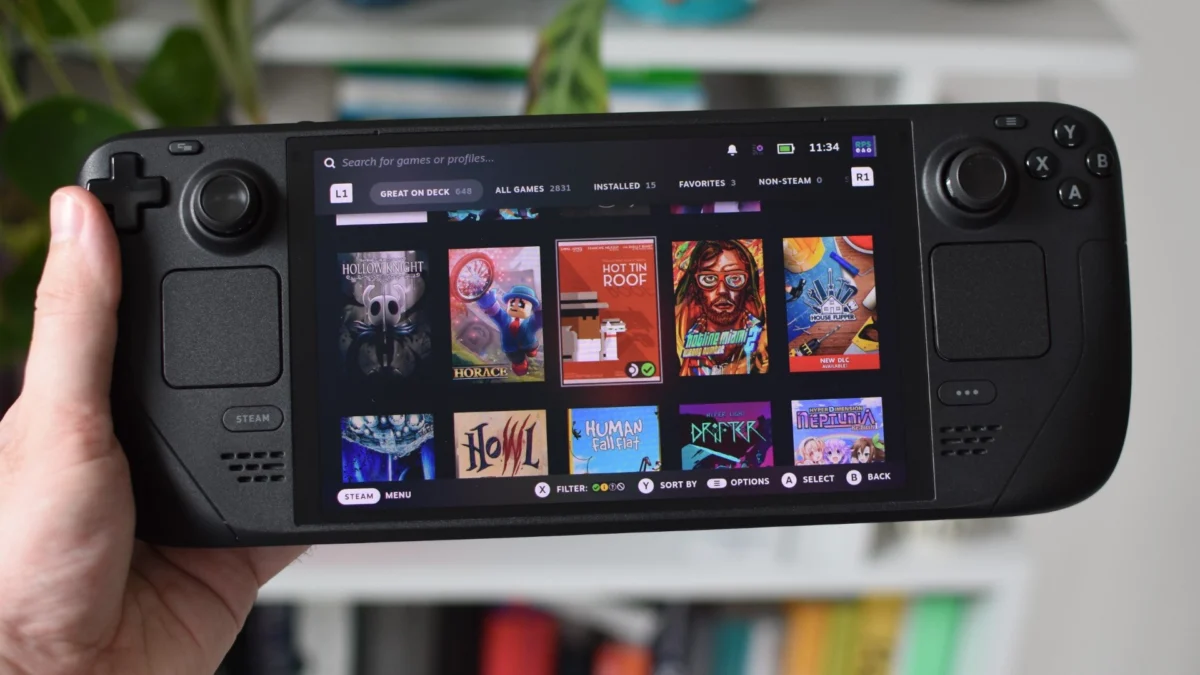
The landscape of portable PC gaming has undergone a seismic shift this week, as Valve Corporation—long considered the standard-bearer for accessibility and value in the handheld market—announced significant price increases for its flagship Steam Deck OLED models. Driven by persistent global memory chip shortages and the escalating costs of hardware logistics, these price adjustments have effectively ended the "golden era" of Steam Deck affordability, prompting a broader conversation about the stability of the PC gaming ecosystem in the age of AI-driven resource competition.
The Reality of the Price Hikes
For years, the Steam Deck was hailed as the undisputed king of price-to-performance ratios. However, as of this week, those value propositions have been drastically recalculated. The entry-level 512GB Steam Deck OLED, which was previously available for £479 / $549, has seen its price balloon to £649 / $789. This represents a staggering 35% increase in the UK and a 44% surge for North American consumers.
The premium tier has fared even worse. The 1TB model, once retailing for £569 / $649, is now priced at £779 / $949. These figures represent inflation rates of 36% and 46% respectively. For the average consumer, these are not marginal adjustments; they are barrier-to-entry shifts that move the Steam Deck from an "impulse buy" or "budget-friendly entry point" into the territory of high-end, enthusiast-grade hardware.
Chronology of a Component Crisis
The roots of this price surge can be traced back to the broader semiconductor market, which has been under immense strain throughout 2024. The primary catalyst is the insatiable demand for high-bandwidth memory (HBM) and DDR5 RAM, fueled by the rapid expansion of AI-centric data centers.
- Early 2024: Memory manufacturers begin prioritizing server-grade DRAM for large-scale AI infrastructure, leading to a tightening supply for consumer electronics.
- Mid-2024: PC hardware manufacturers, including MSI and various motherboard vendors, report rising costs and signal potential consumer-side price hikes to maintain margins.
- Late 2024: The impact ripples outward, affecting not only desktop components but the specialized, miniaturized hardware required for handheld gaming PCs.
- Present Day: Valve formally acknowledges that their previous pricing structure is no longer sustainable under current component costs, citing global logistical challenges as the primary driver for the immediate price increase.
This is not an isolated incident. The ripple effect of the memory shortage has already forced the delay of other upcoming Valve projects, including the highly anticipated "Steam Machine" and the "Steam Frame" VR kit. These projects, which rely on the same specialized silicon components as the Steam Deck, are now facing an uncertain roadmap.
Supporting Data: A Market in Flux
To understand the gravity of these changes, one must look at how the Steam Deck now stacks up against its competitors. Previously, the Steam Deck’s pricing made it impossible to ignore. Today, that competitive advantage has been significantly eroded.
The 1TB Steam Deck OLED is now encroaching on the territory of the Asus ROG Ally X. When the ROG Ally X launched, its $1,000 price point was considered a high-end barrier. With the Steam Deck’s price rising to $949, the gap has shrunk to a negligible margin. Given that the Ally X offers a more powerful processor and higher-tier technical specifications, the choice for a potential buyer becomes significantly more difficult.
Similarly, the 512GB Steam Deck OLED now struggles to justify itself against alternatives like the Lenovo Legion Go S. With the Legion Go S offering comparable performance in a flexible configuration, the Steam Deck no longer holds the exclusive title of the "smartest buy" in the handheld space. The data suggests that Valve is moving away from a loss-leader strategy—or at least a thin-margin strategy—and toward a model that reflects the harsh realities of current manufacturing costs.
Official Responses and Industry Context
Valve’s official statement on the matter is characteristically brief but telling. The company noted that, "these new prices reflect the current state of component costs and other global logistical challenges across the industry as a whole."

While market analysts confirm that the cost of RAM and flash storage has indeed seen a sharp upward trajectory, many industry observers suggest that the severity of these hikes might also be a tactical move by Valve to protect its supply chain. By raising prices, Valve is likely attempting to throttle demand to match the lower availability of components, ensuring that they do not run out of stock entirely during high-traffic periods like the upcoming holiday season.
However, the industry sentiment is one of frustration. The "memory crisis" is no longer just a technical problem for OEMs; it is a consumer issue that is beginning to stifle innovation. When even the most popular devices in the industry are subject to 40%+ price increases, it suggests that the supply chain for consumer electronics is currently fragile and ill-equipped to handle the competing demands of the AI sector.
The Implications for the Future of Handheld Gaming
The most profound implication of these price hikes is the potential shift in the "philosophy" of the handheld market. The Steam Deck was unique because it felt like a labor of love—a device optimized for the user experience rather than raw benchmarks. It prioritized battery efficiency, ergonomic comfort, and software integration (SteamOS) over the "spec-chasing" that characterizes competitors.
If the price of the Steam Deck continues to rise, it risks alienating the core demographic that built its success: the casual-to-mid-range PC gamer who wanted a portable console that didn’t cost as much as a high-end laptop.
1. The Death of the "Budget" Handheld
If the entry price for a high-quality handheld rises toward the $800 mark, the market will effectively lose its "entry-level" tier. This could push consumers toward cheaper, low-quality alternatives or away from the handheld space entirely, potentially stifling the growth of Linux-based gaming handhelds.
2. Pressure on Future Hardware
The looming threat to the Steam Machine and Steam Frame is particularly concerning. If Valve cannot maintain a competitive price point for its core handheld, it may struggle to find a market for more ambitious, home-based hardware. These devices require more silicon and more memory; if the cost to produce them continues to climb, their retail prices could reach levels that are prohibitive for the average gamer.
3. The "AI vs. Gaming" Conflict
Ultimately, this situation highlights a broader conflict in the tech industry: the battle for silicon. As long as AI firms are willing to pay a premium for any memory chip that leaves a factory, consumer hardware manufacturers will be forced to compete for the scraps. Unless the supply of memory stabilizes, we may see a prolonged period where PC gaming hardware remains prohibitively expensive.
Conclusion: A Bitter Pill to Swallow
The Steam Deck OLED remains, by most objective measures, the best-designed handheld on the market. Its combination of a gorgeous OLED screen, a best-in-class user interface, and an ergonomic design that favors long-term comfort makes it an outlier in an industry obsessed with raw clock speeds and benchmark scores.
Yet, at its new price point, the emotional value of the device is being tested. For many, the Steam Deck was the "bargain of the century." To see that bargain vanish under the weight of global supply chain shifts is, to put it mildly, disappointing. While the price hike is a logical, perhaps even necessary, move for Valve to stay afloat, it represents a dark chapter for PC gamers. We are now in a market where the best technology is increasingly reserved for those with the deepest pockets, and the dream of an affordable, portable PC gaming revolution feels, for the moment, a little further out of reach.












No comments yet. Be the first to join the conversation!