

Science fiction has long served as the ultimate playground for television creators. It is a genre that permits the exploration of the human condition, social stratification, and existential dread through the lens of technological advancement and interstellar speculation. However, within this vast expanse lies a distinct, more rigorous sub-genre: Hard Science Fiction.
While much of modern television leans into "soft" sci-fi—where the focus rests primarily on sociology, psychology, and character-driven drama—hard science fiction demands a different level of commitment. These stories are defined by their adherence to scientific accuracy, natural laws, and internal logic. In hard sci-fi, the "sci" is not merely window dressing; it is the engine that drives the narrative. While these shows do not necessarily need to be grounded in our current reality, they must maintain a plausible consistency that respects the laws of physics, biology, and causality.
For viewers seeking stories that challenge the intellect as much as they provide entertainment, Netflix has curated a collection of series that prioritize scientific integrity. From the quantum entanglement puzzles of 3 Body Problem to the cyclical determinism of Dark, these shows represent the pinnacle of cerebral television.
1. The Mechanics of the Genre: What Constitutes "Hard" Sci-Fi?
To appreciate these series, one must understand the distinction between soft and hard science fiction. Soft science fiction (such as Star Wars or The Twilight Zone) uses the setting as a backdrop for moral or emotional allegory. Hard science fiction, conversely, treats the science as a protagonist. If a show features faster-than-light travel, a hard sci-fi series will often attempt to justify it through theoretical physics (like warp fields or wormholes) rather than simply calling it "hyperspace."
The allure of this genre lies in its ability to take the impossible and make it feel inevitable. By anchoring narratives in real-world concepts like entropy, singularity, and quantum mechanics, these shows cultivate a sense of awe. They invite the audience to participate in the discovery, rewarding those who pay attention to the details with a deeper understanding of the show’s internal universe.
2. Chronology of Excellence: A Curated Watchlist
The following series have been selected not only for their high production values but for their unwavering commitment to scientific themes and logical consistency.

3 Body Problem (2024–Present)
After the cultural turbulence surrounding the conclusion of Game of Thrones, showrunners David Benioff and D.B. Weiss sought a project that demanded intellectual rigor. 3 Body Problem, based on the seminal novel series by Liu Cixin, was the answer.
Named after the classic physics problem of calculating the motion of three celestial bodies interacting gravitationally, the show spans decades, from the Chinese Cultural Revolution to the modern-day effort to stop an extraterrestrial threat. The series is bolstered by a cast including Eiza González and Benedict Wong, but its true star is its source material’s commitment to theoretical physics. The show manages to make complex topics—such as the nature of quantum entanglement and the limitations of human perception—accessible and narratively urgent.
Pantheon (2022–2023)
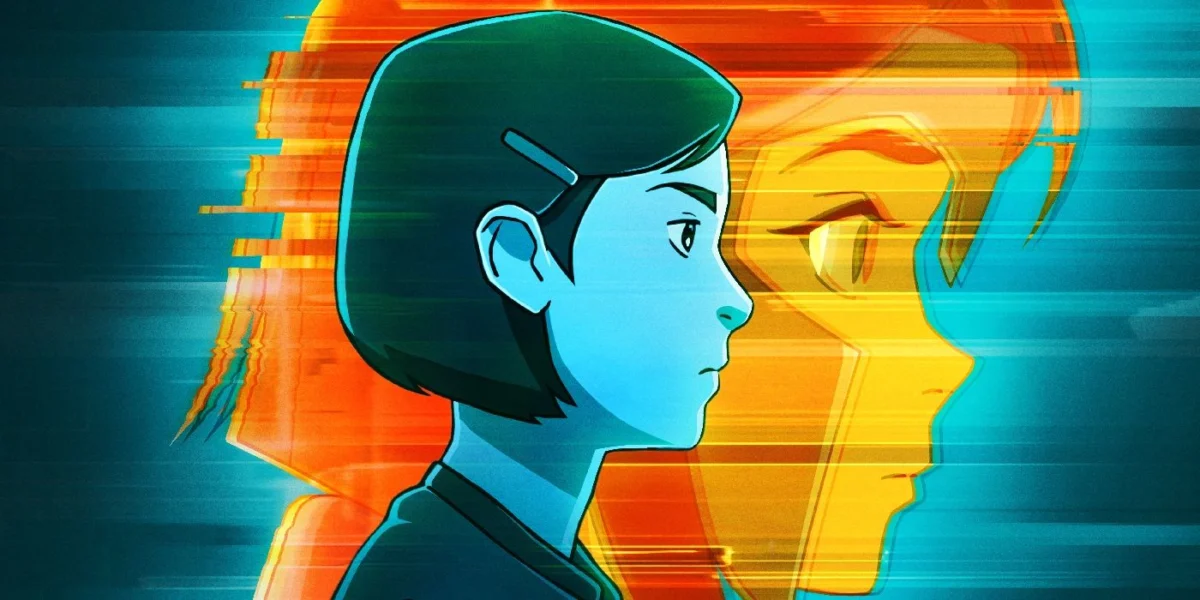
Based on the short stories of Ken Liu, Pantheon is a hauntingly prescient exploration of the technological singularity—the hypothetical moment when machine intelligence surpasses human capability. The series follows Maddie, a young woman who discovers that her deceased father’s consciousness has been uploaded to the cloud.
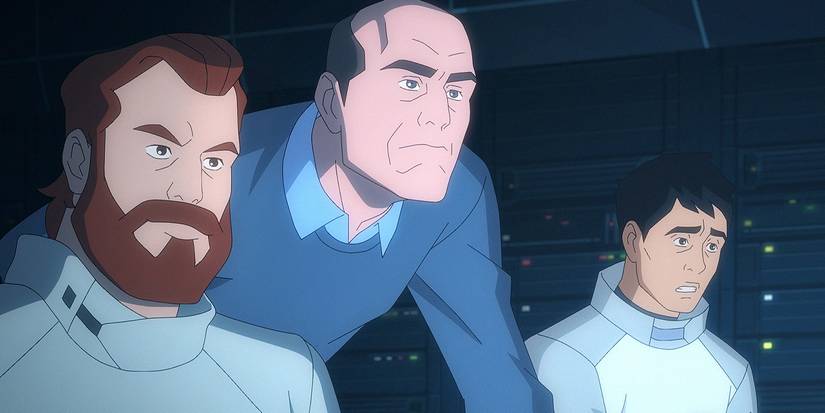
Though it was tragically caught in a corporate tax-write-down shuffle at AMC+ before finding its way to broader platforms, Pantheon remains a masterclass in animation and storytelling. It tackles the ethics of "Uploaded Intelligence" (UI) with a level of seriousness rarely seen in adult animation. It asks the uncomfortable question: If we can digitize the human mind, do we become immortal, or do we simply create a new, fragile kind of ghost?
Scavengers Reign (2023)
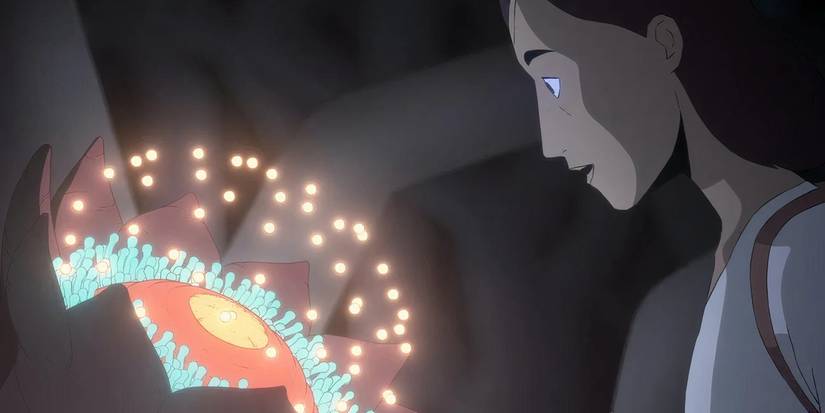
Perhaps the most visually and scientifically imaginative entry on this list, Scavengers Reign follows the survivors of a deep-space freighter crash on a hostile, alien planet. While the setting is surreal, the show’s brilliance lies in its biological rigor. The flora and fauna of the planet Vesta do not act like monsters in a standard action movie; they act like organisms in an ecosystem.
The show treats xenobiology with the care of a nature documentary. Every organism has a purpose, a symbiotic relationship with its environment, and a specific evolutionary logic. It is "hard" sci-fi in the sense that it respects the laws of evolution and ecology, even when presenting us with a world that defies human expectation.
Black Mirror (2011–Present)
While Black Mirror often veers into the "soft" or "near-future" territory, its best episodes are undeniably hard sci-fi. By focusing on how a single, incremental advancement in technology (like neural memory implants or autonomous drones) would realistically alter the social and political fabric of our world, the show functions as a series of controlled experiments.
When Black Mirror is at its best, it isn’t just telling a story; it is projecting the logical conclusion of our current technological trajectory. Episodes like "The Entire History of You" are staples of the genre because they don’t rely on magic; they rely on the extrapolation of existing engineering.
Dark (2017–2020)
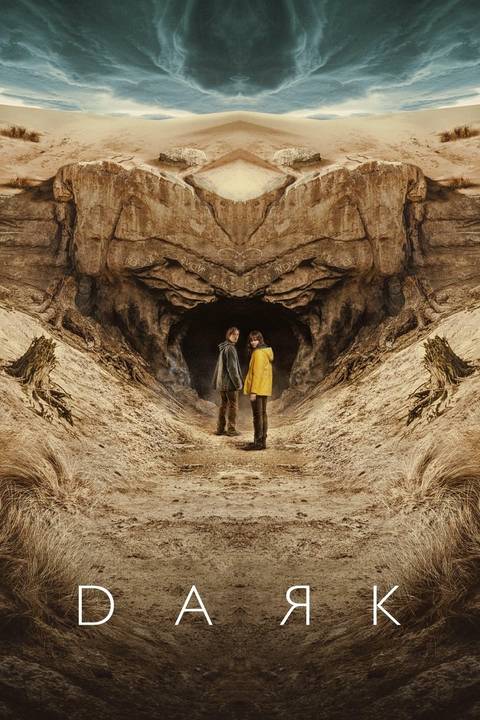
Dark is widely considered the gold standard for time-travel narratives. The German-language series, set in the fictional town of Winden, is a M.C. Escher painting come to life. It avoids the "time-travel paradoxes" that plague lesser shows by committing to a rigid, deterministic loop.

The science in Dark—while speculative—is rooted in the concept of the Block Universe, where past, present, and future exist simultaneously. The show’s commitment to its own internal logic is so profound that viewers often require a notepad to track the intricate family trees and temporal movements. It is an intellectual triumph that proves hard sci-fi can be deeply emotional, atmospheric, and character-driven.
3. Supporting Data and Industry Context
The rise of these shows on streaming platforms like Netflix is no coincidence. There is a growing appetite for "prestige sci-fi" that respects the audience’s intelligence. According to recent viewership data, shows that offer "rewatchability"—series where audiences can return to episodes to catch missed details or re-examine plot mechanics—perform significantly better in terms of long-term subscriber retention.
- Production Investment: The shift toward high-concept, scientifically literate series has seen production budgets for sci-fi soar. 3 Body Problem, for instance, utilized cutting-edge visual effects to depict scientific phenomena that would have been impossible to film just a decade ago.
- The "Nerd-Core" Demographic: Streaming analytics indicate that the 18–45 age demographic is increasingly gravitating toward shows that foster online discussion. Subreddits and fan forums dedicated to Dark and 3 Body Problem have become hubs for deep-dive analysis, turning the viewing experience into a collaborative, community-driven event.
4. Official Responses and Critical Reception
Industry critics have largely praised the shift toward more intellectually demanding science fiction. Critics have noted that while these shows can be "daunting" to casual viewers, they provide a sense of satisfaction that formulaic procedurals cannot match.

In interviews, creators like Jantje Friese and Baran bo Odar (Dark) have emphasized that their goal was never to simplify their concepts for the sake of mass appeal. Instead, they aimed to create a puzzle that would be "fair" to the audience. This ethos—that the audience is smart enough to handle complexity—has become the hallmark of the current era of "Hard Sci-Fi."
5. Implications for the Future of Television
The success of these series suggests that we are entering a new golden age of speculative fiction. As real-world technology approaches the thresholds of AI integration, neural linking, and space colonization, the line between "science fiction" and "future history" is blurring.
The implications are clear: audiences are tired of the "magic science" of the past. They want stories that mirror the rapid pace of real-world scientific advancement. The shows highlighted here are not just entertainment; they are cautionary tales, thought experiments, and celebrations of human curiosity.
As we look toward the future of streaming, we can expect this trend to continue. The demand for content that does not talk down to its audience—content that asks us to think, to research, and to question the nature of our reality—is higher than ever. For those with a Netflix subscription, the library of hard science fiction provides not just a way to pass the time, but a way to engage with the most profound questions of our age.
Whether it is through the lens of a trapped crew on an alien planet or the cyclical grief of a time-traveling family, these shows remind us that the universe is vast, complex, and deeply fascinating—and that science is the best tool we have to understand it.











No comments yet. Be the first to join the conversation!