Pevita Pearce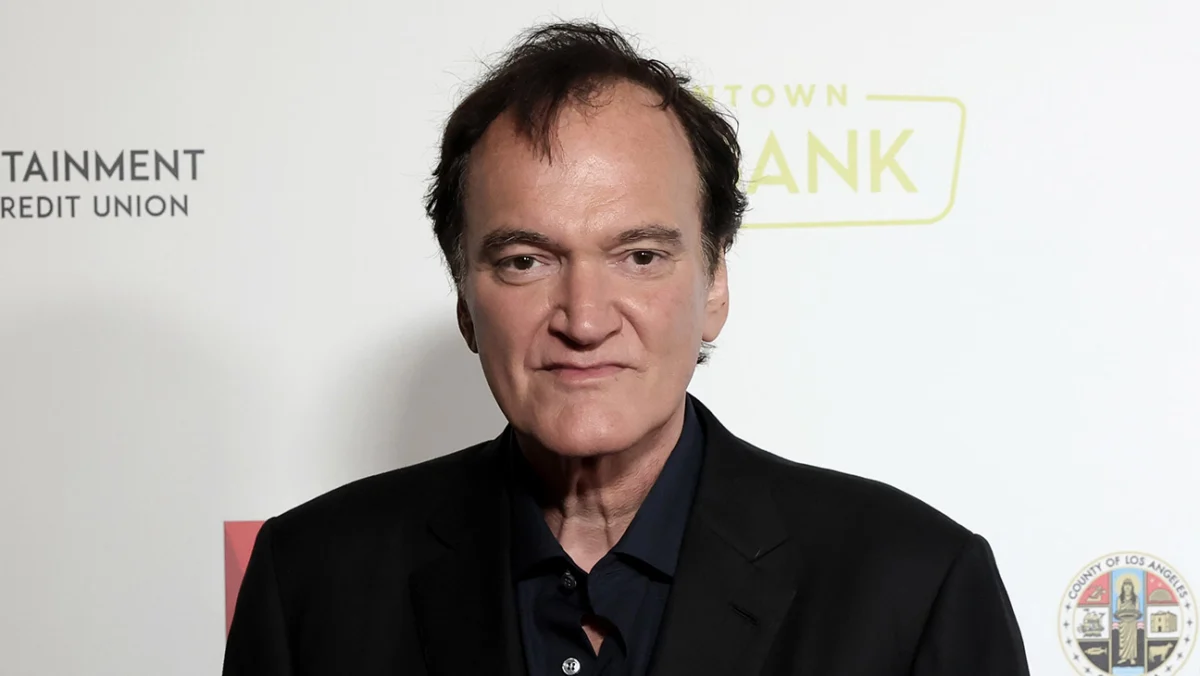
In the high-stakes, ever-evolving landscape of contemporary Hollywood, few voices carry as much weight—or ignite as much controversy—as that of Quentin Tarantino. The two-time Academy Award-winning director of Pulp Fiction and Once Upon a Time in Hollywood has long been a vocal champion of the theatrical experience. However, in a blistering new op-ed for the prestigious Sight and Sound magazine, the filmmaker has leveled a searing indictment against the current state of the industry, describing the modern output of major studios as a "flavorless sausage factory."
Tarantino’s critique is not merely a passing grumble; it is a profound existential lament for a medium he believes has lost its soul in the post-pandemic era. By contrasting the current cinematic landscape with the storied traditions of the 20th century, Tarantino has sparked a heated debate regarding quality, artistic integrity, and the future of the motion picture as an art form.
The State of the Industry: A "Sausage Factory" of Mediocrity
In his candid contribution to the May 2026 issue of Sight and Sound, Tarantino posits that the COVID-19 pandemic acted as a permanent fault line for the industry, separating the "magic" of traditional cinema from the utilitarian, content-driven landscape of today.
"Since the pandemic, for me anyway, it seems almost impossible for a new movie to come out that I don’t pick to death," Tarantino writes. He attributes this cynical shift to a convergence of technical and creative failures: "Flaws, implausibilities, audience pandering, miscast performers or just plain stupid shit usually torpedoes every new movie coming out of the flavorless sausage factory that used to call itself Hollywood."
For Tarantino, the problem is structural. He expresses a sense of growing disdain for the very concept of "the movie" as it exists in the mid-2020s. He notes that the current era’s offerings are so creatively bankrupt that they make the cinematic output of the 1980s—a decade often criticized for its commercialism—appear as a golden age of intellectual rigor by comparison. This contempt is not merely for the stories being told, but for the lack of "generosity" inherent in modern filmmaking, where the goal appears to be engagement metrics rather than artistic transcendence.
The Search for the Sublime: A Rare Exception
Despite his overarching pessimism, Tarantino is not entirely closed off to contemporary film. He acknowledges that he has seen movies he "liked" since the world returned to the theaters, specifically citing Steven Spielberg’s 2021 remake of West Side Story and Kevin Costner’s ambitious two-part epic, Horizon: An American Saga.
Yet, he clarifies that these films, while competent and enjoyable, failed to provide the "transcendental" experience that first drew him to cinema as a child. He laments that he is no longer swept away to that "magical land of enjoyment" that once defined his relationship with the medium. "These days," he admits with a touch of melancholy, "I’d rather read a book."
However, there is one notable exception that managed to pierce through his defensive wall of cynicism. Tarantino reserves high praise for Joe Carnahan’s Netflix thriller, The Rip, starring Matt Damon and Ben Affleck. In a glowing endorsement, Tarantino writes that the film "grabbed [him] and held [him] for its entire duration."
He lauds the film for its "novel premise" and "clever" execution, identifying it as a rare example of a modern thriller that actually succeeds on all cylinders. He credits director Joe Carnahan, cinematographer Juan Miguel Azpiroz, and a "splendid" cast, but emphasizes that the "powerhouse component" is the screenplay written by Carnahan and Michael McGrale. For a director who prioritizes script-writing above almost all else, this is high praise indeed.
Chronology of a Controversial Release
While The Rip has earned the admiration of a cinematic auteur, its path to the screen has been fraught with legal complications that reflect the increasingly litigious nature of the modern entertainment business.
- Development Phase: Joe Carnahan and Michael McGrale draft the screenplay, blending fictionalized elements with gritty, realistic depictions of police procedural work.
- Production: The film secures A-list talent in Matt Damon and Ben Affleck, with their production banner spearheading the project for Netflix.
- Release: The film debuts on the streaming giant, gaining immediate traction for its suspenseful pacing and star power.
- The Lawsuit: Shortly after release, two Miami-Dade police officers file a defamation lawsuit against the production company. The plaintiffs allege that the film does not merely use "inspired by" tropes but intentionally weaves specific, identifiable facts from their own lives into a fictional narrative in a way that causes significant reputational damage.
This legal battle underscores a growing tension in Hollywood: the fine line between creative license and the exploitation of real-life tragedy for entertainment. It is a debate that Tarantino’s critique inadvertently touches upon—the notion that modern "content" prioritizes shock value and narrative convenience over the nuance and responsibility that characterized the filmmaking of previous eras.
Implications for the Future of Hollywood
Tarantino’s scathing assessment serves as a bellwether for a broader sentiment among film purists. As major studios pivot toward algorithmic green-lighting, franchise-heavy slates, and streaming-first distribution models, the traditional "film" is increasingly being replaced by "content."
The implication of Tarantino’s critique is that the industry is in a state of terminal decline, where the lack of artistic risk-taking has led to a stagnation of the medium. When even a director as influential as Tarantino feels that reading a book is a superior alternative to watching the latest releases, it signals a profound disconnect between the creators and the culture they once commanded.
Furthermore, his endorsement of The Rip—a project that is currently entangled in a reputation-damaging legal battle—presents an interesting irony. It suggests that Tarantino values the craft of a well-told, suspenseful story above the surrounding industry noise, yet the very film he praises is currently at the center of the exact kind of real-world "stupid shit" he despises.
A Transition to the Stage: Tarantino’s Next Act
As Tarantino continues to weigh in on the decline of film, he is simultaneously preparing to pivot away from the medium entirely. The director is currently deep in the development of his first stage play, The Popinjay Cavalier.
Set to premiere on London’s West End in 2027, the play is described as a "rambunctious comedy of deception and disguise." Inspired by the swashbuckling epics of stage and screen, the project represents a return to the theatrical roots of storytelling. By moving to the stage, Tarantino is stepping outside the "sausage factory" of Hollywood, seeking a medium where the immediate, live connection with an audience can be reclaimed.
Whether The Popinjay Cavalier succeeds as a critique of modern art or simply as a piece of pure entertainment remains to be seen. However, it is clear that for Quentin Tarantino, the future of his own creative journey lies in finding a stage where the "flavorless" compromise of modern cinema cannot follow him.
In the final analysis, Tarantino’s words serve as a wake-up call. Whether the industry listens or continues to churn out the same "stupid shit" remains the defining question for the next generation of filmmakers. For now, the audience is left with a choice: succumb to the algorithmic churn, or follow the masters back to the source—whether that be a book, a stage, or a rare, gripping thriller that dares to be clever.

 Asep Darmawan
 Nana Wu