

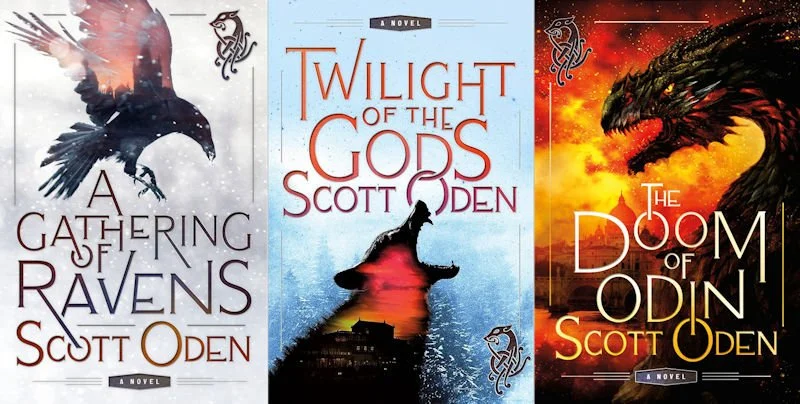
In the expansive landscape of modern fantasy, few characters possess the visceral, haunting resonance of Grimnir—the protagonist of Scott Oden’s acclaimed The Grimnir Saga. Known by a dozen names across a dozen cultures—Corpse-maker, Life-quencher, the Son of the Wolf, and the last of Bálegyr’s brood—Grimnir serves as the anchor for a trilogy that redefines the intersection of historical fiction and grimdark fantasy. Across A Gathering of Ravens, Twilight of the Gods, and The Doom of Odin, Oden crafts a brutal, elegiac meditation on faith, vengeance, and the inexorable march of extinction.
Main Facts: The Anatomy of a Mythic Anti-Hero
At the heart of the saga is a world in transition. The setting is the Dark Ages, a period characterized by the slow, painful eclipse of ancient pagan traditions by the rising tide of Christianity. Within this crucible, Grimnir, the last of the orcs, wanders a war-ravaged landscape. He is a creature of shadow and myth, known to the hymn-singers of England as orcnéas, to the Irish as fomórach, and to the Norse as skrælingr. In his own tongue, he is simply kaunr.
The trilogy is not merely a tale of high adventure; it is a character study of a being who is functionally immortal but spiritually tethered to a dying world. Oden’s writing excels in the portrayal of Grimnir—a character who is at once volatile, vile, and unexpectedly relatable. By eschewing the traditional tropes of the "redeemable hero," Oden allows Grimnir to remain a monster, yet one whose motivations and internal struggles resonate with a haunting, human-like intensity.
Chronological Trajectory: A Three-Part Descent
The saga is structured as a triptych of escalating stakes and deepening lore.
A Gathering of Ravens (Book One)
The narrative begins by establishing the stark contrast between the old world and the new. Grimnir, driven by a singular, burning need for revenge, finds his path crossed by Etain, a young hymn-singer. This initial volume establishes the baseline for the series: the brutality of the medieval setting, the encroaching influence of the church, and the sheer, unadulterated power of Grimnir. It is here that the reader is introduced to the "orc" not as a generic fantasy minion, but as a complex, ancient entity.
Twilight of the Gods (Book Two)
As the saga progresses, the scope of the conflict widens. Grimnir encounters Disa, a fierce shield-maiden. While the dynamic between Grimnir and Etain in the first book was one of necessity and tension, the relationship with Disa blossoms into something resembling mutual trust and respect. This shift is crucial; it humanizes the "Corpse-maker," proving that even a creature of violence is capable of mentorship and growth. This volume also introduces the primary antagonist, Konráðr the White, a Christian fanatic whose inner demons mirror the complexity of the protagonist. Their battle of strategy serves as the structural backbone of the second book, leading to an explosive conflict between the fanatics and the Raven-Geats.
The Doom of Odin (Book Three)
The final chapter acts as a crucible. Oden accelerates the pace, pushing the violence and the influence of ancient magic to their zenith. Grimnir is forced into the perilous underworld to confront his own treacherous kin. For the first time, the reader witnesses the true nature of the orcish race—a display of primal savagery that adds a final layer of depth to the characterization. The trilogy reaches a natural, somber, and deeply satisfying conclusion, providing a definitive answer to the fate of the last of his kind.
Supporting Data: Why the Saga Resonates
The critical acclaim surrounding The Grimnir Saga is not accidental. Several factors contribute to its standing as a masterpiece of the genre:
- Pacing and Lore Management: Unlike many fantasy epics that suffer from "world-building bloat," Oden maintains a brisk, effective pace. He weaves lore into dialogue and action rather than relying on heavy-handed exposition dumps.
- Thematic Depth: The conflict between "old" and "new" religions is a staple of historical fiction, yet Oden treats it with a refreshed, visceral vigor. He avoids turning the conflict into a simplistic binary of good vs. evil, instead focusing on the existential dread of those who know their way of life is coming to an end.
- Tactile Violence: The combat in the saga is brutal and terrifying, yet it never feels gratuitous. Oden understands that violence in fiction is most effective when it serves the narrative; the deaths are consequential, and the battles carry the weight of historical gravity.
- Supernatural Integration: While the backdrop is historical, the infusion of ancient magic ensures the reader never forgets they are reading fantasy. These moments of magic are sparse but impactful, serving as reminders that even a being as powerful as Grimnir is subject to the whims of gods and fate.
Official Responses and Literary Reception
While The Grimnir Saga has perhaps not yet received the broad, mainstream recognition of some contemporary blockbusters, its reputation among genre enthusiasts is sterling. Critics have consistently highlighted the "authentic" nature of the emotions conveyed by a non-human protagonist. The consensus among the literary community is that Scott Oden has achieved a rare feat: a "grimdark" story that feels truly ancient.
Discussions within literary forums often focus on the "morally grey" nature of the characterization. Critics have praised Oden for his refusal to make Grimnir a "hero" in the traditional sense, noting that his bitterness and volatility make him a more memorable—and arguably more human—character than most protagonists in the current market.
Implications: The Legacy of the Corpse-maker
The implications of The Grimnir Saga for the genre are significant. It challenges the notion that orcs, or "monstrous" races, must be relegated to secondary roles or cannon fodder. By centering a narrative on the "last" of a dying race, Oden introduces an element of environmental and cultural mourning that is rare in high fantasy.
Furthermore, the saga serves as a bridge between the historical and the fantastical. It suggests that history is not just a record of events, but a record of myths and monsters that have been systematically erased by the forward march of progress.
For the reader, the saga offers more than just an escape; it offers a mirror. Through Grimnir’s eyes, we see the world as a harsh, unforgiving, and beautiful place, where trust is hard-won and vengeance is a cold comfort. As the final pages of The Doom of Odin are turned, one is left with the distinct feeling of having witnessed the end of an era.
Scott Oden has provided a landmark work in the field of dark historical fantasy. For those who enjoy intricate character studies, vivid historical settings, and the courage to explore the darker facets of the human (and sub-human) condition, The Grimnir Saga is not merely recommended—it is essential reading. It remains a powerful, bloody, and ultimately heart-wrenching testimony to the power of stories that refuse to shy away from the darkness.










No comments yet. Be the first to join the conversation!