

In the pantheon of Hollywood legends, few names carry the weight and historical significance of Robert De Niro. Renowned for his transformative performances in classics like Taxi Driver, Raging Bull, and GoodFellas, De Niro has spent decades defining the American cinematic landscape. However, his transition from the front of the camera to the director’s chair remains one of the most underrated chapters of his career. While his second directorial effort, The Good Shepherd, was met with a lukewarm critical reception, his 1993 debut, A Bronx Tale, stands as a soaring, poignant masterpiece that feels just as vital today as it did over three decades ago.
With a new 4K restoration from Imprint now hitting the market, it is time to re-examine why this intimate, grounded drama deserves a place alongside the greatest crime films in history.
The Origins of a Neighborhood Epic
The genesis of A Bronx Tale lies not in a studio boardroom, but in the gritty, lived-in reality of the Bronx. The film is a direct adaptation of Chazz Palminteri’s autobiographical one-man stage play. Palminteri, who grew up in the Belmont neighborhood, crafted the story as a semi-autobiographical account of his own childhood and his complicated relationship with the local mob hierarchy.
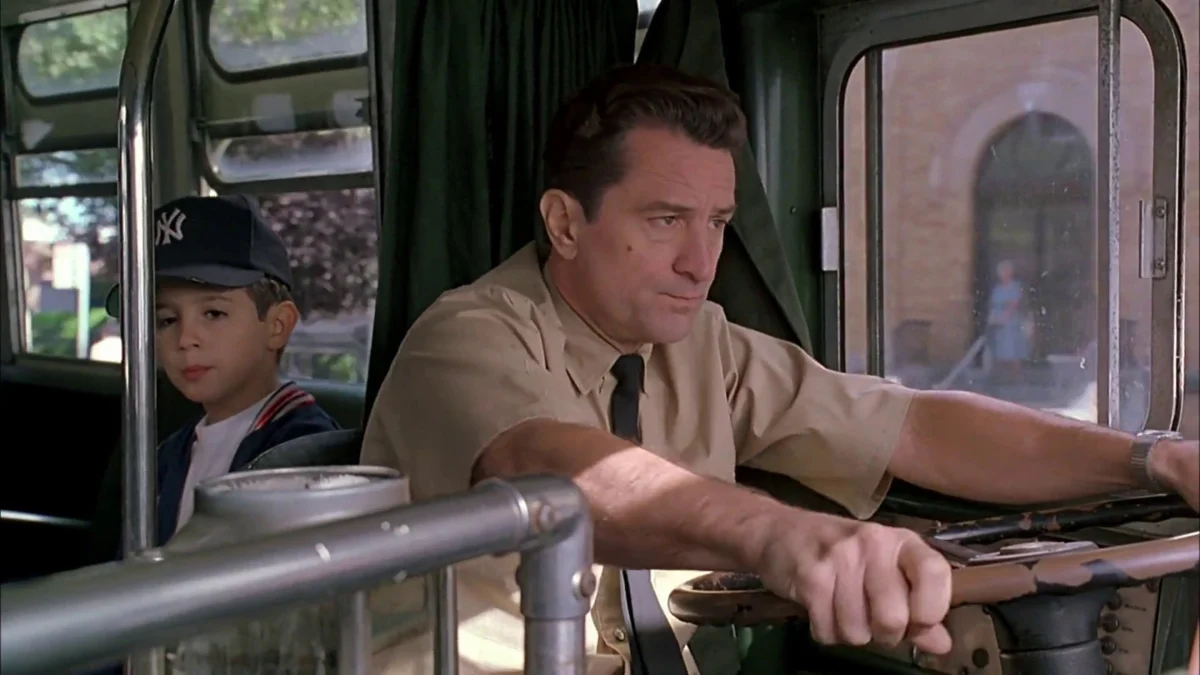
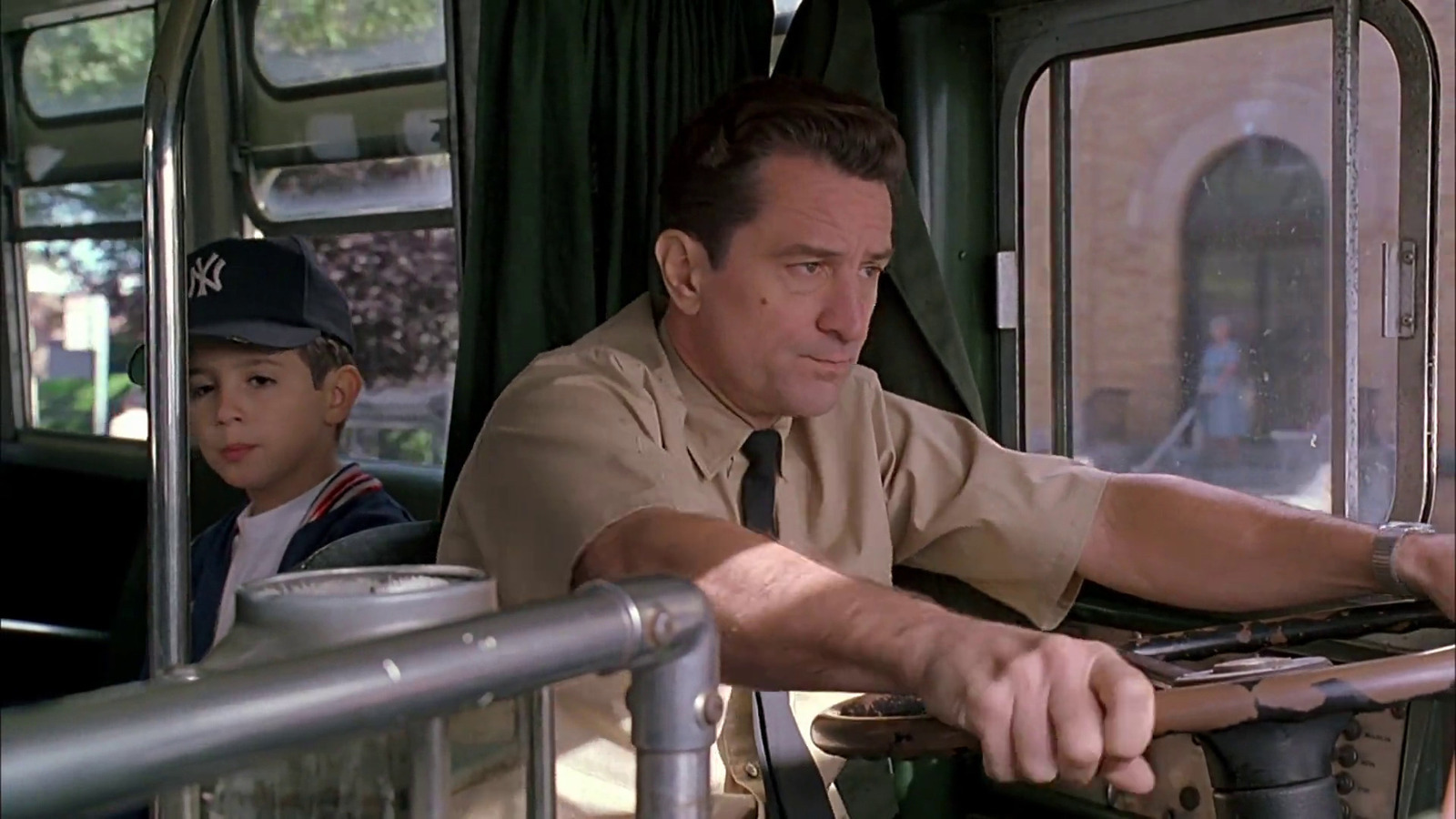
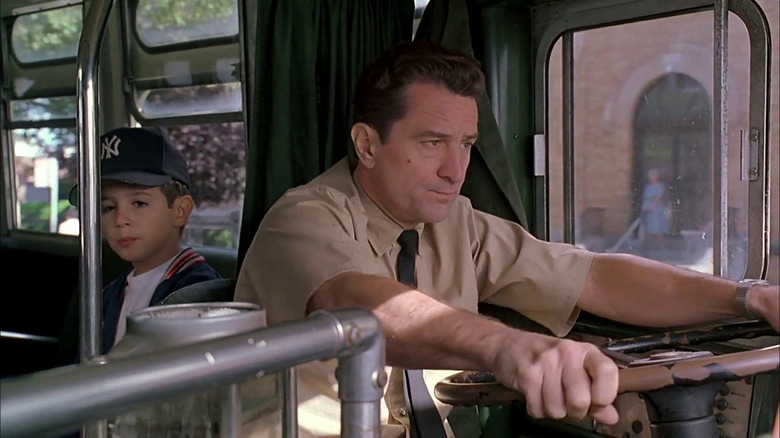
When the time came to bring the story to the screen, Palminteri was famously protective of his work. He had been offered significant sums of money for the rights by major studios, but he refused to sell unless he could write the screenplay and play the role of the mob boss, Sonny. He eventually found his match in Robert De Niro. The two struck a deal: De Niro would direct and star as Lorenzo, the hardworking bus driver father, while Palminteri would helm the script and embody the charismatic, dangerous Sonny.
This collaboration ensured that the film maintained the authentic, street-level heartbeat of the original stage play. It was a gamble for both men—De Niro was moving into a new professional role, and Palminteri was entrusting his personal history to an industry titan—but the gamble paid off in dividends.
Chronology: A Coming-of-Age Story Defined by Duality
The narrative structure of A Bronx Tale is deceptively simple, focusing on the formative years of Calogero "C" Anello.
The Childhood Foundation
The film begins in the 1960s, introducing nine-year-old Calogero (Francis Capra) as a boy living in the shadow of his honest, blue-collar father, Lorenzo (De Niro). The neighborhood of Belmont is a microcosm of Italian-American life, governed by the unspoken rules of the local mobsters who congregate at the local bar.
The turning point occurs when Calogero witnesses Sonny (Palminteri) commit a cold-blooded murder in broad daylight. When the police arrive to question the witnesses, young Calogero chooses silence. This act of loyalty—or perhaps fear—earns him a permanent spot in Sonny’s inner circle. He is nicknamed "C" and begins to live a double life: the son of a bus driver by day and a protégé to a gangster by night.
The Teenage Crucible
As Calogero transitions into his teenage years (played by Lillo Brancato Jr.), the central conflict of the film intensifies. He finds himself pulled between two father figures: Lorenzo, who preaches the dignity of hard work, and Sonny, who offers the allure of power, respect, and easy money.
The tension reaches a boiling point when Calogero begins to navigate the complexities of race and love. He falls for Jane, a Black girl from a neighboring community. This romance acts as a catalyst, forcing Calogero to confront the ingrained prejudices of his peers and the harsh realities of the neighborhood’s rigid tribalism.
Thematic Depth: Beyond the Mob Movie Trope
While A Bronx Tale features mobsters, it is fundamentally distinct from the sprawling, epic crime dramas like The Godfather or GoodFellas. It is a "ground-level" story, as intimate as it is expansive.
The Conflict of Fatherhood
The true brilliance of the film lies in the realization that both Sonny and Lorenzo, though polar opposites in their moral compass, ultimately want the same thing: to protect Calogero. Lorenzo wants to save his son from the inevitable ruin of the criminal life, while Sonny, in a surprising turn of character development, actively tries to steer the boy away from his own path, repeatedly warning him against the pitfalls of "the life."
The Examination of Prejudice
The subplot involving Calogero and Jane serves as a mirror for the era’s racial turbulence. By placing a romance in the center of a insular, white-dominated neighborhood, the film exposes the toxicity of inherited bigotry. Calogero’s internal struggle to defend his relationship against his "friends" is a masterclass in the loss of innocence. It shows that in the Bronx of the 1960s, a boy could learn how to handle a gun before he learned how to handle the complexities of the human heart.
Supporting Data: Why It Matters Now
When A Bronx Tale was released in 1993, it was met with widespread critical acclaim, yet it struggled to achieve the massive box-office dominance of contemporary blockbusters. However, the film has aged with grace.
- Critical Longevity: The film holds a consistently high rating on aggregate sites like Rotten Tomatoes, with critics praising the "lived-in" quality of the performances and the authenticity of the dialogue.
- Performance Benchmarks: Critics often point to Lillo Brancato Jr.’s performance as a standout for his ability to convey the confusion of youth, while De Niro’s restraint as a director allows the ensemble cast to flourish.
- The Imprint 4K Release: The recent 4K restoration is not merely a technical upgrade; it is a signal of the film’s status as a "classic." By restoring the visual clarity of the New York streets, the release allows modern audiences to see the subtle visual storytelling that De Niro employed in his debut.
Implications for Modern Cinema
The success of A Bronx Tale serves as a reminder of the power of the "small" story. In an era dominated by CGI spectacles and franchise tentpoles, the film stands as a testament to the power of character-driven drama.
It also highlights the importance of the director’s perspective. De Niro did not attempt to make a "De Niro movie" in the style of Martin Scorsese. Instead, he opted for a tender, observant approach that favored character over chaos. This directorial choice is perhaps why the film feels so remarkably honest. It wasn’t about spectacle; it was about the street corner, the school yard, and the dinner table.
Conclusion
Robert De Niro’s A Bronx Tale is a testament to the fact that greatness in cinema does not always require grand scale. It requires honesty, a strong script, and a director who understands the pulse of his subject matter.
Whether you are revisiting the streets of Belmont for the first time in years or discovering the film through its new 4K edition, the experience remains unchanged: it is a poignant, funny, and ultimately heartbreaking look at the choices that define us. As we look back at De Niro’s storied career, A Bronx Tale stands not as a footnote to his acting work, but as a defining achievement of his creative life. It remains, quite simply, a must-watch.










