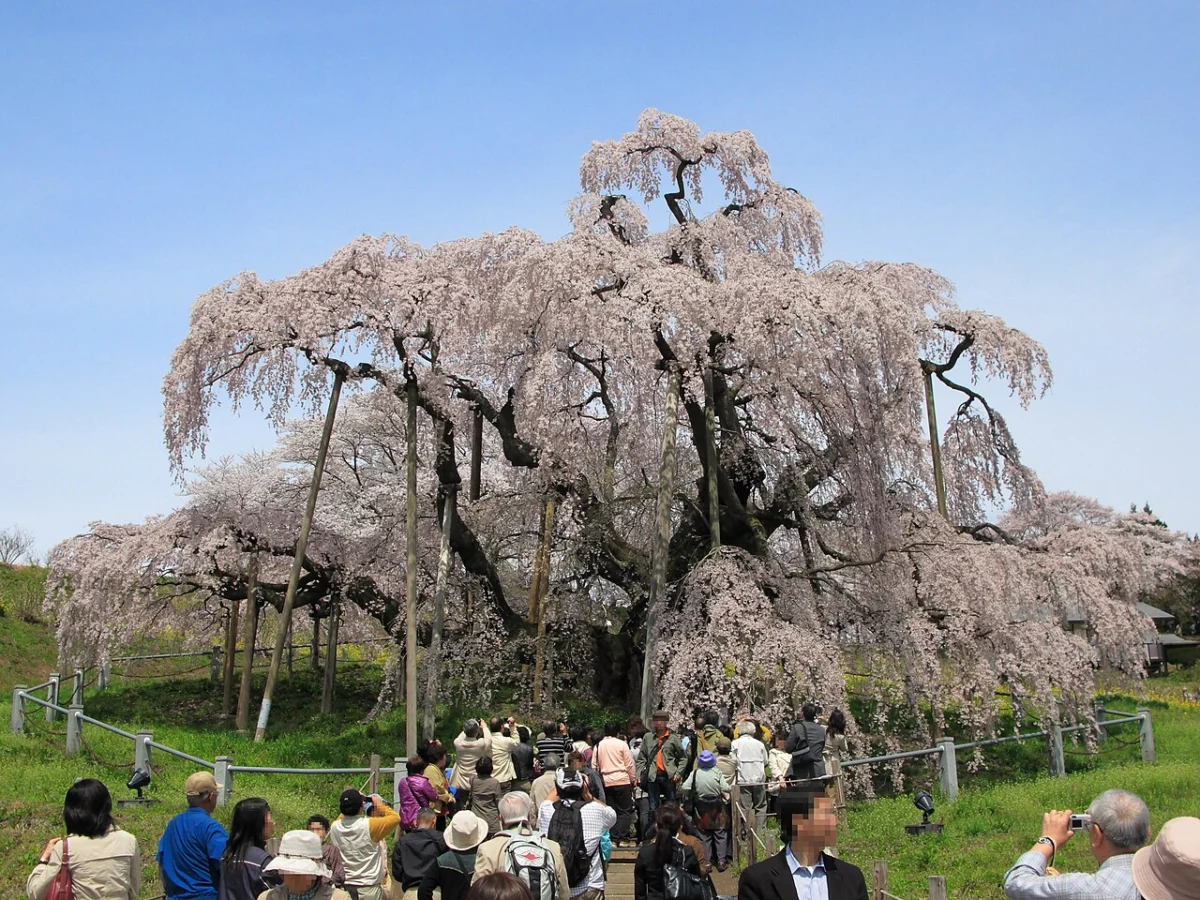
Every spring, when the cherry blossoms of Tokyo have long since fallen to the pavement, a quiet transformation occurs in the rural hills of Fukushima Prefecture. As the Somei-yoshino—the iconic, pale-pink cherry variety that defines the Japanese spring—fades into memory, another giant awakens. Deep in the heart of Miharu, a singular, colossal tree known as the Miharu Takizakura begins its ten-day performance, drawing nearly 200,000 pilgrims to witness what is arguably the most magnificent natural spectacle in Japan.
This is not a forest, nor a park, nor a curated garden. It is a single, 1,000-year-old Prunus pendula cultivar—the "Waterfall Cherry"—that stands as a living testament to time, resilience, and the profound intersection of nature and Japanese cultural identity.
Main Facts: The Anatomy of a Legend
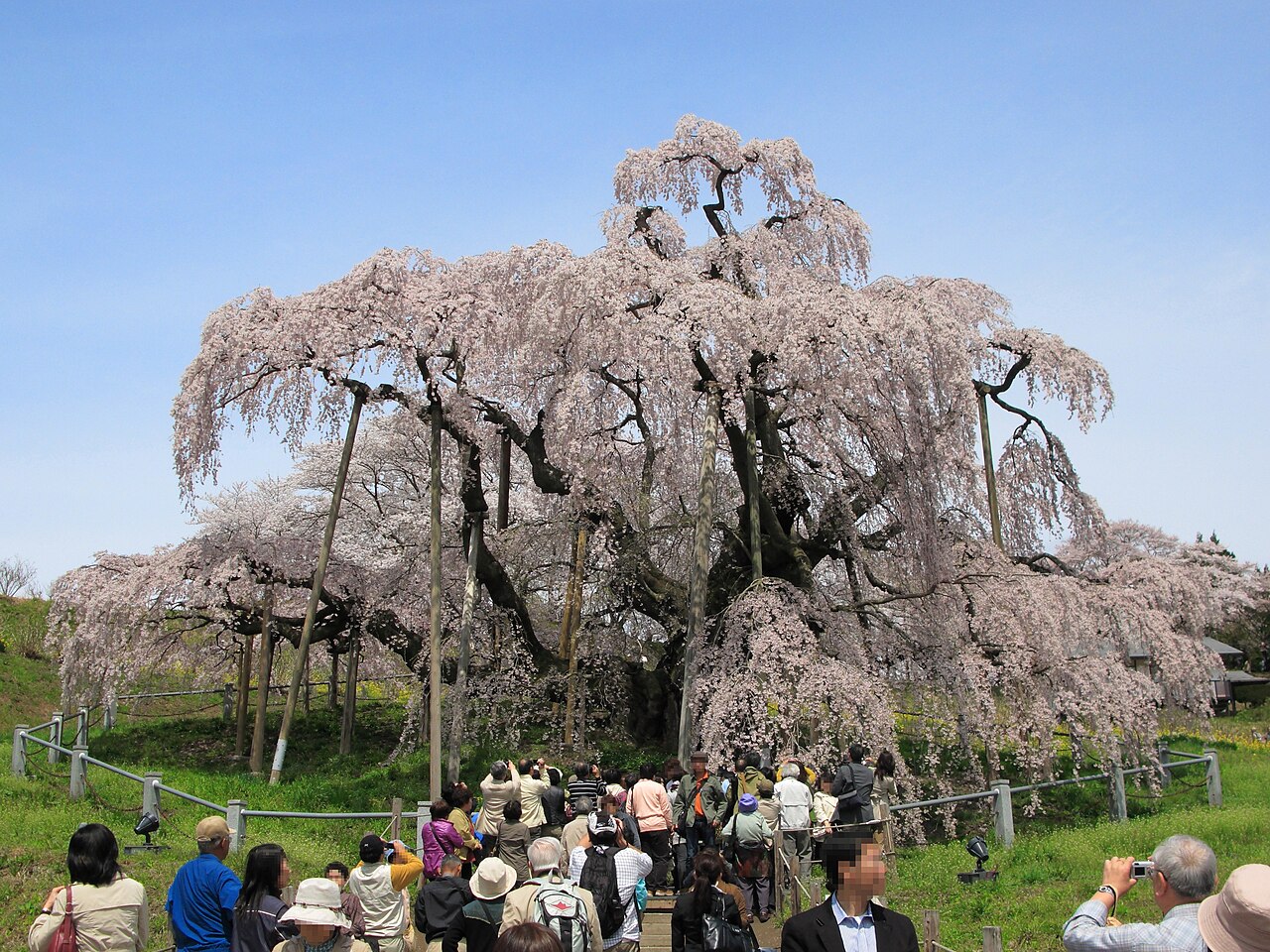
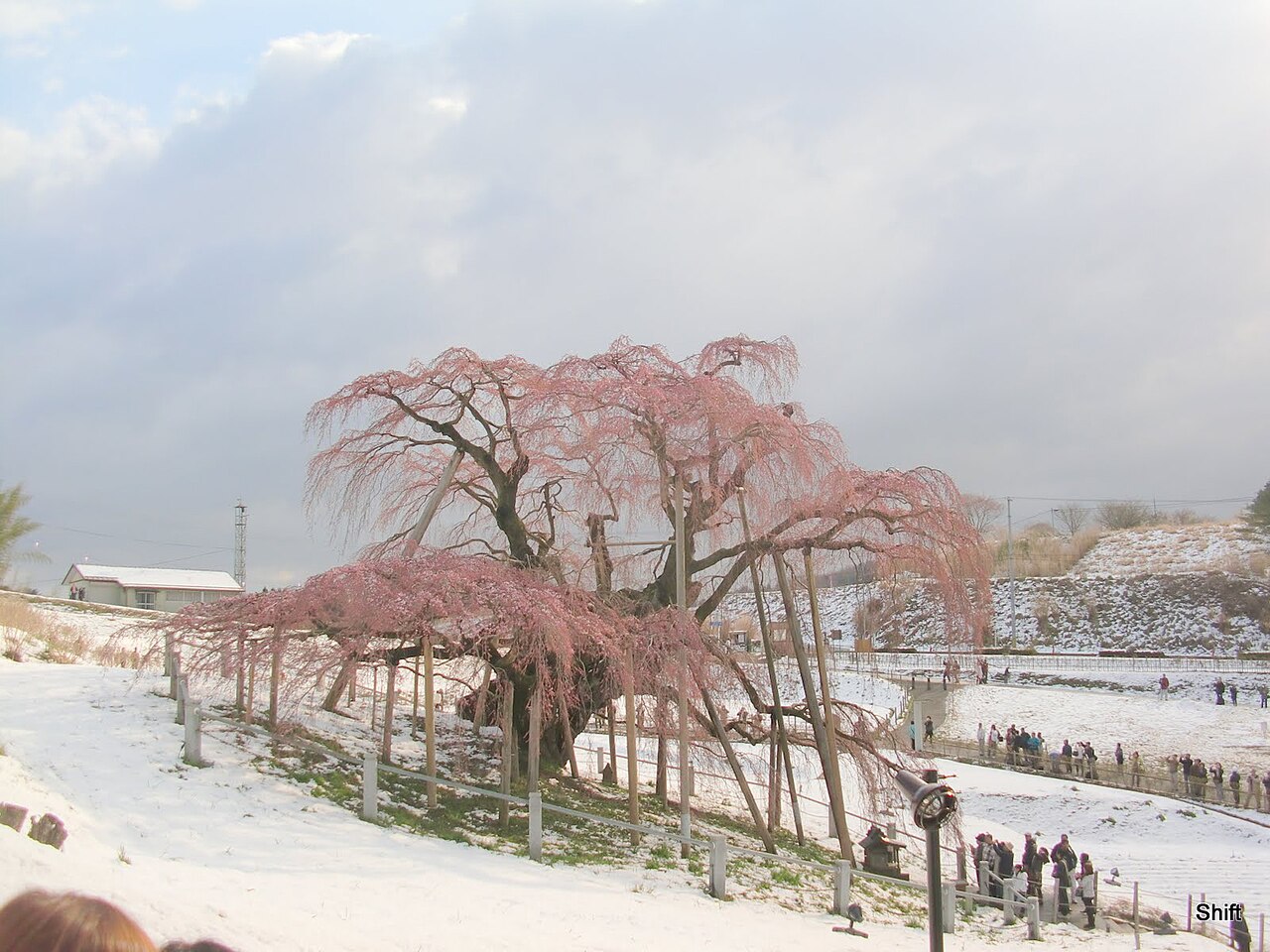
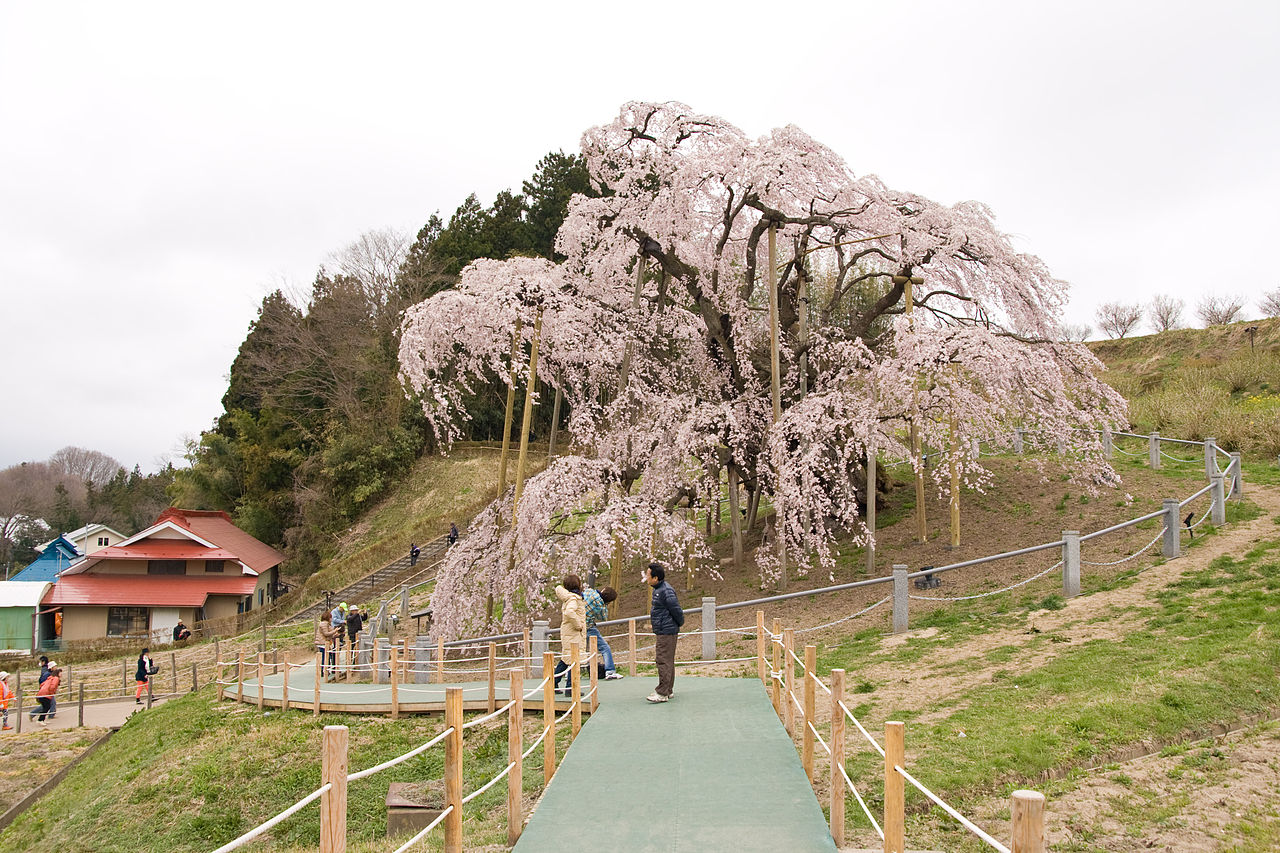
The Miharu Takizakura is not merely a tree; it is an architectural marvel of biology. Standing 13.5 meters tall, its presence is defined by its massive, cascading canopy. Unlike the upright, cloned trees found in urban centers, the Takizakura is a beni-shidare (red-weeping) cherry. Its branches do not reach for the sky; they weep toward the earth, creating a pink curtain of blossoms that spans nearly 15 meters in width.
- Estimated Age: Over 1,000 years.
- Trunk Circumference: 8.1 meters at chest height (roughly the footprint of a studio apartment).
- Status: Designated a National Natural Monument of Japan (October 12, 1922).
- Peak Window: Generally mid-to-late April (highly weather-dependent).
- The "Three Great Trees": It is ranked alongside the Usuzumi-zakura (Gifu) and the Yamataka Jindai-zakura (Yamanashi).
The tree’s asymmetry tells a story of survival. For forty human generations, it has leaned into the sunlight and braced against the winds of the Abukuma mountains, resulting in a structural lean that requires specialized support poles, installed in the 1970s to ensure its continued health.
Chronology: A Thousand Years of History
The history of the Takizakura is inextricably linked to the history of the Miharu domain. Protected as an oya-boku (official tree) by the local feudal lords during the Edo period, the tree was never a mere curiosity; it was a symbol of the land’s enduring vitality.
- The Edo Era (1603–1868): The tree was already a local landmark, celebrated in poetry by figures like Kamo no Suetaka, who famously wrote of the tree’s blossoms "reaching to every corner of Oshu."
- The Modern Era (1922): The Japanese government officially designated it a National Natural Monument, cementing its status as a national treasure.
- The 2011 Crisis: Following the Great East Japan Earthquake and the Fukushima Daiichi nuclear accident, the tree became a symbol of regional hope. Despite the proximity of the incident, the tree remained untouched by radiation, and the town of Miharu remained outside the evacuation zones. Since 2011, it has served as a poignant beacon for the region’s recovery.
Supporting Data: Understanding the "Waterfall" Phenomenon
To understand the Takizakura, one must understand the difference between it and the common Somei-yoshino. The Somei-yoshino is a genetic clone, designed for the rapid, uniform beauty of city parks, with a lifespan typically capped at 80 years. The beni-shidare, by contrast, is grown from seed. It is a "wild" child of nature, capable of living for a millennium.
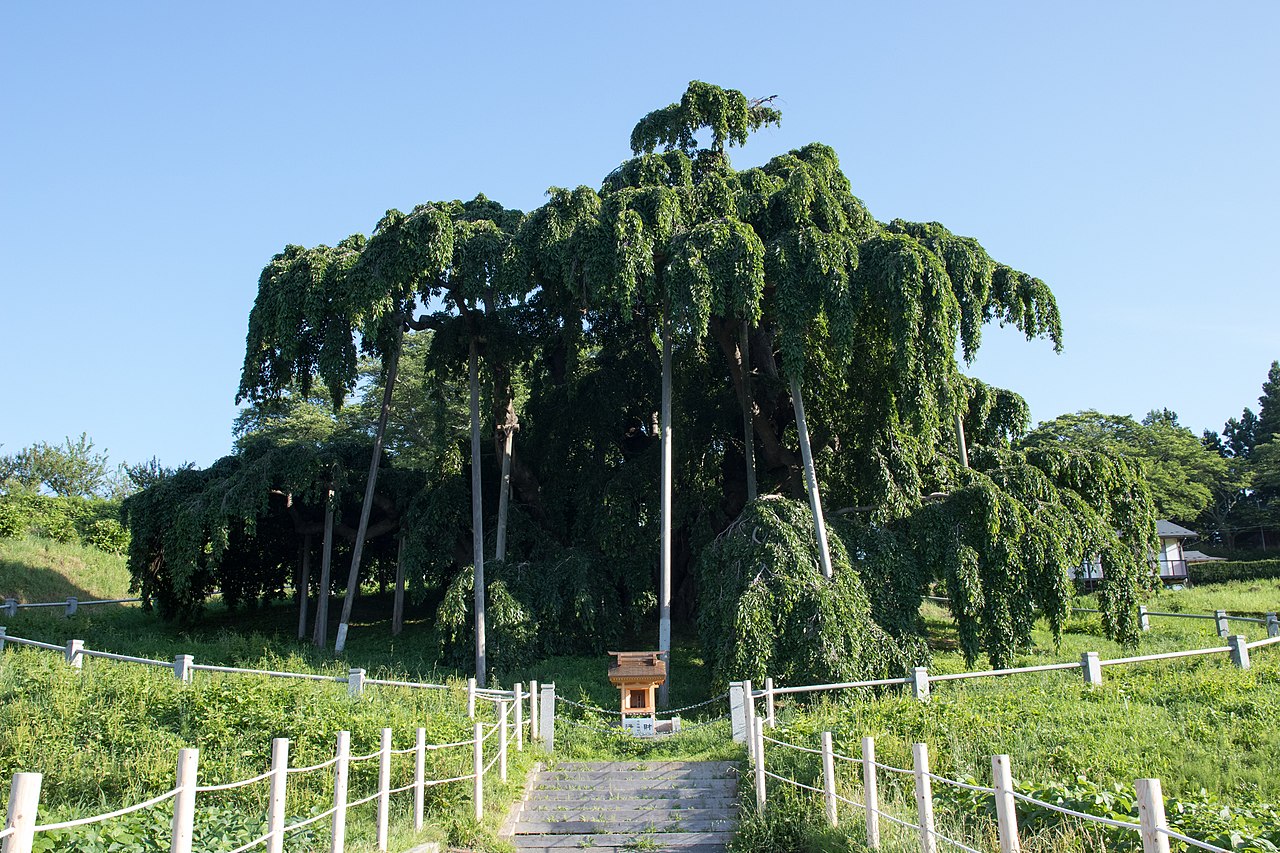
The asymmetry of the Takizakura provides raw data for dendrologists. Its root spread (11.3 meters) and branch distribution—stretching 14.5 meters south versus only 5.5 meters north—demonstrate the tree’s biological response to centuries of topographic and meteorological pressures.
For the modern traveler, this data translates into a "viewing strategy." Visitors who merely walk the path once miss the nuance. The tree changes shape every ten steps. The east side offers softer morning light, while the south side provides the "classic" view that has defined the tree’s iconography for decades.
Official Responses and Conservation Efforts
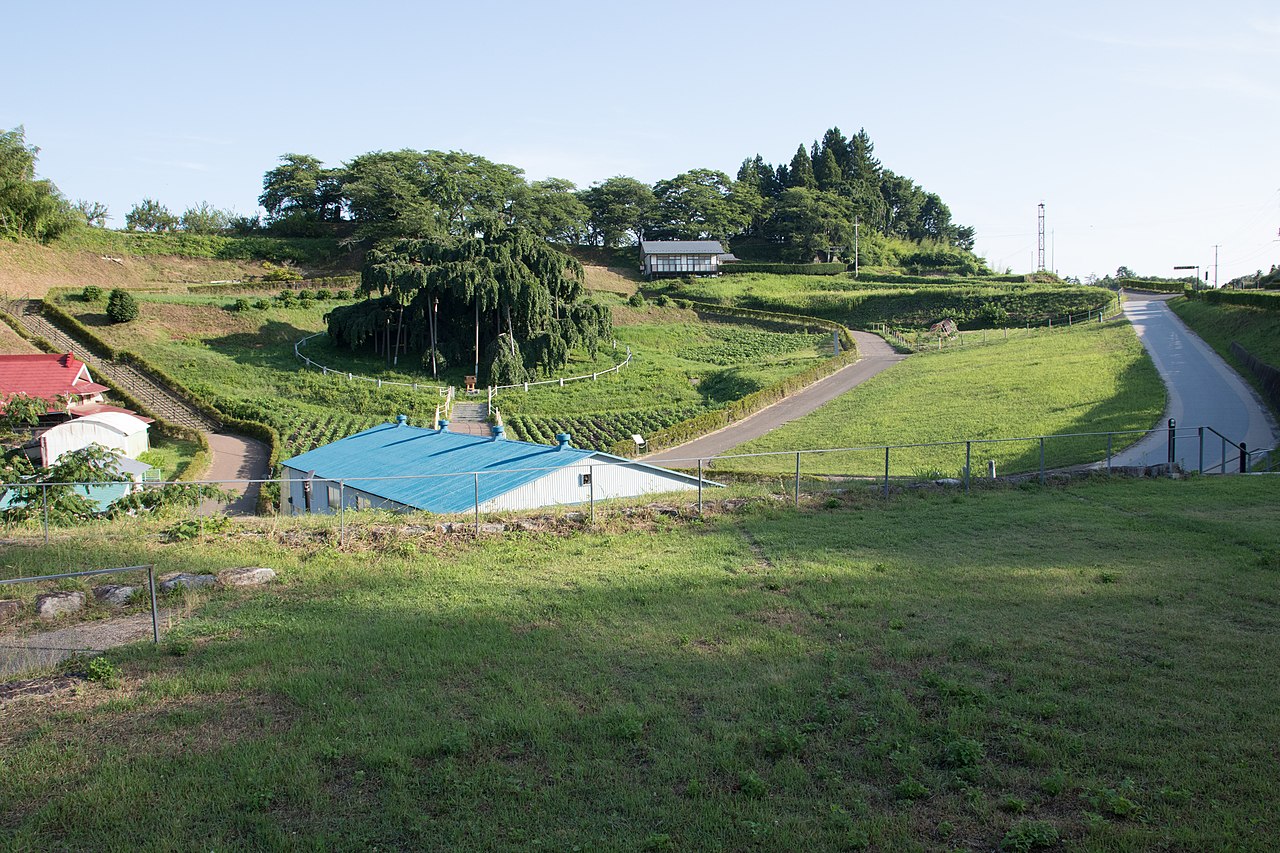
The management of the Miharu Takizakura is a masterclass in delicate preservation. The Miharu Tourism Association maintains the site not as a theme park, but as a sanctuary.
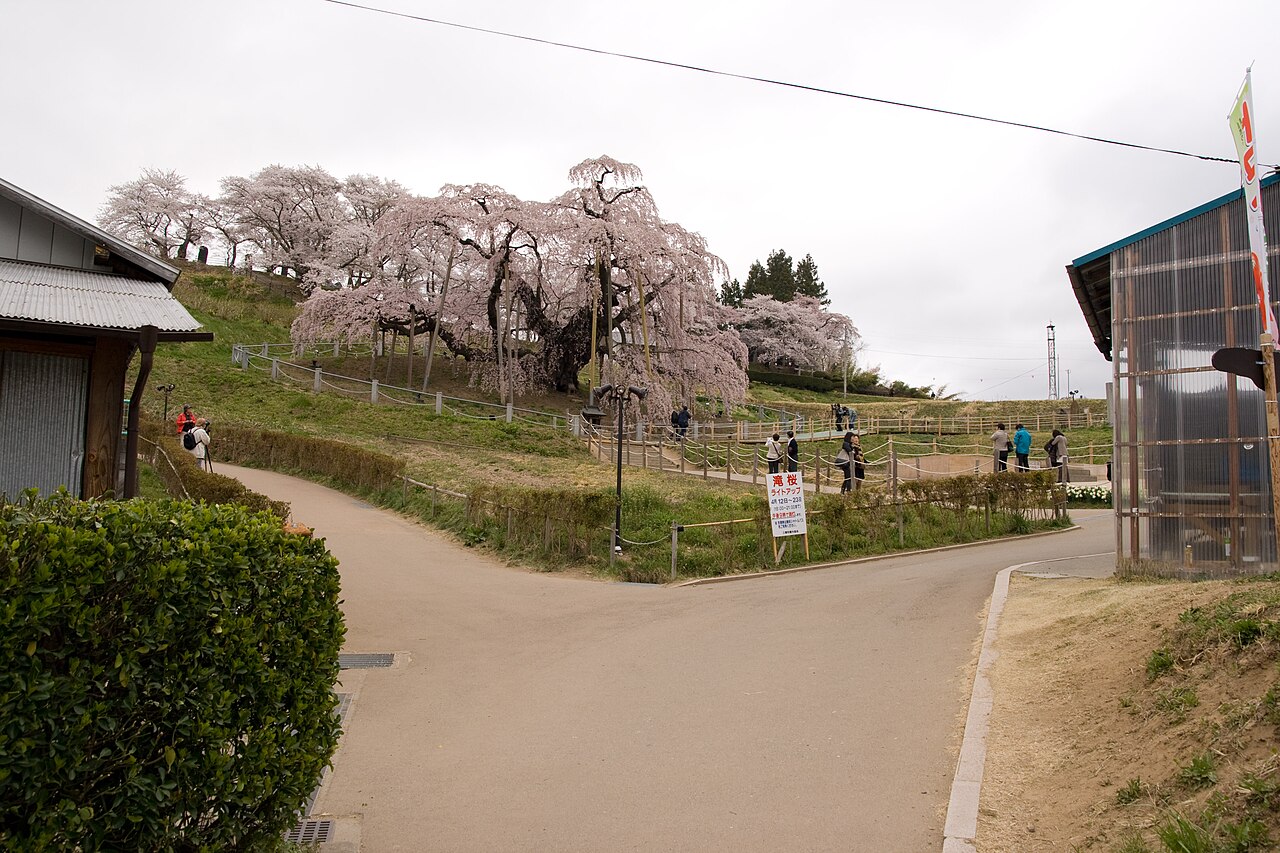
- The Viewing Path: The area is strictly managed with a one-way, clockwise flow to prevent soil compaction and protect the delicate root system.
- The Support System: Because the tree’s branches have become too heavy for its ancient trunk, a sophisticated system of timber supports has been integrated into the landscape. These are not eyesores, but essential crutches that allow the tree to continue its annual bloom.
- Monitoring: The town government oversees constant monitoring of soil health and pest control, ensuring that the beni-shidare cultivar remains free from the diseases that often plague older specimens.
Implications: The Ethics of the Pilgrimage
Visiting the Takizakura in the modern age carries certain ethical and logistical implications. With 200,000 visitors converging in a narrow ten-day window, the "pilgrimage" requires careful planning.
The Timing Problem
The bloom is not a fixed date on a calendar; it is a moving target. In warm springs, it may peak as early as April 10; in cold years, it may hold until the 25th. The implication for the traveler is clear: flexibility is mandatory. Those who book fixed, non-refundable travel plans months in advance risk arriving to find only bare branches or, conversely, petals already falling. The most successful visitors utilize the daily updates provided by the Miharu Tourism Association and maintain a "buffer" in their itineraries.
The Night Illumination Experience
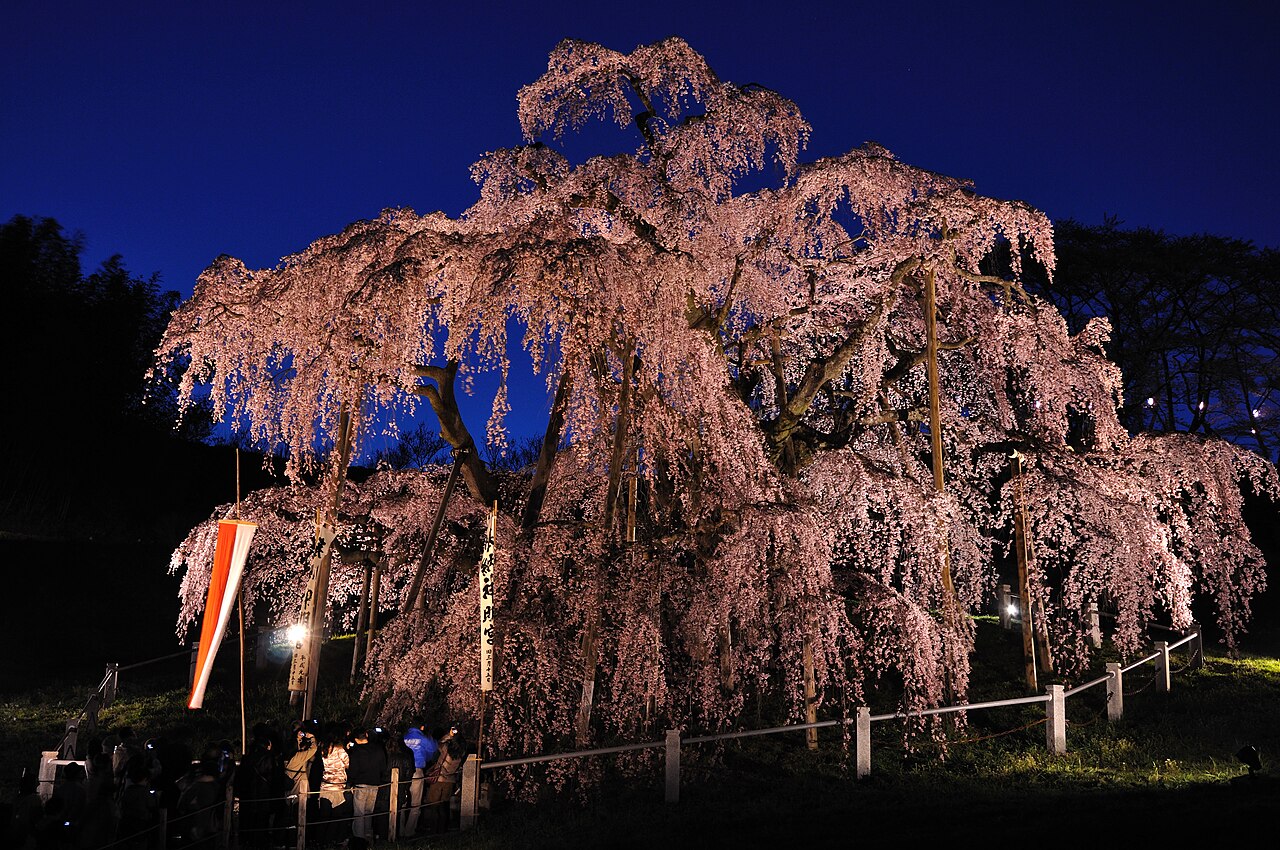
Perhaps the most significant implication for the visitor is the decision to stay for the night light-up. Most tour buses depart by 17:00, leaving the site to independent travelers. As dusk falls, the artificial lighting—placed strategically behind the tree—transforms the blossoms. They shift from a daytime pink to a radiant, molten gold. This is when the "Waterfall" moniker truly makes sense, as the light cascades down the branches in a way that feels almost otherworldly.
Regional Recovery and Education
For those concerned about the 2011 aftermath, the proximity to Commutan Fukushima is an essential stop. This educational center provides a transparent, scientifically backed account of the recovery effort. Visiting the Takizakura is often a way for travelers to support the local economy of a region that has worked tirelessly to redefine itself since 2011.
Strategic Advice for the Modern Traveler
If you are planning to make the journey, consider these three pillars of success:
- Prioritize the Off-Peak: The car parks fill by 09:30 on weekends. To see the tree in its true majesty—free from the density of the tour buses—arrive at 06:00 or wait for the evening light-up.
- Use Koriyama as your Base: Do not attempt to stay in Miharu, where inventory is negligible. Koriyama is the transit hub, providing a twelve-minute rail link to the site and the necessary infrastructure for dining and accommodation.
- Explore the "Sakura-Meguri": The Takizakura is the headline, but it is not the only story. Miharu is home to nearly forty other significant cherry trees. By utilizing the sakura-meguri map provided at the station, a traveler can turn a single-tree visit into a comprehensive tour of Tohoku’s floral heritage.
Conclusion: Is it Worth the Effort?
A thousand-year-old cherry tree is a singular encounter with the concept of mono no aware—the Japanese appreciation for the transience of life. The Takizakura is not an easy destination. It requires travel, weather-watching, and patience. Yet, when you stand at the base of that massive, weeping column of light and see the blossoms swaying in the cool mountain breeze, the logistics vanish.
The Miharu Takizakura is not just a tree; it is a cathedral of nature. Whether you come for the photography, the history, or simply to stand in the presence of something that has witnessed a millennium of human change, the "Waterfall Cherry" remains an essential, unrepeatable experience for anyone seeking the heart of Japan.