Evan Lee Salim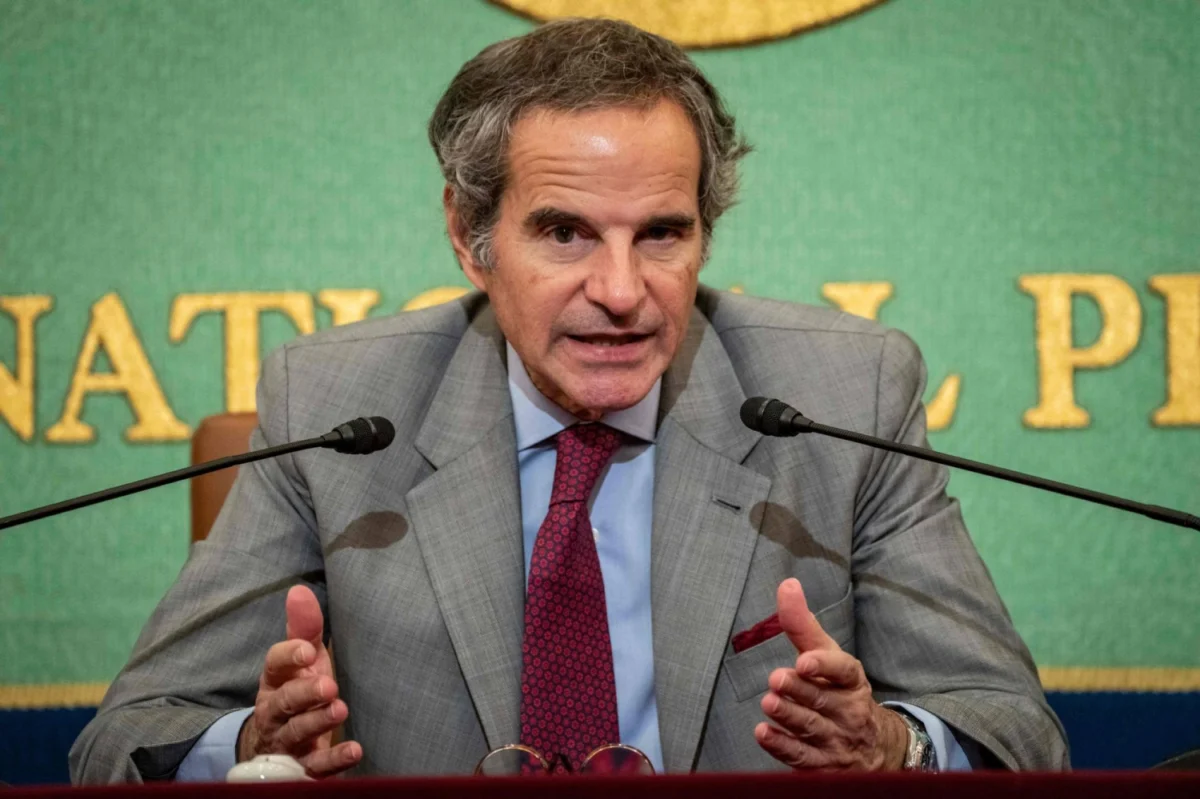
TOKYO — As the geopolitical landscape of the Middle East undergoes a volatile transformation, the International Atomic Energy Agency (IAEA) has issued a stern call for a “very strong” verification regime in Iran. Rafael Grossi, the Director General of the UN’s nuclear watchdog, emphasized on Friday that verbal assurances regarding the peaceful nature of Tehran’s nuclear program are insufficient to guarantee regional and global security.
Speaking from Japan, Grossi underscored that while the United States and Iran are navigating the complexities of potential broader agreements to stabilize the region, the opacity surrounding Iran’s atomic ambitions remains a central obstacle to long-term peace.
Main Facts: The Demand for "Very Strong" Verification
The core of Grossi’s message is a fundamental shift from diplomatic reliance to technical verification. While Iran maintains that its nuclear activities are strictly for civilian purposes—specifically for energy generation and medical research—the international community remains wary.
"I think the objective of this agreement is to ensure that there is no development of nuclear weapons in Iran," Grossi told reporters. "The government of Iran has declared quite clearly that this is not their intention. But, of course, intentions are not enough. We have to have a very strong verification system in place… as soon as is practicable."
The IAEA chief’s remarks highlight a widening gap between Tehran’s stated policy and the technical oversight required to verify that policy. The agency is currently seeking to re-establish the level of access it previously enjoyed, which would include intrusive inspections, remote monitoring, and real-time data collection on uranium enrichment activities.
Chronology: A Timeline of Strained Relations
The relationship between the IAEA and the Islamic Republic has been marked by periodic cooperation followed by abrupt obstructionism. To understand the current impasse, one must look at the recent trajectory of events:
1. The Pre-2021 Era of Compliance
For years, the Joint Comprehensive Plan of Action (JCPOA) provided a framework for IAEA inspectors to monitor Iranian facilities. However, the 2018 withdrawal of the United States from the agreement triggered a steady degradation of compliance.
2. The 12-Day Conflict and Legislative Backlash
In the wake of a 12-day conflict between Israel and Hamas last year, the Iranian parliament (Majlis) passed legislation that significantly restricted the IAEA’s oversight capabilities. This law, which took effect in July of the previous year, led to the suspension of the "Additional Protocol"—a set of measures that granted the IAEA enhanced access to Iranian nuclear sites.
3. The Preliminary U.S.-Iran Negotiations
Following the most recent flare-up in Middle East tensions, indirect negotiations between Washington and Tehran have resumed. These talks aim to prevent further escalation and address the nuclear file, which many analysts view as the ultimate "sword of Damocles" hanging over the region.
4. The Current State of Play
Grossi acknowledged that while dialogue has resumed, progress is in its infancy. The IAEA has "barely initiated" discussions regarding the handling of Iran’s existing uranium stockpile, which has reached enrichment levels that alarm Western intelligence agencies.
Supporting Data: The Uranium Enrichment Dilemma
The urgency behind Grossi’s demand for verification is rooted in technical data. Iran has continued to enrich uranium to levels that exceed the requirements for civilian power generation.
- Uranium Stockpiles: Iran has successfully produced uranium enriched to 20% and, in some instances, near-60% purity. While 90% is typically cited as the threshold for weapons-grade material, the jump from 60% to 90% is a relatively short technical hurdle.
- Monitoring Gaps: Since July, the IAEA has lost access to footage from surveillance cameras installed at nuclear sites. This has created a "blind spot" in the agency’s understanding of Iran’s centrifugal production and inventory management.
- The "Breakout Time" Metric: Analysts frequently refer to "breakout time"—the duration required for a country to produce enough fissile material for a single nuclear device. Current estimates suggest that if Iran were to choose to weaponize, the time required would be counted in weeks or even days, a significant departure from the year-long lead time envisioned under the original 2015 JCPOA.
Official Responses: A Clash of Narratives
The diplomatic discourse surrounding the nuclear file remains bifurcated.
Tehran’s Position
Iran’s official stance remains defiant. The Ministry of Foreign Affairs in Tehran has consistently argued that its nuclear program is a matter of national sovereignty. Iranian officials frequently point to the "civilian right" to nuclear energy enshrined in the Non-Proliferation Treaty (NPT). Tehran maintains that the IAEA’s demands for enhanced access are politically motivated and intended to cripple their technological advancement.
The Western Perspective
The United States, along with the E3 (France, Germany, and the United Kingdom), maintains that Iran’s accumulation of enriched uranium serves no credible civilian purpose at this scale. Western diplomats emphasize that the primary objective of current talks is to freeze Iran’s nuclear progress to prevent a regional arms race, particularly as neighboring states observe these developments with growing apprehension.
The IAEA’s Neutral Stance
The IAEA occupies the precarious middle ground. Director General Grossi’s role is that of a technical auditor. By demanding "very strong" verification, he is signaling that the agency will not be satisfied with the status quo, nor will it act as a rubber stamp for a political deal that lacks robust, verifiable technical guarantees.
Implications: A Region on the Precipice
The implications of failing to implement a rigorous verification system are profound.
1. The Risk of Regional Proliferation
If Iran crosses the nuclear threshold, neighboring nations, including Saudi Arabia and Turkey, have signaled that they may feel compelled to pursue their own nuclear capabilities. This would end the decades-old status quo of nuclear non-proliferation in the Middle East, leading to a "multipolar" nuclear environment that is significantly harder to manage than the current one.
2. Global Economic Stability
The Middle East remains the heart of global energy production. Any escalation in conflict, particularly one fueled by nuclear brinkmanship, would cause catastrophic volatility in oil and gas markets. Global supply chains, already strained by recent conflicts, would likely face severe disruptions.
3. The Future of the IAEA
The credibility of the international non-proliferation regime is at stake. If the IAEA cannot verify the peaceful nature of a nuclear program despite having access, the entire framework of the NPT could be called into question. Grossi is aware that his legacy, and the future of the agency, depends on his ability to force transparency in Tehran.
Conclusion: The Path Forward
As the international community awaits the next round of talks, the message from the IAEA is clear: transparency is not a negotiable commodity. While political leaders in Washington and Tehran may seek a path toward de-escalation, the technical reality of the nuclear fuel cycle requires constant, intrusive, and verifiable oversight.
"Initial conversations have taken place," Grossi noted, regarding the recent talks. "We expect this work to pick up soon." Whether that work leads to a durable containment of Iran’s nuclear ambitions or merely provides a temporary reprieve remains to be seen. For now, the world remains in a holding pattern, waiting to see if diplomacy can succeed where technical verification has stalled.
The task ahead is monumental: crafting a deal that respects Iran’s sovereignty while providing the global community with the absolute certainty that the "intentions" of today do not become the weapons of tomorrow. As Grossi aptly demonstrated, in the world of nuclear non-proliferation, trust is not a substitute for verification.


 Neng Nana
 Asro
Asro