Ammar Sabilarrohman
It has been five years since Eric "ConcernedApe" Barone first teased the world with the concept of Haunted Chocolatier. Since that initial announcement, the gaming community has watched with a mix of eager anticipation and patient restraint. While Barone’s primary focus remained on refining Stardew Valley—transforming a humble farming simulator into a cultural juggernaut that currently stands as a titan of the indie genre—the specter of his next project has continued to loom, promising a deeper, more atmospheric, and arguably more complex experience than its predecessor.
In his latest development update, Barone has offered a rare glimpse into the meticulous, often grueling design philosophy that defines his workflow. For fans waiting for a release date, the news is a familiar refrain: the game is coming, but it will not be rushed. For Barone, Haunted Chocolatier is not just a game; it is a labor of obsession where "good enough" is never the objective.
The Genesis and Evolution: A Chronology of Development
The journey to Haunted Chocolatier began in the wake of Stardew Valley’s monumental success. After years of post-launch support, free content updates, and a successful transition to self-publishing, Barone was ready to pivot.
- October 2021: The world was first introduced to the project via a reveal trailer. The aesthetic—darker, more whimsical, and centered around a chocolatier running a shop in a haunted castle—immediately captured the imagination of the public.
- 2022–2024: During these years, Barone’s public presence shifted toward the "1.6" update for Stardew Valley. This massive undertaking occupied the vast majority of his time, proving that he is a developer who refuses to abandon his existing community while building the next dream.
- 2025–2026: As the dust settled on Stardew Valley’s final major patches, the focus moved back to the laboratory. Recent blog posts from Barone confirm that the project has transitioned from a proof-of-concept phase into the dense, detail-oriented work of building systems and UI.
The chronology of this development cycle is a testament to the "solo developer" model. Unlike major studios that can throw hundreds of artists and programmers at a problem, Barone is the sole architect of this world. Every ghost, every ingredient, and every line of UI code flows through him, a bottleneck that he defends as a necessity for maintaining his specific creative vision.
The Philosophy of "Seamless Perfection"
In his recent blog post, titled "Still Here, Still Grinding," Barone addressed the elephant in the room: the time elapsed since the project’s inception.
"I know it’s taking a long time," he writes. "A big part of that is that I am being very thoughtful about every aspect of the game. The things in the game which the player will be interacting with or using very often need to be ‘perfect.’ They need to be seamless, clear, intuitive, satisfying, aesthetic."
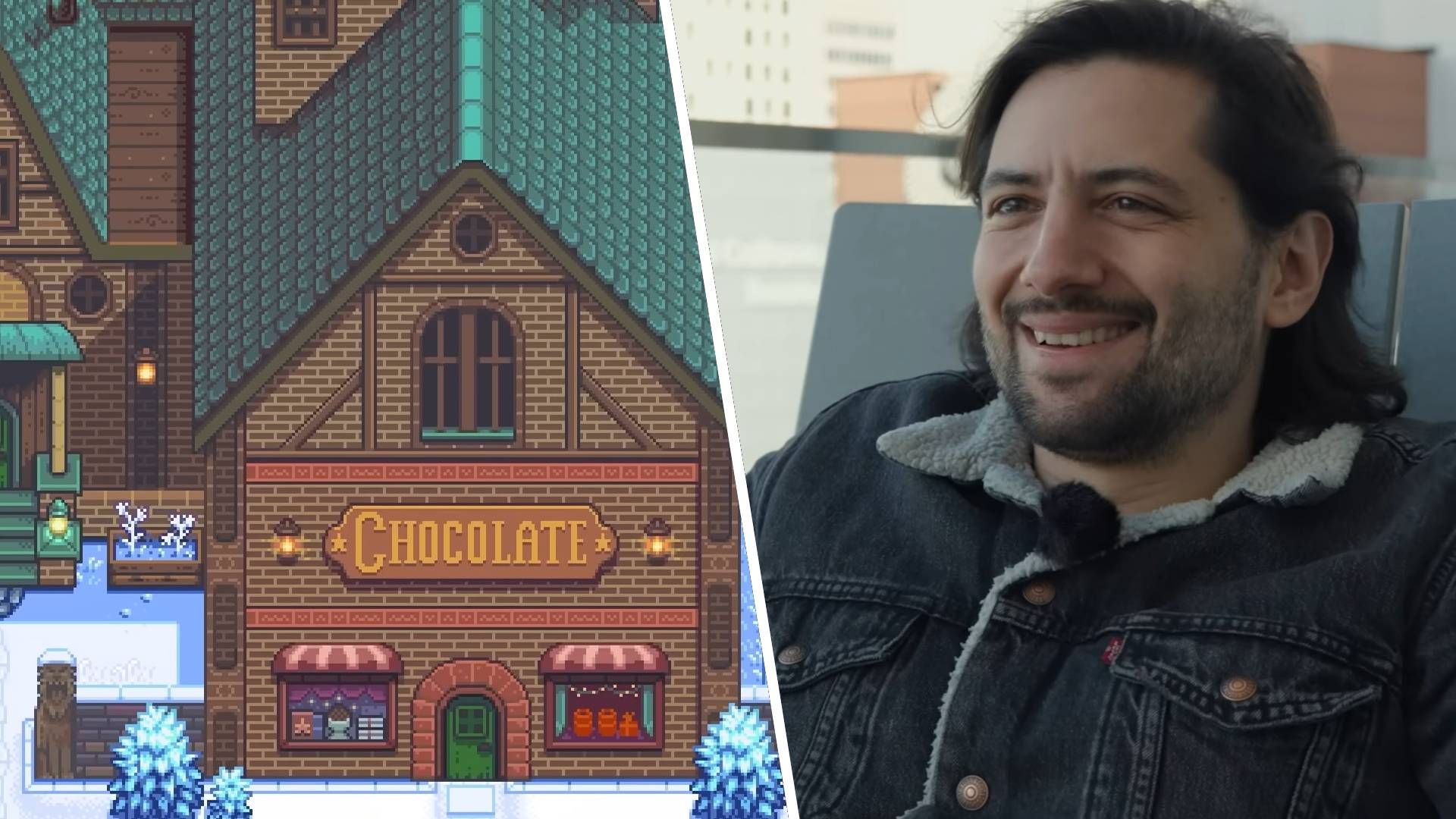
This statement highlights the central challenge of modern game design. In an era where many titles launch in a "functional" but unpolished state, relying on day-one patches to fix glaring usability issues, Barone is taking the opposite approach. He is prioritizing the "feel" of the game—what developers often call "game feel" or "juice"—before the content is even finalized.
The UI: A Case Study in Minimalist Complexity
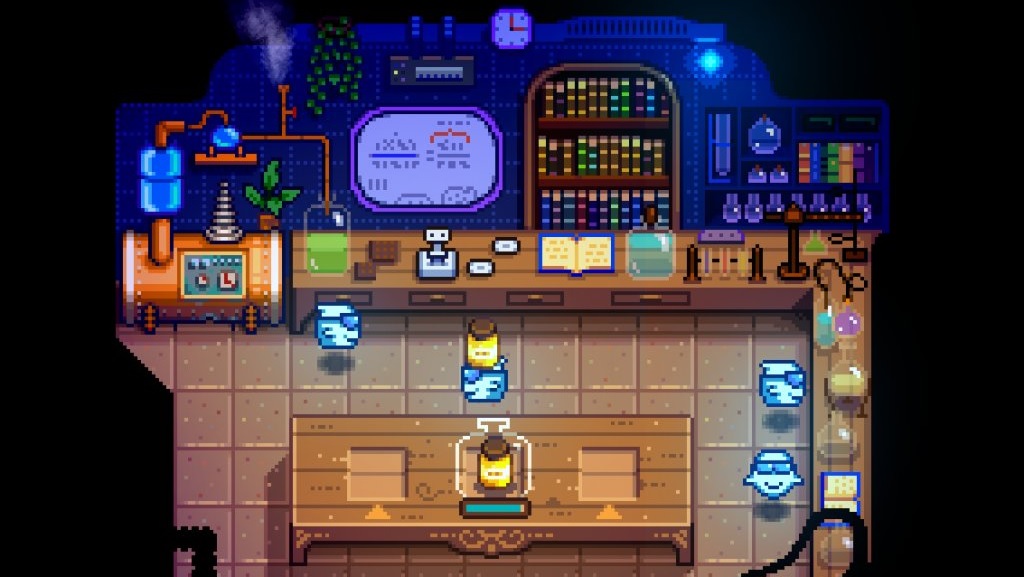
One of the most revealing aspects of his update involves his iterative process regarding the game’s "recipe book." To the uninitiated, a menu screen is a utilitarian necessity. To Barone, it is the bridge between the player and the game’s core loop.
"I’ve been revisiting the recipe book for making chocolates," Barone explains. "As with many things in the game, I’ve iterated on this many times, each time bringing it closer to its final form. To me, it’s not a simple task, as I torture myself over every last detail. This is a UI you will be using fairly often, so it has to be perfect."
He outlines a set of strict criteria for this interface:
- Efficiency: The player must be able to achieve their goal with the fewest possible clicks.
- Data Density: Striking a balance where the information is helpful but not overwhelming.
- Visual Hierarchy: Avoiding "disgusting" clutter by using intuitive, clear groupings.
This level of scrutiny is exactly what made Stardew Valley so successful. When a player clicks on a chest or checks their backpack in Stardew, they don’t think about the UI—they simply act. By striving for that same level of invisibility in Haunted Chocolatier, Barone is ensuring that the game remains accessible while potentially supporting significantly deeper mechanics than its predecessor.
Scaling Up: A More Ambitious Project
Perhaps the most exciting, and daunting, admission from Barone is that Haunted Chocolatier is inherently larger than Stardew Valley. While he has been careful not to promise a game of infinite scale, the implications of his comments suggest a broader scope.
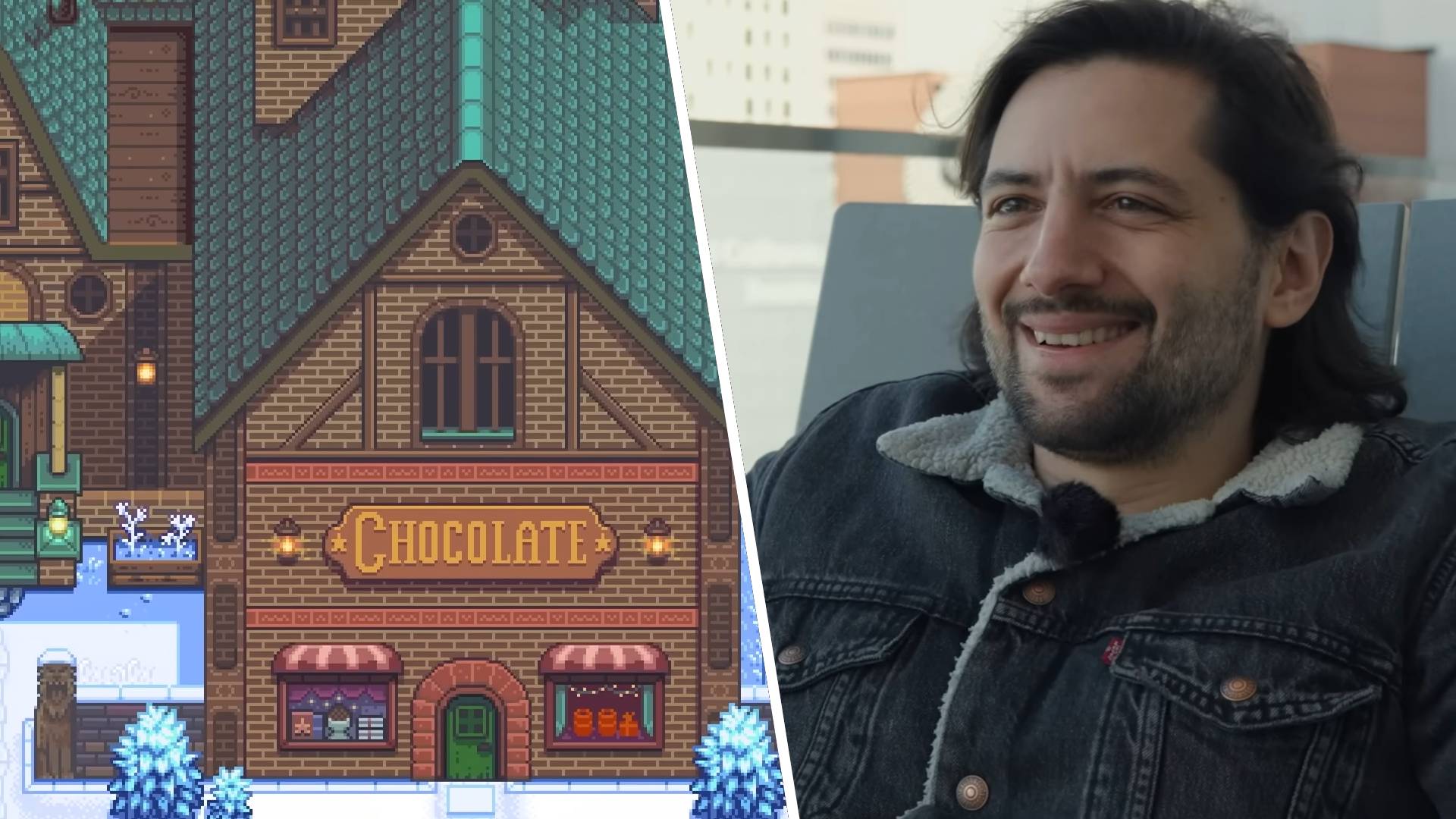
Whether it is a larger world map, a more complex web of character relationships, or more intricate crafting systems, the game is being built as a "bigger project" than the 2016 launch version of Stardew Valley. This scaling up brings with it a geometric increase in the number of variables to balance. In a small game, changing one item’s value has a linear effect. In a large game, that change can ripple through the entire economy and narrative structure.
Barone is currently in the thick of this complexity. He isn’t just coding a game; he is weaving a tapestry where every thread—from the ghostly inhabitants to the chocolate-making process—must hold weight.
Implications for the Industry and the Player
The slow-burn development of Haunted Chocolatier serves as a counter-narrative to the "live service" industry, where games are pushed out to meet quarterly earnings calls and then "fixed" over time.
For the Player: A Lesson in Patience
The gaming community has, by and large, responded to these updates with a surprising amount of grace. There is a palpable trust between Barone and his audience. Because Stardew Valley was delivered with such integrity, fans are willing to grant him the time he needs to repeat that magic. There is a collective understanding that a rushed Haunted Chocolatier would be a tragedy—a dilution of a singular creative voice.
For the Industry: The Solo Developer’s Blueprint
Barone’s process is a masterclass in independent development. He proves that a developer does not need to compromise their vision for the sake of a release window. By maintaining control over every pixel, he ensures that the game’s identity remains unpolluted by the "design by committee" approach that often plagues AAA titles.
However, this also highlights a danger: the burnout of the singular creator. Barone’s "torture" over UI details is the hallmark of an artist who cares deeply, but it is also an unsustainable workload for most. The fact that he continues to iterate speaks to his unique capacity for hyper-focus, but it also raises questions about the future of indie development as expectations for content and polish continue to rise.
Conclusion: The Quiet Art of Waiting
As we look toward the future, the prospect of Haunted Chocolatier remains one of the most enticing prospects in gaming. We are waiting for a game that doesn’t just promise to be "a simulator," but one that promises to be "delightful."
Barone’s insistence on iterating until he is satisfied is the best guarantee we have that the game will stand the test of time. In his own words, "It’s a big game, so there are many things for me to fuss over. But, this is what it will take to make a game I’m satisfied with."
For those of us on the outside, the message is clear: the chocolate shop is still under construction, the recipes are being perfected, and the ghosts are still being taught their roles. And for a game with this much heart, waiting is the smallest price we can pay. We will be here, watching and waiting, until the doors finally open.


 Asro
Asro
 Muslim