

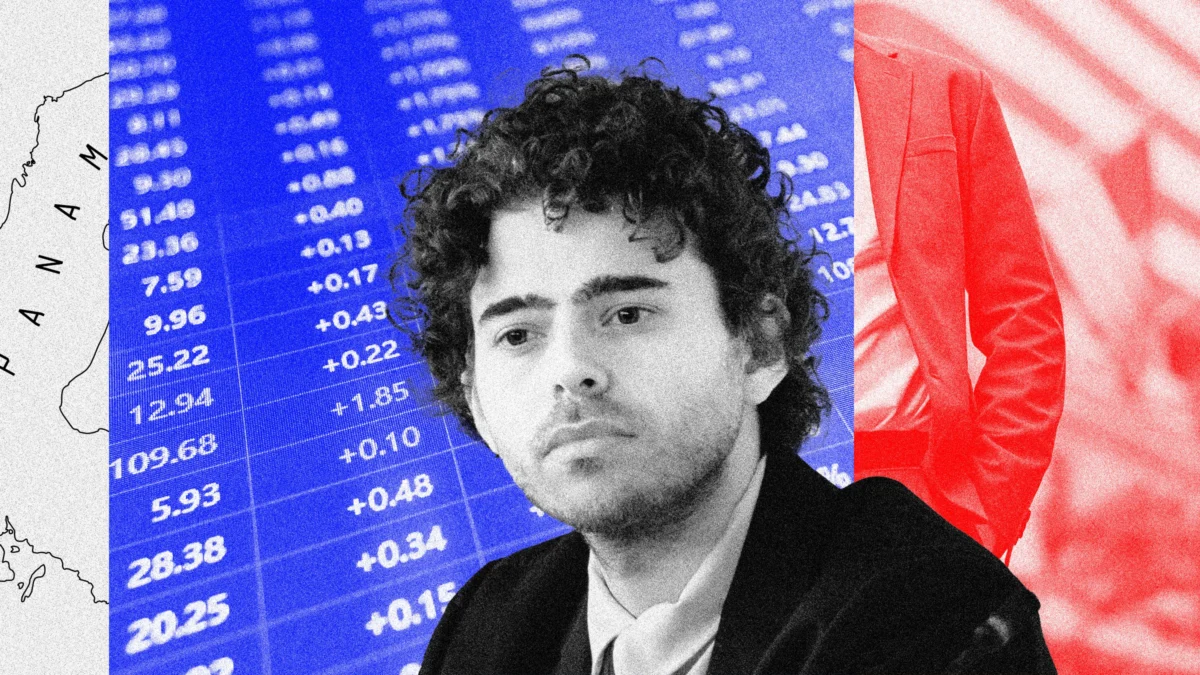
Polymarket has become the central nervous system of global political speculation, a platform where billions of dollars are wagered on everything from presidential outcomes to the minutiae of geopolitical conflict. Yet, for a company that prides itself on the "wisdom of the crowds" and the transparency of blockchain technology, its own corporate structure remains shrouded in a labyrinth of offshore entities, regulatory settlements, and questionable operational practices.
As the platform faces renewed scrutiny from federal investigators and intense public backlash over its marketing ethics, the story of its Panama-based subsidiary, Adventure One QSS, has emerged as a focal point. What was intended to be a regulatory firewall to comply with US law appears, according to internal accounts, to be a ghost office, with its primary "offshore" workforce operating in plain sight from Manhattan.
Main Facts: A Tale of Two Jurisdictions
At the heart of the controversy is a bifurcated corporate structure designed to navigate the restrictive waters of the Commodity Futures Trading Commission (CFTC). In 2022, following a $1.4 million settlement for operating an unlicensed derivatives exchange, Polymarket was forced to "wind down" its US-facing operations.
To bypass the resulting ban on US customers, the company established Adventure One QSS in Panama. The entity was presented as an independent, offshore operator capable of managing the platform’s international flagship services. Simultaneously, a new entity, Polymarket US, was established in 2025 under the oversight of QCX LLC to serve the domestic market legally.
However, the reality of this separation appears to be a mere administrative fiction. Former employees reveal that the "Panamanian" staff consisted largely of individuals working from New York City, often sitting in the same headquarters as their counterparts at the US-licensed arm. The physical headquarters in Panama City, according to reports by NPR, has been found empty, with no evidence of the operational staff necessary to run a global derivatives exchange.
Chronology of a Regulatory Tightrope
2021: The Genesis of the Offshore Strategy
Polymarket incorporates Adventure One QSS in Panama. Incorporation documents initially name local residents—including lawyer Mario Ernesto García de Paredes as the "resident agent" and Diana Munoz as president—to provide the necessary local presence.
2022: The CFTC Crackdown
The CFTC finds that Polymarket, operating under the entity Blockratize, violated the Commodity Exchange Act. The settlement mandates that the company stop serving US customers and pay a $1.4 million fine. The company pivots, positioning Adventure One QSS as its primary international vehicle.
2025: Regulatory Shift and Re-entry
The landscape for cryptocurrency and prediction markets undergoes a dramatic transformation. Following a staff letter from the CFTC that signals a more lenient approach to cross-border swap rules, the agency drops its investigation into Polymarket. Concurrently, President Donald Trump grants a pardon to Binance founder Changpeng Zhao, signaling a broader thaw in federal hostility toward crypto-native entities.
2026: The "Influencer" Backlash and Renewed Scrutiny
Internal and external reporting exposes that Polymarket executives used personal PayPal accounts to pay influencers to drive traffic. Further investigations by the Wall Street Journal reveal the use of deceptive "copycat" websites for marketing. These revelations trigger new calls for a federal probe, and sources confirm to WIRED that the CFTC has reopened its investigation into the company.
The Illusion of Offshore Compliance
The use of offshore entities is a standard, if controversial, tax and regulatory strategy. However, legal experts argue that Polymarket’s configuration crosses a line by purporting to operate from a jurisdiction where it lacks actual infrastructure.
Former CFTC trial attorney Joseph Konizeski notes that the spirit—and likely the letter—of the 2022 settlement required a bona fide relocation of operations. "That would have required them to hire new staff offshore, move their corporate infrastructure offshore, and stop accepting funds from US customers," Konizeski explains.
The fact that Adventure One QSS staff were "touching code" and managing event contracts from Manhattan offices—without any connection to the Panama-based legal residents listed in corporate filings—raises fundamental questions about the validity of their compliance. One former staffer described a chaotic, non-existent barrier between the "offshore" and "domestic" teams, noting that while the roles were ostensibly separated by entity, the workflow was entirely centralized in the United States.
Official Responses and the Regulatory Stance
Polymarket has maintained a posture of silence regarding these specific structural inquiries, declining to comment on the internal distribution of its workforce or the operational status of its Panamanian entity. The CFTC, likewise, has declined to address the specifics of the Adventure One QSS setup or whether it constitutes a violation of the 2022 settlement agreement.
While the agency has not formally accused Adventure One QSS of wrongdoing, industry experts suggest that the optics are damaging. Todd Phillips, a specialist in financial services regulation, characterizes the arrangement as "odd, even if it is legal." The concern is that the company used a regulatory loophole to continue its domestic operations under the guise of an offshore entity, effectively rendering the CFTC’s 2022 enforcement action toothless.
Implications: The Future of Prediction Markets
The implications of this corporate structure extend far beyond bureaucratic maneuvering. They speak to a broader tension between the rapid, borderless nature of decentralized finance and the slow, territorial nature of federal oversight.
1. The Shift from "Unlicensed" to "Deceptive"
Under the current administration, the CFTC has signaled a reluctance to pursue companies solely for operating unlicensed exchanges. However, this leniency comes with a caveat: the agency is increasingly focused on consumer protection. As Jack Murphy, a former CFTC enforcement trial attorney, suggests, the current investigation is likely aimed at the company’s marketing practices rather than its registration status. "The CFTC’s Enforcement Division is prioritizing investigations involving intentional misconduct and is focused on protecting retail traders," Murphy says.
2. The Credibility Crisis
The revelations regarding "fake" winning bets on affiliate marketing pages have inflicted significant damage on Polymarket’s reputation. For a platform that markets itself as a source of "truth" and an objective measure of reality, the accusation that it engineered deceptive advertisements to inflate user engagement is a existential threat. If the users—and the regulators—can no longer trust the platform’s integrity, the model of the prediction market as an "oracle" of public opinion begins to crumble.
3. The Precedent of "Shadow" Entities
The Polymarket case serves as a cautionary tale for regulators. If companies can effectively bypass US law by simply registering a shell entity in a tax-friendly jurisdiction while maintaining a full workforce in the US, the Commodity Exchange Act could become effectively unenforceable in the digital age. The CFTC’s previous actions against firms like WorldWideMarkets—which operated from New Jersey while claiming to be in the British Virgin Islands—show that the government has the tools to pierce the corporate veil if it chooses to do so.
Conclusion: A Reckoning Ahead
Polymarket stands at a crossroads. While it has successfully navigated the regulatory storm of the mid-2020s, it now faces a more precise and potentially more dangerous form of scrutiny. The "bonkers" details of its operations—from the FBI raiding its CEO’s apartment to the use of personal PayPal accounts for influencer payments—are no longer just quirks of a high-growth startup. They are symptoms of a business model that has prioritized rapid expansion and aggressive marketing over the foundational requirements of financial transparency.
As the CFTC continues its investigation, the question is no longer whether Polymarket can avoid regulation, but whether it can survive the scrutiny of its own methods. The "Panama" experiment, designed to hide the company from the reach of US law, may ironically become the mechanism by which regulators finally hold it accountable. For an organization built on the art of predicting the future, Polymarket’s own outlook has never been more uncertain.











