

In an era defined by information saturation, the ability for a brand to cut through the noise is not just an advantage—it is a survival necessity. As we navigate through 2026, the design landscape continues to pivot toward clarity, stripping away the superfluous to favor the essential. Simple, minimalist logo designs have become the definitive language of modern commerce, serving as the immediate bridge between a company’s mission and its audience’s perception.

Main Facts: The Essence of Minimalist Branding
At its core, a minimalist logo is an exercise in restraint. It relies on clean geometry, precise typography, and a deliberate absence of visual clutter. The effectiveness of these designs is rooted in cognitive psychology; the human brain processes simple shapes and coherent layouts significantly faster than complex illustrations.

For brands operating across a digital-first ecosystem—spanning responsive websites, high-density mobile application icons, physical packaging, and ephemeral social media avatars—versatility is the primary metric of success. A logo that retains its legibility when scaled down to a 16×16 pixel favicon is infinitely more valuable than an intricate illustration that loses its integrity at small sizes.

However, a common misconception persists: simplicity is often confused with ease. In reality, creating a "simple" logo is a sophisticated process of elimination. It is not about using fewer elements for the sake of minimalism; it is about distilling a brand’s entire identity into a singular, unambiguous idea. When done correctly, the logo becomes a memorable, distinct, and instantly recognizable asset that builds brand equity over time.

Chronology: The Evolution of Design Tools
The trajectory of logo design has shifted dramatically over the past decade. Historically, the process was gated by technical skill and the time required for manual drafting. Today, we exist in the age of generative intelligence, which has fundamentally altered the designer’s workflow.

- Pre-2020: The traditional era, where logo design was almost exclusively a human-led, manual process involving hand-sketching, vector manipulation in Adobe Illustrator, and intensive research phases.
- 2021–2024: The emergence of digital mockup tools revolutionized the "client-ready" phase. Designers began using sophisticated 3D rendering and mockup software to place logos in real-world contexts—on signage, stationery, and apparel—long before a final print run.
- 2025–2026: The AI revolution. We have entered a period where AI-driven platforms can generate dozens of logo iterations in seconds. These tools have democratized the ability to brainstorm layouts, color palettes, and typography, lowering the barrier to entry for startups and small business owners.
Despite these technological leaps, the fundamental objective has remained constant: to create a symbol that resonates emotionally and intellectually with the consumer.

Supporting Data: Why Simplification Wins
The push for minimalism is supported by the changing habits of the modern consumer. According to recent market analysis, brands that utilize clean, geometric, or wordmark-based logos report higher rates of brand recall.

In the 2026 design landscape, the industry is seeing a resurgence of specific styles:

- Lettermarks: Using initialisms to create memorable icons (e.g., the "S" logo designs by Graphtheory).
- Geometric Minimalism: Utilizing mathematical precision to evoke stability and trust, common in the SaaS and Fintech sectors.
- Dynamic Wordmarks: Custom typography that conveys brand personality through subtle adjustments to weight, kerning, and ligatures.
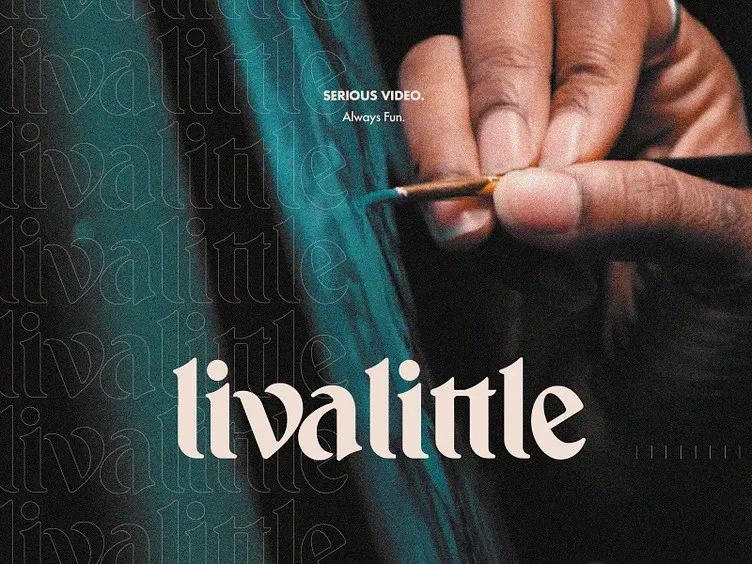
The ongoing "40+ Simplest Logo Designs" trend highlights a shift toward high-concept, low-complexity marks. Whether it is the sleek "Livalittle" logotype or the modern eco-inspired "N + Leaf" symbol, the common denominator is clarity. These designs serve as a blueprint for the current market, proving that small, intentional choices—a slightly rounded edge, a unique negative space, or a bold color choice—are what separate a forgettable logo from a powerful brand identity.

Official Perspectives: The Role of the Professional Designer
While AI tools have made the creation of "ideas" instantaneous, industry leaders maintain that the role of the professional designer has evolved rather than disappeared.

AI can synthesize existing design patterns to produce options at scale, but it lacks the nuance of human experience. A professional designer does not just output a shape; they conduct a deep dive into the brand’s unique value proposition, analyze the competitive landscape, and understand the cultural context of the target demographic.

"AI is a powerful assistant, but it is not a strategist," notes one lead brand identity consultant. "An algorithm can give you a logo, but it cannot explain why that logo will work for a specific, complex business goal. It cannot navigate the emotional complexities of a rebrand or ensure that a mark is legally unique and culturally sensitive."

Professional designers are increasingly positioning themselves as "brand architects," using AI to expedite the technical execution of their concepts while focusing their human efforts on the creative decision-making that AI is currently incapable of replicating.

Implications for the Future of Branding
As we look toward the remainder of 2026 and beyond, several key implications emerge for businesses and designers:

1. The Death of Clutter
The digital landscape is becoming more crowded, not less. As attention spans continue to shrink, brands that cling to complex, dated, or messy logo designs will find themselves increasingly invisible. The mandate is clear: simplify or risk obsolescence.

2. The Marriage of AI and Human Insight
The most successful brands of the next few years will be those that strike the right balance. They will use AI to handle the heavy lifting of design iterations and testing, allowing human designers to focus on high-level narrative and strategy. This hybrid approach will likely lead to a new standard of "hyper-personalized" branding, where logos are adapted to specific platforms with greater ease.

3. Ethical and Unique Identity
With the surge in AI-generated assets, the market faces a saturation of generic imagery. The implication for brands is that "uniqueness" is becoming a premium asset. A logo that is mass-produced by an AI tool without human intervention runs the risk of looking exactly like its competitors. The value of bespoke, human-led design is expected to skyrocket as a result.

4. Continuous Iteration
The concept of a "final" logo is beginning to soften. In the age of digital branding, we are seeing more "liquid" or "responsive" identities—logos that can evolve slightly to fit different contexts without losing their core, minimal essence.

Final Thoughts: A Call to Inspiration
For freelancers and business owners, the current influx of minimalist design resources is an invitation to experiment. Studying the work of industry leaders—such as the "Digital Launch" rocket-from-pixels concept or the "Ironhorn Capital" bull mark—provides a masterclass in how to say more with less.

Whether you are in the early stages of building a startup or looking to refresh a legacy identity, the path forward is through the lens of clarity. Use the available tools to explore, but remember that the strongest brands are built on a foundation of intent, purpose, and human connection. As the design world continues to iterate, the goal remains the same: to create a visual mark that is not just seen, but felt, understood, and remembered.

Key Takeaways for Designers in 2026:

- Prioritize Legibility: Always test your logo at micro-sizes.
- Embrace Negative Space: Let the shape breathe; don’t crowd the canvas.
- Focus on Purpose: Every line should have a reason for existing.
- Balance the Tech: Use AI to build the frame, but use your humanity to build the soul of the brand.
By focusing on these principles, designers can ensure their work not only survives the rapid pace of the current technological climate but thrives as a lasting pillar of visual communication.










No comments yet. Be the first to join the conversation!