

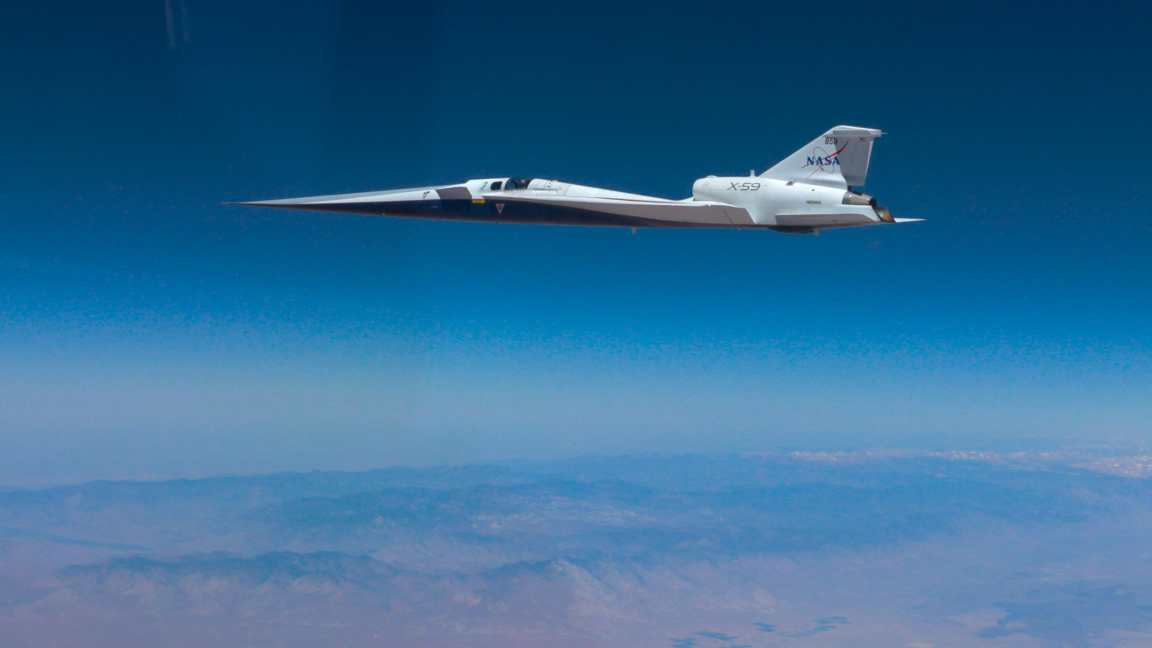
More than two decades after the iconic Concorde made its final commercial flight, the dream of rapid, intercontinental supersonic travel is being reborn—not with a bang, but with a "thump." NASA, in collaboration with Lockheed Martin’s legendary Skunk Works division, has successfully completed the first supersonic flight of the X-59, an experimental aircraft designed to fundamentally change how we perceive speed in the skies. By replacing the window-rattling sonic boom with a soft, unobtrusive sound, this "Quesst" (Quiet SuperSonic Technology) mission aims to dismantle the regulatory barriers that have kept supersonic travel confined to the oceans for over 50 years.
The Technological Leap: Engineering the "Sonic Thump"
The X-59 is a masterpiece of aerodynamic manipulation. Its most striking feature is its needle-like, tapered nose, which accounts for nearly one-third of the aircraft’s 100-foot length. This extreme geometry is not an aesthetic choice; it is a surgical tool designed to manage shockwaves.
In a conventional supersonic aircraft, multiple shockwaves emanate from various points—the nose, the canopy, the engine inlet, the wings, and the tail. As these waves travel away from the plane, they merge, creating the violent double-bang known as a sonic boom. The X-59, conversely, is shaped to keep these shockwaves separated. By preventing them from coalescing, the aircraft ensures that they weaken significantly before reaching the ground.
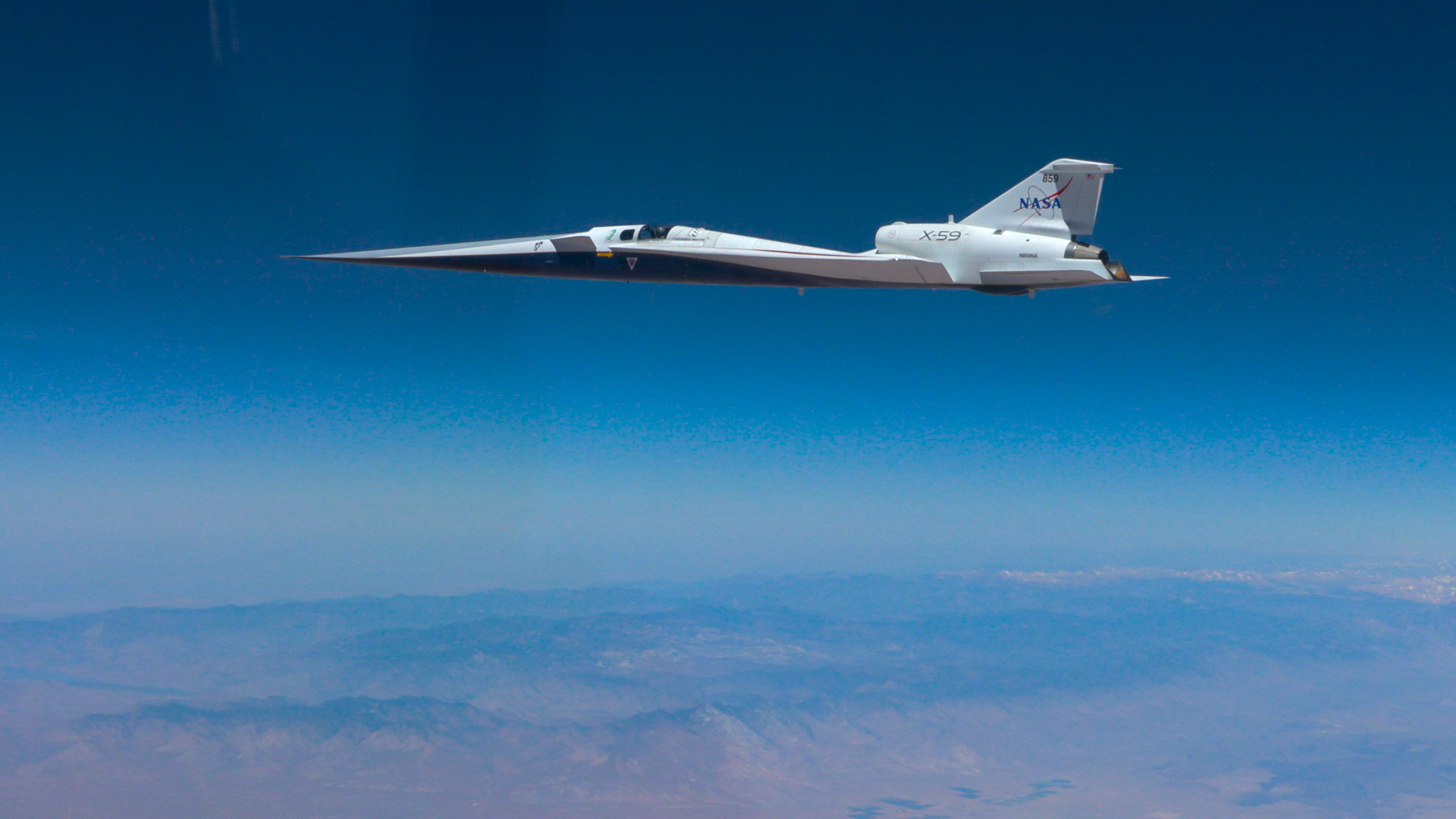
"All the features of the X-59, from its long tapered nose to the engine mounted on top to the shape of the wing—each one of those features was done in one way or another to control the strength of a shockwave," says Peter Coen, mission integration manager for NASA’s Quesst mission. The result is a sound profile equivalent to a car door slamming shut 20 feet away—a massive reduction from the 105 perceived level in decibels (PldB) of the Concorde to a target of just 75 PldB.
Chronology of a Breakthrough
The journey to the X-59’s inaugural supersonic flight has been a rigorous process of testing, refining, and overcoming technical challenges.
- October 28, 2025: The X-59 completes its inaugural flight, marking the start of a critical flight-test campaign to evaluate handling and safety limits.
- March 20, 2026: During the second test flight, the pilot encounters a "bleed leak" warning. While later identified as a false alarm caused by misaligned instrumentation, the incident proved the efficacy of the pilot training and emergency procedures.
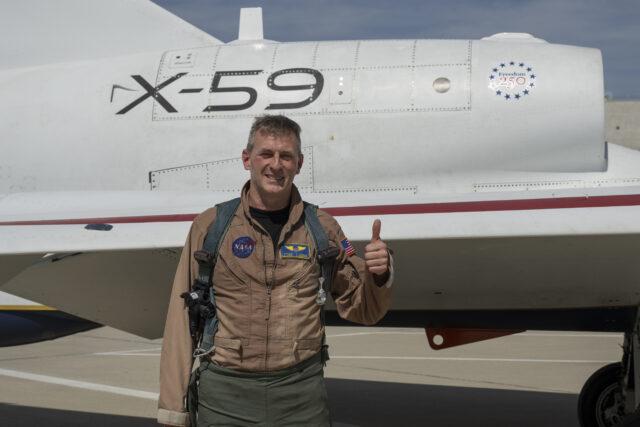
- June 5, 2026: The historic first supersonic flight is achieved. Piloted by NASA’s Jim "Clue" Less, the aircraft reached Mach 1.1 at an altitude of 43,400 feet.
- June 12, 2026: A follow-up test pushes the aircraft to Mach 1.4 at 55,000 feet, confirming the viability of the airframe at higher supersonic speeds.
The "Frankenjet" Philosophy: Reusing for Innovation
While the X-59 is a cutting-edge research platform, its internal architecture is a testament to the "Frankenjet" philosophy—a common practice in experimental aviation where reliable, off-the-shelf parts from existing aircraft are integrated into a new design to maximize efficiency and safety.
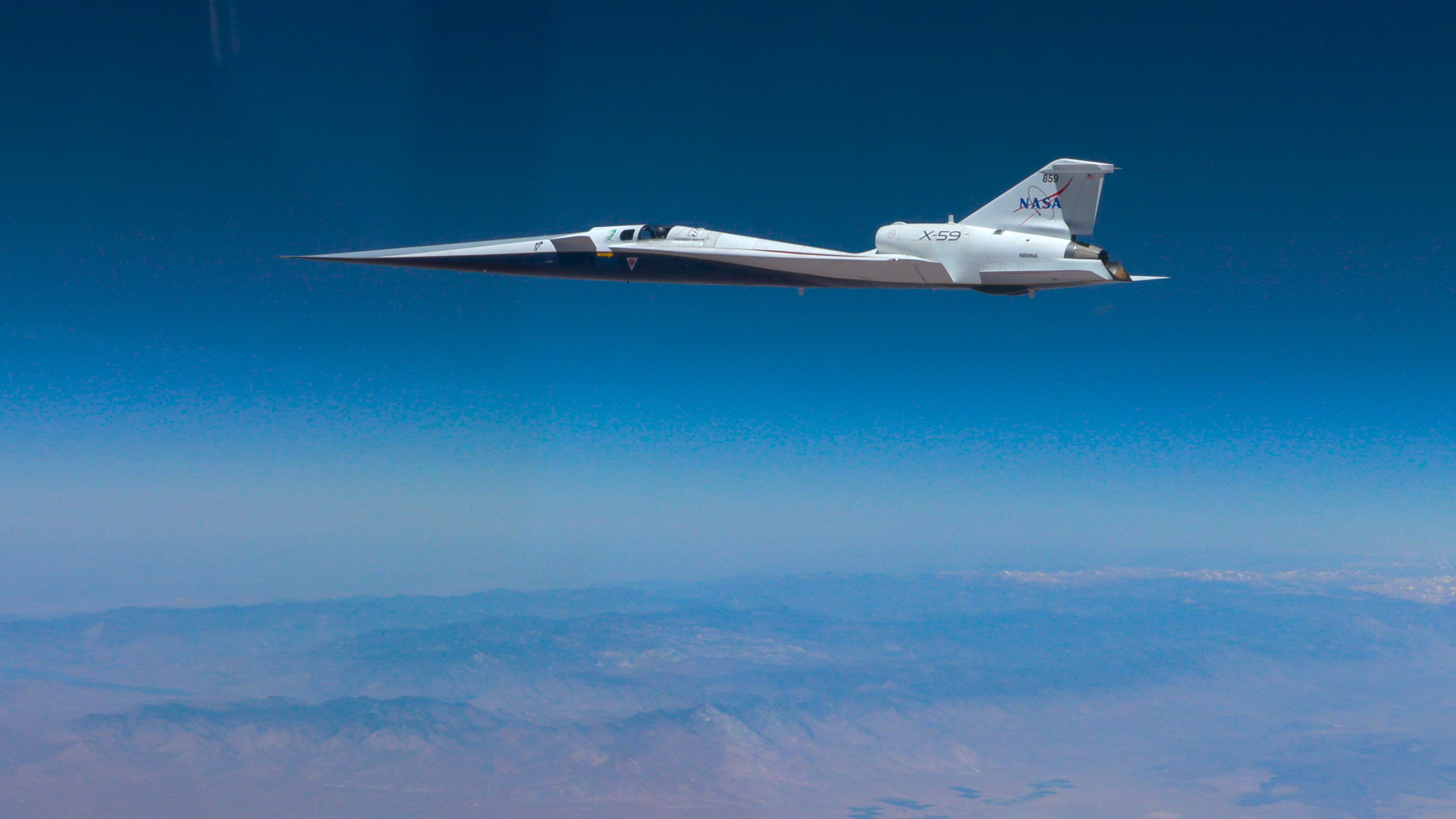
The X-59 utilizes landing gear from an F-16 Fighting Falcon, a stick borrowed from an F-117 Nighthawk, and a throttle system adapted from an F-18 Super Hornet. The cockpit is based on the T-38 trainer, which allows for the use of proven ejection seat technology. This pragmatic approach not only reduces development costs but also ensures that the aircraft relies on battle-tested components, allowing the team to focus their engineering resources on the X-59’s unique, experimental features—most notably the eXternal Vision System (XVS).
Flying Blind: The XVS Innovation
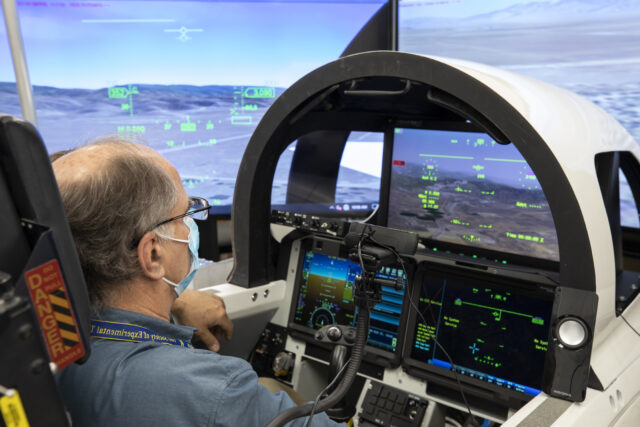
Because of the X-59’s elongated nose, a traditional forward-facing window is impossible. Instead, pilots rely on the XVS, a system utilizing two high-resolution cameras mounted on the top and bottom of the fuselage. This feed is displayed on a 4K monitor inside the cockpit, augmented with real-time flight data.
Initially, there was skepticism regarding whether pilots could adapt to a screen-based view. However, after hundreds of hours in high-fidelity simulators, test pilots Jim Less and David Nils Larson have described the system as "routine." In fact, live flight tests using a modified Beechcraft King Air showed that pilots using the XVS system could often identify nearby traffic faster than those relying on traditional canopy visibility, suggesting that the system could eventually influence cockpit design in non-supersonic aviation as well.
Official Responses and Regulatory Implications
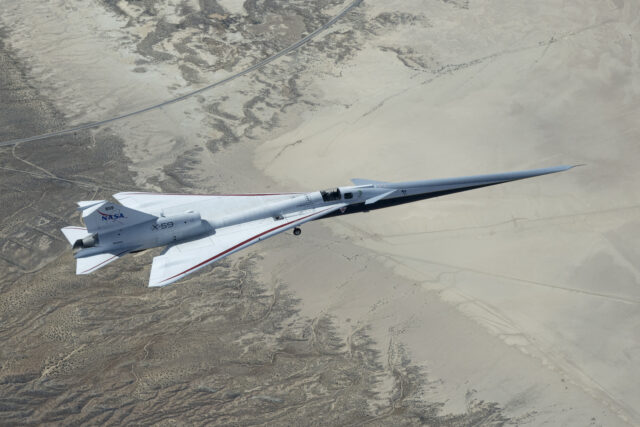
The US government is watching the X-59 program with keen interest. Currently, the FAA maintains a strict ban on overland supersonic travel, a policy rooted in the 1960s public backlash against experimental military sonic boom testing in cities like Oklahoma City. However, the U.S. House has recently advanced legislation that could lift this ban if technologies like those demonstrated by the X-59 can prove that noise can be effectively mitigated.
"The objective is to come up with a standard that enables innovation and allows us to have supersonic flight in the future but still protects the public on the ground," notes Coen. The data gathered by the X-59 will be provided to the FAA and the International Civil Aviation Organization (ICAO) to help draft these new, evidence-based standards.
The Road Ahead: A National Tour
The final phase of the Quesst mission is perhaps the most ambitious: a national tour. NASA plans to fly the X-59 over a variety of communities across the United States, carefully selected to represent diverse demographics, climates, and topographies.
During this phase, NASA will deploy arrays of specialized acoustic recorders to capture the "thump" at ground level. Crucially, they will also solicit feedback from local residents, asking them to describe their experience of the flights. This human-centric data will be the final arbiter of whether the X-59 has succeeded in making supersonic travel socially acceptable.
Challenges to Commercial Viability
Even if the X-59 proves that a quiet supersonic flight is possible, the commercial viability of such aircraft remains a hurdle. Supersonic flight is inherently fuel-intensive. The Concorde’s failure was largely due to the high cost of fuel and maintenance, combined with limited seating capacity. For a modern supersonic airliner to succeed, designers must balance the aerodynamic requirements for speed and silence with the economic realities of fuel efficiency and passenger volume.
However, the success of the X-59 provides a critical piece of the puzzle. By proving that the "sonic boom" is a solvable problem, NASA is removing the primary regulatory obstacle to the next generation of air travel.
Conclusion: A New Horizon
As the X-59 continues its test flights over the Mojave Desert, it carries the hopes of an aviation industry eager for a new frontier. While the pilot experience of crossing the sound barrier may be, as Less puts it, "kind of boring"—a testament to the smoothness of the aircraft’s performance—the implications for the world are anything but.
The X-59 is more than just an experimental aircraft; it is a bridge to a future where geography matters less and the world feels smaller. If NASA’s national tour proves that the public is ready to embrace the quiet thump of supersonic flight, we may soon be looking at a world where a flight from New York to Los Angeles takes a fraction of the time it does today, all while leaving the peace and quiet of the ground undisturbed. For now, the "Quesst" continues, one successful flight at a time.











