Introduction: A New Era for the Undead
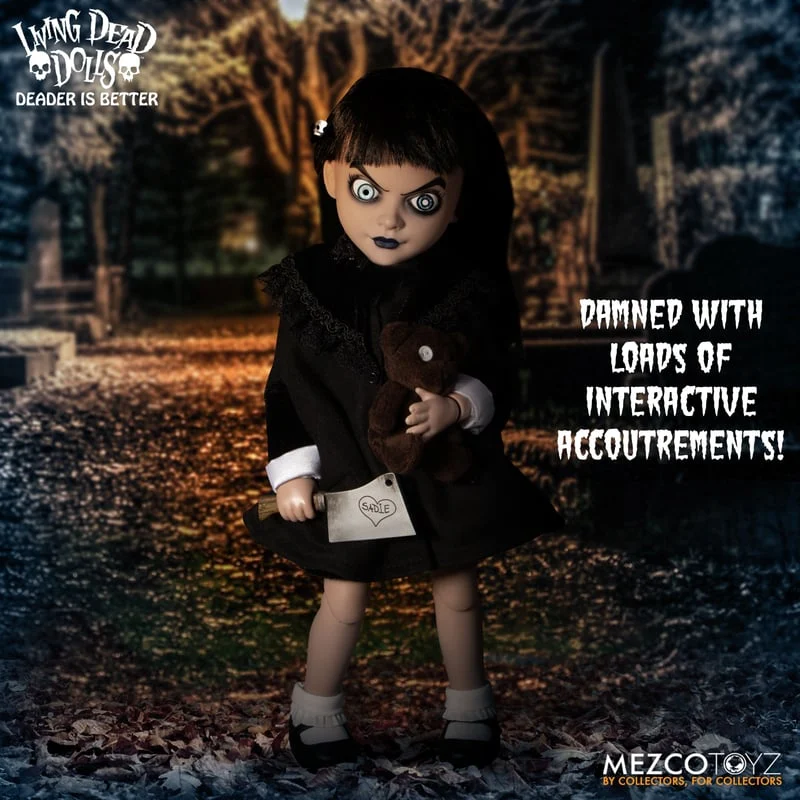
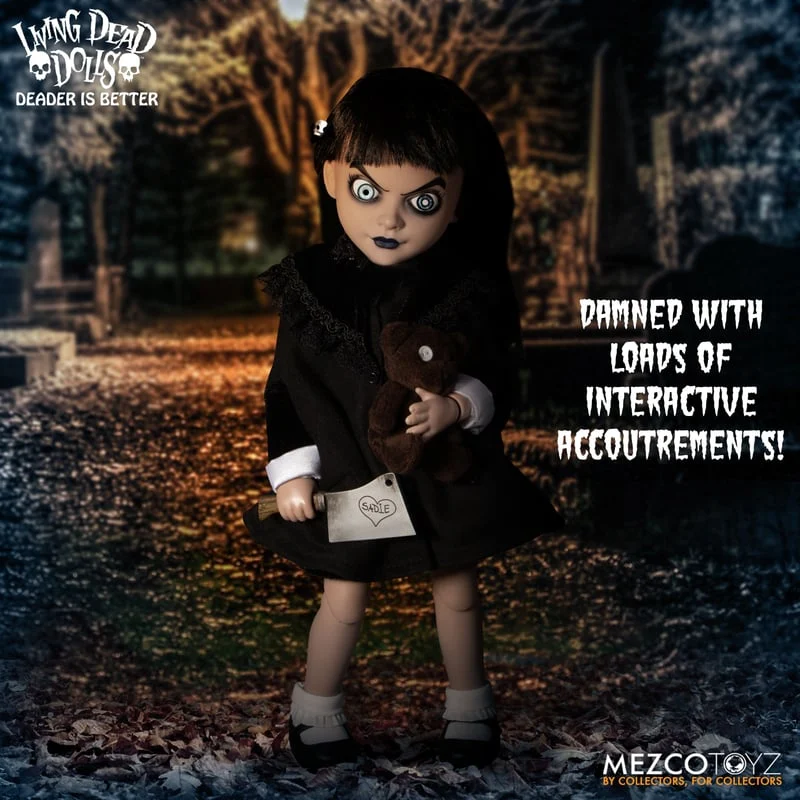
“No one cared how she turned up dead, so Sadie chose to rise instead.” With this chilling mantra, the dark, gothic world of the Living Dead Dolls (LDD) enters a sophisticated new chapter. Since their inception, these haunting collectibles have served as the gold standard for horror enthusiasts and toy collectors alike. Now, Mezco Toyz has announced a high-end, deluxe overhaul of their flagship character, Sadie, signaling a dramatic shift in the brand’s manufacturing philosophy and aesthetic standards.
For over two decades, the Living Dead Dolls brand has been synonymous with the intersection of childhood innocence and post-mortem dread. By introducing a new generation of deluxe figures, Mezco is not merely updating a product; they are redefining what it means to own a piece of horror history. This article explores the evolution of the LDD line, the intricate details of the new Sadie release, and the broader implications for the collectible market.
Chronology: From Underground Cult Classic to Pop Culture Icon
To understand the weight of this new release, one must first look back at the origins of the brand. Created in 1998 by Ed Long and Damien Glonek, the Living Dead Dolls began as a labor of love. Long and Glonek were inspired by antique dolls but sought to infuse them with a darker, more cinematic sensibility.
The Early Years (1998–2005)
Initially, the dolls were handmade, often utilizing modified store-bought dolls, scraps of fabric, and household materials. Their aesthetic—a mixture of Victorian funeral garb and slasher-film tropes—struck a chord with the burgeoning gothic subculture. By 2000, Mezco Toyz partnered with the creators, transforming these handmade oddities into a mass-produced, global phenomenon.
The Expansion (2006–2020)
Over the next fifteen years, the LDD universe expanded to include dozens of series, special editions, and licensed collaborations with horror franchises like A Nightmare on Elm Street, Hellraiser, and The Exorcist. The dolls became a staple in comic book stores, boutique toy shops, and high-end galleries.
The Deluxe Transition (2023–Present)
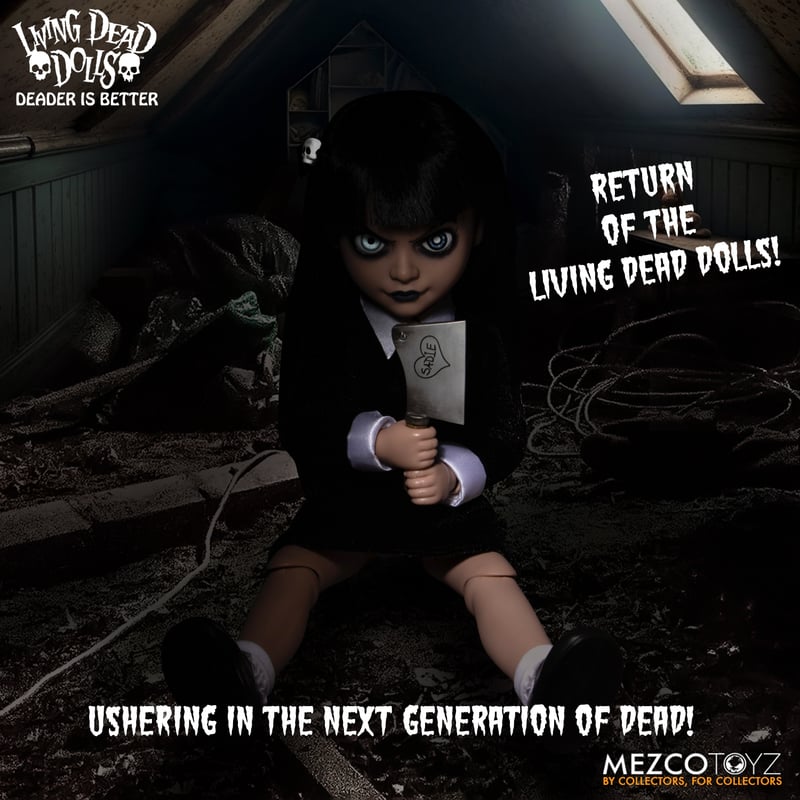
The announcement of the new Sadie figure marks a departure from the static, semi-rigid figures of the past. By incorporating 18 points of articulation, interchangeable faceplates, and sophisticated internal mechanics, Mezco is bridging the gap between "dolls" and "high-end action figures."
Supporting Data: The Anatomy of the New Sadie
The new Sadie figure is not simply a repaint; it is an engineering feat designed to satisfy the most demanding collectors. Priced at $120, the figure occupies the "premium" tier of the collectible market, reflecting a significant leap in production costs and quality control.
Technical Specifications
- Articulation: 18 points of movement, allowing for dynamic posing that was previously impossible for the line.
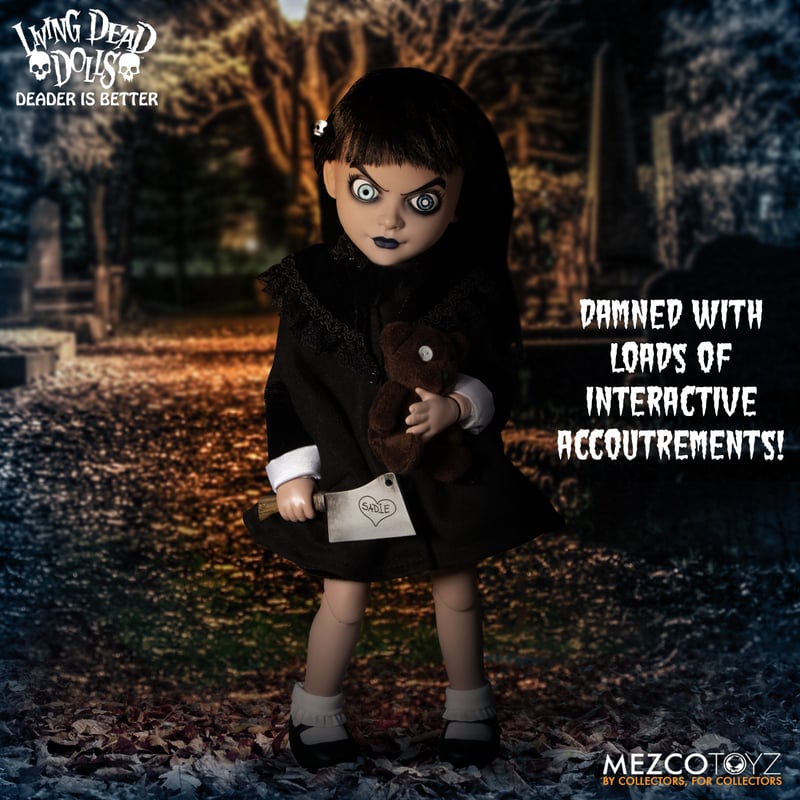
- Ocular Mechanics: The figure features glass-like, movable eyes controlled by internal mechanisms within the head, allowing owners to dictate the doll’s gaze.
- Customization: The figure comes with five interchangeable hands and two "Death Mask" faceplates, enabling the transition from a "grave glare" to a "sinister smirk."
- Costume Design: Sadie retains her iconic velveteen dress, complete with satin collar and cuffs, but now includes premium, removable accessories: a shawl and sunglasses for daytime excursions.
- Included Accoutrements: The set includes a personalized, engraved tombstone, a coffin-shaped purse, a bouquet of black funeral flowers, a signature meat cleaver, and a unique, heterochromatic teddy bear.
The packaging itself serves as a piece of the experience, arriving in a custom-designed, coffin-shaped box that mirrors the character’s dark lore. Scheduled to ship between July and September 2023, the figure is positioned as the centerpiece of a larger, long-term relaunch of the brand.
Official Responses and Creative Vision
While Mezco Toyz often lets the quality of their work speak for itself, the creative team behind the Living Dead Dolls has hinted at the strategic intent behind these upgrades. In industry circles, the move toward "deluxe" versions is seen as a response to the aging collector demographic.
Collectors who purchased their first LDD in the early 2000s are now adults with higher disposable incomes and a preference for "displayability" over traditional playability. By increasing the articulation and detail, Mezco is catering to collectors who want to stage elaborate dioramas. The inclusion of "interactive accoutrements"—such as the meat cleaver and the teddy bear—provides the narrative depth that fans of the LDD lore crave. The message from the design team is clear: Sadie is no longer just a doll to sit on a shelf; she is a dynamic character capable of portraying a variety of macabre narratives.
Implications: The Future of Horror Collectibles
The release of the new Sadie figure has several implications for the broader toy industry and the specific niche of horror-themed collectibles.
1. The Blurring of Lines
For decades, the industry maintained a strict dichotomy between "action figures" (articulated, poseable) and "dolls" (soft-bodied, static, often focused on fashion). The new Sadie effectively kills this distinction. By applying the articulation standards of high-end action figures to the aesthetic of a Victorian doll, Mezco is creating a hybrid category that could influence future horror merchandise.
2. The Premium Shift
The $120 price point for a standard-sized figure signals a move toward "investment-grade" collectibles. As manufacturing costs, logistics, and labor prices continue to rise, companies are responding by packing more value into each box. Rather than releasing cheaper, lower-quality items, Mezco is betting that fans would rather pay a premium for a single, high-quality figure that serves as a showpiece.
3. Sustainability and Longevity
The modular nature of the new dolls—interchangeable hands, faces, and accessories—suggests that Mezco is planning a modular ecosystem. It is highly probable that future releases will share these articulation points, allowing collectors to swap accessories and parts between different figures, effectively increasing the value and lifespan of the entire product line.
Conclusion: A Crypt-Worthy Comeback
The return of Sadie is more than a nostalgic cash-grab; it is a calculated evolution of one of the most beloved brands in horror history. By blending the classic, gothic charm that defined the late 90s with the precision engineering of the 2020s, Mezco Toyz has ensured that the Living Dead Dolls will remain relevant for another two decades.
For the connoisseurs of the creepy and the disciples of the dark, the message is clear: the crypts have been opened, the dead have been upgraded, and the nightmare is far from over. Whether you are a long-time collector looking to complete your set or a newcomer drawn to the haunting allure of Sadie’s new design, this release represents the pinnacle of modern horror artistry. As the industry watches, the Living Dead Dolls prove that even in death, there is always room for growth—and for a little bit of carnage.
About the Author
Jeff Saylor is a seasoned artist, writer, and dedicated pop-culture analyst. With a deep-seated passion for the intersection of horror and high-end design, he has spent years documenting the evolution of the toy industry, from the gritty underground origins of independent collectibles to the polished, premium releases of global powerhouses.