

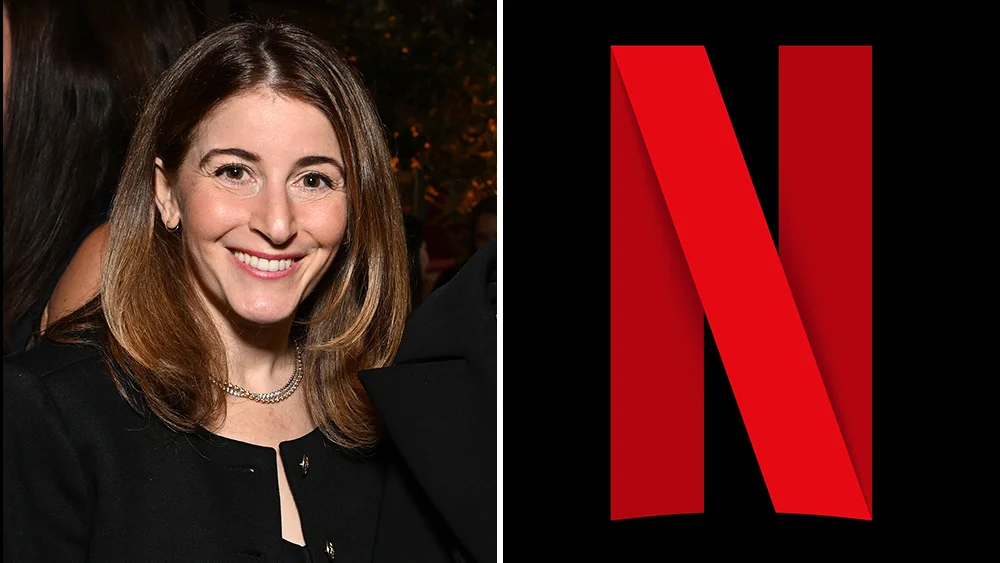
After an influential eight-year run that saw Netflix evolve from a disruptive streaming newcomer into a dominant global entertainment powerhouse, Emily Feingold, the streamer’s Vice President of Communications, is stepping down. Her departure marks the end of a transformative era for the company’s internal and external messaging strategies, occurring at a moment when Netflix is aggressively pivoting toward new business models, including live events, gaming, and advertising.
Feingold’s exit follows a period of significant structural realignment within the Netflix communications department. As the company continues to mature, it has sought to refine its corporate narrative, bringing in fresh leadership to navigate the increasingly complex intersection of technology, policy, and creative content.
Official Statements and Leadership Transition
The departure was confirmed via an internal memo and a subsequent statement from Dani Dudeck, Netflix’s Chief Communications Officer. The company, known for its lean and agile corporate culture, expressed appreciation for Feingold’s longevity and the breadth of her responsibilities during a period of exponential growth.
"Emily has been a dedicated member of the Netflix team for eight years, making meaningful contributions throughout her tenure," Dudeck said in a formal statement. "We’re deeply grateful for all she has done for our team and for the company, and we wish her every success in her future endeavors."
Feingold’s exit is part of a broader recalibration of the communications division. In recent months, Netflix has been bolstering its leadership bench to reflect its diversifying revenue streams. This includes the appointment of Kelly Pakula as VP of Global Corporate Communications, as well as the strategic hiring of Malorie Lucich as Senior Director of Product & Technology Communications and Caitlin Conant as Head of U.S. Policy Communications and External Affairs. These appointments signal a move toward more specialized, localized communications expertise, shifting away from the broader, more generalized roles that defined the streamer’s earlier years.
Chronology of an Eight-Year Evolution
Feingold joined Netflix in 2017, a pivotal year that saw the company’s original content strategy hit its stride. She initially stepped into the fold as part of the film leadership team, arriving just as the streamer was beginning to flex its muscles as a major player in Hollywood’s competitive landscape.
2017–2019: The Rise of Original Cinema
When Feingold first arrived, Netflix was still fighting for legitimacy among traditional Hollywood gatekeepers. She was instrumental in navigating the communications hurdles surrounding the streamer’s early push into prestige theatrical releases. Notable milestones during this period included the awards-season campaign for Alfonso Cuarón’s Roma (2018), which forced a dialogue about the viability of streaming-first films in the Oscars race. She also managed the narrative around Martin Scorsese’s The Irishman (2019), a project that tested the limits of both streaming capacity and traditional industry production models.
2020–2022: Pandemic Growth and Strategic Diversification
The COVID-19 pandemic accelerated Netflix’s global dominance, but it also brought unprecedented scrutiny regarding subscriber growth and content production costs. During this time, Feingold’s portfolio expanded to encompass the entirety of Netflix’s US and Canada communications. She played a key role in communicating the company’s shift toward more aggressive audience metrics and the introduction of transparency regarding global streaming viewership numbers—a move that eventually forced the rest of the industry to follow suit.
2023–2024: New Frontiers
In her more recent years, Feingold’s scope shifted to focus on the US and Canada content communications leadership. This era was defined by Netflix’s attempt to diversify its revenue beyond subscription fees. Feingold was at the helm for the rollout of the company’s ad-supported tier, its entry into the gaming sector, and the expansion into live-event programming. Most recently, she helped frame the narrative surrounding Netflix’s transition into high-profile, wide-release theatrical windows, including the recent success of K-Pop Demon Hunters and the upcoming anticipation surrounding Greta Gerwig’s Narnia project.
The Weight of the Portfolio: Seismic Moments in Media
Feingold’s tenure was characterized by the management of what could be described as "seismic" industry events. Perhaps most notably, she navigated the public and investor scrutiny during Netflix’s reported interest in the acquisition of the Warner Bros. film studio and HBO Max—a move that would have fundamentally altered the landscape of the media industry had it come to fruition.
Managing communications for a company that frequently operates in the "grey area" of traditional industry norms requires a unique set of skills. Feingold had to balance the creative sensibilities of Hollywood’s top talent with the cold, data-driven expectations of Wall Street. Her ability to synthesize these two disparate worlds was a cornerstone of her success at the firm.
Professional Background and Legacy
Before her influential stint at Netflix, Feingold cultivated a career defined by high-stakes corporate strategy. She served as the Senior Vice President of Corporate Strategy and Communications at Andell, Inc., a private investment firm, where she honed her ability to translate complex financial data into compelling narratives.
Her background also includes an extensive 13-year tenure in New York City, a period that saw her serve in leadership communications roles at both Ralph Lauren and The Weinstein Company. These roles provided her with a deep understanding of brand positioning and crisis management, skills that became essential when she joined the high-pressure environment of the tech-streaming sector.
Feingold’s career began in the most public of spheres: the White House during the Clinton administration. This early experience in government communications provided her with a foundation in policy, public interest, and rapid-response messaging—tools that served her well as Netflix began to face increased regulatory and political scrutiny in Washington, D.C., and beyond.
Implications for Netflix’s Future
The departure of a key communications leader like Feingold serves as a bellwether for Netflix’s broader corporate trajectory. With the recent hiring of specialists like Caitlin Conant to lead U.S. Policy Communications, it is clear that Netflix is no longer just a content company—it is a tech-policy entity.
The company is currently facing a maturing market, increased competition from legacy studios, and the ongoing challenge of sustaining subscriber growth. By restructuring its communications department into specialized silos—Product & Tech, Policy, Global Corporate, and Content—Netflix is signaling that it is entering a "professionalized" phase.
For the communications team, the goal moving forward will be to maintain the "Netflix magic"—the cultural cachet that the brand holds—while simultaneously satisfying the rigorous demands of institutional investors who now expect sustained profitability and stable revenue growth.
Feingold leaves behind a legacy of institutional knowledge. She was a constant presence during the streamer’s most explosive years, helping to build a brand that is now a household name globally. As she moves on to her next chapter, the structure she helped build and the narratives she helped shape will remain the bedrock upon which the next generation of Netflix leadership will build its future.
The search for her successor, or the redistribution of her responsibilities, will likely be a closely watched development within the industry, as it will reveal just how much weight the company intends to place on its US and Canada content strategy versus its burgeoning global corporate and policy goals. For now, the transition highlights a company that is confident in its new leadership team and ready to face the challenges of the next decade of digital entertainment.











No comments yet. Be the first to join the conversation!