Evan Lee Salim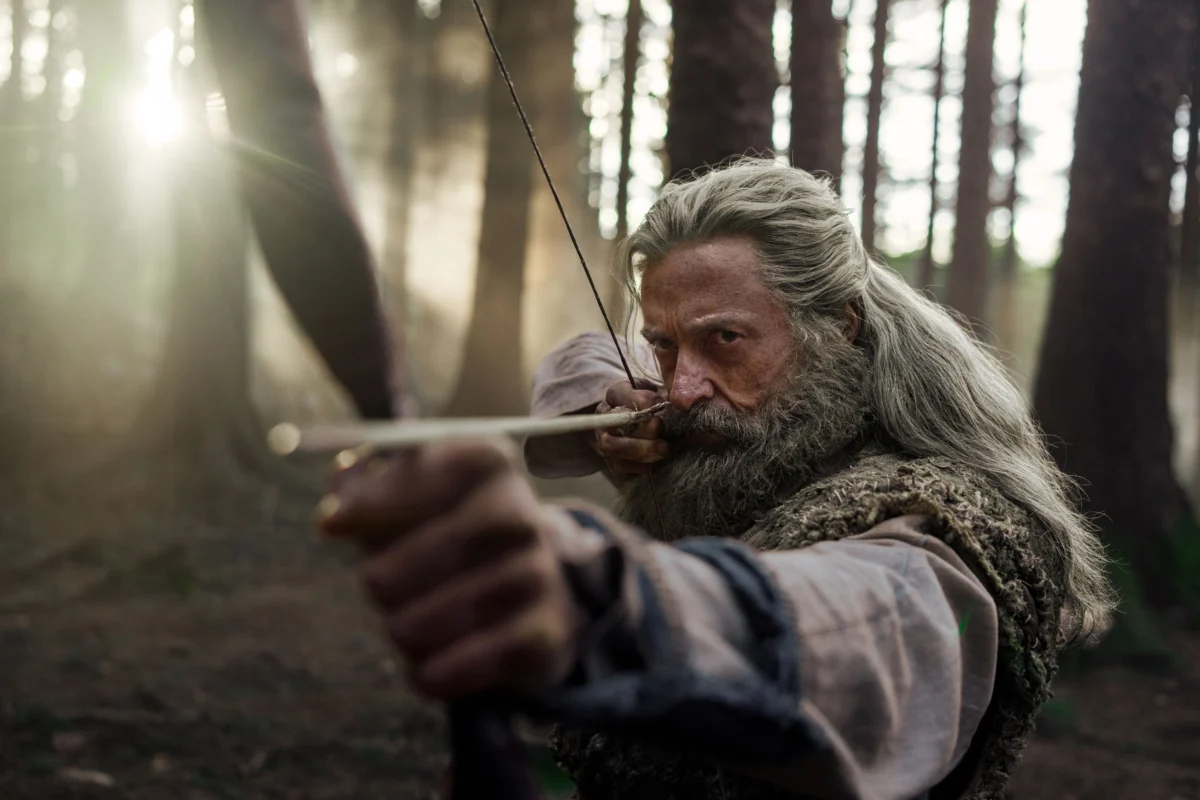
In the landscape of modern cinema, few archetypes are as resilient or as frequently reimagined as Robin Hood. From the swashbuckling charisma of Errol Flynn to the gritty realism of Ridley Scott, the Prince of Thieves has worn many faces. However, Michael Sarnoski’s latest venture, The Death of Robin Hood, arriving in theaters this weekend under the A24 banner, shatters the traditional heroic silhouette. This is not the legend of Sherwood Forest; it is a visceral, unsettling examination of a man whose legacy is built upon a foundation of bone and blood.
The Brutality of the Outlaw: A Revisionist Epic
As IndieWire’s David Ehrlich has keenly observed, Sarnoski’s film functions as both a revisionist historical epic and a meta-commentary on the nature of historical revisionism itself. Hugh Jackman, portraying an aged and weary Robin, delivers a performance that feels less like a folk hero and more like a sociopath.
The film’s opening act is a harrowing, unflinching descent into violence. Gone is the merry bandit of childhood storybooks. In his place is a man who treats violence as a mechanical necessity, capable of driving a torch down a foe’s gullet or slinging arrows into the skulls of adversaries—regardless of age. It is a bold, challenging aesthetic choice that immediately alienates those expecting a noble crusade, forcing the audience to confront the reality of a life defined by systemic slaughter.
Chronology of a Fallen Hero
The narrative trajectory of the film is marked by a profound structural shift. The first half operates as a period-accurate actioner, drenched in the grime and gore of medieval conflict. However, as the film progresses, the pace decelerates into a contemplative, philosophical drama.
Robin’s transition from an unstoppable force of nature to a man grappling with his "blood debts" is facilitated by his encounter with a saintly prioress, played with quiet, commanding grace by Jodie Comer. It is within the walls of her care that the film finds its heart—and its greatest point of contention. The shift from exterior carnage to interior morality is a daring narrative maneuver, one that asks viewers to reconcile the monster they witnessed in the opening sequences with the broken man seeking redemption in the film’s twilight.
Critical Reception and Industry Implications
On the latest installment of IndieWire’s Screen Talk podcast, co-hosts Anne Thompson and Ryan Lattanzio dissected the film’s polarizing reception. With a Metacritic score currently hovering in the 60s, The Death of Robin Hood is a film that clearly divides opinion.

"It’s a harder sell for the audience that the film’s marketing attracts," Lattanzio noted during the discussion. While the film’s second half attempts to weave threads of profound sentimentality and philosophical inquiry, some critics have argued that these segments don’t always land with the intended emotional weight.
Despite the mixed critical consensus, there is a consensus among the Screen Talk team: this is a film that demands to be seen. A24 is banking on the film’s technical prowess to carry it through the upcoming awards season. The period-specific craft—from production design to the stark, unflinching cinematography—is world-class. However, for the film to secure a foothold in the awards conversation, it requires both box office momentum and a vocal critical contingent to advocate for its artistic merits.
Supporting Data: A Competitive Weekend
The film enters a marketplace crowded with diverse offerings. While The Death of Robin Hood targets the prestige-seeking cinephile, the wider theater circuit is currently occupied by a variety of high-profile releases.
As discussed on Screen Talk, the animated landscape is dominated by Pixar’s Toy Story 5. Directed by Andrew Stanton, the film is described as a "champagne bubble"—light, airy, and undeniably effective. While it may struggle to reach the emotional apex of Toy Story 3, the inclusion of Randy Newman’s score and a hilarious, scene-stealing performance by Conan O’Brien—who voices a potty-training device named Smarty Pants—ensures its commercial success.
Furthermore, the independent circuit is abuzz with the potential of Act One, Sophia Takal’s latest thriller, which premiered at Tribeca. Starring Ella Beatty, the film is a taut, psychosexual drama about an acting student ensnared by a manipulative mentor, played by Ari Graynor. With its echoes of All About Eve, Act One is currently seeking a distributor, and industry analysts suggest it is a prime candidate for a streaming acquisition, given its resonance with modern indie audiences.
Implications: The Future of the "Prestige" Actioner
The release of The Death of Robin Hood highlights a growing trend in Hollywood: the "deconstructionist epic." By taking a beloved, static icon and subjecting them to the harsh light of psychological realism, directors like Sarnoski are attempting to bridge the gap between blockbuster spectacle and intimate character study.

However, the gamble is significant. By marketing the film with the promise of period action, A24 risks creating a dissonance for the average moviegoer. If the audience arrives expecting a traditional adventure and receives a slow-burn meditation on trauma and moral decay, the resulting word-of-mouth can be volatile.
Yet, for the industry, this represents a vital test. Can a film that subverts expectations—and requires a significant amount of patience from the viewer—succeed in the current climate? If The Death of Robin Hood manages to translate its strong technical craft into box office stability, it could pave the way for more experimental, genre-bending projects from major indie distributors.
Final Thoughts: A Moral Inventory
Whether one views the film as a masterpiece of revisionist history or a misfire of tonal consistency, it is impossible to ignore the ambition on display. Hugh Jackman’s performance is a career-defining turn, stripping away the polish of his previous roles to expose a raw, unvarnished humanity.
As the film continues its theatrical run, the question remains: will the public embrace a version of Robin Hood who is as flawed and irredeemable as the system he fights against? Or will the legend prove too powerful to be dismantled?
For now, the advice to potential viewers is clear: go into The Death of Robin Hood with an open mind, be prepared for the visceral nature of its opening chapters, and allow yourself the space to engage with the philosophical questions it poses in its quiet, melancholic second half. It may not be the Robin Hood you grew up with, but it is a portrait of a legend that, for better or worse, feels undeniably human.
For more in-depth analysis on the latest releases, including the fallout of the Ronan Farrow-led "Disclosure Day" and further updates on the independent festival circuit, be sure to listen to the full episode of "Screen Talk" on your preferred podcast platform.

 Ammar Sabilarrohman