Muslim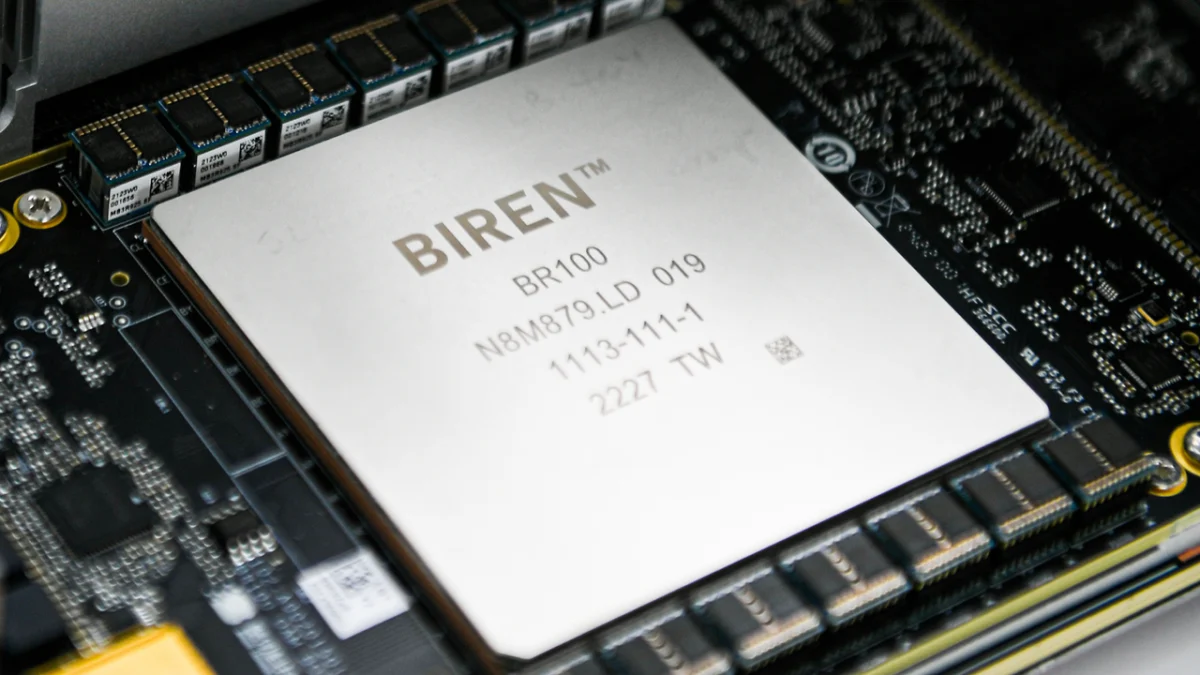
In the high-stakes theater of global artificial intelligence, China is currently undergoing a radical transformation. As U.S.-led export controls tighten the flow of cutting-edge silicon into the People’s Republic, a new cohort of domestic semiconductor firms has risen to fill the void. Among these, Biren Technology, a Shanghai-based developer of high-performance AI accelerators, has emerged as a focal point of this industrial pivot. Recent financial disclosures have painted a picture of meteoric growth, with the company reporting a staggering 1,998% year-over-year revenue surge for the first half of 2026.
However, beneath the headline-grabbing growth percentages lies a nuanced story of a company transitioning from a boutique research firm to a critical national infrastructure provider. While the numbers represent a monumental shift, they also highlight the immense hurdles that remain for China’s domestic chip industry in its bid to achieve technological self-sufficiency.
Main Facts: A Financial Snapshot
According to recent data from Jon Peddie Research, Biren Technology reported revenue of $183.9 million for the first half of 2026. To put this into perspective, the company’s revenue during the same period in 2025 was a modest $8.665 million. This astronomical growth rate—nearly 2,000%—is the clearest indicator yet that the Chinese market for AI hardware is decoupling from Western suppliers.
The company’s financial health is showing signs of maturation. Gross profit hit $78.552 million in the first half of 2026, with a gross margin of 42.7%. Yet, profitability remains elusive. Biren reported a net loss of $56.2 million for the same period. Financial analysts note that this loss is not necessarily a sign of failure but rather a deliberate investment strategy. Biren is funneling capital into the development of next-generation AI accelerators, optically-interconnected rack-scale systems, and, crucially, a proprietary software stack designed to replace the industry-standard NVIDIA CUDA ecosystem.
The Chronology of Disruption: From Export Controls to Domestic Surge
To understand Biren’s trajectory, one must look at the timeline of the U.S.-China technology trade war, which fundamentally altered the competitive landscape of the AI hardware market.
Pre-2025: The Dominance of Global Giants
For years, the Chinese AI market was tethered to the capabilities of NVIDIA and AMD. Domestic firms, including Biren, were viewed as "paper tigers"—their hardware specifications looked competitive on whitepapers, but they lacked the robust software support and ecosystem maturity required to compete with NVIDIA’s H100 and A100 architectures. As long as American chips were available, the market incentive to adopt unproven, domestically manufactured accelerators remained low.
2025: The Inflection Point
The seismic shift began in earnest in the first half of 2025. Following the implementation of strict U.S. export controls, the supply of high-end Western GPUs began to dwindle. Even the "cut-down" versions of NVIDIA chips, which were specifically designed to comply with earlier regulatory hurdles, eventually faced restricted access.
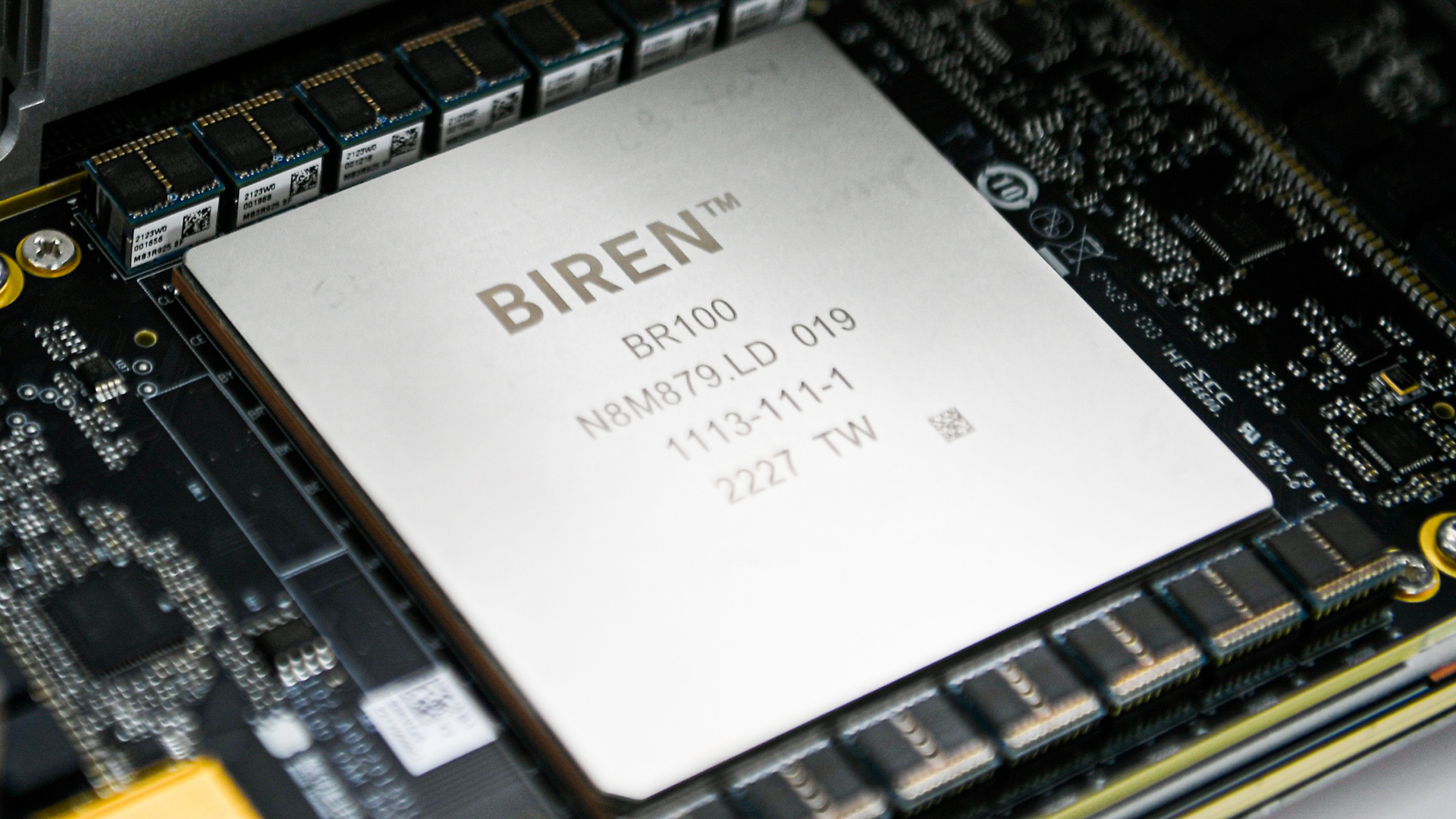
During the first half of 2025, NVIDIA still managed to supply approximately 2.2 million AI accelerators to the Chinese market before the final tightening of restrictions in May. This period marked the last major influx of Western hardware. As the supply chain dried up, the urgency for "indigenous innovation" became a national imperative.
Late 2025 to 2026: The Rise of the Domestic Champion
Starting in the second half of 2025, Biren’s sales began to climb. With no alternative, Chinese hyperscalers and data center operators turned to local manufacturers. By the close of 2025, Biren had generated $154.17 million in total annual revenue. While this was a fraction of the market dominated by Huawei and Cambricon, it established Biren as a serious contender in the high-performance computing (HPC) space.
Supporting Data: Understanding the Market Reality
While a 1,998% growth figure sounds insurmountable, it is vital to contextualize these gains. Biren’s growth is measured against an incredibly small baseline. In 2025, the company shipped only a few thousand, or perhaps tens of thousands, of units. When compared to the millions of units shipped by global incumbents, Biren’s total market share of China’s AI accelerator landscape remains under 3%, according to data from TrendForce.
The product portfolio, however, is expanding. Biren has successfully documented its roadmap, which includes:
- Existing Hardware: The BR106, BR110, and BR166 series, which represent the company’s current fleet of high-end AI GPUs.
- Future Development: The upcoming BR20X, BR30X, and BR31X accelerators, which are expected to bridge the performance gap between legacy Chinese chips and current global standards.
- Software Stack: The "Birensupa" software environment, which is currently undergoing the difficult process of winning developer adoption—the true "moat" that has kept users tied to NVIDIA for over a decade.
Implications for the Industry
The success of Biren Technology carries significant implications for the global semiconductor industry and the geopolitical landscape.
1. The Manufacturing Bottleneck
The primary hurdle for Biren is no longer just R&D; it is manufacturing capacity. To reach a scale that can truly challenge global leaders, Biren must secure high-volume production slots at foundries like SMIC. With many Chinese firms competing for the same limited capacity on advanced nodes, the ability to scale production will determine who survives.
2. The Ecosystem Battle
Hardware is only half the battle. The most significant challenge facing Biren is the "CUDA trap." Developers worldwide are deeply ingrained in the NVIDIA ecosystem. For Biren to succeed, it must convince engineers that Birensupa is not just a substitute, but a viable, high-performance long-term home for their code. This requires an massive investment in developer support, documentation, and library optimization.
3. Geopolitical Repercussions
As China’s domestic firms become more self-reliant, the effectiveness of Western export controls may diminish. If Biren and its peers (Huawei, Kunlunxin, and Cambricon) can reach parity with international standards, the U.S. government may find its primary lever of technological containment increasingly ineffective.
4. A New Era of Competition
The success of domestic firms like Biren signals that the Chinese market is likely to remain closed off to U.S. chipmakers in the long term. This creates a bifurcated global market: one dominated by NVIDIA/AMD/Intel in the West, and an increasingly sophisticated, isolated ecosystem in China.
Conclusion: A Small Giant in the Making
Biren Technology’s 1,998% growth is an impressive statistic, but it is better interpreted as a "proof of concept" rather than a crowning achievement. The company has moved beyond the early-stage volatility that defines most startups and has proven that its products can fulfill a critical role in a constrained market.
The path forward for Biren is fraught with challenges—from the technical difficulty of scaling to 3nm/5nm processes under sanctions, to the grueling task of building a software ecosystem from scratch. However, backed by the immense weight of the Chinese government’s "Made in China 2025" and subsequent industrial mandates, Biren is no longer a peripheral player. It is part of a structural realignment of the global tech economy, and for the first time in history, the world is watching to see if a domestic Chinese alternative can truly stand toe-to-toe with the titans of Silicon Valley.
As the company looks toward the mass production of its BR20X series, the focus will shift from revenue growth to operational dominance. Whether Biren can sustain this momentum will define the future of China’s AI capabilities for the next decade.


 Laily UPN
 Nana
Nana