

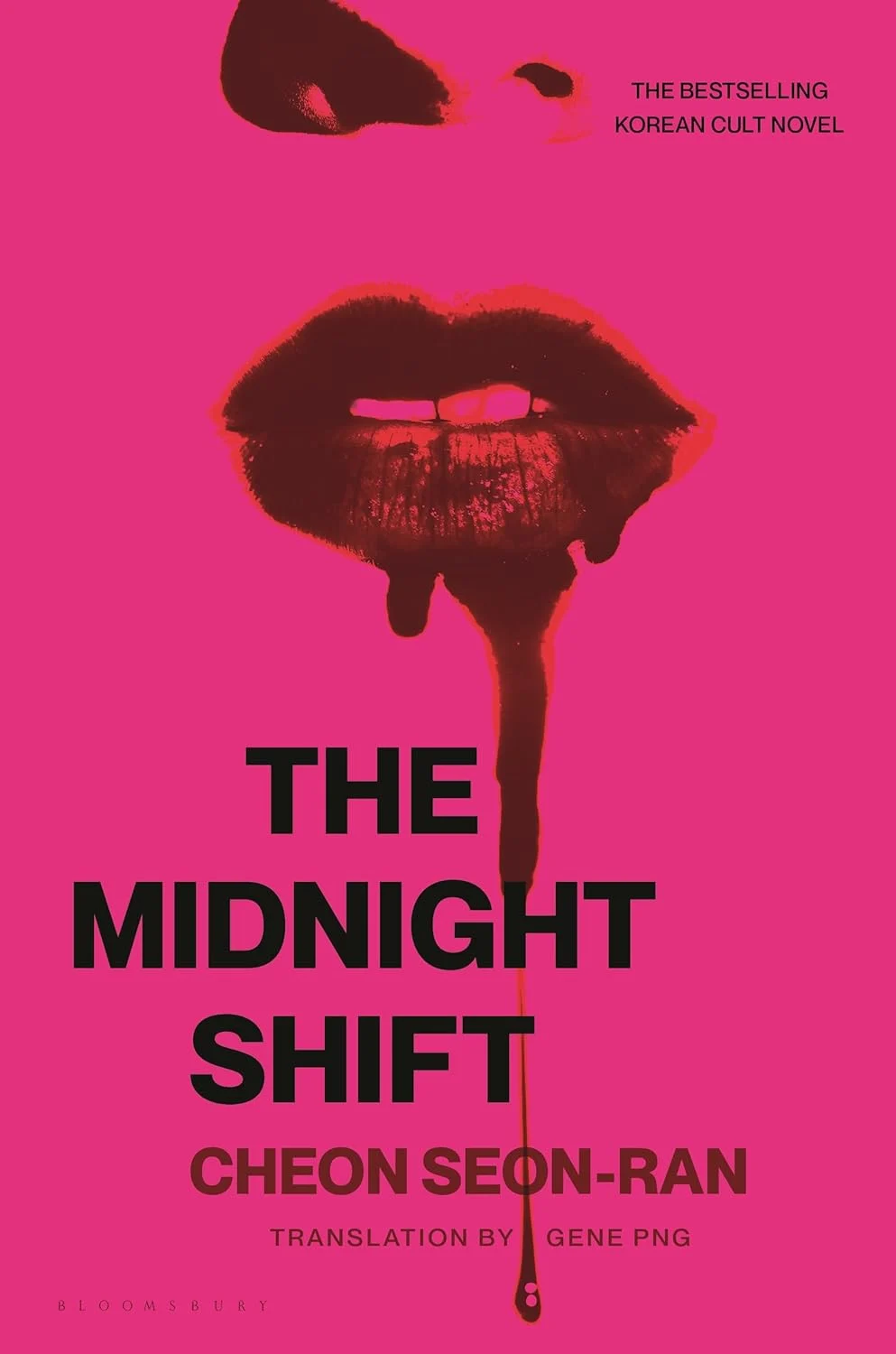
The vampire, a creature of shadow and folklore, has haunted the human imagination for centuries. From the gothic dread of Joseph Sheridan Le Fanu’s Carmilla (1872) to the aristocratic menace of Bram Stoker’s Dracula (1897), the mythos has evolved through countless iterations, from the glittering romance of Stephenie Meyer’s Twilight to the whimsical subversions of Hotel Transylvania. Yet, in The Midnight Shift, the latest novel by acclaimed South Korean author Cheon Seon-Ran—translated into English by Gene Png—the vampire is stripped of its romanticized allure and transformed into something far more visceral: a metaphor for the modern epidemic of social isolation.
Set against the bustling, neon-lit backdrop of contemporary Seoul, The Midnight Shift offers a chilling proposition: what if the monsters of our legends are not merely drawn to the scent of blood, but to the specific, tragic aroma of human loneliness?
A Chronology of a Modern Hunt
The narrative is structured as a complex tapestry woven from three distinct perspectives, each acting as a window into the psychological toll of alienation.
Suyeon’s Investigation (Present Day): The story begins with Suyeon, a young, driven police detective who notices a disturbing pattern: an uptick in "suicides" at a local hospital for the elderly. While her colleagues dismiss the deaths as the inevitable conclusion for the forgotten, Suyeon senses a sinister orchestration. Her investigation leads her to the periphery of society, where she uncovers the chilling reality that these deaths are not self-inflicted, but calculated harvests.
Violette’s Origins (1983, France): In a narrative thread that transports the reader to 1983 France, we follow the childhood of Violette. Adopted by French parents, Violette embodies the "outsider" experience. Despite living in a loving home, she struggles with an existential void that only begins to fill when she encounters Lily, an otherworldly entity. This segment provides the emotional bedrock of the novel, establishing the vampire-hunter’s motivations and her deep, sapphic yearning for a being that exists outside the human experience.
Nanju’s Descent (Present Day): The third perspective belongs to Nanju, a hospital nurse who finds herself complicit in the vampire’s crimes. Her arc serves as a haunting examination of moral erosion. Through her eyes, the reader witnesses how the crushing weight of loneliness can render a person susceptible to manipulation, turning them into a cog in a deadly machine.
The Anatomy of the Monster: Loneliness as Prey
At the heart of The Midnight Shift lies a hauntingly poetic premise: vampires are predators that "breathe in the scent of lonely blood." In one of the novel’s most poignant passages, Violette explains the mechanics of this vampirism to Suyeon:
"People who are driven to the edge of loneliness and solitude don’t cry… If no tears are shed, then no moisture escapes the body. Extra moisture dilutes the blood, just like aged wine. And since they [vampires] are creatures with an inconceivably keen sense of smell, they can discern the scent of lonely blood."
This conceptualization shifts the vampire from a supernatural villain to a symbol of the "soul-numbing" isolation that pervades modern society. Cheon Seon-Ran suggests that when an individual loses their will to live—when they no longer possess the vitality to weep—they become "extra moisture" for the predator. The vampire, in this context, is merely the final punctuation mark on a life already hollowed out by the absence of community.
Supporting Data: The Reality of ‘Godoksa’
While The Midnight Shift is a work of fiction, its thematic resonance is rooted in a documented global crisis. In South Korea, the phenomenon of godoksa, or "lonely death," has become a critical social issue. The demographic shift, characterized by an aging population and a rise in single-person households, has left millions vulnerable.
Recent reports, including data from the Seoul Institute, reveal that 62% of single-person households in Seoul report experiencing persistent loneliness. Furthermore, estimates suggest that over 130,000 young people in the city suffer from severe social isolation. These figures are not outliers; they are part of a global trend. From the "epidemic of loneliness" identified by health officials in the United States to the "hikikomori" phenomenon in Japan, the feeling of being cut off from others has become a defining characteristic of the 21st-century experience.
Cheon Seon-Ran’s novel acts as a mirror to this data, illustrating that the "monsters" described in the book are not just in the pages—they are in the empty apartments and the silent corridors of hospitals everywhere.
Critical Analysis: Strengths and Shortcomings
As a work of literature, The Midnight Shift is a daring experiment that succeeds in its thematic ambition but occasionally falters in its execution.
The Triumph of Characterization
Violette remains the novel’s most compelling figure. Her struggle to belong—both as an adopted child in a foreign land and as an associate of the "other"—is rendered with a nuance that is both heartbreaking and gripping. Her three-dimensional nature provides the necessary emotional anchor for a plot that might otherwise feel too abstract.
Narrative Pacing and Development
Conversely, the novel faces challenges in its character balance. While Suyeon and Nanju are pivotal to the plot, they often feel under-developed. Nanju, in particular, occasionally feels like a "cardboard figure," with her motivations left in the shadows. Furthermore, readers looking for a deep dive into the historical lore of the vampires or the specific "agreement" between species may find the middle sections of the book frustratingly paced. The conclusion, while emotionally resonant, feels somewhat rushed, leaving the complex threads of the past and present to be tied together in a manner that feels more perfunctory than earned.
Implications: A Call for Connection
Despite its minor structural flaws, the impact of The Midnight Shift is undeniable. The novel forces the reader to confront the terrifying reality that isolation is a lethal condition. By framing loneliness as a physical substance that can be smelled and consumed, Cheon Seon-Ran effectively externalizes an internal, invisible pain.
The book serves as a grim warning: in a world where digital connectivity has often replaced genuine human intimacy, we are creating the perfect environment for the "vampires" of neglect and indifference to thrive.
As the narrative concludes, Suyeon’s realization serves as the book’s manifesto: "The only way we can protect ourselves is by making sure no one is left alone."
The Midnight Shift does not offer a magic bullet for the crisis of loneliness. It does not suggest that the monsters will be defeated by police investigations or heroics. Instead, it argues for a more fundamental, albeit difficult, solution: the active, intentional cultivation of human connection. In a society that is increasingly efficient at keeping us apart, the simple act of checking on a neighbor, visiting an elderly acquaintance, or acknowledging the "lonely blood" of those around us may be the only barrier standing between us and the shadows.
In conclusion, The Midnight Shift is a vital addition to contemporary genre fiction. It successfully bridges the gap between the supernatural and the sociological, ensuring that the next time we hear the word "vampire," we think less of fangs and capes, and more of the quiet, agonizing silence of a life lived without human warmth.









No comments yet. Be the first to join the conversation!