

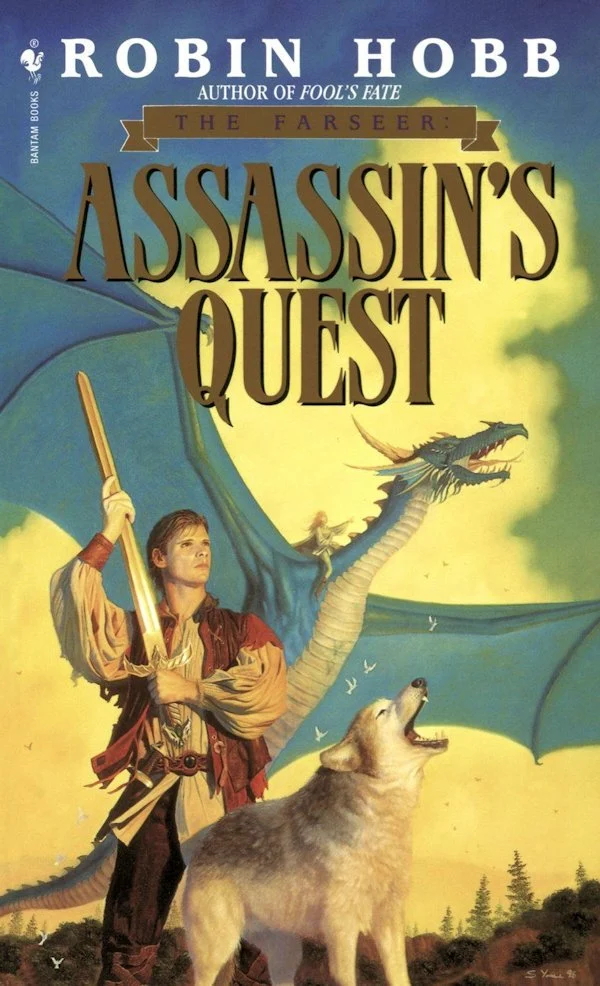
At first glance, the sprawling, melancholic landscapes of the Six Duchies seem lightyears removed from the neon-lit, high-octane aesthetic of today’s dominant "romantasy" genre. Robin Hobb’s The Farseer Trilogy—comprising Assassin’s Apprentice (1995), Royal Assassin (1996), and Assassin’s Quest (1997)—is a foundational text of epic fantasy, characterized by its slow-burn prose, political intrigue, and the quiet, devastating internal life of its protagonist, FitzChivalry Farseer.
Yet, as the literary landscape shifts and readers increasingly crave the hyper-emotional, character-centric narratives popularized by authors like Rebecca Yarros and Sarah J. Maas, a fascinating realization emerges: the DNA of modern romantasy is inextricably linked to the structural choices Hobb made three decades ago. While Hobb’s work is not a "romance" in the traditional sense, her mastery of intimate storytelling, the burden of internal conflict, and the intensity of character relationships provides a structural blueprint that modern writers have inadvertently—or perhaps intuitively—adopted to achieve massive commercial and emotional success.
The Core of the Narrative: Defining the Modern Shift
The defining trait of the modern romantasy explosion is the prioritization of character depth over world-saving stakes. In these novels, the "plot" is often a scaffold upon which the protagonist’s emotional journey is built. If the world ends, it is a tragedy because it destroys the emotional sanctuary of the lead characters.
Hobb’s Farseer trilogy operates on this exact frequency. Fitz is the quintessential reluctant hero; his motivations are rarely rooted in a grand destiny or the altruistic desire to save the Six Duchies from the marauding Red Ships. Instead, his choices are driven by his desperate need for belonging, his loyalty to his mentors, and his complicated, often painful, romantic entanglements with Molly.
As the Fool famously posits in Royal Assassin:
"Not all men are destined for greatness… What good is a life lived as if it made no difference at all to the great life of the world? A sadder thing I cannot imagine."
Hobb invites the reader to value the "small" moments—the raising of a child, the planting of a seed—above the epic scope of war. This is the very heartbeat of the romantasy genre: the radical idea that personal fulfillment and intimate connection are just as critical, if not more so, than the fate of the realm.
Chronology and the Evolution of the "Deep POV"
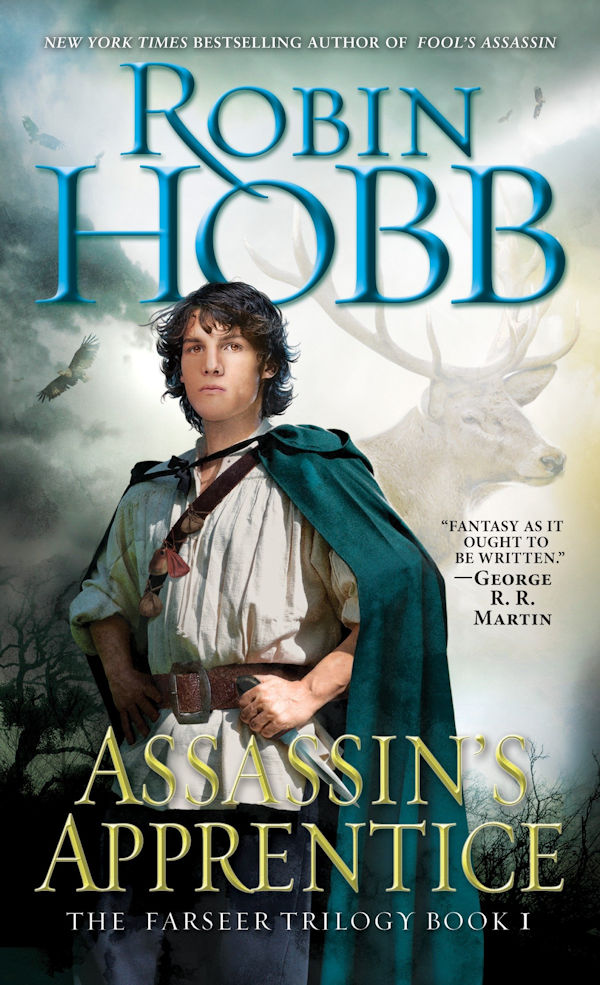
To understand the bridge between Hobb and the current zeitgeist, one must examine the chronology of the "First-Person Intimate" narrative. In the 1990s, when The Farseer Trilogy was released, epic fantasy was often dominated by sprawling, multi-POV narratives (think Robert Jordan or George R.R. Martin). Hobb’s choice to anchor her entire trilogy in the singular, deeply subjective perspective of Fitz was a stylistic gamble that paid off in long-term reader loyalty.
This technique is the cornerstone of modern romantasy. By locking the reader inside the mind of the protagonist, authors create a parasocial intimacy that makes even the most questionable decisions feel earned. In romantasy, when a character chooses a toxic lover or prioritizes a romantic bond over a geopolitical obligation, the reader forgives them because they have felt the character’s loneliness and longing from the inside out.
Fitz’s tendency to pursue personal vengeance—risking the security of the throne to satisfy his own grievances—parallels the "all-consuming love" trope found in current bestsellers. Because Hobb invests so heavily in the reader’s emotional connection to Fitz, we do not view his poor decisions as plot holes; we view them as human failures, which makes the narrative infinitely more compelling.
Supporting Data: Character Relationships as the Narrative Engine
Beyond the internal monologue, Hobb’s work excels in the construction of relationships that mirror the tropes of modern romance. While the romance between Fitz and Molly serves as the emotional anchor, it is the relationship between Fitz and the Fool that offers the most compelling structural parallel to contemporary genre fiction.
The "Slow Burn" and Forced Proximity
The dynamic between Fitz and the Fool features the hallmarks of the most popular romantasy tropes:
- Forced Proximity: Both are outcasts, bound by their proximity to the throne and their unique magical status.
- Forbidden/Complex Dynamic: Their relationship is defined by a slow, agonizing evolution. The Fool’s care for Fitz is frequently masked by biting wit and emotional manipulation, creating a push-pull tension that keeps the reader perpetually invested.
As Fitz notes in Assassin’s Apprentice: "He mocks me, but from him, it seems a kindness. He makes me feel, well, important." This vulnerability is exactly what modern readers seek. The relationship does not need to be explicitly romantic to hold the weight of a romance; it functions on the same psychological mechanisms of deep attachment, trauma-bonding, and unconditional support.
The Burden of Magic: Internalized Conflict
In the modern genre landscape, magic is rarely just a tool for combat; it is a metaphor for the character’s internal struggle. Hobb’s dual system of magic—the Wit and the Skill—acts as a perfect mirror for Fitz’s internal fragmentation.
- The Wit: A raw, forbidden, and deeply intimate connection to the animal kingdom, representing Fitz’s primal nature and his desire for unconditional connection.
- The Skill: A regal, structured, and dangerous mental magic, representing his duty to the crown and his isolation.
Fitz’s struggle to reconcile these two forces is inherently "romantasy-coded." Both powers threaten to consume him, yet both offer him a form of ecstasy and strength. When he uses the Skill, he feels a "keenness of life," a sensation that mirrors the intensity of new love or forbidden desire. By crafting magic that demands such a high physical and psychological toll, Hobb elevated her fantasy to a level of visceral intensity that contemporary authors have sought to emulate for years.
Implications for the Future of Fantasy
The enduring success of The Farseer Trilogy serves as a lesson for the modern publishing industry. As romantasy continues to dominate the charts, the "Hobbian" approach—prioritizing the emotional interiority of the character above all else—is no longer an outlier; it is the industry standard.
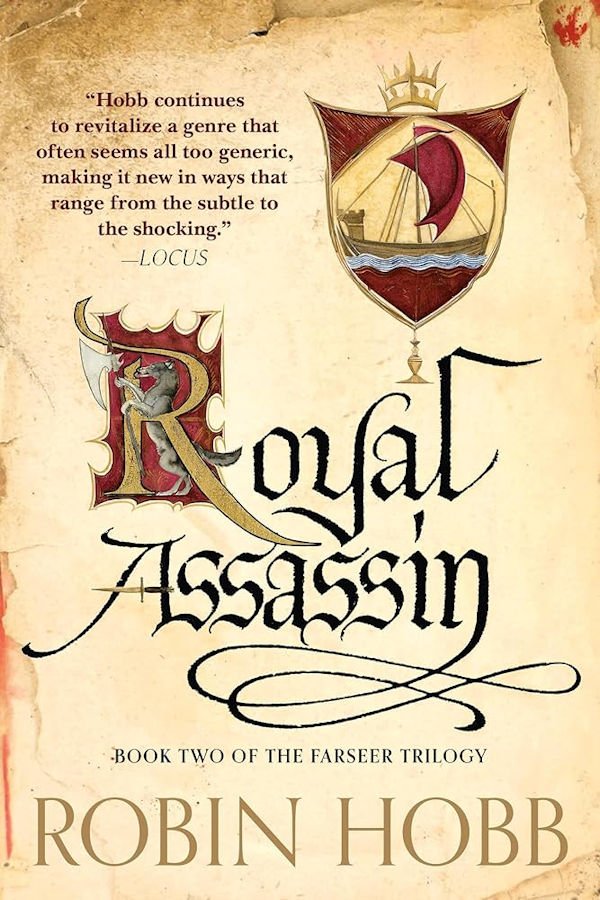
However, there is a cautionary note in this evolution. While the focus on character is what makes these stories resonate, the risk lies in sacrificing the world-building that gives these characters their context. Hobb succeeded because she never allowed the personal drama to completely eclipse the stakes of the Six Duchies. The "Red Ships" were a real, existential threat, just as the political machinations of Regal and King Shrewd were constant pressures.
For future authors, the takeaway is clear: the most successful stories are those where the internal, romantic, and character-driven stakes are perfectly balanced against a world that feels as vast and dangerous as the emotions of the protagonist.
Conclusion: A Legacy of Intimacy
Robin Hobb did not set out to write "romantasy," yet she created a landscape where the heart is the most dangerous battlefield. Her ability to weave personal trauma, the complexity of forbidden bonds, and the weight of personal identity into a high-fantasy framework remains the gold standard.
As we look toward the future of the genre, we see a trail of breadcrumbs leading back to the halls of Buckkeep. Whether it is in the slow-burn chemistry between protagonists or the way a magic system is used to reflect a character’s deepest insecurities, Hobb’s influence is unmistakable. As she wisely wrote in Assassin’s Apprentice:
"Don’t do what you can’t undo, until you’ve considered what you can’t do once you’ve done it."
Modern authors have clearly considered her work, and in doing so, they have undone the old boundaries of the genre, allowing fantasy to become as personal, as messy, and as deeply felt as life itself.










No comments yet. Be the first to join the conversation!