

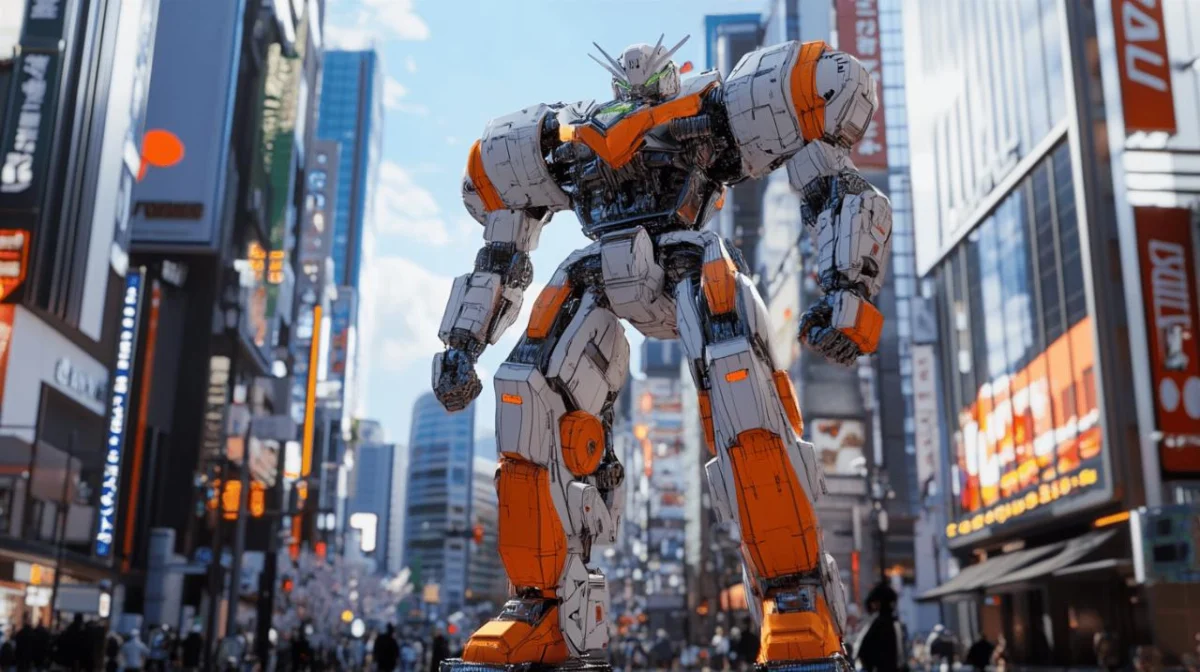
In the heart of Japan’s industrial research landscape, a mechanical revolution is taking shape. The Advanced Industrial Science and Technology (AIST) institute has unveiled the HRP-5P, a humanoid robot designed specifically to address one of the most pressing crises facing the nation: an aging workforce and a chronic shortage of skilled labor. As construction sites grow increasingly complex and human personnel become harder to recruit, the HRP-5P represents a pivotal shift in how we conceive of heavy labor, precision engineering, and the future of the built environment.
Main Facts: The Anatomy of a Revolutionary Worker
The HRP-5P is not merely a machine; it is an autonomous, humanoid platform engineered to replicate the dexterity and judgment of a professional construction worker. Standing roughly 1.8 meters tall and weighing 101 kilograms, the robot is designed to operate in environments built for humans.
Unlike stationary robotic arms used in manufacturing, the HRP-5P is mobile. It features a sophisticated array of sensors, including laser-based range finders and multi-camera vision systems, allowing it to navigate cluttered construction sites. Its primary utility lies in its ability to handle materials that are cumbersome or hazardous for humans. From maneuvering heavy sheets of drywall to performing delicate fixation tasks, the HRP-5P demonstrates a level of spatial awareness and motor control previously unseen in mobile construction robotics.
The robot’s intelligence is driven by advanced AI that allows it to perceive its environment in real-time. It doesn’t just follow a pre-programmed path; it identifies objects, assesses the state of a wall or floor, and adjusts its grip and force accordingly. This adaptability is the hallmark of the HRP-5P, distinguishing it from older generations of "blind" automation.
Chronology: From Concept to Construction Site
The journey of the HRP-5P began years before its official public debut. AIST researchers identified that the traditional construction sector was hitting a wall—literally and figuratively. With Japan’s population aging rapidly, the number of young people entering the labor-intensive construction sector has plummeted, creating a "labor cliff."
- 2015–2017: AIST researchers focused on developing the foundational humanoid hardware, focusing on balance and weight-bearing capacity. The goal was to create a platform that could handle the physical load of construction materials without the stability issues that plagued earlier humanoid models.
- September 2018: The HRP-5P was officially unveiled to the public in Japan. The demonstration showcased the robot autonomously installing a piece of drywall, successfully navigating the task from picking up the board to screwing it into the metal stud frame.
- 2019–2022: The project shifted from a controlled laboratory environment to "field-like" test conditions. Researchers focused on refining the robot’s AI to handle unpredictable variables, such as uneven terrain, debris, and varying light conditions on active job sites.
- 2023–Present: The technology has moved into a phase of integration, where researchers are now exploring its viability in high-stakes sectors beyond residential construction, including the specialized environments of naval shipyards and aerospace assembly plants.
Supporting Data: The Efficiency Gap
The push toward robotics in construction is backed by staggering data. The construction industry is notoriously one of the least digitized and least automated sectors in the global economy, making it ripe for a "productivity explosion."
Recent case studies provide a glimpse into the potential gains:
- Precision and Throughput: While a skilled human can maintain a steady pace, the HRP-5P and its contemporaries do not suffer from fatigue. Modern robotic floor sanders, for instance, can now achieve a precision of 0.5mm over a 250-meter span in a single day—a level of consistency that is nearly impossible for a human to maintain for eight hours straight.
- The Hadrian X Benchmark: To understand the speed potential, one must look at peers like the Hadrian X, which can lay 1,000 bricks per hour. When coupled with the mobility of the HRP-5P, the potential for 24/7 construction cycles becomes a reality.
- Time-to-Market: The adoption of these technologies has shown that project timelines can be slashed significantly. Projects like those using modular 3D printing, such as the houses built by Winsun in China within 24 hours, serve as the "north star" for what total automation can achieve.
The HRP-5P’s contribution is focused on the "last mile" of construction—the interior finishing—where labor costs are highest and human errors, such as misaligned panels or improper screw placement, are most common.
Official Responses and Strategic Implications
The development of the HRP-5P has drawn significant attention from both the Japanese government and international industrial leaders. AIST officials have stated that the HRP-5P is not intended to replace human workers in the traditional sense, but to act as a "force multiplier."
"Our objective is to augment the existing workforce," says a spokesperson for the AIST research team. "By offloading the repetitive, physically taxing, and dangerous aspects of construction to the HRP-5P, we allow human workers to shift into roles that require higher-level oversight, project management, and specialized technical problem-solving."
The Japanese government, through the Ministry of Economy, Trade and Industry (METI), has heavily subsidized these initiatives, viewing them as a national security imperative. If Japan cannot automate its infrastructure maintenance and residential construction, the economic cost of the demographic shift will be catastrophic.
The Broader Implications for Industry
The ripple effects of the HRP-5P are extending far beyond the walls of residential housing.
Expanding into Aerospace and Shipbuilding
The adaptability of the HRP-5P’s sensors and manipulation systems makes it a prime candidate for aerospace assembly. In the construction of aircraft, where components must be fitted with extreme precision and under strict quality control, the HRP-5P could serve as an essential automated assistant. Similarly, in shipyards, where the scale of construction is massive and the environment is often cramped and hazardous, a mobile humanoid could handle welding or heavy lifting in areas where traditional heavy machinery cannot reach.
Safety and Collaborative Robotics
The integration of HRP-5P introduces the concept of "Cobotics" (collaborative robotics) to the construction site. This requires a fundamental redesign of safety protocols. Unlike a factory floor, where safety zones are fenced off, a construction site is dynamic. The HRP-5P is equipped with proximity sensors and real-time AI processing that allows it to stop instantly if a human enters its immediate workspace. This safety-first design is essential for the acceptance of robots in close proximity to human crews.
Workforce Retraining
A major implication of this technology is the necessary shift in human skills. The role of the "construction worker" is evolving into the "robot operator/technician." AIST is currently working on training programs that teach construction personnel how to program these robots, perform basic maintenance, and oversee multiple units simultaneously. This transition is expected to create a new tier of high-skilled labor, potentially making the construction sector more attractive to younger, tech-savvy generations who might otherwise avoid the industry.
The Future: Toward a Fully Automated Site
As we look toward the next decade, the HRP-5P serves as a bridge to a new era of construction. We are witnessing the birth of the "Intelligent Job Site." In this future, the site is monitored by drones that provide 3D thermal imaging and progress reports, while exoskeletons allow human workers to carry loads that were previously impossible. Meanwhile, the HRP-5P and its successors perform the heavy lifting and the meticulous, repetitive tasks.
The challenges remain, of course. The high cost of R&D, the need for robust software that can handle the sheer unpredictability of an outdoor building site, and the regulatory hurdles of safety certification are all significant barriers. Yet, the momentum is undeniable.
The HRP-5P is more than a robot; it is a strategic response to the reality of the 21st century. As Japan navigates its demographic transition, it is not simply trying to survive; it is attempting to pioneer a model for global construction that is safer, faster, and more efficient. By marrying the precision of AI with the versatility of a humanoid form, the HRP-5P is laying the foundation for a future where the buildings of tomorrow are built by the machines of today. The era of the "Silicon Mason" has arrived, and it is here to stay.












No comments yet. Be the first to join the conversation!