Evan Lee Salim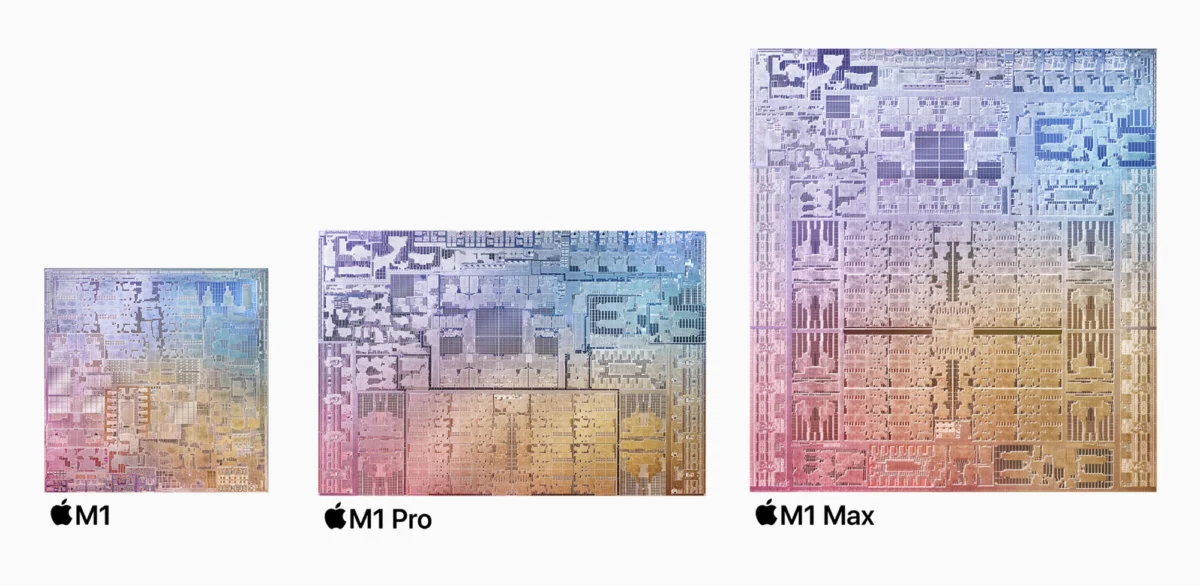
In a pivotal moment for the computing industry, Apple has officially pulled back the curtain on its next generation of custom silicon: the M1 Pro and M1 Max. Unveiled at the company’s "Unleashed" event in Cupertino, these chips represent the most ambitious hardware transition in Apple’s history. Moving beyond the limitations of third-party architectures, Apple has engineered these processors to serve as the beating heart of its revamped 14-inch and 16-inch MacBook Pro laptops, signaling a definitive shift in what users can expect from mobile workstation performance.
The Main Facts: A Leap in Architecture and Power
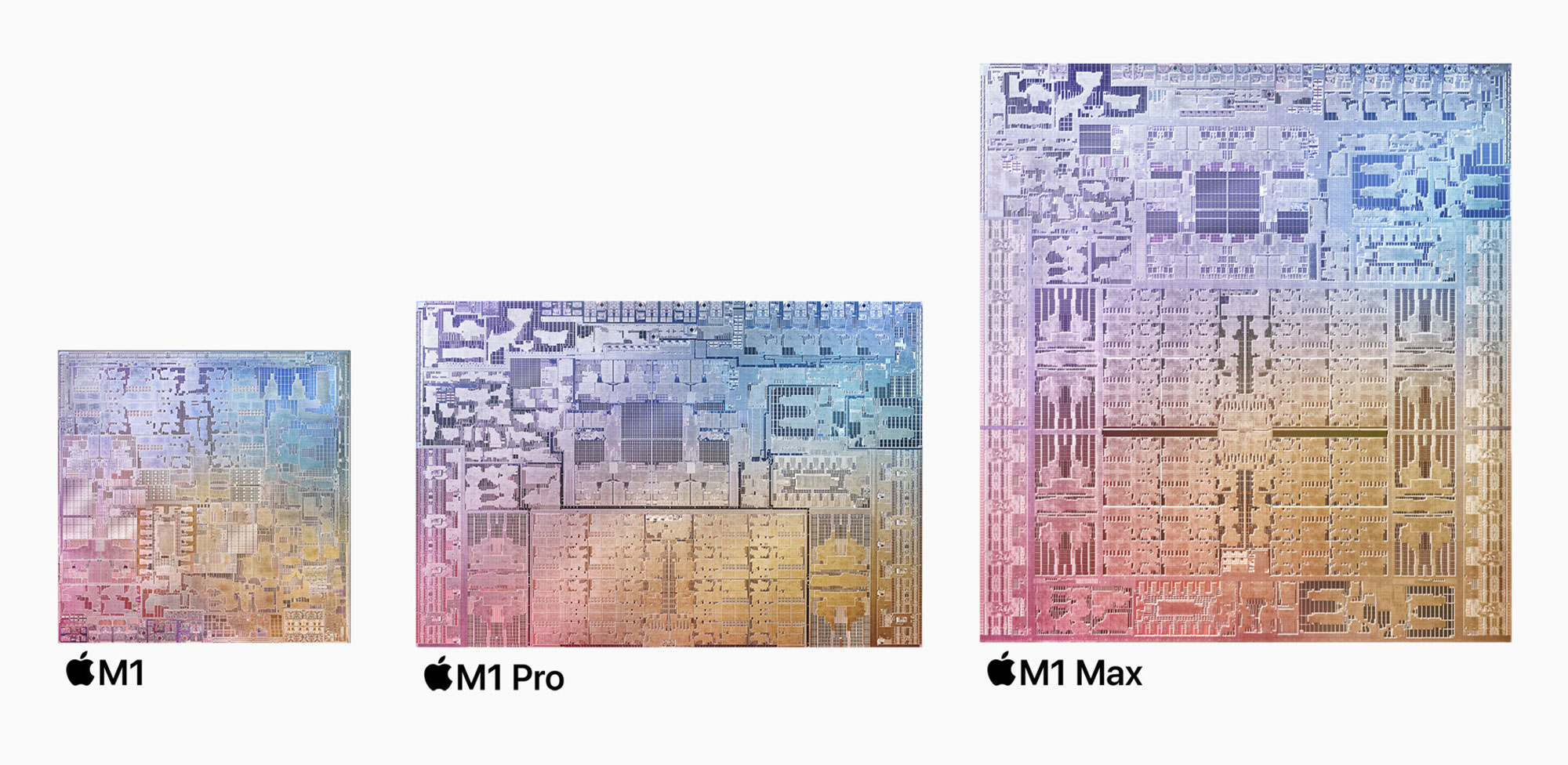
Built upon an advanced 5nm process node, the M1 Pro and M1 Max represent a monumental engineering achievement, housing up to 57 billion transistors—a staggering figure that dwarfs the original M1 chip. By integrating the CPU, GPU, and specialized accelerators onto a single SoC (System on a Chip) architecture, Apple has effectively eliminated the data transfer bottlenecks that typically plague traditional laptop designs.
At their core, these chips utilize a standard 8P+2E (Performance and Efficiency) CPU configuration, designed to balance heavy-duty multitasking with background system maintenance. However, the graphics capabilities are where the most dramatic shifts occur. With GPU configurations ranging from 14 to 32 cores and unified memory options spanning from 16GB to 64GB, these machines are aimed squarely at professionals who demand desktop-class performance in a portable chassis.
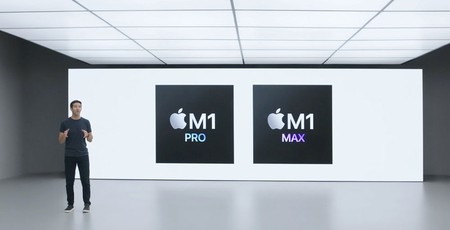
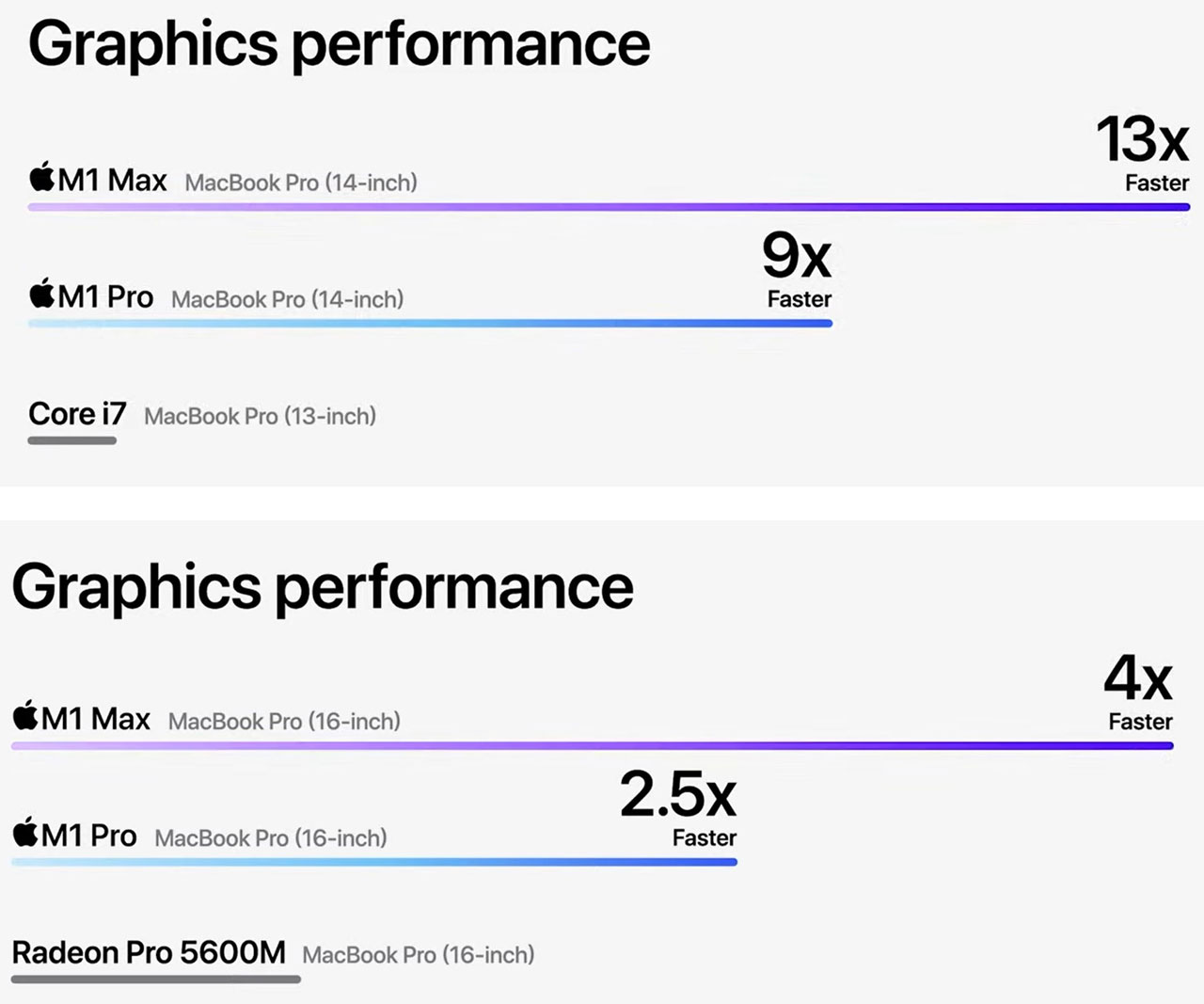
Apple’s benchmarks are aggressive: the company claims up to 70 percent faster CPU performance compared to the original M1 and a massive 4x increase in GPU power. When paired with the 16-core Neural Engine—dedicated to AI and machine learning tasks—these chips are positioned as the most powerful processors Apple has ever brought to market.
A Chronology of the Transition
To understand the magnitude of this launch, one must look at the timeline of Apple’s "Silicon Transition." When Apple first announced its two-year plan to move away from Intel processors in June 2020, industry analysts were skeptical. The transition was framed as a monumental challenge: how to replace the deep-rooted x86 ecosystem with an ARM-based architecture without alienating the professional creative base.
- June 2020: Apple announces the "Apple Silicon" initiative, promising a two-year transition period.
- November 2020: The M1 chip is launched in the MacBook Air and 13-inch MacBook Pro, proving that high-efficiency ARM chips could compete with Intel’s lower-wattage mobile processors.
- April 2021: The M1 is brought to the iMac and iPad Pro, further cementing the architecture’s versatility.
- October 2021 (The "Unleashed" Event): Apple introduces the M1 Pro and M1 Max. This marks the midway point of the two-year transition and signals that the company is ready to tackle the high-performance professional market—a segment previously thought to be the final, most difficult stronghold of Intel and AMD.
Supporting Data: Dissecting the Performance Claims
Apple’s presentation at the "Unleashed" event was characterized by a barrage of performance charts and comparisons against the existing mobile workstation landscape. Johny Srouji, Apple’s Senior Vice President of Hardware Technologies, emphasized that the new SoCs deliver not just raw speed, but "massive gains in CPU and GPU performance" alongside a six-fold increase in memory bandwidth.
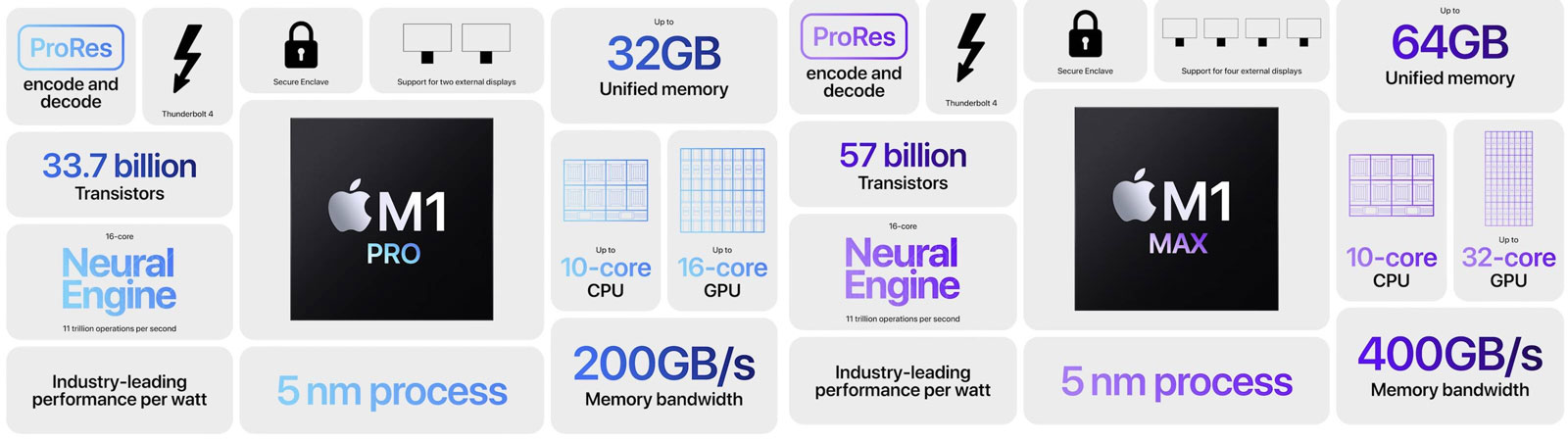
Perhaps most impressive is the power efficiency. In an era where "pro" laptops often require massive power bricks and struggle to last more than a few hours under load, the new 16-inch MacBook Pro offers up to 21 hours of video playback. This is achieved through the SoC’s ability to manage power states with granular precision, effectively shutting down unused transistors during low-intensity tasks.
The GPU performance, however, is the most contentious and exciting point of discussion. Apple’s internal comparisons show the M1 Pro and Max outperforming both integrated graphics from Intel and discrete mobile GPUs like the AMD Radeon RX 5600M. While Apple’s marketing materials present a compelling case, the tech community remains eager to verify these metrics through independent, real-world benchmarks once the devices hit the market.
The Media Engine: A Creative Revolution
One of the most nuanced but impactful additions to the M1 Pro and M1 Max is the dedicated Media Engine. For video editors, photographers, and motion graphics artists, this is a game-changer. The new SoCs include hardware-accelerated support for the ProRes codec.
Apple claims that the M1 Max can transcode ProRes video in Compressor up to 10 times faster than the previous Intel-based 16-inch MacBook Pro. This is not just a marginal improvement; it is a fundamental shift in professional workflow. By offloading the encoding and decoding of complex video streams to dedicated hardware, the CPU and GPU are freed to handle effects, color grading, and complex timeline operations without stuttering. This effectively democratizes high-end 8K video production, allowing creators to edit multiple streams of high-quality footage on a laptop while on location.
Official Responses and Industry Implications
The reaction from the creative industry has been largely optimistic, though guarded. Apple’s official stance is that it has successfully "led the industry in performance, custom technologies, and power efficiency." By controlling both the hardware and the software (macOS), Apple has created a vertical integration that competitors—who must rely on Windows, discrete GPUs from NVIDIA/AMD, and third-party motherboard designs—simply cannot replicate.
Industry observers suggest that if these performance claims hold up under third-party scrutiny, the landscape of the laptop market will change permanently. The implications are two-fold:
- For the Creative Sector: The move toward "Unified Memory" and specialized media engines suggests that the "RAM bottleneck" is a thing of the past. Professionals who previously required a dedicated desktop Mac Pro may find that their workflows can now be fully mobile.
- For the Competition: Intel and AMD now face a formidable challenge. While their x86 chips remain powerhouses, the "performance-per-watt" gap created by Apple’s custom silicon is widening. This forces the entire industry to rethink mobile architecture, likely accelerating the development of more efficient, specialized silicon in the Windows ecosystem.
Looking Ahead: The Final Stretch of the Transition
As the first units of the 14-inch and 16-inch MacBook Pro reach the hands of consumers and reviewers, the conversation will shift from marketing claims to real-world utility. Will the thermal management in the thinner 14-inch chassis be sufficient to handle the M1 Max’s peak loads? How will gaming performance, which has historically been a weak point for the Mac, compare against dedicated gaming laptops from competitors?
What is clear is that Apple is no longer just a computer manufacturer; it is a chip manufacturer of the highest order. The M1 Pro and M1 Max are more than just incremental updates—they are a declaration of independence. By mid-2022, when the two-year transition is expected to conclude, Apple will have completely shed its reliance on external processor vendors.
For the professional user, this translates to a future where hardware and software are no longer two separate entities fighting for dominance, but a cohesive unit designed for a singular purpose: performance without compromise. As we watch the initial wave of reviews, one thing is certain: the bar for what a "professional" laptop can achieve has been raised to an unprecedented level. The industry is watching, and for the first time in years, the traditional PC manufacturers have been placed firmly on the defensive.


 Nana Muazin