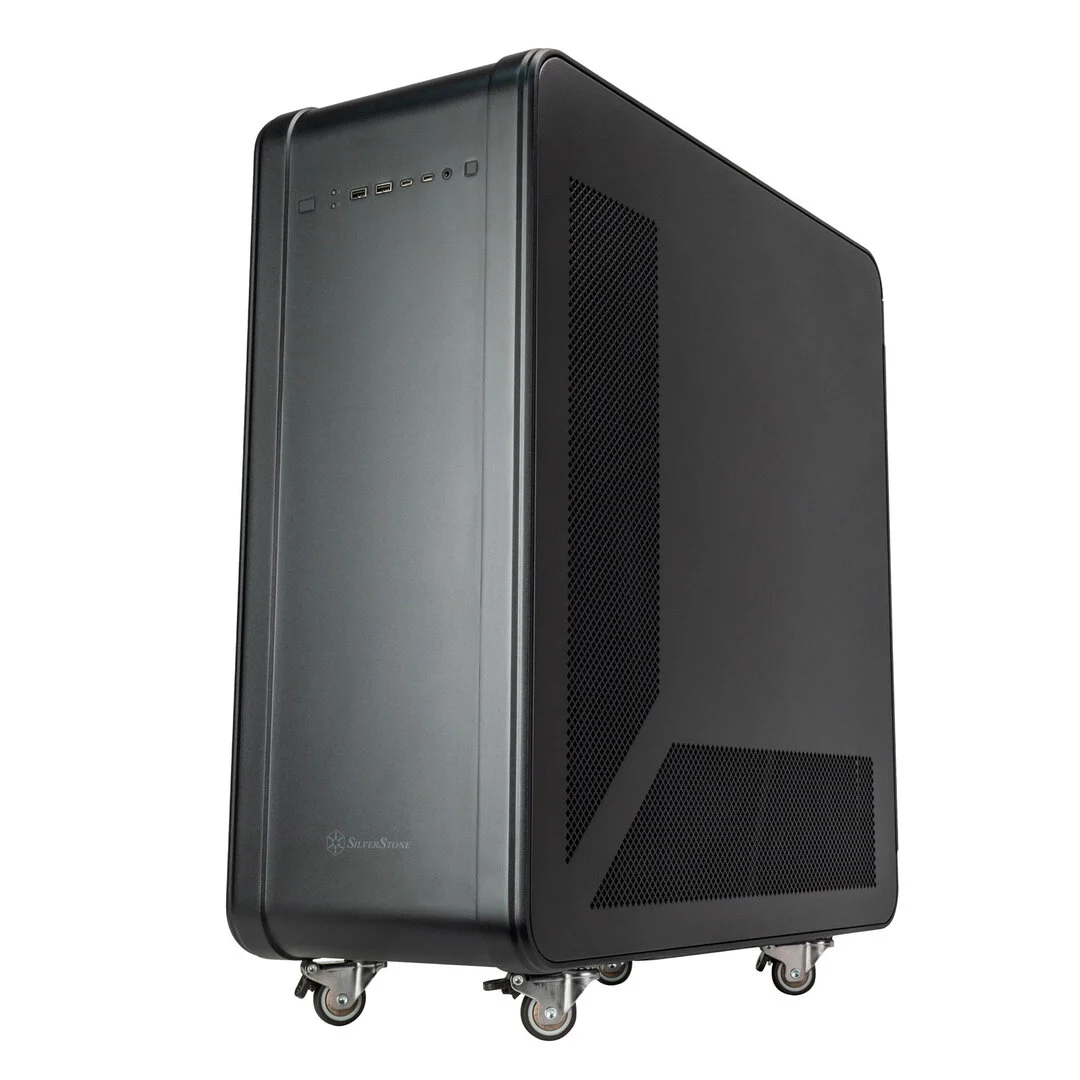
In the rarefied air of high-end PC enthusiast hardware, where the intersection of industrial design and extreme utility often dictates price, few names command the respect of Silverstone. With the launch of the Alta T1, the company has not merely released a new chassis; it has curated a statement piece that evokes the golden era of enthusiast computing while integrating the cooling demands of modern, server-grade hardware. Positioned as a "Premium Super-Tower," the Alta T1 brings a four-figure price tag to the table, forcing a conversation about what truly constitutes value in a market increasingly saturated with mass-produced, aesthetic-focused glass boxes.
Main Facts: Architecture of an Icon
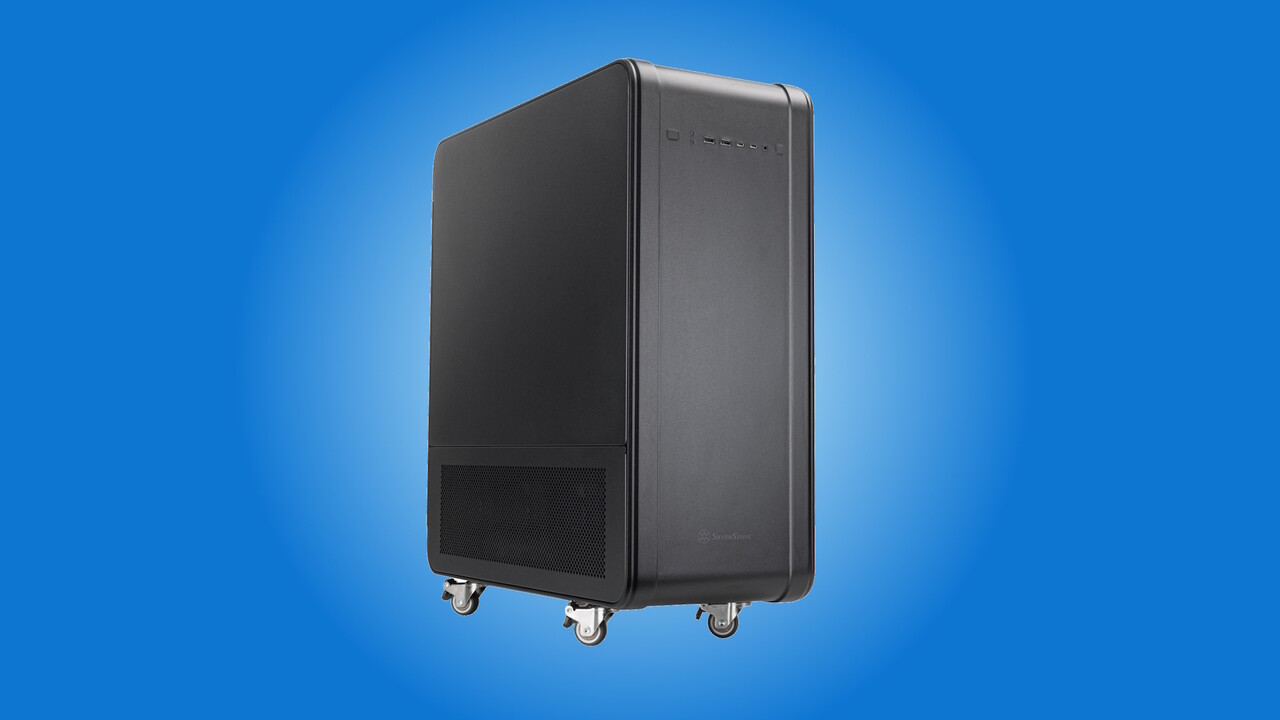
The Alta T1 is built on the philosophy of uncompromising space. Drawing heavy inspiration from the legendary Temjin series of the 2000s—a lineup that defined the "dream PC" for a generation of builders—the Alta T1 utilizes a premium aluminum unibody construction. This is not the thin, stamped steel commonly found in mid-tower cases; the panels range from 4.3mm to a staggering 8mm in thickness, providing a structural rigidity that feels more like an industrial server rack than a home workstation.
The interior layout is a masterclass in modularity and sheer volume. With eight expansion slots, the case supports E-ATX and SSI-EEB motherboards, effectively bridging the gap between high-end desktop gaming and professional workstation or server environments. The power supply versatility is equally impressive, supporting two standard ATX power supplies or, alternatively, 2U-CRPS and mini-redundant power supplies mounted sideways to optimize airflow and cable management.
Chronology of Development: From Concept to Premium Reality
The journey of the Alta series has been one of iterative refinement. Silverstone has spent years refining the "Alta" design language, which emphasizes vertical airflow and unconventional component mounting to maximize thermal efficiency.
- The Heritage: The early 2000s Temjin series established Silverstone as the premier brand for enthusiasts seeking "full tower" capabilities.
- The Predecessors: The evolution continued through the Alta D1, which introduced modular bays for workstation flexibility, and the Alta F1 and F2, which explored the limits of GPU mounting and angled motherboard layouts.
- The T1 Realization: The Alta T1 represents the culmination of these experiments. By synthesizing the material quality of the Temjin with the modern thermal requirements seen in the D1 and F2, Silverstone has effectively created a flagship for its own product ecosystem. The transition to a four-figure price point was not an overnight decision but a calculated move to position the T1 as a semi-professional grade tool rather than a disposable consumer product.
Supporting Data: Thermal and Physical Specifications
For the power user, the technical specifications of the Alta T1 are the primary selling point. The cooling capacity is arguably the most aggressive in the consumer market. Silverstone has designed the chassis to accommodate up to three 420mm radiators, distributed across the top and side panels. For those utilizing liquid cooling loops, a dedicated mounting bracket behind the front panel allows for the integration of a custom Distro-Plate, streamlining the routing process significantly.
Cooling and Hardware Compatibility
- Radiator Support: Triple 420mm radiator capacity provides thermal headroom for even the most overclocked dual-CPU or multi-GPU configurations.
- Air Cooling: If users opt for traditional air cooling, the clearance is generous, supporting CPU coolers up to 165mm in height. Removing the extension card support bracket increases this to 188mm.
- GPU Versatility: The case supports up to four graphics cards. To ensure stability, an extension card support bracket is included to prevent "GPU sag" and provide structural integrity for heavy, multi-fan cooling solutions.
- Drive Storage: In a standard configuration, the case can house up to eight storage drives. However, this modularity comes with trade-offs: utilizing a second ATX power supply necessitates the removal of the left radiator bracket and two drive mounts, forcing the user to prioritize between raw power delivery and massive liquid cooling capacity.
A unique feature necessitated by the sheer mass of this chassis is the inclusion of integrated rollers. When fully loaded with multiple GPUs, high-wattage power supplies, and liquid cooling fluid, the Alta T1 reaches a weight that makes traditional feet impractical. The rollers are factored into the height specifications, ensuring that the chassis remains functional even when it is too heavy to move manually.
Official Responses and Market Positioning
Silverstone has positioned the Alta T1 as a direct competitor to boutique-tier enclosures, such as those produced by In Win’s Signature Series. While the €1,200 (approx. $1,300) price tag is undeniably steep, the company argues that it is consistent with the cost of enterprise-grade server hardware.
"The Alta T1 is not for the average gamer," a spokesperson noted in a recent briefing. "It is for the professional, the content creator, and the enthusiast who requires the flexibility of a server in a form factor that respects the heritage of the enthusiast community."
In the current market, the price is indeed at the extreme upper limit. While competitors offer "premium" cases in the $300–$500 range, those products often rely on tempered glass and RGB aesthetics. The Alta T1, by contrast, relies on heavy-gauge aluminum and functional, high-density engineering. It is a "workstation-grade" chassis that happens to be available on the consumer market.
Implications for the Industry
The arrival of the Alta T1 signals a potential shift in the enthusiast market. For years, the trend has been toward "more glass, more lights." Silverstone’s pivot back to industrial-grade materials and pure functional engineering suggests that there is a growing segment of the market—the "prosumer"—that is tired of fragile materials and is willing to pay a premium for longevity and thermal performance.
The Sustainability Aspect
One of the overlooked implications of the Alta T1 is its potential for longevity. A chassis made of 8mm aluminum, with universal support for E-ATX and SSI-EEB boards, is not a product that will need to be replaced in three years. It is built to outlast multiple upgrade cycles. In an industry defined by planned obsolescence, the Alta T1 offers a refreshing, if expensive, alternative.
The "Cost-per-Performance" Debate
Critics may point to the price as a deterrent, but the Alta T1 serves as a benchmark for what is possible when design constraints are removed. When a user is building a workstation with four high-end GPUs and a dual-PSU setup, the cost of the chassis becomes a fraction of the total system cost. In that context, the Alta T1 is not an extravagant purchase; it is a logical investment in the stability and cooling of the components it houses.
Conclusion
The Silverstone Alta T1 is a defiant piece of engineering. It refuses to adhere to the modern industry trend of prioritizing visual "flash" over material substance. By channeling the spirit of the early 2000s and applying modern thermal design principles, Silverstone has created a chassis that is as much a piece of furniture as it is a computer component.
For the vast majority of users, the Alta T1 is overkill. But for those who demand the absolute maximum in cooling, expandability, and structural integrity, it stands alone. Whether it succeeds in shifting the market trend remains to be seen, but the Alta T1 serves as a necessary reminder that in the world of high-performance computing, space, material quality, and airflow will always be the ultimate luxuries. As it hits the market this autumn, the Alta T1 will likely become the "holy grail" of custom PC builds, a testament to what is possible when the price tag is the last thing considered.