Lina Hope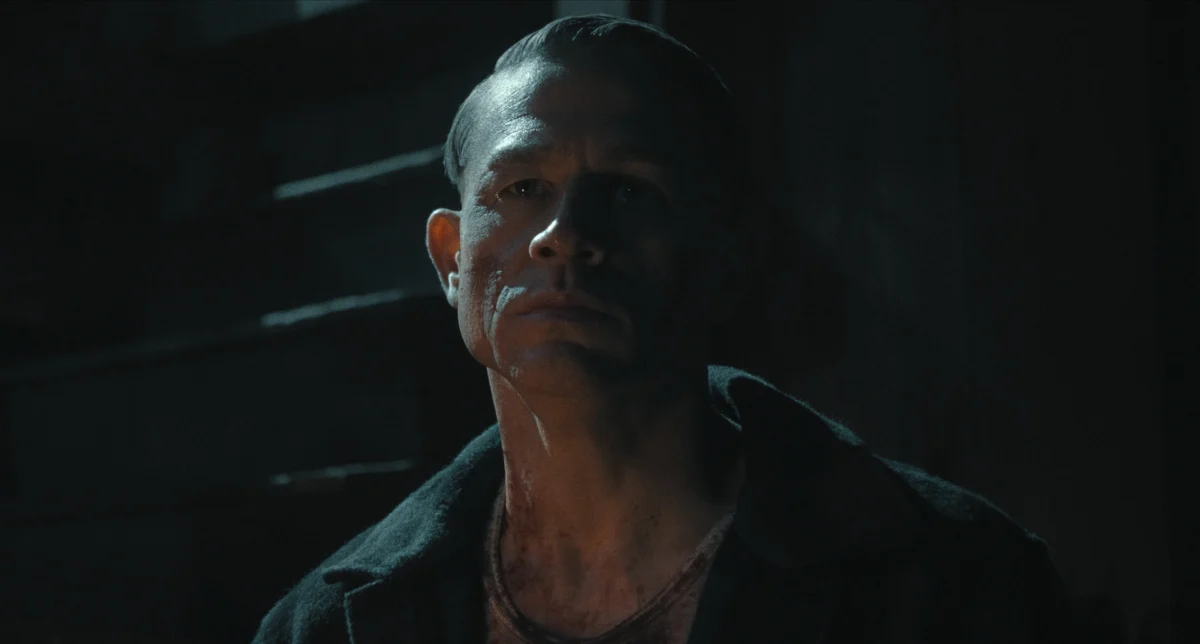
In the landscape of modern television, few producers command the psychological terrain quite like Ryan Murphy. With the latest installment of his Monster anthology series, Monster: The Ed Gein Story, Murphy turns his lens toward the man whose gruesome crimes served as the primary blueprint for cultural touchstones like The Silence of the Lambs, Psycho, and The Texas Chain Saw Massacre. Yet, capturing the essence of a real-life murderer who remains a symbol of American gothic horror requires more than just cinematography; it demands a sonic landscape that is as unsettling as it is complex.
Composer Mac Quayle, a long-time collaborator of Murphy’s, found himself tasked with this daunting mission. Speaking at IndieWire’s recent Craft Roundtables, Quayle provided a deep dive into the creative process behind the score, revealing how he distilled the notoriety of Ed Gein into a singular, malleable musical theme.
The Genesis of the Theme: Defining the Macabre
The creative process for a series of this magnitude begins long before the final edit. For Quayle, the challenge was to create a musical identity that could encompass not just the killer, but the toxic, suffocating influence of his mother—a central pillar of the Gein mythology.
“I just was like, ‘Okay, I need a creepy theme for Ed and his mother,’” Quayle explained during the roundtable. “And I’m hoping it’s going to be able to do some other things. The creepy part is what I started with, and that’s what I presented to Ryan.”
Quayle’s approach was rooted in the psychological dissonance characteristic of the real Ed Gein. He aimed for a sound that felt inherently wrong, a sonic manifestation of the isolation and psychological rot that defined Gein’s life in Plainfield, Wisconsin. By focusing on a core melodic motif, Quayle ensured that the music would not merely act as background noise, but as a recurring character that evolved alongside the narrative.
Chronology of a Score: From Concept to Continuity
The development of the score for Monster: The Ed Gein Story was not a linear path of simply adding "scary sounds" to footage. Instead, it was an exercise in structural engineering. Quayle discovered early on that by establishing a strong, singular theme, he could create a "throughline"—a musical thread that connected the disparate, often chaotic events of the show.

As the series moved through its narrative arc, Quayle began to manipulate his initial, dark motif. He found that the melody possessed a surprising level of elasticity. When the script called for a funeral scene, Quayle didn’t reach for a new piece of music; instead, he stripped the theme down, slowing the tempo and incorporating minor, mournful intervals to lean into the sorrow inherent in the tragedy.
“Sure enough, I took it for a funeral scene and I made it sad, and I was like, ‘Whew, it worked.’ It was dramatic,” Quayle reflected. The experiment proved successful enough that he pushed further. Later in the series, when the story necessitated a shift into more complex emotional territory—moments that required an "uplifting" or deceptive lightness—Quayle reharmonized the theme. By integrating major chords and brighter textures, he successfully transformed the sinister motif into something that felt deceptively hopeful, highlighting the dangerous duality of Gein’s public persona versus his private monstrosity.
Supporting Data: The Craft of the Modern TV Score
Quayle’s insights were part of a broader discussion on the state of television scoring, featured in IndieWire’s Craft Roundtables. He was joined by an elite cohort of composers who are currently defining the sound of the prestige TV era. The panel included:
- Jeff Russo (Alien: Earth): Discussing the challenge of blending science fiction scale with intimate human stakes.
- Brenton Vivian (The Madison): Exploring the nuance of character-driven scores in high-stakes dramas.
- Kris Bowers (Spider-Noir): Delving into the stylistic fusion required for noir-influenced superhero storytelling.
- Amanda Jones (Murderbot): Analyzing the mechanical and emotive balance needed for synthetic protagonists.
- John Paesano (The Boroughs): Examining the importance of setting-specific atmosphere in suburban horror-dramas.
These composers represent a shift in the industry where the "score" is no longer a secondary element of production. In the streaming age, where viewers are highly attuned to production values, the musical score is often the primary vehicle for world-building. For Quayle and his peers, the work involves a delicate balance between technical proficiency and emotional intuition.
The Psychology of Sound: Implications for the Genre
The use of a single, morphing theme to underscore a serial killer’s life carries significant weight. It implies that there is no separation between the "normal" man and the "monster"—the music itself suggests that they are the same entity, simply presented in different keys.
By utilizing a throughline, Quayle avoids the trap of generic "horror music" which often relies on jump-scare stings or dissonant noise. Instead, he provides a psychological anchor. This technique is particularly effective in Monster: The Ed Gein Story, where the audience is already aware of the outcome. The score serves to deepen the tragedy, reminding the viewer that even in the most horrific circumstances, there is a human element—however distorted—at play.

This approach aligns with the wider shift in the "True Crime" genre. Rather than merely sensationalizing the violence, creators like Murphy and composers like Quayle are increasingly focused on the "why." By utilizing music to reflect the shifting emotional states of a killer, the score invites the audience to consider the pathology of the perpetrator, creating a more immersive, albeit chilling, viewing experience.
Official Responses and Industry Reception
The reaction to the musical direction in the Monster anthology has been overwhelmingly positive, with critics noting that the audio design often does more to build tension than the visual effects themselves. During the roundtable, the panel discussed the collaborative relationship between composer and showrunner. For Quayle, the trust afforded by Ryan Murphy allows for a level of experimentation that is rare in the industry.
"It’s about finding that intersection where the music doesn’t just explain what we are seeing, but adds a layer of information that the image alone can’t provide," Quayle noted. This philosophy of "emotional layering" has become a hallmark of his work, ensuring that the Monster series remains a standout in a crowded genre.
Looking Ahead: The Future of Prestige Scoring
As the lines between television and film continue to blur, the demand for composers who can handle long-form narrative arcs is higher than ever. The work of Mac Quayle on Monster: The Ed Gein Story serves as a masterclass in this regard. By crafting a theme that is both "creepy" and "uplifting," he has demonstrated that the most effective scores are those that possess the versatility to evolve.
The IndieWire Craft Roundtables, which are now available for streaming on PBS SoCal and the PBS App, offer a rare glimpse into the mechanics of this craft. For aspiring composers and fans of the series alike, the panel provides essential context on how the "sound" of a monster is created—and why, sometimes, the most terrifying thing a viewer can hear is a familiar melody, played just a little bit wrong.
In conclusion, Monster: The Ed Gein Story stands as a testament to the power of the musical throughline. Through his calculated, nuanced, and deeply psychological score, Mac Quayle has managed to do what many thought impossible: he has given a voice—and a melody—to the silence of the lambs. As audiences continue to engage with the series, they are not just watching the story of a murderer; they are listening to the intricate, haunting composition of a man falling into the abyss.


 Suro Senen
 Raul Delapena Setiawan