

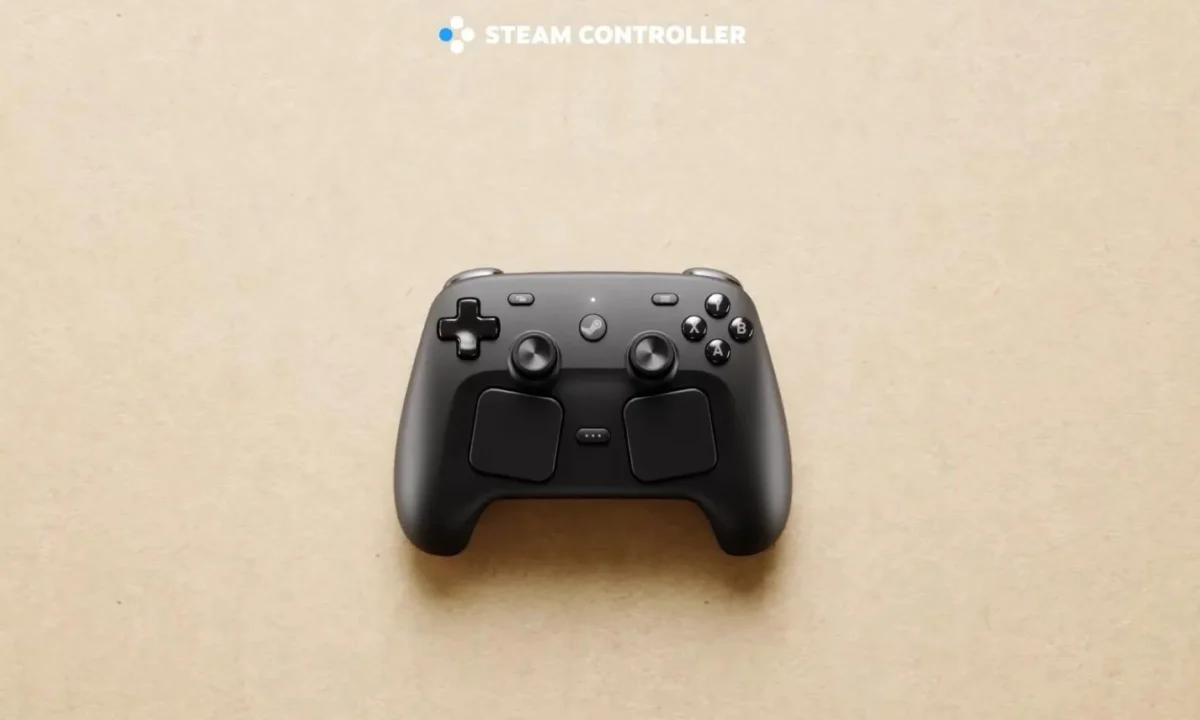
Valve’s highly anticipated return to the hardware space with the new Steam Controller has been met with both critical acclaim and significant logistical friction. Following a launch that saw initial units vanish from digital shelves almost instantly—triggering a secondary market frenzy and a subsequent move toward a reservation-based queue system—the controller has firmly established itself as a premium enthusiast peripheral. However, as the device finds its way into the hands of more users, a persistent critique has overshadowed its hardware prowess: the "walled garden" nature of its software ecosystem.
For all its ergonomic innovation, the controller’s deepest functionality remained tethered to the Steam client. While this was a boon for Steam-centric power users, it alienated those who prefer a diverse gaming library spanning multiple launchers like Epic Games, GOG, or standalone titles. Now, a critical update to the Simple DirectMedia Layer (SDL) is poised to bridge that divide, signaling a shift that could transform the Steam Controller from a platform-exclusive novelty into a universal powerhouse for PC gaming.
Chronology of a High-Stakes Launch
The journey of the new Steam Controller has been defined by rapid momentum and reactive problem-solving.

- Early April 2026: The Steam Controller is officially released to the public at a $99 price point. Early reviews praise its sophisticated haptic feedback and ergonomic layout, but stock is depleted in minutes.
- Mid-April 2026: Scalpers flood secondary marketplaces, listing the device at triple its MSRP. Valve responds by implementing a reservation queue system, mirroring the successful rollout strategy used for the Steam Deck, to ensure the hardware reaches genuine gamers.
- Late April 2026: Users begin expressing frustration regarding the controller’s dependency on the Steam client for advanced mapping and input features. The device struggles to interface seamlessly with non-Steam games, leading to a perceived limitation in its utility.
- May 2026: A breakthrough emerges. Developers contributing to the open-source SDL project push a major update, effectively enabling the Steam Controller to interface with non-Steam applications without relying on the proprietary Steam Input API for basic connectivity.
The "Walled Garden" Problem: Why Flexibility Matters
To understand why the latest update is so significant, one must understand the unique architecture of Valve’s controller. Unlike a standard Xbox controller, which relies on the industry-standard XInput API, the Steam Controller utilizes a proprietary, highly complex input mapping system. This system allows for granular control over haptics, trackpad sensitivity, gyro aiming, and back-button remapping.
When a user plays a game outside of Steam, the lack of this "middleware" meant that many of these advanced features were effectively disabled. The controller would often default to a generic "mouse-keyboard" emulation mode that felt clunky and imprecise. For a controller marketed as the "pinnacle of precision," this software bottleneck was a major point of contention. PC gamers, by nature, are platform-agnostic; they demand that their hardware work across their entire library, not just a curated selection.
SDL Support: A Technical Lifeline
The recent integration of the Steam Controller into the Simple DirectMedia Layer (SDL) is a game-changer. SDL is a cross-platform development library designed to provide low-level access to audio, keyboard, mouse, joystick, and graphics hardware via OpenGL and Direct3D. It is the invisible glue that holds much of the PC gaming ecosystem together.

By adding the Steam Controller to the SDL repository, Valve and the open-source community have essentially given the device a "universal translator." According to technical documentation spotted by Phoronix, this update provides a standardized mapping layer. This means that any game engine or application that utilizes SDL—which covers the vast majority of modern indie titles and many AAA releases—can now recognize the controller’s unique inputs without needing a Steam wrapper to interpret the data.
Functional Scope of the Update
Early testing reports from developers and testers involved in the SDL pull request indicate that the implementation is robust, though not without minor teething issues. The functionality now extends to:
- Capacitive Stick Touch: Enabling context-sensitive inputs based on thumb placement.
- Gyro and Accelerometer: Providing high-fidelity motion aiming that previously required custom Steam configurations.
- Grip and Back Buttons: Allowing for more efficient control schemes in complex games.
- QAM (Quick Access Menu) Button: Mapping the secondary hardware keys to system-level shortcuts.
Official Stance and the XInput Dilemma
Despite the excitement surrounding this update, Valve has been careful to manage expectations. In a candid interview with Digital Foundry, Valve developer Pierre-Loup Griffais clarified why the company did not simply opt for standard Windows XInput support, which would have made the controller plug-and-play like a standard Xbox gamepad.

"XInput is a legacy standard," Griffais noted. "It was designed for the Xbox 360 controller architecture, which lacks trackpads, gyro, and high-degree back-button customization. If we forced the Steam Controller to emulate XInput, we would be lobotomizing the device. Users would lose 60% of what makes this controller special just to gain universal compatibility."
Valve’s strategy, therefore, is to avoid the "lowest common denominator" approach. By supporting modern frameworks like SDL, they aim to provide universal compatibility while retaining the advanced feature set that makes the controller an enthusiast-grade peripheral.
Implications for the Gaming Ecosystem
The successful integration of the Steam Controller into the broader PC landscape has profound implications for both hardware manufacturers and gamers.

1. The Death of Proprietary Lock-in
This move sets a precedent for future peripherals. It suggests that even if a manufacturer creates a unique hardware input (like trackpads or complex gyro arrays), they are now expected to support open-source standards to ensure longevity. This is a win for consumer rights, as it prevents companies from "bricking" the utility of a peripheral if their proprietary software platform ever fades in popularity.
2. A New Standard for "Pro" Controllers
The Steam Controller is effectively challenging the dominance of the Xbox Elite and PlayStation DualSense Edge. By proving that a highly specialized controller can function across all PC storefronts, Valve is pressuring competitors to improve their own driver support for non-console platforms.
3. Challenges to Overcome
The transition is not yet perfect. Early adopters have noted that running the Steam client in the background while using the controller in an SDL-supported game can lead to "double-input" scenarios. This occurs when both the Steam Input wrapper and the native SDL driver attempt to manage the device simultaneously. Valve and the SDL contributors are reportedly working on a "passthrough" mode that would allow the device to detect whether the Steam client is active and prioritize the correct driver accordingly.

Conclusion: A Hardware Platform Reborn
The Steam Controller’s recent history is a case study in the evolving relationship between hardware and software. Valve initially created a device that was, by design, an extension of its digital storefront. However, the market’s demand for flexibility has forced an evolution.
By embracing the open-source SDL standard, Valve has successfully navigated the difficult balance between maintaining the controller’s unique, high-end features and ensuring that it can function as a "daily driver" for the modern PC gamer. While the double-input bugs and the requirement for SDL-compatible titles suggest that the "universal" promise is still in its infancy, the trajectory is clear. The Steam Controller is no longer just a Steam peripheral; it is becoming a legitimate contender for the best all-around input device for the PC gaming platform.
As the developer community continues to refine the mapping profiles and iron out the background-process conflicts, the Steam Controller stands as a testament to the idea that in the world of PC gaming, the user’s right to choose their platform should always be supported by the hardware they own. The future of gaming input is not locked behind a single launcher—and thanks to this latest development, the Steam Controller is finally ready to lead that charge.












No comments yet. Be the first to join the conversation!