Reynand Wu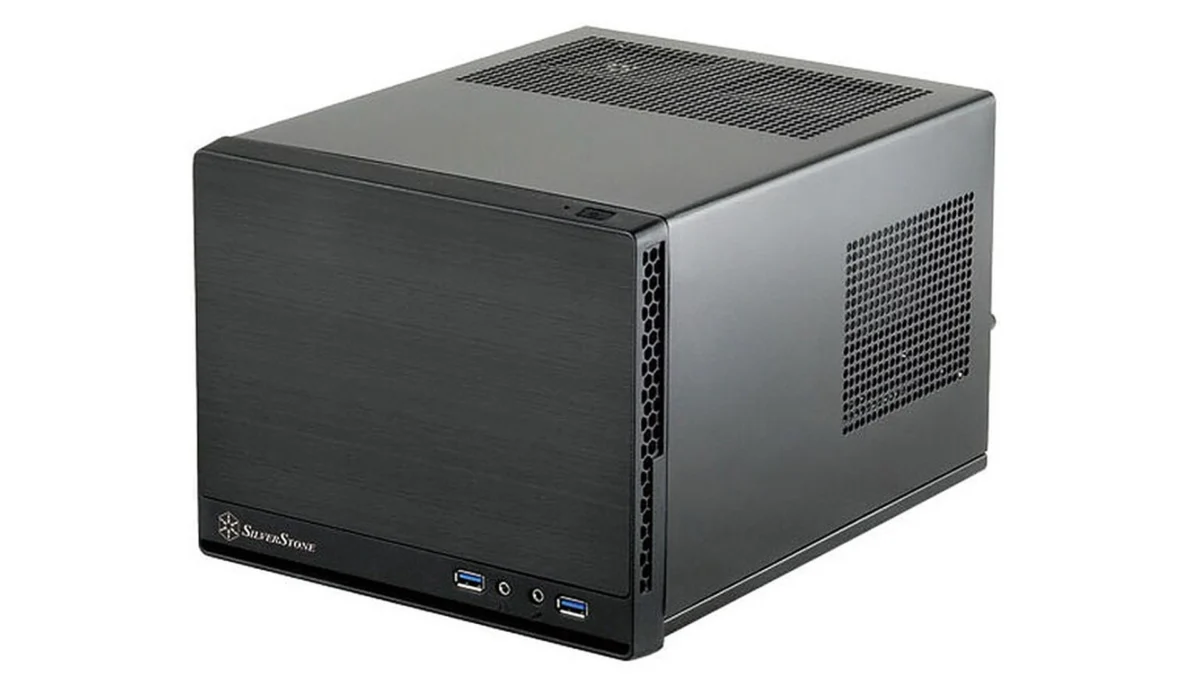
In the rapidly evolving landscape of living-room gaming hardware, a new challenger has emerged from an unlikely source. LDLC, the prominent French technology retailer, recently unveiled a compact gaming desktop dubbed the "PC Box." However, the device’s brief, controversial stint under the name "Stim Machine" has ignited a firestorm of discussion regarding brand imitation, hardware philosophy, and the ongoing struggle to define the "perfect" living room console-PC hybrid.
While Valve’s Steam Machine has positioned itself as a refined, lifestyle-oriented appliance designed for the aesthetic standards of modern living, LDLC’s entry represents a raw, performance-first alternative. This clash of ideologies—form versus function—is now at the heart of a debate among enthusiasts who are forced to choose between the polish of a curated console experience and the raw, unbridled power of a boutique PC.
Chronology of a Naming Faux Pas
The story began with a quiet launch on the LDLC web store, where the company introduced a small-form-factor (SFF) PC designed to sit under the television. In a move that caught industry observers off guard, the device was explicitly marketed as the "Stim Machine."
The name, a transparent play on Valve’s "Steam Machine," was initially dismissed by many as a placeholder or a placeholder-turned-joke that had accidentally slipped into production. However, as listings propagated across social media and tech forums, it became clear that the name was an intentional, albeit ill-advised, marketing choice.
Within 48 hours of the product’s digital footprint expanding, French tech outlet Journal Du Geek reported on the peculiar naming convention. The backlash was immediate. The blatant nature of the parody—reminiscent of low-budget knock-offs—drew ire from consumers who expected a more professional branding effort from a retailer of LDLC’s stature.
By the third day, the "Stim Machine" moniker had been scrubbed from the official LDLC listing. References were systematically replaced with the more utilitarian "LDLC PC Box" or "PC Box Kit." While LDLC has not issued a formal apology, the swift pivot suggests that legal counsel or marketing teams recognized that the "Stim" brand was not only a liability but a distraction from the hardware’s actual technical merits.
Technical Analysis: Muscle vs. Aesthetics
The fundamental difference between Valve’s Steam Machine and the LDLC PC Box lies in their design philosophies. Valve has prioritized the "appliance" experience: quiet fans, sleek lines, and a chassis designed to blend into high-end furniture. LDLC, conversely, has leaned into the "DIY-adjacent" mentality.
Under the Hood
The PC Box is undeniably the more powerful machine in a direct benchmark-to-benchmark comparison. It features:
- Processor: AMD Ryzen 5 8400F.
- Graphics: Radeon RX 9060 XT.
When contrasted against the Steam Machine’s Zen 4 and RDNA 3 architecture, the PC Box’s RX 9060 XT acts as the primary differentiator. For gamers prioritizing raw frame rates and graphical fidelity over noise profiles, the LDLC box is the superior performer. It is designed for users who want to run the latest titles at 4K resolution without compromising on texture quality or ray-tracing settings.
The Trade-off
However, this performance comes with significant caveats. Hardware experts have noted that the LDLC PC Box is significantly bulkier than its Valve counterpart. While the Steam Machine is engineered to fit into a standard Scandi-style media cabinet with ease, the LDLC PC Box has a more industrial, utilitarian aesthetic.
As James, our lead hardware reviewer, noted: "The Steam Machine looks like it could blend into any Scandi cabinet; the Stim Machine looks like it should be on the work desk of a heavily ennuied photocopier sales manager." The thermal management in such a compact chassis also suggests that the machine will likely run louder under load, a factor that can be a dealbreaker for a device intended to sit mere feet away from a user on a sofa.
Furthermore, LDLC does not provide the "out-of-the-box" experience that SteamOS offers. Users are expected to handle the installation and configuration of the operating system themselves, adding a layer of technical friction that Valve has worked tirelessly to remove.
Supporting Data and Pricing Realities
Both devices have launched into a market defined by the ongoing global memory and component crisis, resulting in price tags that many consumers find difficult to justify.
| Feature | LDLC PC Box (Kit) | LDLC PC Box (Pre-Assembled) | Steam Machine (512GB) | Steam Machine (2TB) |
|---|---|---|---|---|
| Price | €999.99 | €1,039.99 | €1,039.00 | €1,359.00 |
| OS | User-installed | User-installed | SteamOS (Pre-installed) | SteamOS (Pre-installed) |
| Target Audience | Power Users/Enthusiasts | Enthusiasts | Casual/Living Room Users | High-end Enthusiasts |
The pricing parity is startling. The LDLC PC Box is priced aggressively, but when factoring in the cost of time—specifically the labor required for the user to configure the software—the value proposition becomes nuanced. For the Steam Machine, the premium price is partially justified by the seamless, turn-key software experience provided by Valve. For the LDLC PC Box, the buyer is paying for hardware headroom, not for the "ecosystem" convenience.
Official Responses and Industry Implications
The response from the broader hardware community has been one of skepticism. Industry analysts suggest that LDLC’s attempt to draft off the momentum of the Steam Machine is a symptom of a larger trend: retailers are increasingly desperate to capitalize on the resurgence of the "Living Room PC" category.
Valve has remained characteristically silent regarding the "Stim Machine" incident, likely viewing it as an insignificant annoyance rather than a competitive threat. However, the incident serves as a warning for other retailers: in an age of social media, "cheeky" branding rarely succeeds in the long term. It can alienate the very core enthusiasts who would otherwise be the first to adopt high-performance hardware.
From an economic perspective, the PC Box also underscores the fragility of the current hardware market. With memory and semiconductor supply chains still recovering, the high entry point for these devices limits them to a niche demographic. Neither machine is currently positioned to challenge the dominance of the PlayStation 5 or Xbox Series X, both of which offer a far more stable price-to-performance ratio for the average consumer.
The Road Ahead: Where Do We Go From Here?
The saga of the "Stim Machine" is ultimately a microcosm of the current state of PC gaming. We are currently in a transition period where the lines between the "office desktop" and the "living room console" are blurring.
For the average consumer, the lesson of this launch is clear: hardware specifications, while important, are only half the battle. The user experience—the silence of the fans, the reliability of the software, and the physical footprint of the unit—remains the ultimate arbiter of success.
As we look toward the future, it is unlikely that LDLC’s PC Box will topple Valve’s Steam Machine in the public consciousness. The Steam Machine represents a vision of a unified, polished future, whereas the LDLC PC Box represents the current, chaotic reality of building a PC in a world where component prices are high and patience is thin.
Perhaps the most prudent advice for the gaming community remains the same as it has been for years: unless an immediate upgrade is required, there is little harm in waiting. With the volatile state of the memory market and the experimental nature of these early SFF units, waiting for the technology to mature—and for the prices to stabilize—remains the most sensible strategy for the vast majority of players. Whether one chooses the polished console experience or the raw, "mulching" performance of a DIY-style box, the choice remains a luxury in a market that has yet to prove it can provide true value for the average living room gamer.


 Asro
Asro
 Muslim