


The foldable smartphone market, long considered a niche playground for early adopters, is bracing for its most transformative year yet. With recent intelligence surfacing regarding Samsung’s upcoming lineup, the industry is shifting its focus from "can it fold?" to "how thin can it get?" Fresh leaks concerning the Samsung Galaxy Z Fold 8 have sparked intense speculation, painting a picture of a device that prioritizes extreme ergonomics and a revamped aspect ratio, signaling a direct challenge to the anticipated entry of Apple into the foldable arena.
The Core Revelation: An "Insanely" Thin Profile
The latest discourse on the future of Samsung’s flagship foldable was ignited by industry analyst and prominent leaker Sonny Dickson. By showcasing a physical dummy unit of the device—a tool typically used by third-party accessory manufacturers to ensure case compatibility prior to a device’s official launch—Dickson provided the most tangible evidence to date of Samsung’s design direction.
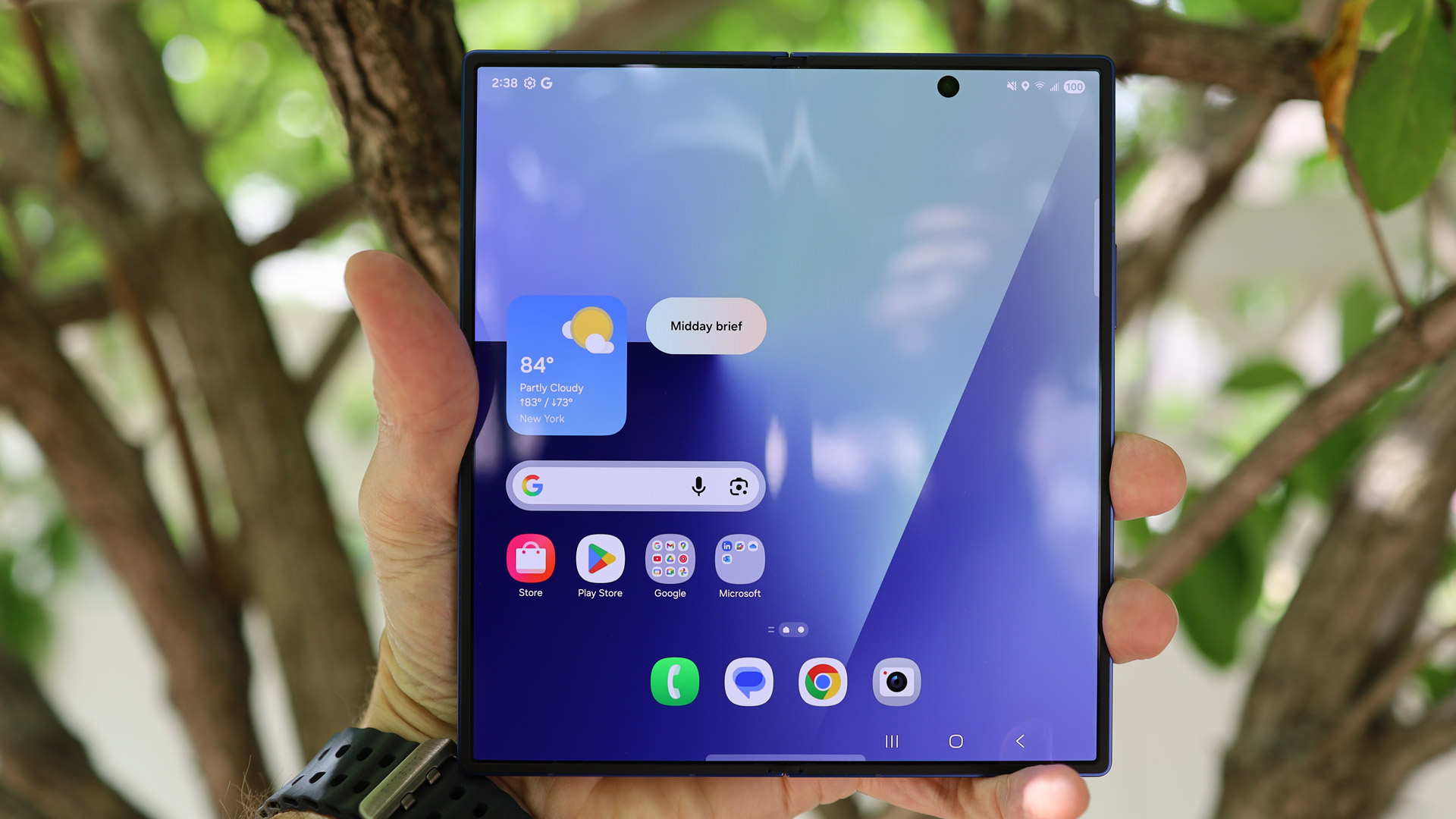
The most striking takeaway from the footage is the device’s profile. Dickson described the thinness of the unit as "insane," drawing a bold comparison to the Samsung Galaxy S25 Edge when unfolded. This marks a significant departure from the perception of foldables as bulky, two-piece devices that feel cumbersome in the pocket. If the final retail unit maintains the dimensions of these dummy models, Samsung will have achieved a milestone in hardware engineering: making a dual-screen device feel as sleek as a standard, high-end monolithic smartphone.
However, the response from the public has been polarized. While some tech enthusiasts laud the engineering feat, others have expressed reservations, using terms like "chunky" and "weird." These criticisms often stem from the trade-offs required to reach such thinness, such as potential compromises in battery capacity, camera sensor depth, or thermal management.
Defining the Lineup: The "Wide" Strategy
A critical clarification has emerged regarding the branding of these devices. According to reports from SamMobile, the industry has been misidentifying the upcoming models. The device previously touted as the "Fold 8" is actually the "Galaxy Z Fold 8," while the direct successor to the previous generation, the Galaxy Z Fold 7, will be rebranded as the "Galaxy Z Fold 8 Ultra."
This nomenclature serves a functional purpose. The "Wide" moniker—often attached to the base model in leaks—refers to the fundamental change in the phone’s aspect ratio. Current book-style foldables, such as the Z Fold 7, utilize a tall, narrow outer display that mimics a standard smartphone but feels claustrophobic for typing. When opened, these devices often present a near-square inner display, which is excellent for productivity but suboptimal for standard media consumption, such as 16:9 or 21:9 video content.

By shifting toward a wider, shorter aspect ratio, Samsung is moving closer to a traditional tablet experience. This design choice is not merely an aesthetic preference; it is a direct response to the evolving needs of mobile users who increasingly consume high-definition media on the go.
Chronology of the Foldable Evolution
To understand the significance of the Z Fold 8, one must look at the trajectory of the form factor over the last decade:
- 2019: The Prototype Phase. Samsung launches the original Galaxy Fold. It was a proof-of-concept, plagued by screen durability issues and a thick, industrial hinge design.
- 2021-2023: The Refinement Era. With the Z Fold 3 through Z Fold 5, Samsung focused on water resistance, S-Pen integration, and closing the gap in the hinge. The form factor, however, remained consistently tall and narrow.
- 2024: The Competitive Pivot. Competitors, particularly from the Chinese market like Honor and Huawei, began releasing foldables that were significantly thinner than Samsung’s offerings, forcing Samsung to reconsider its architectural approach.
- 2025: The Year of the "Ultra." The transition to the "Ultra" branding suggests a segmentation of the market. Much like the S-series, Samsung is looking to offer a "standard" premium foldable and a "pro" version that likely packs superior optics and a larger battery.
- 2026: The Current Leak Cycle. As we look toward the launch of the Z Fold 8 series, the narrative has shifted from durability to form factor perfection.
The Apple Factor: A Looming Market Disruption
The elephant in the room remains the rumored "iPhone Fold." For years, rumors have suggested that Apple is waiting for the technology to mature before entering the market. Reports indicate that Apple is eyeing a September launch for its first foldable, potentially coinciding with the iPhone 18 Pro.
Samsung’s decision to move toward a wider aspect ratio is widely interpreted as a pre-emptive strike. Industry analysts suggest that Apple’s internal testing has focused on a 4:3 aspect ratio when open, which is considered the "gold standard" for tablet-like utility. By adopting a similar, wider footprint, Samsung is ensuring that when the iPhone Fold finally arrives, developers will have already optimized their applications for a "wide" foldable experience, thereby nullifying any "first-mover" advantage Apple might have hoped to claim.
Furthermore, Apple is rumored to be developing proprietary hinge technology that could render the infamous "crease"—the Achilles’ heel of all foldable displays—nearly invisible. Samsung is under immense pressure to either match this or offer a superior software experience to maintain its market dominance.
Implications for the Ecosystem
The move toward thinner, wider devices has profound implications for the mobile ecosystem:
- Software Optimization: The wider screen will force app developers to rethink multi-window multitasking. Instead of two narrow, vertical columns, apps will likely be able to display side-by-side in more natural, horizontal layouts.
- Accessory Ecosystem: As seen with the dummy units, case manufacturers are already preparing for the new dimensions. This suggests that the "thin" design may necessitate new materials or hinge protection designs that don’t add excessive bulk.
- Battery and Thermal Management: Physics dictates that thinner devices have less room for battery cells. Samsung will likely rely on high-density battery technology and more efficient chipsets (likely the next-generation Snapdragon for Galaxy) to ensure that the Z Fold 8 does not suffer from subpar battery life.
- Market Segmentation: By separating the Z Fold 8 from the Z Fold 8 Ultra, Samsung is essentially acknowledging that the foldable market is no longer a monolith. There is a demand for a lighter, "everyday" foldable and a "power-user" version that houses the best hardware, regardless of weight or thickness.
Official Responses and Industry Outlook
While Samsung has maintained its traditional silence regarding unreleased products, the company has been vocal about its commitment to the "form factor of the future." In recent investor calls, Samsung executives hinted at a "radical redesign" of the Z series, focusing on portability and screen real estate.
Market research firms remain optimistic. The foldable sector is projected to grow by 20% year-over-year, and Samsung’s ability to refine the hardware will be the primary driver of this growth. However, the rise of competitors offering similar hardware at lower price points means that Samsung can no longer rely on brand name alone. The Galaxy Z Fold 8 will need to prove that its "insane" thinness is matched by a level of reliability and software integration that, as of yet, no other manufacturer has managed to master.
Conclusion: The Final Frontier of Foldables
As we move toward the anticipated launch window, the narrative surrounding the Galaxy Z Fold 8 is clear: Samsung is playing for keeps. By embracing a wider aspect ratio and pushing the boundaries of physical thickness, they are not only reacting to the threat posed by Apple and Chinese rivals but are actively attempting to define the "perfect" foldable device.
The path from the first, clunky iteration of the Galaxy Fold to the sleek, refined profile of the upcoming Z Fold 8 is a testament to the rapid pace of mobile innovation. Whether these design choices will resonate with the average consumer or remain a point of contention remains to be seen. What is certain, however, is that the foldable phone has finally moved past its experimental phase. It is now a mature product category, and the battle for the top spot is only just beginning. As fans and critics alike wait for the official unveiling, one thing remains certain: the days of the bulky, narrow foldable are numbered, and the future, quite literally, is shaping up to be much thinner and much wider.












No comments yet. Be the first to join the conversation!