Nana Muazin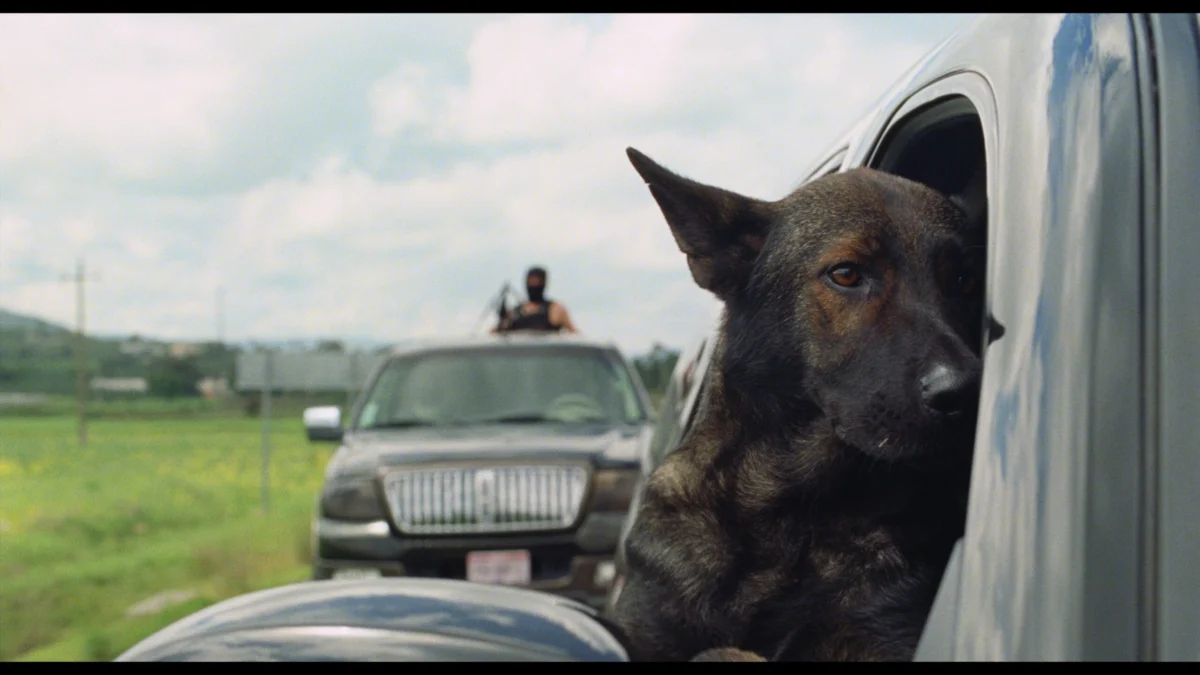
Introduction: A Reflection of the Human Condition
The adage that a dog is a man’s best friend is a sentiment often relegated to Hallmark sentimentality, but in the hands of Mexican filmmaker Rodrigo Garcia Saiz, it becomes a profound exploration of grief, moral ambiguity, and the search for salvation in a fractured world. His sophomore feature film, Morro, currently a standout contender in the New Directors category at the 74th San Sebastián Film Festival, is more than a narrative about a pet—it is a meditation on the collateral damage of violence in rural Mexico and the transformative power of unconditional love.
For Garcia Saiz, whose previous work Lluvia cemented his reputation as a filmmaker of nuance and emotional depth, Morro represents his most personal project to date. By centering the story on a man who finds his own humanity mirrored in the eyes of a creature caught in the crosshairs of a drug lord’s cruelty, Garcia Saiz challenges audiences to reconsider the nature of rescue: Who, in the end, is truly saving whom?
The Narrative Premise: Guilt and the Shadow of Violence
Set against the backdrop of a rural Mexico where violence is an atmospheric constant rather than a loud spectacle, the film follows Mateo, a village veterinarian. Mateo is a man defined by absence, living in the quiet, stifling vacuum left by the death of his son—an unresolved grief that has rendered him a ghost in his own life.
His routine is irrevocably altered when he is forced to treat Morro, a dog belonging to a local drug lord. The dog, much like Mateo, is an inadvertent victim of a brutal world. As Mateo nurses the animal back to health, the film eschews dialogue in favor of a profound, wordless communion.
Garcia Saiz is deliberate in his insistence that Morro is not a film about drug trafficking. "I wanted to reflect on the violence in Mexico since I left it," says the director, who now resides in Madrid. "But not so much about showing the violence itself, but about what happens to the people who stay. The violence is more in the moral and physical context. It is about how an animal that doesn’t judge, that asks for nothing but love and gives love, could help."
Chronology of Conception: From Real-Life Tragedy to Screen
The genesis of Morro was not found in a writer’s room, but in the harrowing reality of conflict zones. Garcia Saiz, driven by a desire to understand the human cost of the regional strife he had observed from afar, began conducting interviews in areas heavily impacted by cartel activity.
"I started researching, went into conflict zones, and discovered this story, which is loosely based on the experience of someone I met through a friend," Garcia Saiz explains. The process was delicate; he had to earn the trust of a survivor who was initially hesitant to recount his experiences. "At first, he was a little hesitant because he didn’t really want to tell us the whole story. But little by little, he opened up. I gradually gained his trust, and he started telling me things."
Once the core of the story was established, Garcia Saiz collaborated with screenwriter Carlos Armella to flesh out the emotional arc. The realization that his fictionalized screenplay mirrored the lived reality of those on the ground solidified the project’s purpose. "It was really exciting to realize that what I had in my head actually happens in real life," he recalls. "So I made the story very much my own and it became a story that really came from my heart."
Supporting Data: The Artistic Choices Behind the Lens
One of the most striking aspects of Morro is the director’s decision to shoot on 35mm film, a stylistic choice that borders on the radical in an era of digital convenience. Collaborating with director of photography Alfonso Herrera Salcedo, known for his work on Spectre, Garcia Saiz sought an aesthetic that felt tactile, authentic, and disciplined.
"Shooting on 35mm was also a way of going back to basics," Garcia Saiz explains. The set functioned as a sanctuary of focus. "It became almost like a church where everyone had to be quiet. There were no cell phones because the film stock is obviously very expensive, and you can’t just improvise, especially when you’re working with an animal and such a great actor."

This discipline extended to the casting of the titular character. The director was adamant about avoiding trained "studio dogs." He needed an animal with a natural, expressive presence that could hold its own against the seasoned performance of lead actor Gustavo Sánchez Parra. The serendipitous discovery of the dog—who ultimately formed such a deep bond with Sánchez Parra that the actor adopted him—provided the film with its emotional anchor.
"He looked a little like the dog from the story I researched," says the director. "When I saw him, I fell in love with him because he had such a beautiful expression. He could also believably be a drug dealer’s dog, but at the same time, he’s such a gentle, sweet animal."
Official Perspectives and Producer Insights
The production of Morro is a collaborative effort, bringing together a powerhouse team of producers including Paola Cortés, Alberto Müffelmann, Julia Cherrier, and Pablo Guerrero. The film is produced by Calouma Films in partnership with Central Films and The 42 Film.
The production team highlights the film as a testament to the endurance of the human spirit. By focusing on the bond between Mateo and Morro, the filmmakers argue that in the face of systemic corruption and violence, the smallest acts of mercy—tending to an injured animal—are the most significant acts of resistance.
Implications: A Broader Look at Contemporary Cinema
Morro serves as a poignant reminder that the most impactful stories are often the quietest. By stripping away the tropes of the crime genre, Garcia Saiz shifts the focus to the psychological landscape of rural Mexico. The film asks the audience to consider the moral weight of living in a place where violence is the baseline, and how one maintains a sense of self when the environment is constantly eroding the soul.
The film also signals a shift in Garcia Saiz’s artistic trajectory. His openness about his next project—a film dealing with his relationship with his father, who passed away on the director’s tenth birthday—suggests that Morro is part of a larger, ongoing process of self-examination.
Conclusion: The Legacy of a Gentle Story
As the 74th San Sebastián Film Festival progresses, Morro stands as a quiet powerhouse, an example of how a narrative centered on the bond between a man and a dog can hold a mirror up to society. It is a film that refuses to offer easy answers or explicit depictions of horror, choosing instead to find hope in the silent, judgment-free connection between two survivors.
Through his uncompromising approach to 35mm film, his refusal to rely on animal training tricks, and his deep research into the realities of those living in conflict, Garcia Saiz has crafted a film that feels both intimate and universal. It is a profound statement on redemption, suggesting that while we cannot always change the violent world around us, we can choose to be the person who saves, and is saved by, the innocent creatures that cross our path.
Film Details:
- Director: Rodrigo Garcia Saiz
- Starring: Gustavo Sánchez Parra
- Producers: Calouma Films, Central Films, The 42 Film
- Festival Run: 74th San Sebastián Film Festival (Sept. 18-26)


 Nana
Nana
 Lina Hope