Suro Senen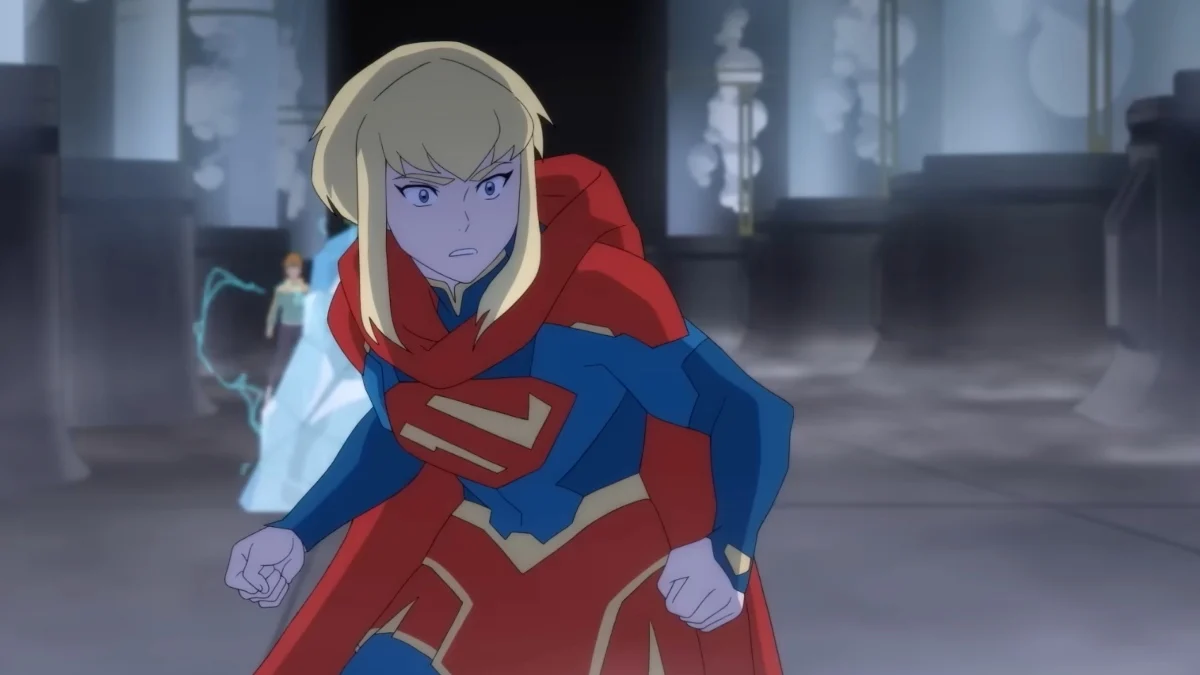
By Editorial Staff
June 14, 2026
In the ever-expanding landscape of DC Comics adaptations, few characters have undergone as many seismic shifts as Kara Zor-El. As My Adventures With Superman kicks off its third season on Adult Swim, viewers are introduced to a version of Supergirl that feels distinctly fresh—a far cry from the gritty, cynical portrayal expected in upcoming big-budget feature films.
This juxtaposition highlights a fundamental truth about the DC mythos: Supergirl is not a static icon, but a fluid archetype. Her presence in the animated hit series, voiced by Kiana Madeira, serves as a masterclass in how legacy characters can be reinvented for new generations without losing their core essence.
The Core Conflict: Identity in the Age of Multiverses
The premiere of My Adventures With Superman season three, titled "Into the New World," wastes no time in establishing its stakes. We find Kara Zor-El at a crossroads. Having spent the entirety of the second season under the thumb of the malevolent AI Brainiac—who manipulated her into acting as a planetary antagonist—Kara is finally liberated.
The episode features a poignant, definitive farewell to the entity she once called "Father," a moment that signals the death of her indoctrination and the birth of her autonomy. Unlike previous iterations of the character who arrive on Earth as a fully formed hero or a lost child, this Kara is a survivor of trauma attempting to integrate into a social circle that already includes Clark Kent, Lois Lane, and Jimmy Olsen.
For the cynical observer, the timing of her arrival—just weeks before the theatrical release of the Supergirl film featuring Milly Alcock—might smell like corporate synergy. However, any viewer expecting the world-weary, hard-edged "Woman of Tomorrow" trope will be pleasantly surprised. Madeira’s Kara is earnest, occasionally socially awkward, and deeply empathetic. She is a character in the process of becoming, rather than one who has already arrived.
A Chronology of Reinvention: From Silver Age to Modernity
To understand why this version of Supergirl feels so revolutionary, one must look at the character’s tumultuous history. Since her debut in Action Comics #252 in 1959, Kara has been a canvas for the shifting cultural tides of the 20th and 21st centuries.
The Silver Age: The "Superboy in a Miniskirt" Era
In her early appearances, Kara was defined almost exclusively by her relationship to her cousin. She lacked the agency of Superman; her stories were relegated to the domestic, the romantic, or the futuristic escapades of the Legion of Super-Heroes. She was, for all intents and purposes, a supporting player in a world built for the Man of Steel.
The 1972 Pivot: The Modern Woman
The 1970s marked the first major attempt to give Supergirl a soul of her own. With her 1972 solo series, writers shifted her aesthetic—swapping the caped costume for blue blouses and red shorts—and gave her a professional identity. She became a "Kryptonian Mary Tyler Moore," balancing her dual existence with a sense of career-focused ambition that mirrored the second-wave feminist movement.
The Era of Experimentalism
Post-Crisis on Infinite Earths, the character entered a period of radical experimentation. DC Comics tested the limits of the brand: she became a shapeshifting protoplasm, a human teenager imbued with magic, and even the daughter of the cosmic tyrant Darkseid. While these iterations were polarizing, they proved that "Supergirl" was a mantle that could survive any number of narrative deconstructions.
Supporting Data: The Power of Character Divergence
The "anti-canonical" nature of the current landscape is not a bug; it is a feature. By allowing different mediums to iterate on the character simultaneously, Warner Bros. and DC are effectively conducting a grand experiment in narrative flexibility.

| Iteration | Key Tone | Primary Focus |
|---|---|---|
| Silver Age | Whimsical/Teen-centric | Adolescent milestones |
| 1972 Series | Professional/Modern | Balancing career and identity |
| Benoist (TV) | Hopeful/Altruistic | Establishing a heroic legacy |
| Madeira (Animated) | Vulnerable/Exploratory | Healing from trauma/Social growth |
| Alcock (Film) | Cynical/Gritty | Existential isolation |
This data confirms that the "definitive" Supergirl does not exist. Instead, we have a collection of lenses through which we view the same foundational story: a survivor of a lost world seeking belonging in a world that doesn’t quite know how to handle her power.
Official Perspectives and Creative Intent
The creative team behind My Adventures With Superman has been vocal about their desire to prioritize the "trio" dynamic that anchors the show. By introducing Kara, they are testing the tensile strength of the friendship between Clark, Lois, and Jimmy.
"Kara isn’t here to be a sidekick or a copy of Clark," notes one lead producer in a recent press roundtable. "She is here to show us what it looks like when a Kryptonian doesn’t have the upbringing that Clark had. She is learning how to be a person, not just a hero."
This aligns with the broader DC strategy, which has moved away from a rigid, unified timeline. Under the current leadership at DC Studios, the focus has shifted toward "character-first" storytelling. If a director or showrunner believes a specific tone serves the narrative best, they are given the latitude to pursue it, even if it contradicts the tone of a film hitting theaters in the same month.
Implications: The Strength of the "Anti-Canon"
The success of My Adventures With Superman suggests that audiences are far more sophisticated than executives once feared. They do not require a singular, immutable "canon." Instead, they respond to quality, emotional consistency, and character growth.
The De-centering of Superman
The most compelling implication of this season is the de-centering of Superman himself. By giving equal weight to Jimmy’s photography, Lois’s investigative drive, and now Kara’s journey of self-discovery, the show validates that the "Superman" brand is about a community, not just a single god-like figure. Kara’s arc—from a tool of Brainiac to a girl attending the Smallville fall festival—is a profound statement on the healing power of friendship.
The Future of Legacy Characters
If Supergirl can exist as a cynical, space-faring loner in one medium and a wide-eyed, fun-loving teenager in another, the precedent is set for other legacy characters to follow suit. This approach mitigates "franchise fatigue." When the audience knows that a new adaptation offers a unique spin rather than a re-tread of established beats, they are more likely to invest their time.
Conclusion: The Definitive Supergirl is the One You Love
Ultimately, the question of "who is the canonical Supergirl?" is a distraction. The richness of the character lies in her ability to adapt to the needs of the story. Whether she is the daughter of Darkseid, a futuristic teen, or a refugee finding joy in a Smallville autumn, she remains an avatar of hope and resilience.
My Adventures With Superman succeeds because it refuses to treat Kara as a derivative of her cousin. It grants her the space to be silly, to be scared, to flirt, and to grow. By stripping away the weight of "canon," the show has rediscovered the character’s most essential quality: her humanity.
As the series continues, fans can look forward to a season that prioritizes heart over heritage. The "anti-canonical" approach is proving to be the most fertile ground for storytelling in the DC Universe, and if the first episode is any indication, Kara Zor-El is just getting started on her most interesting journey yet.
My Adventures With Superman airs new episodes every Saturday at midnight on Adult Swim.


 Nana Wu
 Jia Lissa