

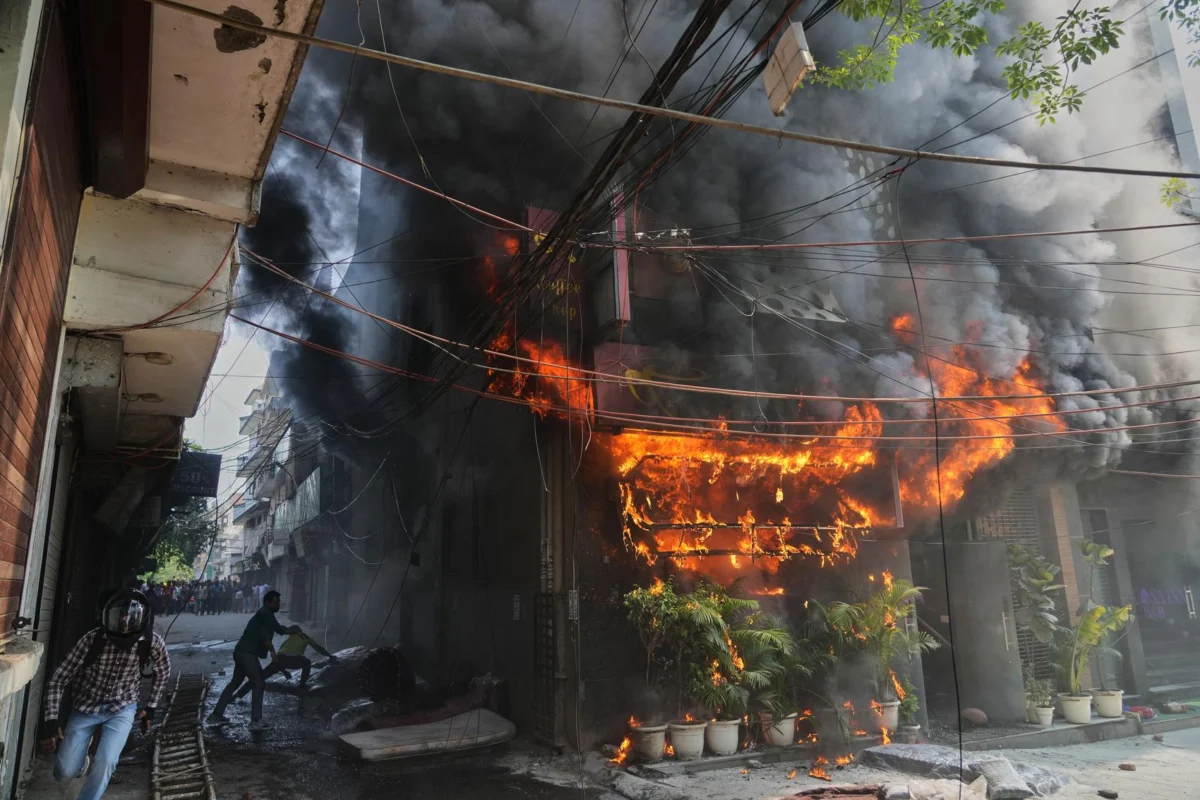
NEW DELHI — A catastrophic fire tore through a multi-story building in the densely populated Malviya Nagar neighborhood of South Delhi on Wednesday, leaving at least 21 people dead and scores injured in a disaster that has once again cast a harsh spotlight on the systemic failures of urban fire safety in India’s capital.
The blaze, which erupted in a structure housing a ground-floor restaurant and an upper-level hotel, sent shockwaves through the community, turning a routine weekday morning into a harrowing scene of survival and despair. As smoke billowed into the sky, the tragedy claimed the lives of both local residents and international visitors, many of whom were in the city seeking specialized medical treatment.
The Catastrophe: A Chronology of the Disaster
The inferno began in the early hours of Wednesday morning. While the exact ignition point remains under investigation, initial reports suggest that the fire may have started in the lower levels of the building, where the restaurant’s kitchen facilities are located. Within minutes, the fire surged upward, fueled by what investigators suspect were substandard electrical wiring and a lack of proper fire-suppression infrastructure.
By 8:00 a.m., the building was engulfed. Terrified occupants, trapped by the rapidly spreading flames and the toxic, black smoke, were seen hanging from windows, desperate for rescue. The narrow, congested lanes of Malviya Nagar—a neighborhood popular among students and young professionals—hampered the initial response, as emergency vehicles struggled to navigate the cramped thoroughfares.
At the peak of the operation, eight fire engines were deployed. Firefighters fought for hours against the intense heat, while local residents, displaying immense courage, formed human chains to assist those fleeing the burning structure. More than 40 survivors were pulled from the wreckage, many suffering from severe smoke inhalation and burns. They were rushed to nearby medical facilities, including the All India Institute of Medical Sciences (AIIMS) and Safdarjung Hospital, where a state of emergency was declared to manage the influx of casualties.
The Human Toll: International Impact
As the smoke cleared, the grim reality of the disaster emerged. Among the 21 confirmed fatalities were several foreign nationals. Reports from local media indicated that these individuals had traveled to New Delhi from abroad specifically for medical procedures—a common occurrence in the city, which serves as a global hub for affordable, high-quality medical tourism.
These patients and their families often reside in hotels or guesthouses in neighborhoods like Malviya Nagar, which offer proximity to major hospitals. The tragedy has now sparked questions regarding the oversight of such accommodations, which frequently operate in a regulatory gray area, failing to meet international safety standards for fire exits, sprinklers, and fire-resistant materials.
Official Responses and Financial Aid
The scale of the tragedy prompted an immediate response from the highest echelons of the Indian government. Prime Minister Narendra Modi expressed his profound grief, offering condolences to the bereaved families.
"The fire in Malviya Nagar is heartbreaking," a statement from the Prime Minister’s Office (PMO) read on X (formerly Twitter). "My thoughts are with those who have lost their loved ones. May the injured recover quickly."
The government announced an ex-gratia payment of 200,000 rupees ($2,088) to the next of kin of each victim. While the financial assistance provides a measure of immediate relief, for many, the compensation underscores the irreparable loss of life in a disaster that many local activists argue was entirely preventable. The Delhi police have registered a case of culpable homicide not amounting to murder against the building’s owners and the management of the restaurant, citing gross negligence in maintaining safety protocols.
Supporting Data: A History of Negligence
The Malviya Nagar blaze is the latest in a recurring series of fire-related tragedies in New Delhi. The city’s rapid urbanization has consistently outpaced the enforcement of building codes. According to data from the Delhi Fire Service, thousands of buildings across the capital lack valid "No Objection Certificates" (NOCs) for fire safety.
The pattern is often identical:
- Illegal Alterations: Many residential properties are converted into commercial spaces, such as hotels or restaurants, without necessary structural reinforcements or the installation of emergency fire escapes.
- Flammable Materials: Buildings are frequently constructed with poor-quality insulation and interior paneling that acts as an accelerant.
- Lack of Maintenance: Fire extinguishers are often expired, and emergency exits are frequently padlocked or obstructed by storage materials.
Urban planning experts note that the dense, unplanned nature of neighborhoods like Malviya Nagar makes them "fire traps." In these areas, the "right of way" for fire tenders is frequently blocked by unauthorized construction, parked vehicles, and overhead power lines, significantly increasing the time it takes for emergency services to reach a site.
Implications: The Search for Accountability
The aftermath of this disaster has triggered a broader debate regarding urban governance. The opposition party and local civic groups have demanded a transparent judicial inquiry into how such a building was permitted to operate as a hotel.
"We are tired of ‘post-mortem’ inquiries," said Anjali Verma, a local community organizer. "Every time a building burns down, there is a promise of change. Yet, the same flouting of laws continues. When will the Municipal Corporation of Delhi (MCD) hold these builders accountable?"
In response to the public outcry, the Delhi government has ordered a comprehensive audit of all "high-risk" commercial buildings in the city. However, previous attempts at such audits have often been stymied by administrative corruption and the sheer volume of non-compliant structures.
The Way Forward
As the charred skeleton of the Malviya Nagar building stands as a stark monument to the disaster, the focus now shifts to the long-term recovery of the survivors and the pursuit of justice for the deceased. Forensic experts are working to identify the exact cause of the electrical short circuit—the suspected culprit—while the police continue their interrogation of the property owners.
For the international community, the incident serves as a sobering reminder of the risks associated with rapid, unregulated urban expansion. For the residents of New Delhi, the fire is a painful plea for reform. The hope remains that this catastrophe will finally force the hand of authorities to implement strict, non-negotiable fire safety standards, ensuring that the next generation of students, professionals, and visitors can live and work without the constant shadow of such a preventable threat.
The fire in Malviya Nagar is more than just a local tragedy; it is a systemic failure that demands a national reckoning. Until the safety of human life is prioritized over the ease of bureaucratic corner-cutting, the risk of another such disaster remains a grim, ever-present reality in India’s bustling capital.
This report was compiled using information from the Associated Press and local police statements. The investigation into the Malviya Nagar fire is ongoing.












No comments yet. Be the first to join the conversation!