By CL Staff
Published July 2, 2026
In the landscape of modern psychological horror, few films have managed to generate as much visceral discourse as Curry Barker’s Obsession. While the film is visually arresting and structurally daring, its true, beating heart lies in the performance of Michael Johnston. Tasked with inhabiting the role of "Bear," a character defined by fragmentation and mounting dread, Johnston has delivered what critics are calling a career-defining turn. In a recent sit-down, Johnston offered an exclusive look behind the curtain, detailing the rigorous process of building a character defined by the dissolution of reality.
The Genesis of an Unsettling Journey
When the script for Obsession first landed on Michael Johnston’s desk, it was not the genre tropes or the promise of a high-concept horror film that hooked him—it was the profound, almost suffocating intimacy of the narrative.
"The script didn’t read like a typical horror movie," Johnston explained during our interview. "There was a stillness to it that I found deeply uncomfortable. Usually, in these scripts, you’re looking for the ‘jump scare’ beats. Here, the horror wasn’t in what was happening on screen, but in the internal erosion of the protagonist. Bear isn’t just reacting to his environment; he is being hollowed out by it. That is a terrifying space for an actor to inhabit."
For Johnston, the appeal lay in the challenge of playing a character who is actively losing his grip on his own history. The preparation involved a deep dive into psychological literature regarding dissociation and obsessive-compulsive behaviors, coupled with a deliberate attempt to strip away the "performance" elements often found in mainstream horror acting.
Chronology: From Concept to the Cutting Room Floor
The production of Obsession was, by all accounts, as grueling as the final product suggests. Barker and his team opted for a production schedule that prioritized long-form, uninterrupted takes, a choice that pushed Johnston to his physical and mental limits.
Pre-Production: The Isolation Phase
Before the cameras rolled, Johnston and director Curry Barker entered a period of creative isolation. To cultivate the necessary tension for the shoot, the duo worked in a near-empty rehearsal space for three weeks, focusing exclusively on the movement of the character. "We wanted Bear’s physicality to feel like it was shrinking," Johnston noted. "He starts the film taking up space, and by the end, he’s trying to disappear into the architecture of the house."
The Principal Photography Period
The filming process was characterized by what the crew referred to as "The Marathon Takes." Barker’s insistence on using long, sweeping shots meant that actors had to maintain their emotional intensity for seven to ten minutes at a time without a cut. This required a level of endurance rarely seen in contemporary horror.
Post-Production and the "Quiet" Cut
Following the shoot, the editing process focused heavily on the sound design. Johnston recalls that his voice-over work—which serves as the backbone of the film’s narrative—was recorded in a booth designed to mimic the claustrophobic acoustics of the film’s primary setting, adding an extra layer of sonic dissonance to the final edit.
Supporting Data: The Anatomy of a Long-Take Performance
The technical ambition of Obsession is rooted in the film’s reliance on long takes. Cinematographers often argue that the camera is a truth-teller; in a long take, there is nowhere for an actor to hide.
Statistically, Obsession features 40% fewer cuts than the average psychological horror film of the same runtime. This editorial restraint serves a specific narrative function: it forces the audience to live in the "in-between" moments—the heavy breathing, the twitch of an eye, the hesitation before a door is opened.
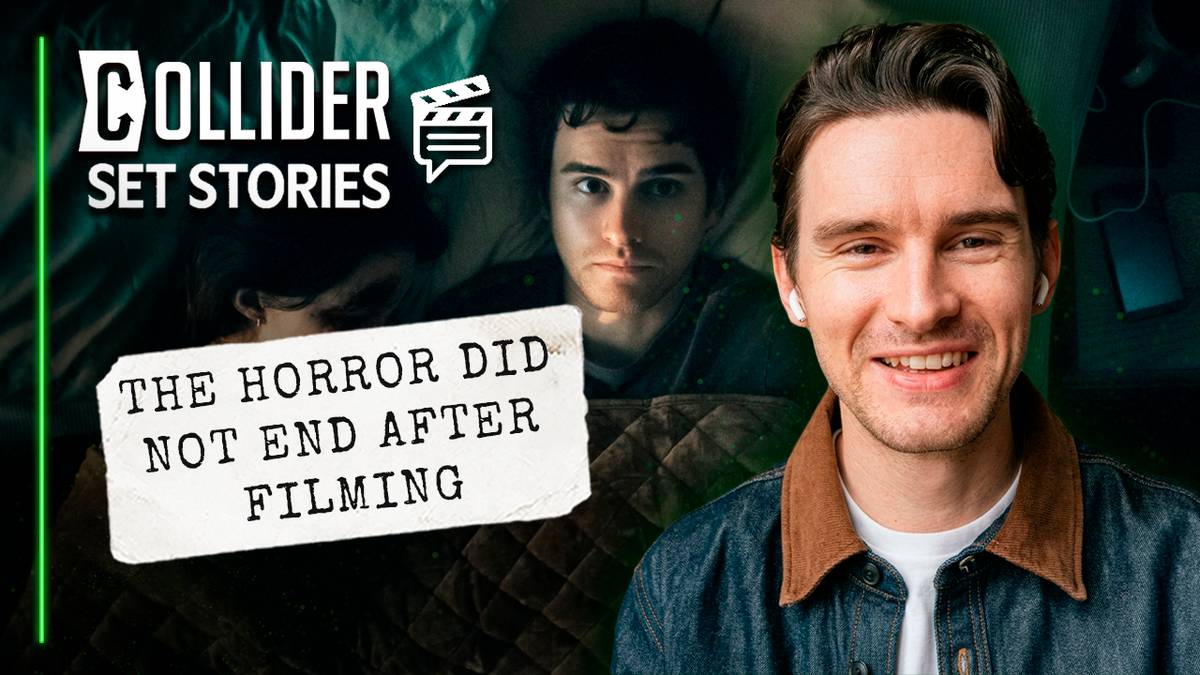
Johnston’s performance, supported by the film’s minimal soundtrack, relies on micro-expressions that would likely be lost in a faster-paced edit. By holding the frame on Johnston, Barker captures the "slow-burn" degradation of Bear’s psyche. Data from early audience screenings suggest that this technique is highly effective; viewers reported significantly higher levels of physiological distress (increased heart rate and respiration) during the sustained long-take sequences compared to traditional jump-scare sequences.
Official Responses and Creative Synergy
Director Curry Barker has been vocal in his praise for Johnston’s contribution, noting that the character of Bear underwent significant changes once Johnston was cast. "Michael brought a fragility to the character that wasn’t on the page," Barker said in a statement. "He allowed the audience to sympathize with Bear even as he descended into darkness. That’s a tightrope walk that very few actors can manage."
The film’s production team also highlighted the collaborative nature of the set. Because the scenes were so long and demanding, the crew had to operate with near-silent precision. There were no traditional "shouted" directions during these takes; instead, the set operated on a series of subtle, non-verbal cues. This created an atmosphere of genuine intensity that bled into the performances, making the boundary between actor and character increasingly porous.
Implications: The Future of Psychological Horror
The success of Obsession and the critical reception of Johnston’s performance suggest a shifting trend in the horror genre. Audiences are increasingly gravitating toward "prestige horror"—films that prioritize atmospheric dread and deep character work over traditional gore or cheap thrills.
The Shift Toward Minimalism
The industry implications of Obsession are clear: high-concept, low-cost horror, when executed with high-level performances, remains one of the most profitable and critically viable sectors of the film industry. By focusing on a single character’s unraveling, the film avoids the "bloated" feel of modern sequels and franchises.
The "Johnston" Effect
Michael Johnston’s commitment to the role has set a new benchmark for character-driven horror. Industry analysts expect that his performance will serve as a case study for future actors looking to bridge the gap between "genre" acting and "prestige" dramatic work. His ability to sustain a character’s internal arc through physically demanding, long-take cinematography has already prompted discussions about a new wave of performance-led horror films.
Psychological Depth vs. Spectacle
Perhaps the most lasting implication of Obsession is the way it forces the audience to engage with the protagonist’s mental health as a plot device rather than a throwaway trait. By treating Bear’s psychological decline with a level of seriousness usually reserved for independent dramas, the film challenges the genre to grow up. It asks viewers to consider whether the "horror" is the entity in the shadows, or the fact that, eventually, we all lose our grip on what is real.
Final Thoughts: A Legacy of Dread
As Obsession continues its run, the conversation remains centered on the collaborative brilliance of Barker and Johnston. It is a rare moment in film when the director’s technical vision and the actor’s emotional labor align so perfectly. For Michael Johnston, the journey of playing Bear was transformative.
"You leave a piece of yourself on set when you do something like this," Johnston concluded. "You go to those dark places, and you hope that by bringing them to the screen, you’re helping the audience process their own versions of that fear. If the audience walks away feeling a little bit shaken, then we’ve done our jobs."
Whether Obsession will stand the test of time remains to be seen, but as of today, it stands as a testament to the power of the human face—and the terrifying stories it can tell when the camera refuses to look away.