
 Lina Irawan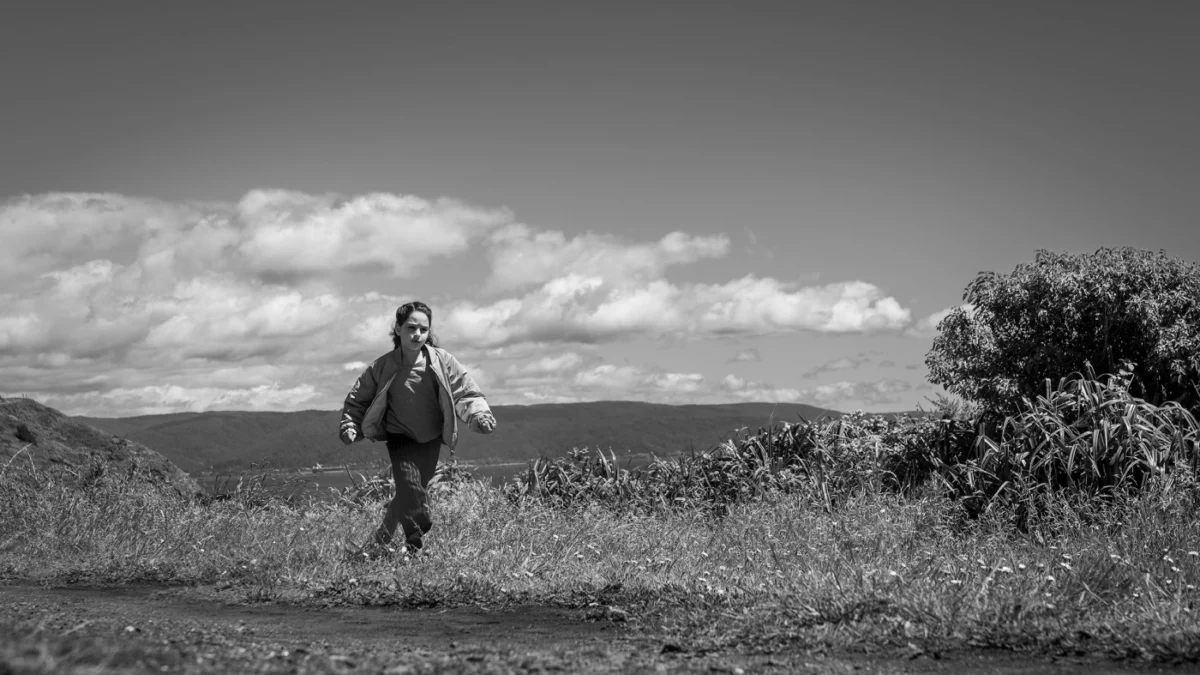
At the 60th edition of the Karlovy Vary International Film Festival (KVIFF), the premiere of Valeria Sarmiento’s Behind the Rain signaled a cinematic reckoning. Competing for the prestigious Crystal Globe, the film is a haunting, monochromatic exploration of childhood trauma, set against the backdrop of the misty, rain-drenched city of Valdivia, Chile. Through the eyes of Sofía, a young psychology graduate returning to her roots, the film peels back layers of societal denial to expose the pervasive, often unspoken, reality of sexual abuse.
The Narrative Arc: A Return to the Veil
The story follows Sofía, who has just completed her studies in Valparaíso. Her homecoming to Valdivia is meant to be a quiet transition into adulthood, but it is abruptly punctured by the discovery of a young girl’s body. This tragic event serves as a catalyst, tearing through the atmospheric, rain-heavy veil of the town and forcing long-buried memories of Sofía’s own childhood to the surface.
The film serves as a psychological thriller of the soul. As Sofía navigates the town, she must decide whether to remain complicit in the silence that protects her community’s dark secrets or to confront a history that is as painful for her neighbors as it is for her personally. The "rain" of the title is a metaphor for the pervasive, numbing nature of trauma—a persistent climate that obscures the vibrant colors of truth until one chooses to look behind it.
Chronology of a Creative Vision
The genesis of Behind the Rain was not a linear path but a return to origins. Director Valeria Sarmiento, a titan of Chilean cinema, initially sought to develop the project through European production channels in France and Switzerland. However, the narrative remained stagnant. It was only through a return to the source—Chile—and a collaboration with actress and producer Chamila Rodríguez that the project found its momentum.
Sarmiento enlisted the late writer Omar Saavedra Santis to help flesh out her original concept. The screenplay development became a collaborative exercise in excavating the past. With cinematography by the esteemed Acácio de Almeida and editing by Galut Alarcón, the production team worked to create a visual language that mirrors the fragility of memory. The filming process, conducted in the intimate, tightly knit geography of Valdivia, provided a harmonious environment that allowed the cast and crew to delve into the film’s heavy subject matter with professional grace and emotional safety.
Artistic Choices: The Aesthetics of Silence
One of the most striking elements of Behind the Rain is its visual austerity. The film is rendered almost entirely in black and white, a choice that pays homage to the cinema of Sarmiento’s youth. Born in 1948, she grew up in an era defined by grayscale photography, and she purposefully utilizes this aesthetic to create a sense of timelessness and distance.
"My mother told me I had to look behind the rain in order to see all the colors," Sarmiento explained during a post-premiere discussion at KVIFF. The decision to introduce color only at the film’s conclusion is a poignant narrative device, symbolizing the clarity that comes after the long, grueling process of confronting one’s trauma. The black-and-white visuals serve as the "rain"—the veil of silence that blankets the community—while the final emergence of color represents the restoration of the victim’s agency and the possibility of healing.

Behind the Camera: A Producer’s Personal Mission
For producer and co-star Chamila Rodríguez, the film is more than a professional project; it is a cathartic exorcism. Having collaborated with Sarmiento for two decades, dating back to their work on Secrets (2008), the trust between the two was essential for tackling such a delicate narrative.
Rodríguez, who plays a complex, often abrasive lawyer in the film, revealed in a conversation with The Hollywood Reporter that the story mirrored her own lived experience. "I experienced something similar when I was a child," she shared. "My experience of child abuse was hidden, and I never spoke about it until I was 40."
This personal connection infused the production with an intense sense of purpose. For Rodríguez, cinema functions as a mechanism for transformation—turning the "demons" of the past into a tangible, shared experience that can foster dialogue. Her dual role as both a performer and a producer underscores the film’s commitment to authenticity, ensuring that the portrayal of trauma is rooted in genuine understanding rather than mere dramatization.
The Cast: Portraying the Complexity of Trauma
The casting process was driven by a need for depth and accessibility. Paula Prado, who takes on the lead role of Sofía, was selected for her unique ability to embody the quiet intensity required by the script. Sarmiento noted that finding an actress capable of relocating to Valdivia for the duration of the shoot was a logistical challenge, but once Prado was on board, the film’s emotional center solidified.
The ensemble cast—which includes Cristián Arriagada, Aline Kuppenheim, Shlomit Baytelman, Daniel Muñoz, Julio Milostich, Aimar Alarcón Rodríguez, and Clara Vargas Arellano—brings a multifaceted perspective to the community’s collective denial. By presenting a cast that ranges from seasoned veterans to emerging talent, the film paints a portrait of a society where abuse is not just a crime committed by an individual, but a shadow cast by the entire community.
Societal Implications: Breaking the Cycle
The primary objective of Behind the Rain is to ignite a public discourse that has been stifled for too long. In Chile, as in many parts of the world, child abuse is a "hidden" reality—often because the victims lack the linguistic tools or the safe environments necessary to report their experiences.
"People have to talk about it," says Rodríguez. "It’s like the abuse is hidden because children don’t have the words to be able to tell others about what’s been happening."

The film serves as an instrument for this conversation. By moving the discussion from the private, shameful sphere into the public, artistic sphere, Sarmiento and her team hope to provide a mirror to society. The film challenges the audience to consider their own roles in the "veil of silence." When a community chooses to look away, they enable the perpetrator; when they choose to "look behind the rain," they begin the long, difficult process of accountability.
Technical Excellence and Festival Reception
The technical pedigree of Behind the Rain is undeniable. With the masterful eye of director of photography Acácio de Almeida, the film transforms the Chilean landscape into a character in its own right. The proximity and intimacy of Valdivia allowed the production to maintain a controlled, focused environment, which was crucial given the intensity of the themes.
The film’s world premiere at the 60th Karlovy Vary International Film Festival placed it at the center of the global cinematic conversation. KVIFF, known for its commitment to challenging and socially relevant filmmaking, provided the ideal platform for a work that seeks to dismantle societal taboos. The reception among critics and peers suggests that Behind the Rain is poised to be a significant addition to the canon of films dealing with trauma, alongside works that seek to blend rigorous artistic vision with the necessity of social commentary.
Conclusion: Looking Toward the Light
Behind the Rain is a testament to the power of film to articulate the inarticulate. Valeria Sarmiento has crafted a work that refuses to offer easy solutions or comforting platitudes. Instead, she invites the viewer to sit with the discomfort of the truth, to recognize the damage wrought by silence, and to acknowledge that the only way to reach the "color" of a recovered life is to first walk through the gray.
As the film makes its rounds on the international festival circuit, its impact will be measured not just in awards or box office returns, but in the conversations it initiates in the living rooms, courtrooms, and town squares of the communities it reflects. By choosing to confront the shadows, Sarmiento and her team have created a beacon of transparency, reminding us all that until we look behind the rain, we are all living in a monochrome world.


 Pevita Pearce
 Asep Darmawan




