The Unconventional Legacy of Oliver Tree: A Retrospective on the Life and Career of a Genre-Defying Artist
Main Facts: The Tragic Loss of an Iconoclast
The music world is in mourning following the confirmation of the tragic death of Oliver Tree, the California-born singer-songwriter, producer, and multimedia artist, who reportedly perished in a helicopter crash in Rio de Janeiro, Brazil. He was 32 years old. The news, first reported by CNN Brazil, has sent shockwaves through the entertainment industry, leaving millions of fans reeling from the sudden loss of one of the most unpredictable and visually distinct figures in contemporary music.
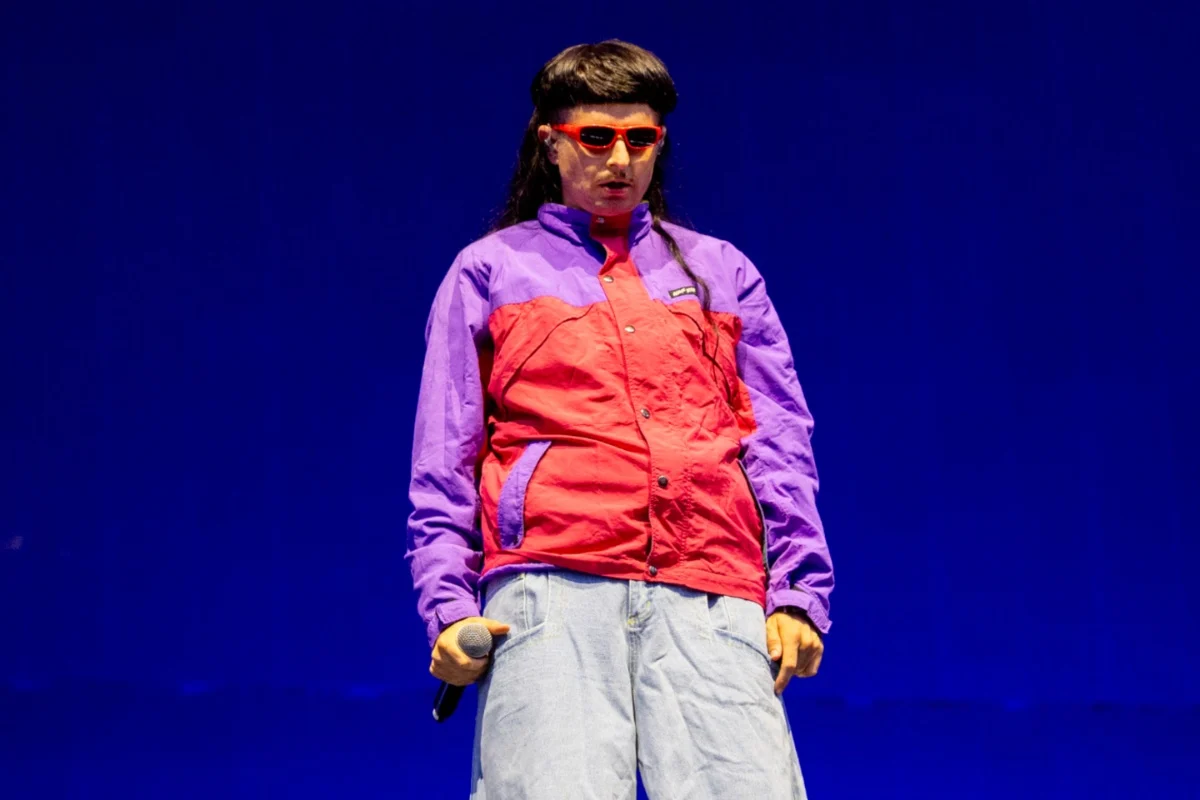
Tree, born Oliver Tree Nickell, was more than just a musician; he was a performance artist who utilized the internet as his primary canvas. Known for his signature bowl cut, oversized JNCO-style jeans, and a flamboyant, hyper-saturated 1980s aesthetic, Tree transcended the traditional boundaries of pop, electronic, and hip-hop. His career was defined by viral hits, eccentric music videos, and an ironic, meta-commentary on the nature of celebrity that endeared him to a generation raised on the rapid-fire rhythms of TikTok and YouTube.
While official details regarding the specific circumstances of the aviation incident remain preliminary, local authorities in Brazil are currently conducting an investigation into the crash site. As of this report, representatives for Oliver Tree have not issued a formal statement, though the entertainment community has begun to pour out tributes to an artist who refused to fit into any predefined mold.
Chronology: From Bay Area Roots to Global Stardom
To understand the cultural footprint of Oliver Tree, one must look back to his formative years in the San Francisco Bay Area. Before he was the neon-clad, meme-ready superstar, he was simply "Tree," a burgeoning producer and artist deeply embedded in the local dubstep and electronic underground.
The Early Years (2010–2015)
Tree’s initial foray into the professional music sphere began in the early 2010s. Under the moniker "Tree," he produced gritty, bass-heavy dubstep tracks that earned him a reputation for technical prowess and sound design. His debut EP, Demons, released in 2013 via the prestigious R&S Records, showcased a young artist experimenting with the dark, atmospheric textures of electronic music. During this period, Tree was primarily a behind-the-scenes operator, honing the production skills that would later define his highly polished studio sound.
The Breakthrough (2016–2018)
The pivotal shift in his trajectory occurred in 2016 when producer Whethan released the track "When I’m Down," featuring Oliver Tree. The song became an immediate sensation, its infectious, poppy hooks and Tree’s distinct vocal delivery catapulting him into the mainstream spotlight. The success of the feature served as a springboard, leading to a major-label deal with Atlantic Records. Shortly thereafter, he officially transitioned to the persona of "Oliver Tree," releasing "Welcome to LA," a track that signaled his departure from pure electronic music toward a genre-bending fusion of alternative rock, hip-hop, and pop.
The Rise of the "Alien Boy" (2018–2021)
The release of the 2018 EP Alien Boy marked the solidification of the Oliver Tree brand. It was here that he introduced the world to the "retro-oddball" aesthetic that would become his trademark. The music video for "All That x Alien"—which he wrote, directed, and choreographed—was a watershed moment. Amassing over 50 million views, the video served as a masterclass in internet-native marketing. By embracing the absurdity of his own image, Tree managed to bridge the gap between niche internet subcultures and the global pop mainstream.
Supporting Data: By the Numbers
Oliver Tree’s success was not merely aesthetic; it was statistically significant. His ability to manipulate algorithmic trends while maintaining artistic integrity set him apart from his contemporaries.
- Streaming Dominance: Tracks such as "Life Goes On" and "Miss You" (a collaboration with Robin Schulz) reached multi-platinum status, with "Life Goes On" becoming a foundational track for millions of user-generated videos on platforms like TikTok.
- The Power of Visuals: His music videos were rarely just "videos." They were episodic, narrative-driven, and often surreal, acting as viral catalysts. His channel consistently saw engagement metrics far above the industry average for artists in his genre.
- Collaborative Range: His resume included high-profile collaborations with artists as diverse as Lil Yachty, Trippie Redd, and Robin Schulz, proving that he could oscillate between the worlds of SoundCloud rap, radio pop, and European house music with ease.
The Aesthetic and Cultural Implications
Oliver Tree was arguably the first true "Internet Era" superstar. He understood that in the 21st century, the persona is just as important as the melody. By adopting a character—the bowl-cut-wearing, scooter-riding, self-deprecating prankster—he protected his private self while providing the public with a constant stream of content.
Critics often debated whether Tree was a musician who used internet culture, or an internet personality who happened to make music. This ambiguity was, in many ways, his greatest work of art. He held a mirror up to the music industry, mocking the seriousness of stardom while simultaneously delivering tracks that were undeniably catchy and structurally sophisticated. He occupied a space of "post-irony," where the lines between the joke and the genuine emotion were permanently blurred.
His passing leaves a void in a landscape that has become increasingly homogenized. At a time when pop stars are often manufactured to be palatable and relatable, Tree was abrasive, strange, and intentionally polarizing. He proved that an artist could be successful by being unapologetically, and often uncomfortably, themselves.
Official Responses and Industry Impact
As news of the crash broke, the response from the music industry was immediate and mournful. Fellow artists and collaborators took to social media to express their shock.
"Oliver was a pioneer of a new way of existing in the music industry," noted one industry analyst. "He didn’t just write songs; he built worlds. The loss of his voice is a loss for the avant-garde of pop music."
While his management team has yet to provide a detailed statement regarding memorial services or the status of unreleased recordings, fans have already begun congregating on social media to share their favorite "Tree" moments. From his chaotic interviews to his high-concept live performances, the consensus is clear: Oliver Tree was a singular force.
A Legacy of Non-Conformity
As the investigation into the Rio de Janeiro crash continues, the focus will inevitably shift toward the preservation of his creative legacy. Tree leaves behind a catalog that defies categorization, a testament to an artist who refused to stay in a lane.
He demonstrated that music could be a performance piece, a digital meme, and a genuine emotional outlet all at once. Whether he was riding a Razor scooter onto a stage or breaking down the mechanics of a viral hit in a candid interview, he remained committed to the idea that art should be fun, weird, and above all, authentic to the creator’s vision.
In the end, Oliver Tree’s greatest success was not his chart-topping hits or his millions of views—it was his ability to make the world stop and stare, even if they weren’t entirely sure what they were looking at. As the music world continues to process this tragedy, one thing is certain: there will never be another Oliver Tree.
More information regarding the memorial services and the official investigation will be provided as it becomes available.