Azzam Bilal Chamdy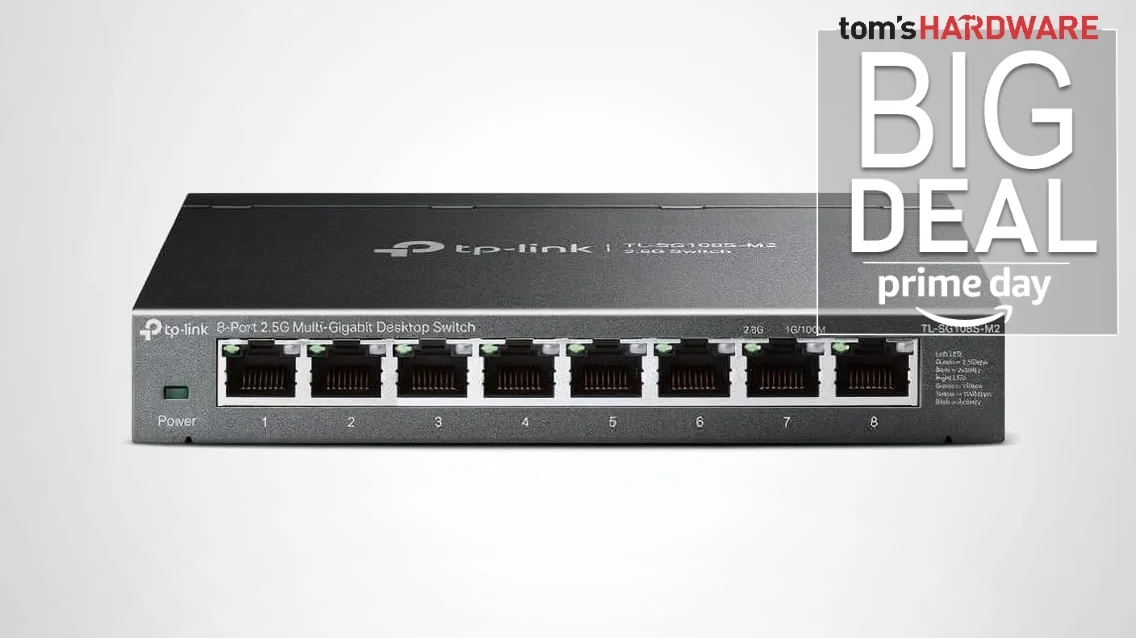
In an era where high-definition streaming, cloud-based productivity, and high-speed local network storage (NAS) are becoming standard, the bottleneck of traditional 1 GbE (Gigabit Ethernet) infrastructure is increasingly apparent. For power users, content creators, and small office administrators, the transition to 2.5 GbE networking has been a long-awaited upgrade. However, the cost of entry for multi-gigabit hardware has historically remained a hurdle.
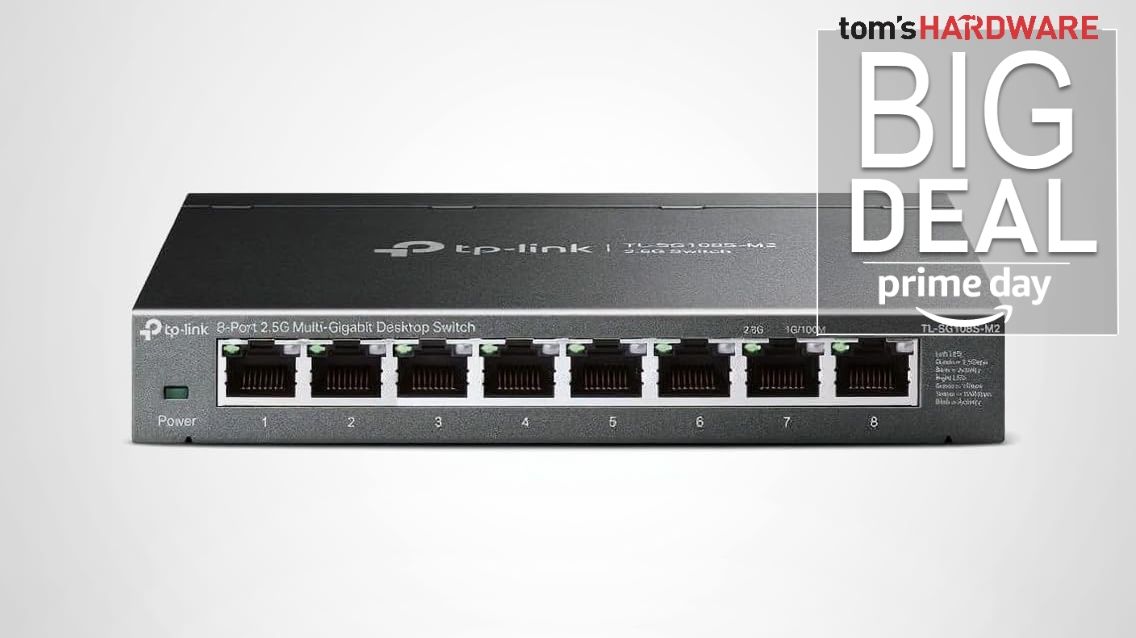
That barrier is crumbling this Prime Day. The TP-Link TL-SG108S-M2, a robust, unmanaged 8-port 2.5 GbE switch, has seen a significant price correction, dropping to just $49.99. This represents a major shift in the market, making high-bandwidth networking accessible to the average consumer.
Main Facts: A Networking Powerhouse for Under $50
The TP-Link TL-SG108S-M2 is designed as an "unmanaged" switch, meaning it is a true plug-and-play device. It requires no complex configuration, VLAN tagging, or command-line interface knowledge to operate. Simply connect your devices, and the switch intelligently manages the data traffic.
Key Technical Specifications:
- Port Configuration: 8 x 2.5 Gbps RJ45 ports.
- Switching Capacity: 40 Gbps.
- Compatibility: Backward compatible with 100 Mbps and 1 Gbps devices.
- Cabling: Fully compatible with existing Cat5e infrastructure, eliminating the need for expensive recabling.
- Construction: Durable, all-metal chassis with passive cooling.
- Dimensions: 6.22 x 3.98 x 1 inches.
For those currently running a standard 1 GbE setup, this switch provides a massive 2.5x increase in bandwidth per port. With a total switching capacity of 40 Gbps, the device is more than capable of handling simultaneous high-traffic loads from multiple workstations, NAS drives, and high-speed Wi-Fi 6/7 access points.
Chronology: The Evolution of Affordable Multi-Gigabit Networking
The trajectory of networking hardware over the last decade has been defined by the "Gigabit Plateau." For years, 1 Gbps was the gold standard for home and office environments. While fiber-to-the-home (FTTH) services began offering speeds beyond 1 Gbps, internal local area networks (LANs) lagged behind.
The Rise of 2.5 GbE
Around 2020, the industry began a concerted push toward 2.5 GbE (NBASE-T). This standard was specifically engineered to run over the existing Cat5e and Cat6 cabling that was already installed in millions of homes and businesses. Prior to this, jumping from 1 Gbps to 10 Gbps required expensive Cat6a or fiber-optic cabling, which was often cost-prohibitive for residential applications.
Market Disruption
In late 2023 and early 2024, brands like UGREEN, QNAP, and TP-Link began aggressively pricing their unmanaged multi-gig switches. The TL-SG108S-M2 arrived as a direct competitor to these early adopters. By removing "managed" features—which are often unnecessary for the average user—manufacturers were able to drive the price down from the $150+ range to the sub-$100 mark. The current $49.99 sale price represents the "tipping point" for mainstream adoption, signaling that multi-gigabit networking is no longer a luxury but a standard consumer commodity.
Supporting Data: Why 2.5 GbE Matters
To understand the value proposition of the TL-SG108S-M2, one must look at the data throughput requirements of modern computing.
1. The NAS Bottleneck
Many users operate a Network Attached Storage (NAS) device to manage backups and media libraries. A standard 1 GbE connection limits file transfer speeds to approximately 110–120 MB/s. With a 2.5 GbE connection, those speeds can jump to nearly 280–300 MB/s, assuming the drives themselves are fast enough to keep up. This effectively cuts transfer times for large video files or system backups by more than half.
2. Wi-Fi Access Point Backhaul
Modern Wi-Fi 6E and Wi-Fi 7 access points are capable of aggregate wireless speeds that exceed 1 Gbps. Plugging these devices into a 1 GbE switch creates a "bottleneck at the wire," where the wireless signal is faster than the connection back to the router. A 2.5 GbE switch allows the full potential of high-speed wireless networks to be realized.
3. Future-Proofing
As ISP plans offering 2 Gbps or higher become more common, having a 1 GbE switch will literally prevent users from receiving the speeds they are paying their service providers for. The TL-SG108S-M2 ensures that the internal network can handle these incoming speeds without degradation.
Official Perspectives and Industry Implications
While TP-Link has not released a specific press statement regarding the temporary price drop, industry analysts suggest this is a strategic move to clear inventory and establish dominance in the "SOHO" (Small Office/Home Office) segment.
Passive Cooling: The Silent Revolution
A standout feature of the TL-SG108S-M2 is its passive cooling system. Many early high-speed switches relied on small, high-pitched fans that were prone to failure and created annoying ambient noise. By utilizing an all-metal, heat-dissipating chassis, TP-Link addresses the primary complaint of power users: noise pollution. In a home office or recording studio setting, this silent operation is a major selling point.
Implications for the "Smart Home"
The proliferation of cheap 2.5 GbE switches will likely accelerate the adoption of high-bandwidth smart home devices, such as 4K/8K security camera systems and high-resolution media servers. As these devices drop in price, the network becomes the central nervous system of the home. Reliable, high-speed switching is the bedrock of this infrastructure.
Conclusion: Is This the Right Time to Buy?
If you have been waiting to upgrade your home network, the answer is a resounding yes. At $49.99, the TL-SG108S-M2 is essentially priced at the same level as older, slower 1 GbE switches from years past.
Consider the following before purchasing:
- Existing Cables: If your home is wired with Cat5e, you are already set. No rewiring is required to see the benefits of 2.5 GbE.
- Device Support: Ensure that your desktop PC, workstation, or NAS actually has a 2.5 GbE-capable network interface card (NIC). If they do not, you may need to purchase inexpensive PCIe 2.5 GbE expansion cards to take full advantage of the switch.
- The "Unmanaged" Factor: Understand that this is not a managed switch. If you require advanced features like VLAN tagging, port trunking, or SNMP monitoring, you will need to look at enterprise-grade managed hardware, which comes at a significantly higher price point.
For 95% of users—gamers, streamers, creative professionals, and those managing large home data archives—the TP-Link TL-SG108S-M2 provides the perfect balance of performance, affordability, and simplicity. With Prime Day deals rarely lasting beyond the promotional window, this is a rare opportunity to future-proof your home network at a cost that is impossible to ignore.
For more in-depth reviews and the latest updates on networking hardware, continue to follow Tom’s Hardware. We regularly update our guides on the best PC hardware deals, including comprehensive breakdowns of the latest SSDs, GPUs, and networking gear to help you build the ultimate home office environment.

 Raul Delapena Setiawan
 Ali Ikhwan