Siti Muinah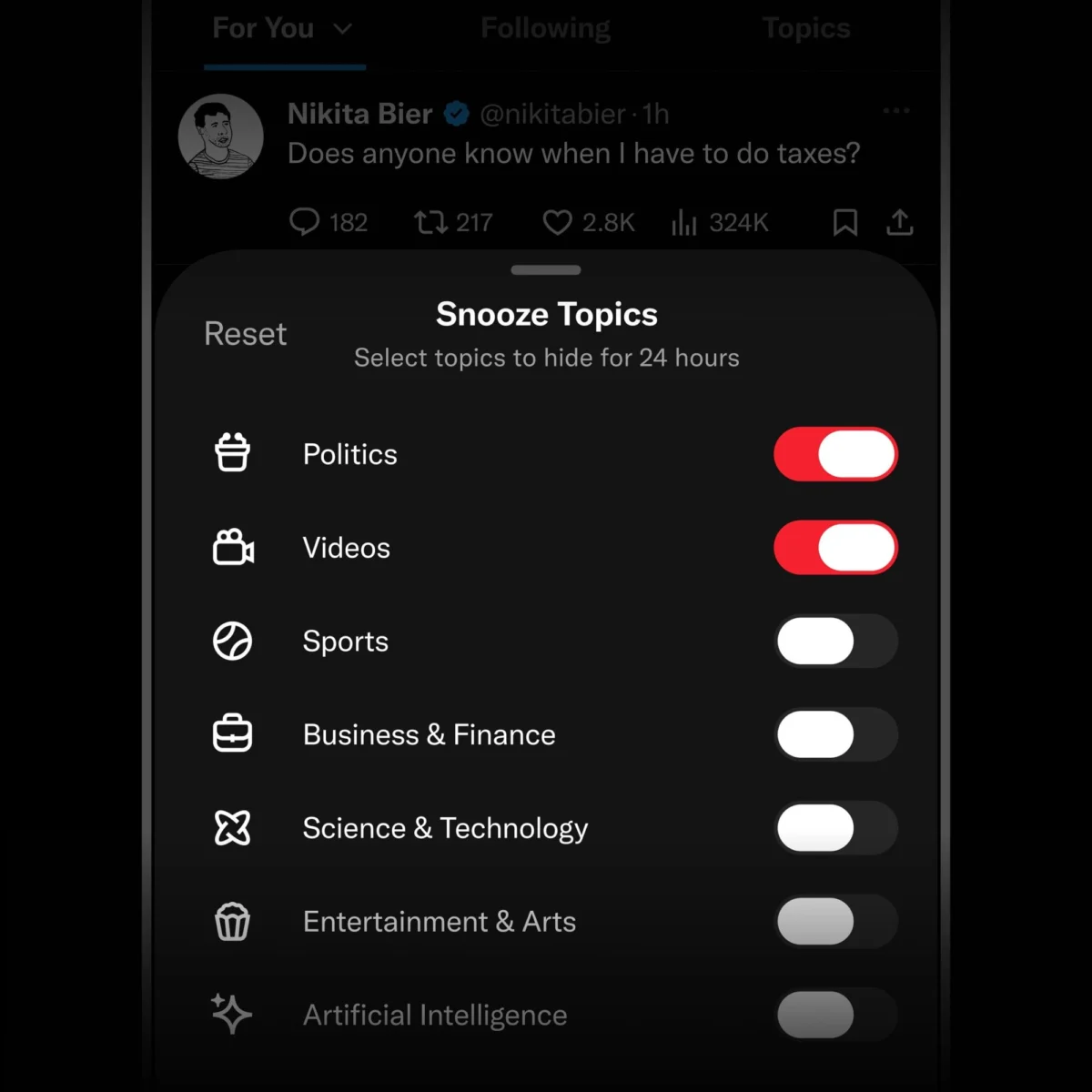
In a significant update to its platform architecture, the social media giant X (formerly Twitter) has officially rolled out a highly anticipated "Custom Timelines" feature. This development marks a pivotal shift in how the platform handles information density, moving away from a monolithic "For You" feed toward a more fragmented, user-defined experience. By leveraging the advanced analytical capabilities of xAI’s Grok, X is betting that granular control will increase user retention and provide a more meaningful interaction with the vast repository of data generated on the site every second.
The update, which began its rollout earlier this week, is currently exclusive to Premium subscribers on iOS, though the company has signaled that an Android launch is imminent. This strategic move aims to solidify the value proposition of X’s paid tier by offering utility that mimics the professional-grade customization previously associated only with the platform’s "X Pro" (formerly TweetDeck) interface.
The Evolution of the Feed: How Custom Timelines Work
The concept of the Custom Timeline is not entirely new to social media, but X’s execution differentiates itself through the integration of artificial intelligence. Unlike traditional lists or curated groups that rely on manual follows, X’s new timelines are "living" feeds.
Powered by Grok’s Large Language Model (LLM) capabilities, these timelines dynamically ingest, categorize, and prioritize content based on a specific topic. According to Nikita Bier, X’s Head of Product, the feature utilizes Grok’s deep semantic understanding of posts to create a curated experience that adapts to the user’s personal engagement patterns.
"It’s powered by Grok’s understanding of every post with the algorithm’s personalization—meaning every timeline is made just for you," Bier explained in an announcement post. "It works even better when it’s a topic you already engage with. This was a huge undertaking across many months, so we’re excited for you to take it for a spin."
Functionality and User Experience
For the end user, the process is designed to be seamless. Users can designate specific subjects—ranging from niche technological interests like "semiconductor manufacturing" to broad categories like "global sports"—and the system will generate a continuous, dedicated feed. Early reporting from analysts like Aakash Gupta suggests that users can create up to 75 of these individual timelines, allowing for an unprecedented level of content isolation.
However, the experience is not yet without friction. Early adopters have reported instances of "content bleeding," where the algorithmic boundaries of one timeline overlap with another. There have also been reports of redundant content, where the same post appears multiple times across different custom feeds, suggesting that the AI’s deduplication logic is still in its infancy.
Chronology: From Concept to Rollout
The path to this feature has been marked by a series of rapid iterations. Following the platform’s rebranding and the subsequent pivot toward becoming an "everything app," the development team prioritized tools that could manage the sheer noise of the platform.
- Initial Development (Early 2024): Engineering teams at xAI and X began testing semantic categorization models using the Grok backend. The goal was to move beyond keyword matching, which is often easily gamed, toward conceptual matching.
- Beta Testing: A small group of power users and beta testers were given access to the "Experimental" version of custom feeds. During this phase, users expressed frustration over the inability to filter out specific topics effectively.
- The "Snooze" Integration: Recognizing that a feed is only as good as its exclusions, X introduced the "Snooze Topics" feature alongside the custom timelines. This allows users to proactively mute certain subjects from specific feeds, ensuring that if a user is building a "Tech" timeline, it is not inadvertently cluttered by "Sports" or "Politics."
- Public Rollout (Current Week): The feature was pushed to the production app for iOS users with an active Premium subscription.
Supporting Data and Technical Implications
While the user-facing benefits are clear—specifically the ability to separate disparate interests without creating multiple accounts—the implications for X’s data ecosystem are profound.
The Data Feedback Loop
Analysts have been quick to point out that this feature is a "win-win" for xAI. By allowing users to explicitly tag and curate their own feeds, X is essentially crowdsourcing the training data for its AI models. Every time a user creates a timeline, they are providing a labeled dataset that teaches Grok what kind of content belongs to a specific topic. This reinforces the "reinforcement learning from human feedback" (RLHF) loop, which is essential for making the AI more accurate over time.

Technical Performance
According to Bier, the feature is designed to scale. The infrastructure supporting these timelines must process millions of posts per minute and categorize them in real-time. This is a massive engineering undertaking that requires low-latency retrieval. While the system currently exhibits some "maturity issues," as noted by early adopters, the architecture is built to evolve. The more users interact with their timelines—liking, sharing, or hiding posts—the more the underlying model refines the feed’s accuracy.
Official Responses and Conflict Resolution
The rollout has not been without its public hiccups. When users pointed out that specific topics, such as religious or niche cultural feeds, were not performing as expected or were missing entirely, Nikita Bier was quick to address the feedback.
In response to a user who was disappointed that a "Catholicism" feed was not yielding relevant results, Bier clarified the state of the technology. "Update your app," Bier advised. "That’s the old experimental feature. We’re working on supporting religions in the next two weeks. We had it earlier, but the quality/content didn’t meet our bar yet."
This transparency highlights a core component of X’s current product strategy: "Ship fast, iterate faster." The company is clearly comfortable releasing features that are in a state of constant, public-facing refinement. By engaging directly with users on the platform, X’s leadership is turning product support into a social engagement tool, effectively creating a feedback loop that feels more personal than traditional corporate customer service.
Implications for the Future of Social Media
The shift toward custom-curated, AI-managed timelines represents a broader trend in the social media landscape: the move away from the "one-size-fits-all" algorithm.
1. Fragmentation vs. Community
For years, platforms like Facebook and Twitter were defined by a single, central feed that dictated the flow of information. By handing the "keys" of curation back to the user, X is acknowledging that its user base has become too diverse for a single, uniform algorithm to satisfy. This may lead to a more fragmented user experience, but it also increases the likelihood that users will stay on the app longer if they can isolate the content that is most relevant to their personal or professional lives.
2. The Death of the "Main Feed"?
Some skeptics, such as user @syssignals, have noted that despite the new feature, they still find themselves returning to the primary "For You" timeline. "I saw overlapping in between AI, Software and Tech," the user noted. "I am still on my For you timeline. But hope this custom timeline will be mature as time goes by." This indicates that while the tool is promising, it has not yet replaced the serendipity of the original algorithmic feed.
3. Monetization of Utility
By gating these features behind the Premium subscription, X is attempting to shift its revenue model from a pure advertising-based structure to one that relies on software-as-a-service (SaaS) utility. If users find that these custom timelines become essential to their workflow—whether they are journalists tracking breaking news, traders following financial markets, or hobbyists tracking niche interests—they are significantly more likely to maintain their subscription.
Conclusion: A Work in Progress
The rollout of custom timelines is a bold, if imperfect, experiment in user-centric AI. It addresses a long-standing desire for more control over the "firehose" of content that social media platforms provide. While the feature currently struggles with content overlaps and requires a degree of manual pruning from the user, the integration of Grok’s semantic intelligence provides a solid foundation for growth.
As X continues to refine the algorithm and expand the feature to Android and web users, the ultimate success of custom timelines will be measured by their ability to provide a clean, noise-free experience. For now, it is a promising glimpse into a future where the platform’s algorithm is no longer a "black box" that dictates what we see, but a collaborative partner that helps us curate our own digital environments. As the platform matures, one thing is certain: the era of the static, one-dimensional feed is rapidly drawing to a close.


 Layla Zulfa
 Nila Kartika Wati