

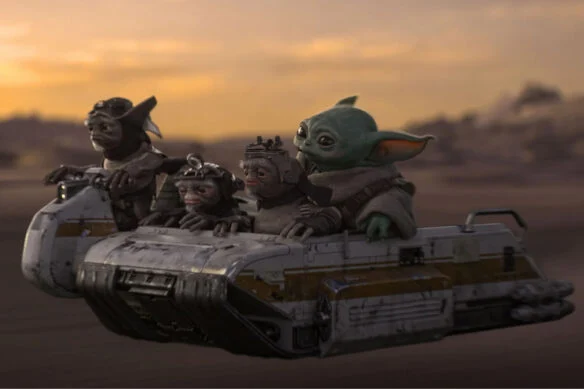
By [Your Name/Contributor Name]
On May 22nd, the silence of the theatrical void—a span stretching back to 2019—was finally broken. Star Wars returned to the silver screen with The Mandalorian and Grogu, a 132-minute cinematic venture that seeks to bridge the gap between the intimate, episodic storytelling of Disney+ and the grand-scale spectacle expected of a theatrical franchise. Directed by Jon Favreau, the film serves as a litmus test for the future of the galaxy far, far away.
The Mission: A Narrative Overview
The film finds our titular duo, Din Djarin (Pedro Pascal) and his charge, Grogu, operating under the aegis of the New Republic. Tasked with rooting out Imperial remnants that continue to plague the Outer Rim, the pair finds themselves entangled in a web of political maneuvering and underworld intrigue.
The central conflict arises when a high-value target, Janu Coin (Jonny Coyne), evades capture. Colonel Ward, portrayed by the legendary Sigourney Weaver, issues a mandate: secure information on Coin by locating the missing Rotta—the son of the late Jabba the Hutt. Rotta, voiced by Jeremy Allen White, presents an unexpected obstacle. Far from a captive in need of rescue, the Huttlet has found a new life as a gladiator on the planet Shakari, where he enjoys the adoration of the crowd and the protection of a powerful crime syndicate.
What follows is a high-stakes struggle for survival, as Djarin and Grogu find themselves hunted by both the criminal element and remnants of the Empire.

Chronology of a Franchise Icon
To understand the significance of this release, one must contextualize it within the broader history of the saga. Since 1977, the month of May has functioned as a cultural heartbeat for science fiction enthusiasts. George Lucas’s original trilogy set the gold standard for space opera, creating a lexicon of visual effects and sound design—pioneered by Industrial Light and Magic—that transformed how audiences experienced film.
- 1977–1983: The original trilogy establishes the mythos.
- 1999–2005: The Prequel era introduces complex political machinations and expanded lore.
- 2015–2019: The Sequel trilogy attempts to capture a new generation while honoring the legacy.
- 2019–2023: The "Mando-Verse" era on Disney+ shifts the focus to serialized, character-driven storytelling.
- May 2024: The Mandalorian and Grogu marks the return of the franchise to the theatrical format.
This current project, written by Jon Favreau, Dave Filoni, and Noah Kloor, occupies a precarious space. It follows four successful seasons of The Mandalorian on streaming, raising the question: does a beloved series translate effectively into a two-hour theatrical event?
Critical Analysis and Audience Reception
The reception in the week following the premiere has been as polarized as it has been passionate. Critics have lauded the technical prowess of the production, specifically citing Ludwig Göransson’s evocative, genre-bending score and the seamless integration of classic canon callbacks.
Perhaps the most discussed element of the film is the surprise cameo by Martin Scorsese. Portraying Hugo Durant, an Ardennian shopkeeper and reluctant informant, Scorsese brings a gravitas and an unexpected, grounded humor to the galaxy. His presence serves as a reminder that Star Wars can successfully integrate high-caliber acting talent into its broader tapestry.
Conversely, the "nattering" of adult fans and critics has focused on three primary areas:

- Pacing and Plot: Some reviewers suggest the narrative feels stretched or, conversely, too compressed compared to the leisurely pace of the television series.
- Visual Consistency: Despite the high budget, some viewers have criticized the visual effects in specific action sequences, noting a lack of the "weight" found in earlier, practical-heavy entries.
- Lack of Universe Expansion: A common grievance among legacy fans is that the film functions as a "side-quest" rather than a seismic shift in the Star Wars status quo.
The "Lucas Philosophy" and the Target Demographic
At the heart of the current debate is a fundamental question regarding the purpose of Star Wars. George Lucas famously maintained that these stories were, first and foremost, for children.
"Kids, not adults," remains the mantra for those defending the current trajectory. When viewed through this lens, the criticisms regarding plot complexity and canon expansion appear secondary. The film features high-energy performances from the physical actors—Brenden Wayne and Lateef Crowder, who share the role of Mando with Pedro Pascal—and the return of fan-favorite character types, such as the mysterious bounty hunter Embo.
For the primary target audience—children aged 5 to 10 who grew up with The Clone Wars, Rebels, and the first three seasons of The Mandalorian—the film succeeds on its own terms. It offers tactile wonder, a relatable bond between the surrogate father and child, and the thrill of the hunt.
Behind the Scenes: Production and Casting
The production of The Mandalorian and Grogu represents a massive logistical effort. The decision to pivot from a planned fourth season of the television series to a standalone feature film was a strategic move by the leadership at Lucasfilm.
- The Mando Team: Pedro Pascal continues to lend his voice to Din Djarin, while the physical presence is meticulously maintained by the duo of Wayne and Crowder. This collaborative performance has become a hallmark of the franchise’s commitment to character consistency.
- The Sigourney Weaver Factor: The addition of Sigourney Weaver as Colonel Ward adds a layer of genre prestige. Seeing an icon of science fiction cinema in the cockpit of an X-wing is a fan-service moment that pays off significantly, grounding the film in the history of the genre itself.
- The "Rotta" Twist: Jeremy Allen White’s contribution as the voice of a crime-lord-in-the-making provides the film with its most surprising character arc, subverting the traditional "damsel in distress" trope often found in the rescue-mission structure.
Implications for the Future of Lucasfilm
The box office performance of this film will likely dictate the cadence of Star Wars releases for the next decade. If The Mandalorian and Grogu proves that the theatrical model can thrive alongside the streaming model, it validates the "Braintrust" strategy employed by Favreau and Filoni.

However, if the criticism regarding the lack of "epic storytelling" persists, Lucasfilm may find itself at a crossroads. The challenge lies in balancing the demand for "Universe-shattering" stakes with the requirement for intimate, character-focused adventures.
Ultimately, the film succeeds in its intent to entertain. While older fans may find themselves dissecting the nuances of the plot or yearning for the weight of the original films, they would do well to remember their own first encounters with a galaxy far, far away. The sense of wonder, the pulse of the hyperspace jump, and the bond between two travelers—this is the core of the franchise.
In a landscape dominated by cynicism and hyper-analysis, The Mandalorian and Grogu offers a simple, effective reminder: sometimes, it is enough to just let the kids enjoy the show. Whether this marks a permanent shift in the theatrical strategy or a one-off experiment remains to be seen, but for now, Mando and his charge have secured their place in the annals of the saga.
Note: All images and associated metadata provided are the property of Lucasfilm Limited and The Walt Disney Company. This review is intended for informational and critical discussion purposes.











No comments yet. Be the first to join the conversation!