

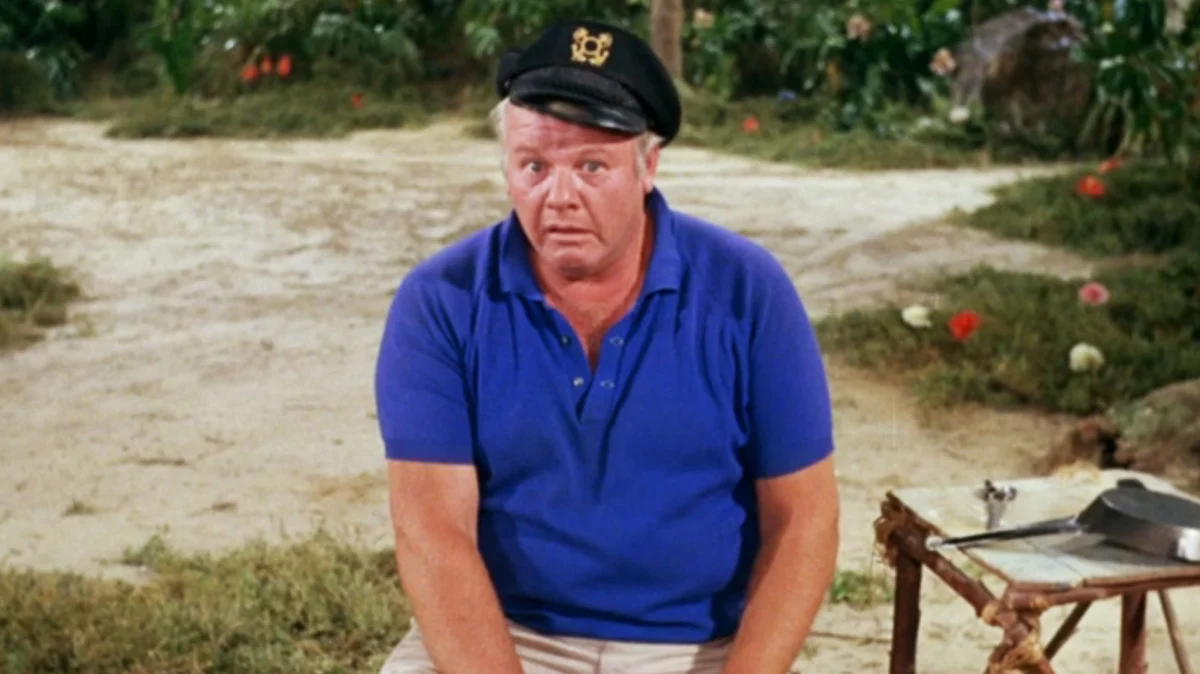
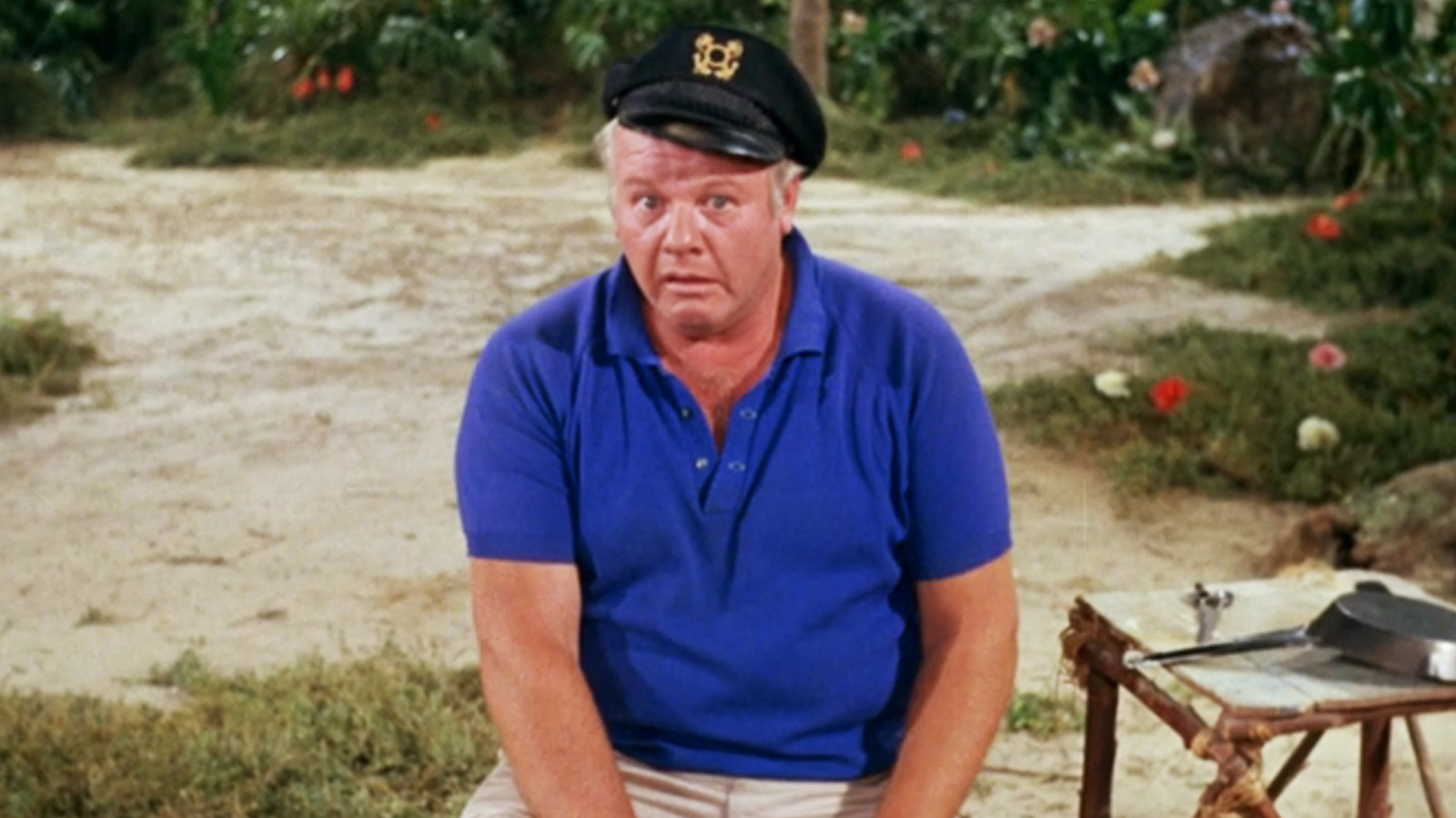
For millions of television viewers, Alan Hale Jr. is—and will forever be—the Skipper. As Captain Jonas Grumby on the iconic CBS sitcom Gilligan’s Island, Hale Jr. crafted a character defined by his booming laugh, his frustration with his bumbling first mate, and an unwavering, if somewhat beleaguered, sense of authority. Yet, to reduce Hale Jr.’s career to a single tropical island is to ignore a rich, multi-generational lineage of Hollywood character acting.
Beyond the khaki shorts and the captain’s hat, there lies a fascinating piece of cinematic trivia: Alan Hale Jr. and his father, the esteemed character actor Alan Hale Sr., both stepped into the boots of the same literary icon, Porthos the Musketeer. Separated by four decades and vastly different eras of filmmaking, their portrayals of Alexandre Dumas’ legendary character serve as a poignant bridge between the Golden Age of Hollywood and the late 1970s.
The Patriarch: Alan Hale Sr. and the Golden Age
To understand the significance of this shared role, one must first appreciate the stature of Alan Hale Sr. Long before his son became a household name, the elder Hale was a quintessential fixture of the American film industry. His career spanned the transition from silent films to the talkies, beginning in 1911 with The Cowboy and the Lady.
Hale Sr. was the ultimate journeyman performer, possessing a versatility that allowed him to command the screen alongside the greatest legends of the 20th century. His filmography reads like a syllabus for a course on classic Hollywood: he worked with Douglas Fairbanks, Clark Gable, Cary Grant, and Humphrey Bogart. His ability to blend into the scenery while simultaneously elevating the performances of his leads made him a producer’s dream.
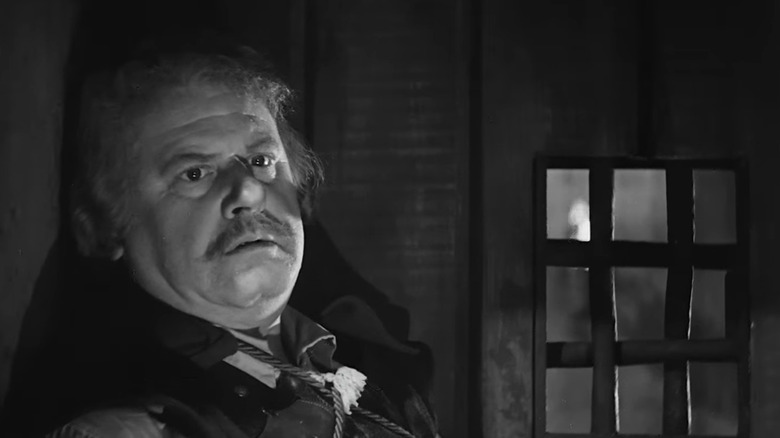
In 1940, he appeared in The Fighting 69th alongside James Cagney, a performance that highlighted his gravitas. Interestingly, the younger Hale would eventually work with Cagney as well, appearing in 1950’s The West Point Story. That same year, the elder Hale passed away, marking the end of a prolific career that saw him appear in over 200 films. Among these, his 1939 turn as Porthos in The Man in the Iron Mask remains a standout, establishing a high bar for any actor—even his own son—who would follow in those footsteps.
Chronology: The Porthos Connection
The connection between the two Hales and the character of Porthos is not merely a coincidence; it is a testament to the cyclical nature of Hollywood storytelling.
- 1939: Alan Hale Sr. delivers a definitive performance as Porthos in the classic The Man in the Iron Mask. This version, rooted in the aesthetic of the late 1930s, captured the swashbuckling spirit of the Dumas era.
- 1949/1952: Alan Hale Jr. takes his first stab at the musketeer lore in At Sword’s Point, playing "Porthos Jr." This film, though shot in 1949, was held for release until 1952, marking the beginning of the younger Hale’s association with the franchise.
- 1952: Hale Jr. portrays Porthos in Lady in the Iron Mask, a unique gender-swapped spin on the classic tale where a princess is hidden behind the titular mask.
- 1979: The most significant "full-circle" moment occurs when Alan Hale Jr. is cast as Porthos in The Fifth Musketeer. Directed by Ken Annakin, this film serves as a direct, albeit critically panned, return to the source material of the Dumas novel The Vicomte of Bragelonne: Ten Years Later.
Supporting Data: Behind the Scenes of The Fifth Musketeer
By the time production began on The Fifth Musketeer in Vienna, the landscape of cinema had changed drastically from the days of Hale Sr. The film was an ambitious international co-production, aiming to recapture the epic scope of classic adventure films. The production was helmed by Ken Annakin, a veteran British director known for Swiss Family Robinson, a film that had been a massive commercial success for Disney.
The cast of The Fifth Musketeer was star-studded, featuring Beau Bridges in a dual role as both the King and his imprisoned twin, Philippe. The supporting cast included seasoned veterans like Lloyd Bridges and José Ferrer. Alan Hale Jr. was cast alongside them, completing the trio of legendary musketeers.
For Hale Jr., the role was more than just a job; it was an opportunity to channel the spirit of his father. Physically, the resemblance between the two men was striking. As the younger Hale aged, his features and presence increasingly mirrored those of his father, giving his 1979 performance an uncanny, almost ghost-like quality. Viewers familiar with the 1939 classic could easily see the echoes of the elder Hale in the younger man’s mannerisms and delivery.
Official Responses and Critical Reception
It is a common trope in Hollywood that remakes often struggle to escape the shadow of their predecessors. The Fifth Musketeer was no exception. Despite the high-profile cast and the prestige of the source material, the film failed to impress critics.
The New York Times critic Vincent Canby provided a particularly scathing review, noting that the film "revives without quite giving life to Alexander Dumas’s story." The consensus was that while the film had the trappings of an epic, it lacked the narrative cohesion and heart of the original 1939 version.
However, from a personal and career-trajectory standpoint, the film was a milestone for Alan Hale Jr. After years of being typecast as the Skipper—a role he reportedly embraced but which nonetheless defined him exclusively—the opportunity to step into a classic literary role was a professional reprieve. He was not just the "first mate" or the "captain" of a stranded vessel; he was a legacy actor performing a role that his father had once held in high regard.
The Implications: A Legacy Beyond the Island
The story of the Hales and the Musketeers is a microcosm of the Hollywood studio system’s reliance on family dynasties and recurring archetypes. In the mid-20th century, actors were often viewed as "types," and the Hales were both excellent examples of the "ruggedly dependable" character actor.
The Weight of a Name
Being the son of a successful actor in the Golden Age was a double-edged sword. While it provided access to the industry, it also invited inevitable comparisons. Alan Hale Jr. spent his early career proving he could carry the mantle of his father’s talent, eventually finding his own voice through television. The fact that he returned to the role of Porthos three times demonstrates a commitment to the craft that transcended simple stunt casting.
Television vs. Film
The transition from the massive reach of Gilligan’s Island back into feature films highlights the distinct divide between television fame and cinematic ambition. Gilligan’s Island was a pop-culture juggernaut, yet it trapped its stars in a perpetual state of "character-hood." By returning to the Musketeer lore in 1979, Hale Jr. was attempting to reconnect with the medium that had defined his father’s success. It was an act of cinematic homage that allowed him to stand on the shoulders of the man who started the journey in 1911.
Conclusion
While the critics may not have been kind to The Fifth Musketeer, the film serves as a vital piece of the Alan Hale family story. It reminds us that the faces we see on screen are often part of a much longer, deeper history of craft. Alan Hale Jr. may always be the Skipper to the world, but to film historians and fans of classic cinema, he will also be remembered as the man who, four decades later, successfully stepped into the boots of his father, proving that the spirit of the swashbuckler was indeed a family tradition.
In the end, the uncanniness of the transition—from father to son, from 1939 to 1979—is a testament to the enduring power of the characters created by Dumas and the actors who brought them to life. Whether on a deserted island or in the halls of a French palace, the Hales proved that great character work is truly timeless.











No comments yet. Be the first to join the conversation!