

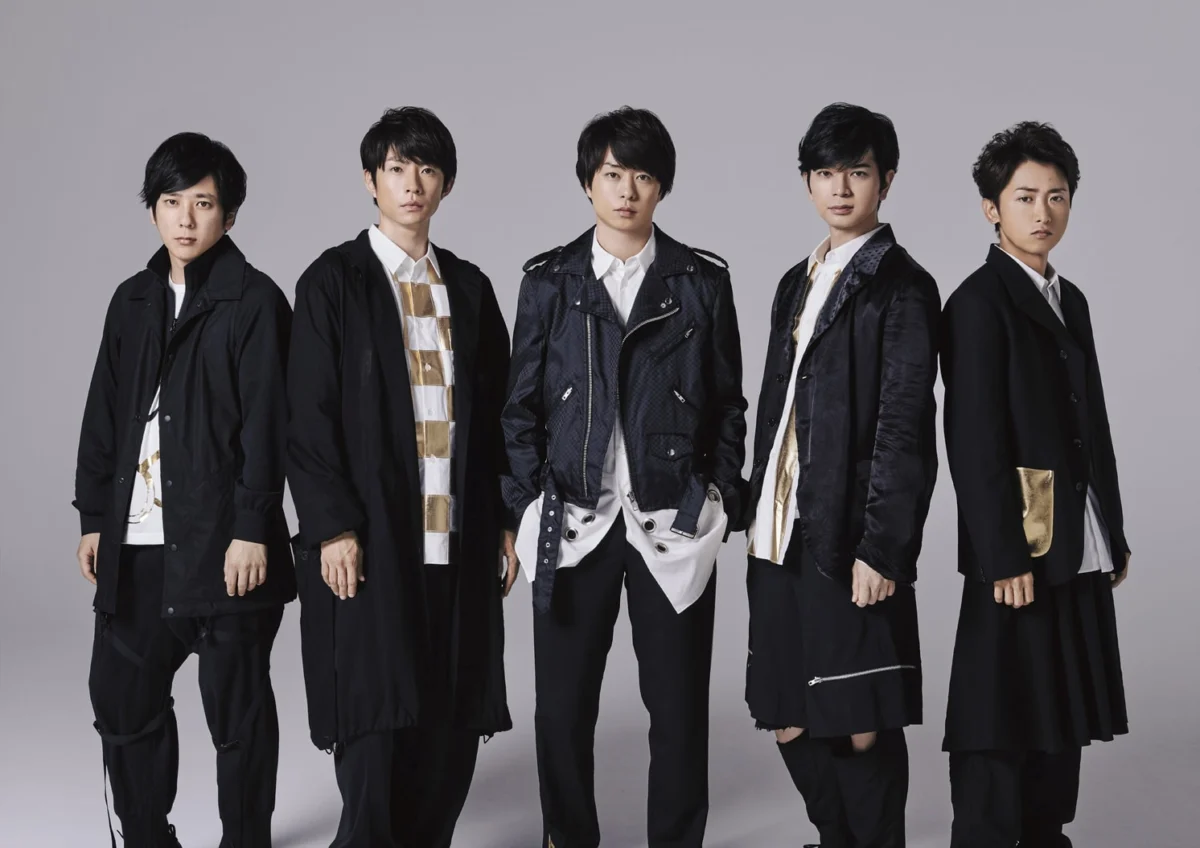
After more than two and a half decades of defining the landscape of Japanese pop culture, the legendary boy band Arashi has officially closed the final chapter of their storied career. On Sunday evening, inside the hallowed walls of the Tokyo Dome, the quintet—Satoshi Ono, Sho Sakurai, Masaki Aiba, Kazunari Ninomiya, and Jun Matsumoto—delivered a final, three-and-a-half-hour performance that served as both a celebration of their legacy and a poignant goodbye to millions of fans worldwide.
The sold-out spectacle, a marathon of hits and memories, featured a meticulously curated 33-song setlist. From the high-energy nostalgia of their self-titled debut single to the introspective maturity of their final release, "Five," the concert functioned as a sonic timeline of a group that evolved alongside its audience. The night was punctuated by fan-favorite anthems, including the infectious "Love so sweet" and the irrepressibly optimistic "Happiness." A standout moment arrived with the performance of "Whenever You Call," the group’s first all-English track, penned by global superstar Bruno Mars, highlighting Arashi’s successful efforts to transcend language barriers in their later years.
The End of an Era: A Chronology of Arashi’s Journey
To understand the weight of Sunday’s final performance, one must look back at the trajectory of a group that became synonymous with the "J-pop" identity. Formed in 1999, Arashi exploded onto the scene, quickly establishing themselves as not just musicians, but as ubiquitous figures in television, film, and commercial endorsements.
- 1999: The group makes its official debut in Honolulu, Hawaii, setting the stage for a meteoric rise that would see them dominate the Oricon charts for years.
- 2000s-2010s: Arashi solidifies their status as Japan’s premier idol group, breaking records for concert attendance and physical media sales. They become cultural pillars, with members hosting long-running variety programs and starring in critically acclaimed dramas.
- 2020: In a move that shocked the industry, the group announced a formal hiatus, citing a desire to step back from the relentless pace of their collective activities.
- May 2024: The group officially confirmed their intent to disband, setting the stage for a final farewell tour and the culminating event at the Tokyo Dome.
- October 2024: The final concert serves as the definitive punctuation mark on a 26-and-a-half-year journey.
Official Responses: A Legacy of Mutual Devotion
The emotional core of the concert was the final address from the members. Standing at the center of the stage, group leader Satoshi Ono spoke for his brothers-in-arms, offering a sentiment that resonated through the stadium and across the digital airwaves.
"Today marks the end of our activities, but the Arashi that we have created together will continue to live on," Ono stated, his voice steady yet filled with emotion. His fellow members, Sho Sakurai, Masaki Aiba, Kazunari Ninomiya, and Jun Matsumoto, each took turns addressing the sea of lightsticks that illuminated the dome, thanking the fans who had supported them through every pivot of their careers.
The sentiment was one of shared history. For Arashi, the fans were not merely consumers of music but participants in a collaborative experience. As the members reflected on their time together, they emphasized that while the machinery of "Arashi" as a commercial entity would cease, the bond forged between them and their audience remained permanent.
Fan Perspectives: Beyond the Music
The impact of Arashi’s dissolution cannot be overstated. For millions, the group served as a steadying force through decades of personal and societal change. Social media platforms, particularly X (formerly Twitter), were flooded with tributes that moved beyond typical fandom discourse.
"Thank you for 26 and a half incredible years," one fan wrote. "Through every stage of life, Arashi gave people memories, comfort, and moments they’ll carry forever. This doesn’t feel like an ending—it feels like a legacy that will keep living on."
Another user shared a story that echoed the sentiment of many households: "I’m endlessly grateful to Arashi for supporting the well-being of my eldest daughter. Now our whole household can hum their songs just like devoted fans. Arashi was something truly special to our household. Even though the group has disbanded, we’ll keep following the members forever."
These tributes underscore the parasocial yet deeply profound relationship Arashi cultivated. They were not just idols; they were companions. Their songs provided the soundtrack to first jobs, marriages, hardships, and triumphs. The loss of the group is, for many, the loss of a tangible connection to their own youth.
The Cultural Implication: The Controversy of Commitment
The fervor surrounding the farewell concert also touched upon a more complex debate regarding the nature of fandom and the boundaries of personal sacrifice. A viral post on the social media platform Threads ignited a firestorm of controversy when a man revealed that his wife chose to attend the Arashi concert over attending her own father’s wake.
The disclosure, which was subsequently shared on X and garnered over 36 million views, served as a lightning rod for discussions regarding priorities, familial obligation, and the "once-in-a-lifetime" nature of cultural events.
The Polarization of Opinion
The public reaction was sharply divided, reflecting deeper societal tensions:
- The Pro-Fan Perspective: Supporters of the woman argued that individual autonomy and the pursuit of personal happiness are valid, even in the face of bereavement. Some commenters posited that funerals are performative rituals and that a person’s memory is honored through internal reflection rather than physical attendance.
- The Traditionalist Perspective: A vocal majority expressed shock, arguing that family obligations—particularly the final farewell to a parent—take precedence over any entertainment event, regardless of its cultural significance. Many stated that the weight of such a decision would be a "burden of guilt" they could never recover from.
This debate transcended the Arashi fandom, evolving into a broader discourse on how modern society balances individual passions with communal and familial expectations. It highlighted the extreme lengths to which modern "stan culture" can go, and prompted many to examine their own moral compasses in the face of terminal life events versus fleeting cultural moments.
Conclusion: The Aftermath of an Icon
As the lights dimmed at the Tokyo Dome on Sunday, the physical presence of Arashi as a collective faded, but their influence remains deeply embedded in the bedrock of J-pop. They leave behind a discography that has been a source of comfort for nearly three decades and a blueprint for how a group can evolve from teen idols to cultural icons.
The controversy surrounding the fan’s decision to attend the concert serves as a final, perhaps unintended, testament to the intensity of the bond Arashi created. Whether one views their impact as a beacon of joy or as an all-consuming force, there is no denying that the departure of Arashi leaves a void that will not be easily filled. As the industry moves forward, the question remains: Can any group ever command the same level of devotion, or was Arashi a unique phenomenon of a time and place that will never be replicated? For now, the fans continue to stream their songs, keeping the music alive, and ensuring that, in the words of Satoshi Ono, the Arashi they created together continues to live on.












No comments yet. Be the first to join the conversation!