Raul Delapena Setiawan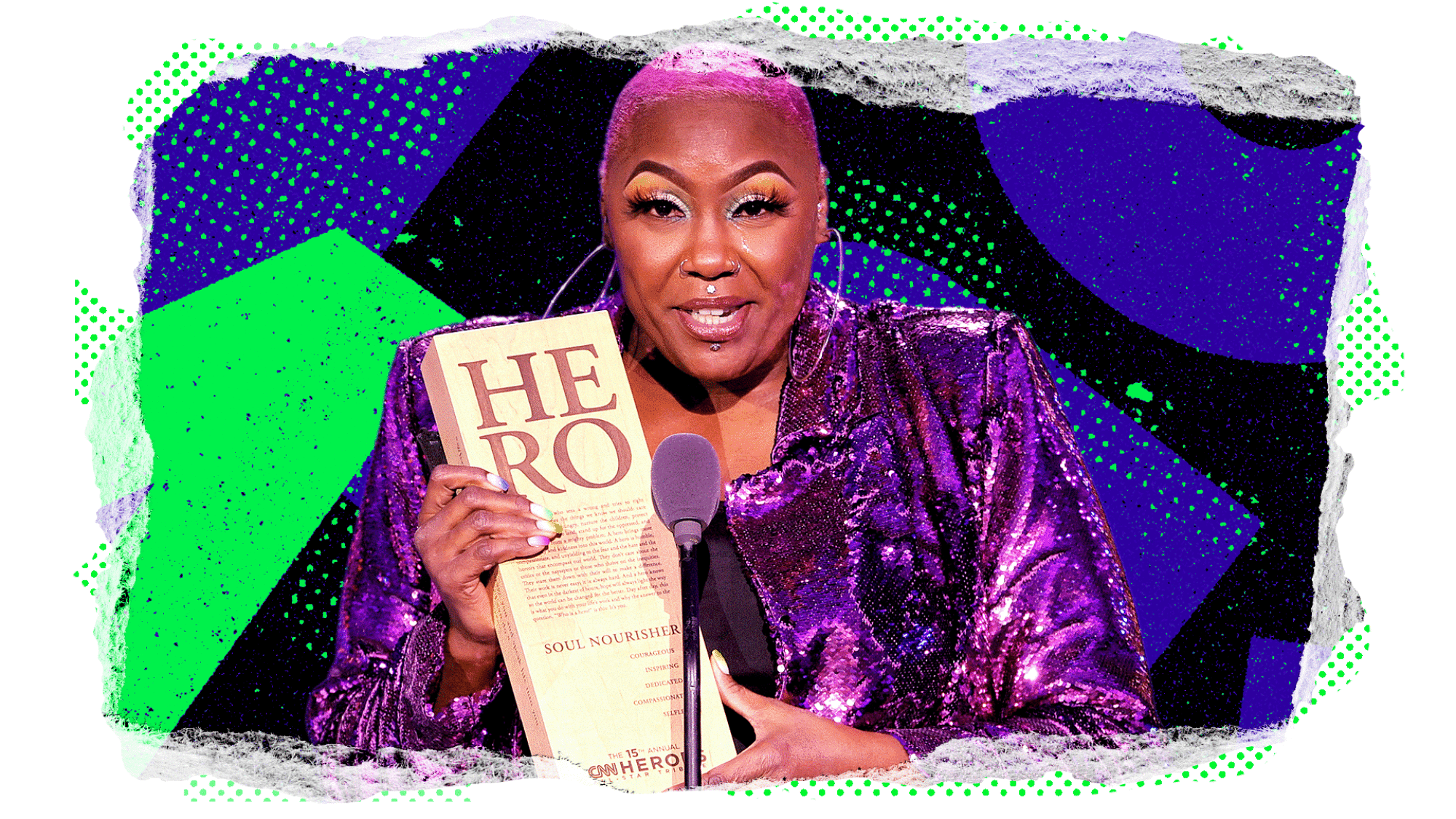
When the news broke in January 2026 that Shirley Raines—the woman affectionately known as "Ms. Shirley"—had passed away at 58 due to hypertensive heart disease, the city of Los Angeles felt an unmistakable void. To the millions who followed her on TikTok and Instagram, she was not just a content creator; she was a beacon of unfiltered, radical compassion. To the unhoused residents of Skid Row, she was a lifeline.
Raines, the founder of the nonprofit Beauty 2 The Streetz, didn’t just document poverty; she challenged the digital age to look at it directly, with grace, humor, and an unwavering commitment to human dignity. Her legacy, which continues to unfold months after her passing, serves as a masterclass in how social media can be reclaimed as a tool for genuine social good.
The Genesis of a Movement: From Personal Grief to Public Service
The story of Shirley Raines is one of transmuting profound personal suffering into universal healing. Born in Compton, California, Raines’ life was marked by early exposure to the harsh realities of homelessness and systemic instability. However, the true turning point in her life came in 1990, following the tragic, accidental death of her young son.
In the wake of such a life-shattering event, many would have retreated from the world. Instead, Raines chose the path of service. She began by bringing food and basic hygiene kits to the streets, recognizing that the emotional toll of homelessness was compounded by the loss of self-esteem that comes with physical neglect.

In 2017, she formalized her efforts into Beauty 2 The Streetz. She understood something that traditional aid organizations often overlook: that being homeless does not strip a person of their need for self-expression, beauty, or vanity. By bringing professional hair stylists, makeup artists, and grooming supplies to the sidewalk, she provided more than just a haircut; she provided a moment of normalcy and a reminder of humanity.
A Chronology of Impact: Scaling Compassion
Raines’ work expanded from small, spontaneous acts of kindness into a powerhouse of humanitarian aid. Her timeline of influence is as follows:
- 2017: Beauty 2 The Streetz is officially launched, focusing on the overlooked grooming needs of the unhoused population in Los Angeles.
- 2020-2021: As the pandemic shuttered the world, Raines’ social media presence exploded. Her livestreams provided an intimate, unvarnished look at the plight of Skid Row during a global crisis, driving massive donations and volunteer interest.
- 2021: Raines is rightfully recognized as a CNN Hero of the Year, bringing national attention to the specific needs of LA’s unhoused.
- 2025: A banner year for her advocacy, Raines is named to the Time100 Creators list and receives the Outstanding Social Media Personality award at the NAACP Image Awards Creative Honors.
- January 2026: Raines passes away, leaving behind a legacy that continues to be managed by her dedicated board and volunteer network.
- June 2026: LA Pride honors Raines posthumously as an Icon Grand Marshal, cementing her status as a champion for all marginalized communities.
The Digital Mirror: Breaking Through the Noise
In an era where social media is frequently criticized for promoting narcissism and superficiality, Raines stood as an anomaly. She amassed over 7 million followers by eschewing the "polished" influencer aesthetic in favor of raw, authentic, and often heartbreakingly real interactions.
Joy Taylor, a prominent TV and radio personality who eventually joined the board of Beauty 2 The Streetz, recalls being struck by the "spiritual" nature of the work. "I was looking for a place to volunteer… I really wanted to be boots on the ground," Taylor notes. "The experience of working with her is spiritual in a way."

Raines’ success on platforms like TikTok and Instagram was built on a foundation of radical openness. She didn’t talk at her followers; she invited them into the experience. Whether she was breaking into a spontaneous dance or offering a warm word to a stranger, her personality was magnetic. This authenticity translated into tangible funding—followers were so moved by her transparency that one donor famously purchased an abandoned building in Las Vegas to serve as a permanent base for her outreach efforts.
The "Human Touch" Doctrine: Why Aesthetics Matter
One of the most persistent, yet overlooked, aspects of Raines’ philosophy was the belief that grooming is a fundamental human right. Critics of such programs often suggest that food and housing should be the only priorities for outreach. Raines disagreed, arguing that dignity is essential to survival.
"You can see the light come back in people," Taylor explains. "There’s also something to human touch." For someone living on the streets, the simple act of having one’s hair washed or being offered a hot meal by someone who treats you as an equal can be the difference between giving up and finding the motivation to seek resources.
Raines understood that when an individual feels "seen," they are more likely to engage with social services. She wasn’t just providing shampoo; she was providing an invitation to re-enter society.

Official Responses and the Future of the Legacy
The void left by Ms. Shirley is being filled by a community she built from the ground up. Her organization continues to operate, hosting events like the recent Mother’s Day Restoration Brunch, where volunteers continued her tradition of providing esthetic services to women in need.
Lawrence Carroll, board president of LA Pride, reflects on the profound impact Raines had on his own leadership. "She just reminded me of family," Carroll says. "She saw the humanity in folks, just the fact that she was calling people ‘kings’ and ‘queens.’ We need more Ms. Shirleys, right?"
By naming her an Icon Grand Marshal for the 2026 LA Pride parade, the organization is signaling that Raines’ fight for the unhoused is inseparable from the fight for universal human rights. Her inclusion alongside civil rights activist Mia Yamamoto and actor Jeff Hiller underscores the intersectional nature of her work.
Implications: The Moral Responsibility of the Influencer
The legacy of Shirley Raines poses a significant question for the modern digital creator: If you have the power to command an audience of millions, what is your moral obligation to the world outside the screen?

Raines proved that social media need not be a "cesspool of wasted time," as many critics characterize it. Instead, she utilized the reach of the algorithm to highlight the dark corners of society and bring light to them through collective action. Her life suggests a new model for the 21st-century humanitarian: one who uses the tools of mass media to foster small, intimate acts of grace.
As we move forward without her physical presence, the challenge remains for her followers to continue the work. The "Ms. Shirley" method was never meant to be a solo act; it was a rallying cry for collective responsibility. Her life reminds us that no matter how much technology changes the way we connect, it can never replace the visceral, transformative power of one person looking another in the eye and saying, "You matter."
In the final analysis, Shirley Raines did not just "break through the noise." She changed the frequency entirely, teaching a digital generation that the most powerful thing you can do with your platform is to use it to uplift the person standing right in front of you. Her work continues, the brunch tables are set, and the "kings and queens" of the streets still have an advocate in the millions who continue to watch, remember, and serve in her name.

 Siti Muinah
 Dwi Wanna