


In a move that has sent tremors through the software development community, GitHub has officially transitioned its popular AI-powered coding assistant, Copilot, from a flat-rate subscription model to a usage-based billing system. The change, which went into effect in April and reached full operational maturity this June, marks a fundamental pivot in how the world’s most widely used AI coding tool monetizes its services. As the dust settles, users are reporting a harsh reality: their previous "normal" development workflows are now burning through monthly credit allocations in record time, leading to significant frustration and calls for more transparency.
The End of the "All-You-Can-Eat" Era
For years, GitHub Copilot operated on a predictable, request-based subscription model. Developers paid a flat monthly fee—ranging from $10 for Pro users to $100 for "Max" tiers—and received a generous allotment of standard and "premium" AI requests. This system allowed for a degree of "coding comfort," where users could lean on AI to debug, document, or refactor code without constantly monitoring their consumption.
GitHub’s rationale for the pivot centers on the escalating costs of inference. According to the company, the previous model forced them to subsidize "power users" who pushed the limits of the AI, effectively forcing the service to absorb the heavy financial burden of high-volume, complex queries. Under the new regime, the "mouth-shaped money slot" is officially open. Every interaction—from a simple autocomplete suggestion to a deep, multi-file refactoring task—now draws from a specific pool of "AI credits," where one credit equates to $0.01 in utility.

A Chronology of the Transition
The transition began in April, when GitHub first signaled the move away from request-based billing. While the announcement was initially framed as a move toward "equitable usage," the reality of the implementation has proven to be a shock to the system.
- April 2026: GitHub announces the intent to shift to usage-based billing, citing the need to better align subscription costs with actual compute consumption.
- May 2026: Beta testing and documentation updates prepare the user base for the shift. Confusion begins to brew as users attempt to calculate how their typical coding patterns will map to the new credit system.
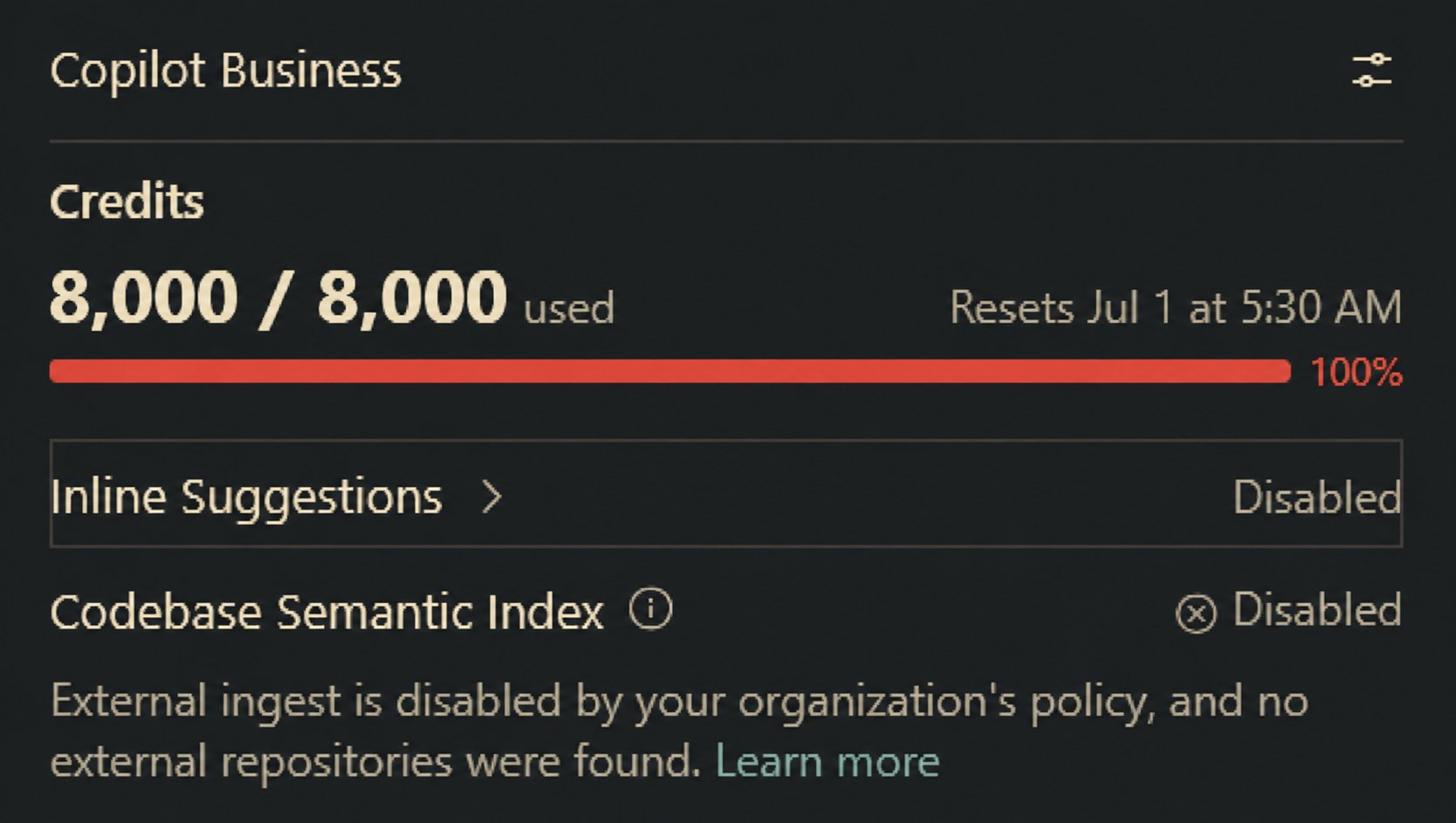
- June 2026 (The "Go-Live"): The new pricing model becomes the default. Within hours, social media platforms and the official GitHub community forums were flooded with "sticker shock" reports. Users began sharing screenshots of depleted credit balances, with some reporting that they had burned through their entire month’s quota in less than a single workday.
The Economics of Tokens: Breaking Down the Data
The new billing structure is complex, as it is tied directly to token usage and the specific Large Language Model (LLM) employed for a given task. Because different models carry different computational footprints, the cost of a "simple query" can vary wildly depending on which model the user selects—or which model the "Auto" feature chooses for them.
Tiered Credit Allocations
- Copilot Pro ($10/mo): 1,500 credits ($15 worth).
- Copilot Pro+ ($39/mo): 7,000 credits ($70 worth).
- Copilot Max ($100/mo): 20,000 credits ($200 worth).
The cost is not just about the number of prompts, but the density of the request. As highlighted by recent data, OpenAI’s GPT-5.4 Nano is relatively inexpensive, costing roughly $1.25 per million output tokens. However, the more capable, "frontier-level" models like the GPT-5.5 series can cost up to $30 for the same output.
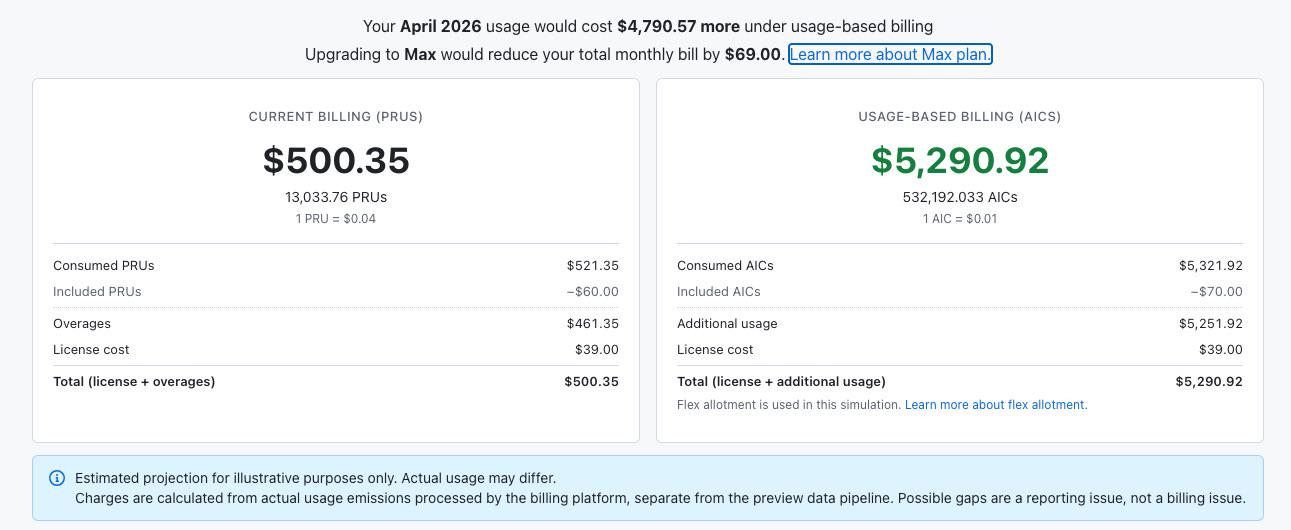
When users rely on "Auto" mode—which dynamically selects a model based on the complexity of the task—they are essentially handing the keys to their wallet to an algorithm. Reports indicate that "Auto" mode has, at times, selected high-end, expensive models for trivial, low-complexity tasks, depleting credit pools far faster than the user anticipated.
Supporting Evidence: The "Minesweeper" Benchmark
To test the viability of this new system, analysts at Ars Technica conducted a stress test using a standard, straightforward prompt: "Build a Minesweeper game." When routed through the Claude Haiku 4.5 model via Copilot, the task consumed 94 credits. While this might seem reasonable for a standalone toy project, it illustrates a troubling trend for enterprise-level development.
Complex codebases require extensive context windows. When a user asks an AI to review a large file, the AI must process the entire context. In the new system, sending that context uses tokens, and those tokens cost credits. Developers who are accustomed to keeping long-running chat sessions open are finding that they are being charged for the entire history of the chat every time they hit "enter."
The Developer Reaction: From Frustration to Adaptation
The sentiment on platforms like Reddit and X (formerly Twitter) has been largely negative. One user lamented that even while acting with extreme caution, they managed to burn through 840 credits in a single day using Claude Sonnet 4.6. Another user noted that they had exhausted 21% of their monthly Pro allotment in a few hours of work, leading them to reconsider the long-term viability of the subscription.
However, a subset of the community has begun to adapt. Strategies now include:
- Strict Prompting: Users are becoming more surgical with their requests, limiting the AI to specific functions rather than broad architectural queries.
- Context Management: Developers are now manually clearing their chat histories to avoid sending massive, redundant context windows that consume unnecessary credits.
- Model Selection: More users are manually selecting cheaper, "Nano" or "Flash" models for basic syntax tasks, reserving expensive frontier models for only the most difficult logic challenges.
Industry Implications: The "Subsidized Era" Ends
The move by GitHub is likely a bellwether for the broader AI industry. For the past two years, companies have aggressively subsidized AI usage to capture market share and "hook" developers on new workflows. Now, with the reality of high inference costs setting in, the focus has shifted to profitability.

If the "Copilot Model" becomes the industry standard, we may see a bifurcation in the market. On one hand, premium, high-compute models will remain available for enterprise users with significant budgets. On the other, a "low-cost" tier of AI coding tools is emerging. Some developers are already moving toward integrating open-source or highly efficient, smaller models like Deepseek into their local environments. By running these models, developers can achieve significant coding utility for a fraction of the cost—sometimes paying as little as a few cents for millions of tokens.
Conclusion: A Turning Point for AI Integration
The transition to usage-based billing for GitHub Copilot is more than just a pricing change; it is a fundamental shift in the relationship between AI tools and their users. The "magic" of AI coding is being tempered by the harsh reality of its underlying cost.
For GitHub, the challenge will be to balance the need for profitability with the risk of alienating the very developers who built their ecosystem. For developers, the lesson is clear: the age of "free-flowing" AI assistance is over. In its place is a new, more calculated landscape where every token counts, and efficiency is no longer just a coding best practice—it is a financial necessity. As the industry watches, the question remains: will this pricing model drive innovation in model efficiency, or will it simply price out the hobbyists and smaller developers who have been the backbone of the AI coding revolution? For now, the answer remains written in the rapidly depleting credit balances of thousands of developers worldwide.












No comments yet. Be the first to join the conversation!