Basiran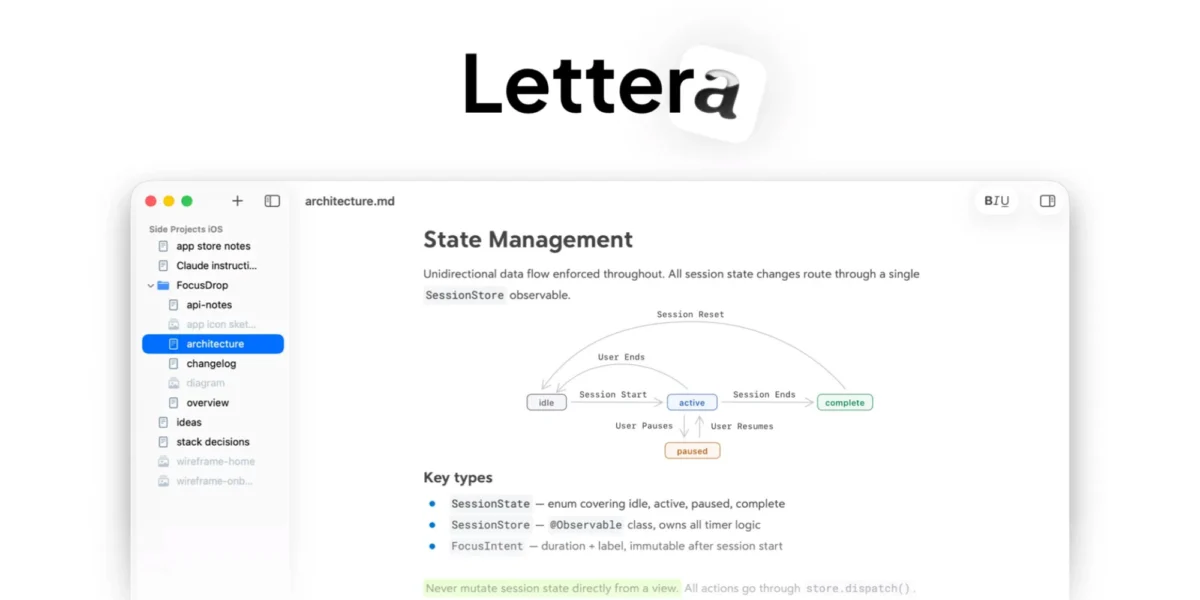
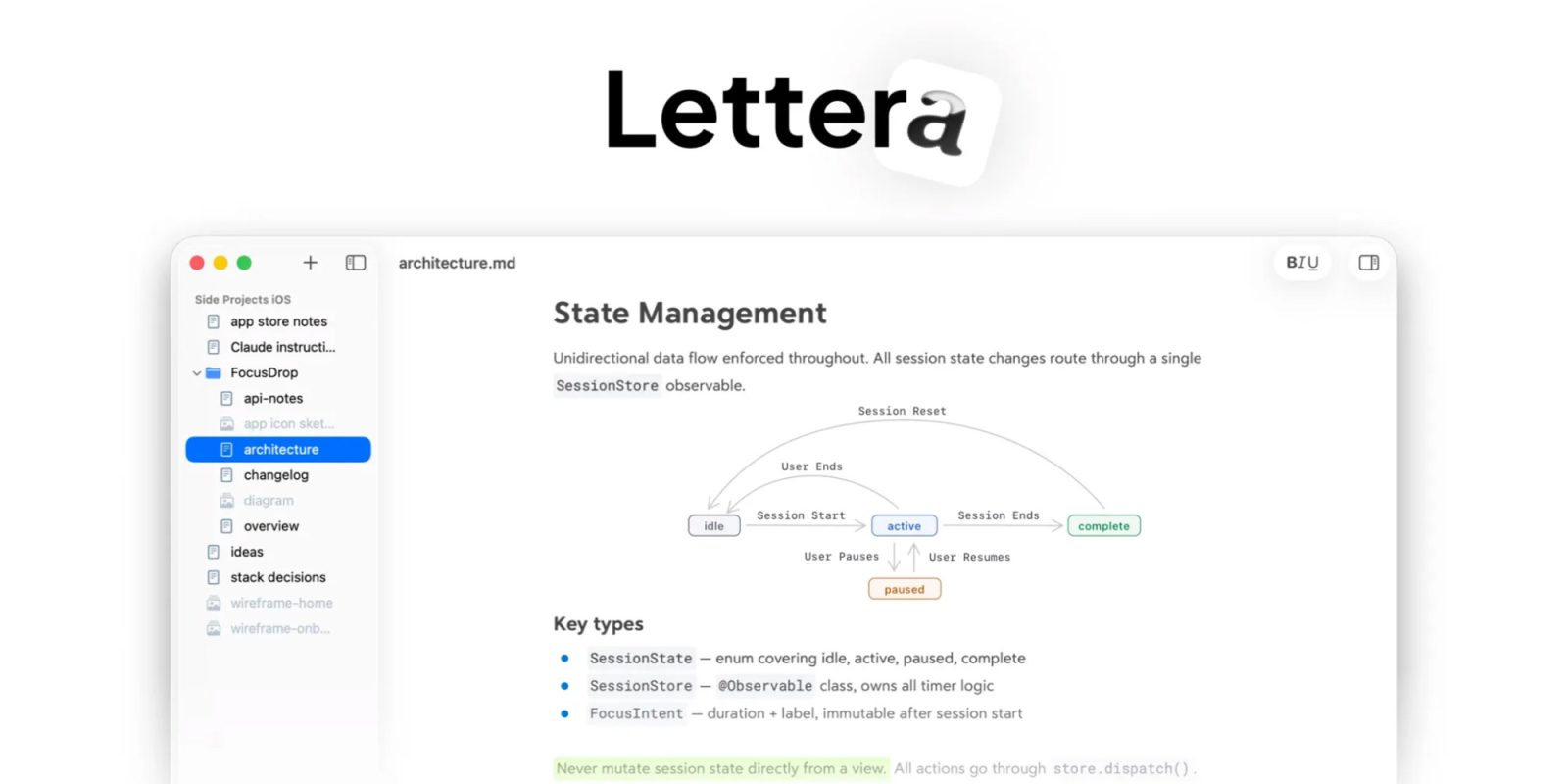
In the landscape of modern digital productivity, few tools have garnered as much loyalty as Bear, the elegant note-taking application developed by Shiny Frog. For years, users have lauded its minimalist aesthetic and robust Markdown support. Now, that ecosystem is expanding. This week, Shiny Frog officially announced the beta launch of Lettera, a standalone Markdown editor that brings the acclaimed engine powering Bear 2.0 to a broader range of workflows. Designed to function as a dedicated file-based editor, Lettera marks a significant pivot for the developers—moving from a proprietary database-driven note-taking environment to an open, file-centric writing tool.
The Chronology: From Panda to Lettera
To understand the significance of Lettera, one must look at the iterative journey of the Bear ecosystem. The foundation for this new application was laid years ago during a period of intense development internally known as "Panda."
The "Panda" Genesis (2021)
In June 2021, the development team at Shiny Frog provided a rare, behind-the-scenes look at their progress. They unveiled "Panda," an internal codename for a revolutionary new editor engine. At the time, the company emphasized that this was not merely a cosmetic update but a complete architectural overhaul. The primary goal was to transition the platform to a "full-blown" Markdown experience, ensuring that the software was as powerful for developers and researchers as it was for casual note-takers.

The Bear 2.0 Milestone (2023)
The fruits of the Panda project materialized in July 2023 with the launch of Bear 2.0. This update was monumental for the community, introducing over 20 major features. Most notably, it debuted the ability to hide complex Markdown syntax while maintaining a clean, "What You See Is What You Get" (WYSIWYG) interface. It also introduced support for advanced Markdown extensions, including tables, footnotes, and YAML front matter, effectively transforming the app from a simple note-taking tool into a professional documentation suite.
The Birth of Lettera (2026)
Following the success of Bear 2.0, the developers faced an increasing volume of requests from the user community. Power users, journalists, and software engineers frequently asked whether the underlying editor—so refined and capable—could be decoupled from the Bear app entirely. Users wanted a tool that didn’t require importing notes into a proprietary database but could instead work directly with files on their hard drives. Lettera is the direct answer to these requests.
Defining the Lettera Experience: Technical Capabilities
Lettera is marketed as a native, refined Markdown editor tailored for macOS. By stripping away the "all-in-one" database architecture of Bear, Lettera positions itself as a specialized instrument for focused writing.
File-System Agnosticism
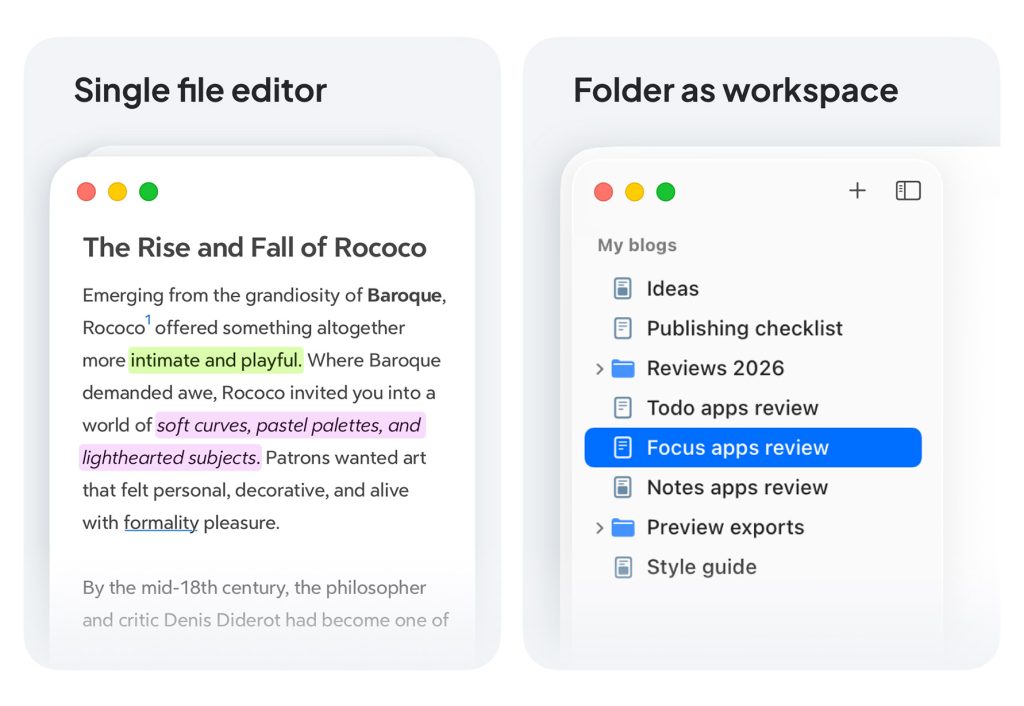
One of the most critical departures from the traditional Bear model is Lettera’s file-handling capability. While the app creates a default "Lettera" folder within iCloud by default to ensure cross-device synchronization, it is not tethered to it. Users can open any folder on their Mac, transforming the app into a workspace for technical documentation, blog drafting, or academic research. This makes it highly interoperable with version control systems like Git, as files remain standard Markdown documents.
The Editor Engine
At its core, Lettera uses the same engine that powers Bear 2.0. This means users receive:
- Syntax Highlighting: A sophisticated visual representation of Markdown that remains readable while you type.
- Support for Extensions: Full compatibility with tables, footnotes, and metadata, ensuring that complex documentation remains organized.
- Performance: Built as a native macOS application, it offers the responsiveness that web-based or cross-platform Electron apps often lack.
Official Responses and Developer Philosophy
In their official announcement, the team at Shiny Frog characterized the project as a natural evolution of their design philosophy. "Lettera is a native, refined Markdown editor for macOS," the company stated. "Built for writers, researchers, developers, and anyone who works with documents, from a quick blog draft to a complete technical documentation system."
The decision to release the app in a public beta via TestFlight indicates a commitment to community-driven development. By opening the doors to early adopters, Shiny Frog is soliciting feedback on everything from the subtle nuances of the user interface to the more granular details of file system integration. This collaborative approach has been a hallmark of the company’s history, and they have established a dedicated section on the official Bear Community forum specifically for Lettera discussions, bug reports, and feature requests.
Implications for the Writing and Tech Industry
The release of Lettera is not merely the launch of a new text editor; it is a strategic shift in the productivity software market.
Competition with Specialized Editors
The market for Markdown editors is dense, featuring heavy hitters like Obsidian, Typora, and Ulysses. Lettera enters this space with a distinct advantage: the "Bear pedigree." Users who have spent years learning the keyboard shortcuts and visual syntax of Bear will find the transition to Lettera seamless. Unlike Obsidian, which relies on a complex plugin architecture, Lettera aims to offer a "batteries-included" experience that is polished out of the box.

The Shift Toward Open Standards
By focusing on individual file editing rather than a proprietary database, Shiny Frog is acknowledging a broader trend in the tech industry toward data portability. Users are increasingly wary of "walled garden" applications. By allowing Lettera to work with any folder on a local machine, the developers are signaling that the user’s files belong to the user, not the software. This transparency is likely to attract a demographic of professional writers and developers who prioritize the longevity of their data.
Impact on the Bear Ecosystem
Some may wonder if Lettera will cannibalize the user base of Bear. However, the two apps serve different functions. Bear remains an excellent "Second Brain" tool for organizing notes, clippings, and journals. Lettera is an "active workspace" for long-form content and project-based writing. It is highly likely that many users will employ both apps simultaneously: Bear for collection and quick thoughts, and Lettera for execution and final drafting.
Looking Ahead: The Path to Version 1.0
The current beta phase is expected to be a period of intense refinement. As the developers sift through the feedback provided via TestFlight and the community forum, they will likely focus on three key areas:

- UI/UX Refinement: Ensuring the interface remains uncluttered while adding the power-user features requested by the community.
- Performance Optimization: As users test the app with massive project folders, maintaining the "native" speed will be critical.
- Cross-Platform Considerations: While currently a macOS-exclusive experience, the industry will be watching to see if the success of Lettera eventually prompts a version for iOS or other platforms.
Conclusion
Lettera represents a milestone for Shiny Frog. It proves that the company is listening to its power users, willing to experiment with new paradigms, and confident enough in its core technology to let it stand on its own. For those who have long admired the Bear editor but required a more flexible, file-based workflow, the wait is effectively over.
As the beta progresses, the community will be instrumental in defining the trajectory of this tool. For those interested in participating, the path is clear: download the TestFlight build, open a folder, and begin writing. In an era where digital clutter is a constant, a refined, focused editor like Lettera is a welcome addition to the modern writer’s toolkit. Whether it will replace established players remains to be seen, but with its clean design and deep roots in one of the most successful writing platforms of the last decade, Lettera is undeniably a project to watch.

 Ali Ikhwan
 Rifan Muazin