Laily UPN
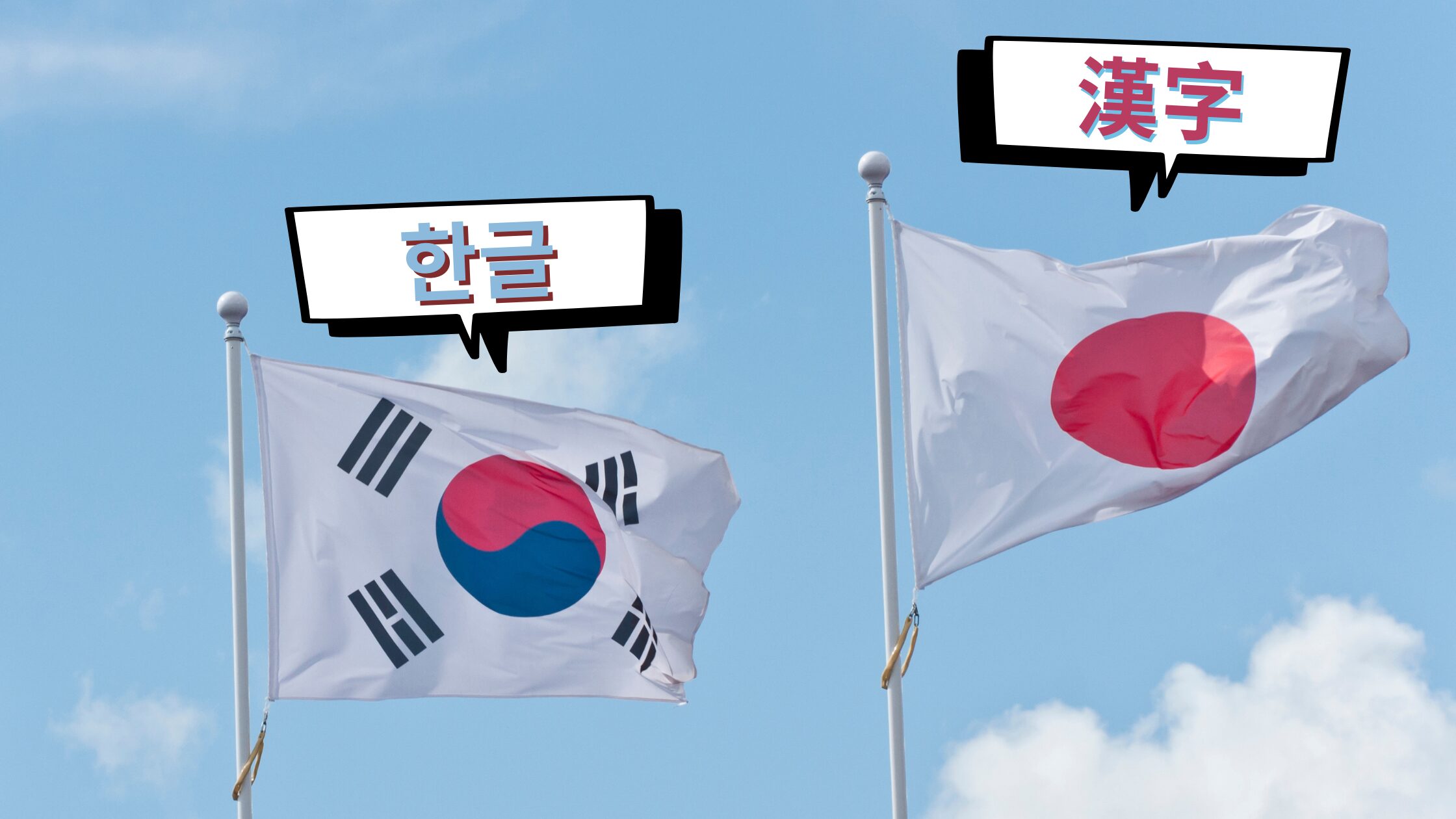
The cultural architecture of East Asia is built upon a foundation of Chinese influence, yet few aspects of this shared heritage are as divergent as the modern writing systems of Japan and Korea. While both nations historically adopted Chinese characters—known as hanzi in China, hanja in Korea, and kanji in Japan—their paths toward modernity led to fundamentally different linguistic outcomes.
Today, the Japanese learner faces a daunting mountain: mastering 2,136 "Joyo" kanji alongside two distinct syllabaries, hiragana and katakana. Conversely, the Korean learner navigates the elegant simplicity of hangul, an alphabet of 24 basic and 40 combined letters. This stark disparity recently ignited a heated, multilingual debate on social media, prompting a deeper investigation into a question that has haunted East Asian linguists for a century: Why did Japan’s various attempts to abolish kanji fail, while Korea’s transition to a phonetic script became a cornerstone of its national identity?
The Great Script Debate: Is Simplification Progress?
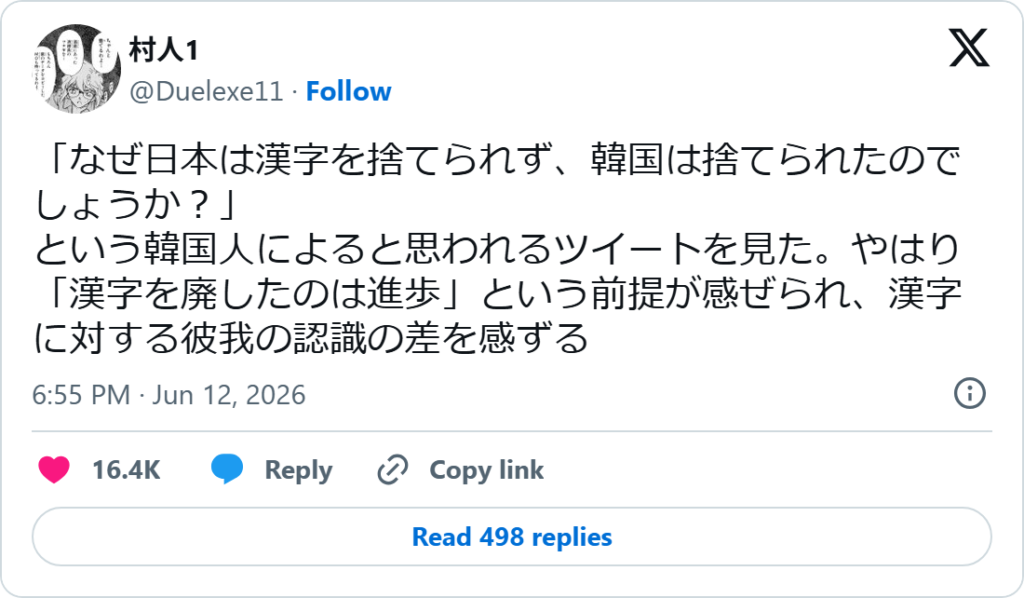
The conversation was triggered by a viral post on X (formerly Twitter) by user @Duelexe11, who highlighted a sentiment often expressed by Korean speakers: "Why couldn’t Japan abandon kanji while Korea could?" The question carries an implicit premise—that the transition from complex, character-based systems to phonetic alphabets constitutes an objective form of "progress."
The ensuing thread, spanning Japanese, Chinese, Korean, and English, saw a fervent defense of kanji from Japanese participants. Many rejected the Western, phonocentric view that equates linguistic "evolution" with the move toward an alphabet. One user demonstrated the frustration of a "kana-only" Japan by posting a lengthy paragraph written entirely in hiragana. The result was a visually taxing, difficult-to-parse block of text that proved the point: while technically possible, abandoning kanji in Japanese leads to a massive loss of semantic density.
A Chinese user chimed in to support the utility of characters, noting that the high information density of ideograms allows for easier disambiguation of similar-sounding words—a major hurdle for purely phonetic scripts. For many in the region, kanji are not a relic of a primitive past, but a sophisticated tool for modern communication.
A Century of Abolitionist Ambition
The idea of "ditching" kanji is not a modern fad; it is a ghost that has haunted Japanese political discourse since the twilight of the Edo period.
The Edo-Meiji Pioneers
The first recorded proposal to abolish kanji came from Maejima Hisoka, the visionary founder of the modern Japanese postal system. In a submission to the last shogun, Tokugawa Yoshinobu, Maejima argued that the complexity of the writing system was a barrier to national progress. The Shogun, occupied with the collapse of his regime, largely ignored the plea.
With the advent of the Meiji Restoration in 1868, the push for reform accelerated. As Japan raced to industrialize and align itself with Western powers, the "national language" became a site of intense ideological struggle. Reformers split into three camps: those advocating for the adoption of the Roman alphabet (Romaji), those pushing for a kana-only system, and those who sought a restricted, simplified set of kanji.
The Post-War Crisis and the French Proposal
The most significant threat to the survival of kanji occurred in the immediate aftermath of World War II. The Allied Occupation (GHQ/SCAP) viewed the Japanese writing system as a catalyst for mass illiteracy and a barrier to democratization.
Amidst this climate of radical restructuring, the novelist Shiga Naoya proposed perhaps the most eccentric solution in linguistic history: the total abandonment of Japanese in favor of French as the national language. Shiga argued that Japanese was "incomplete and inconvenient." His proposal, which relied more on the "vibes" of French literature than on practical linguistics, was eventually dismissed as a symptom of the era’s existential confusion.
The Data That Saved Kanji
The GHQ’s campaign to abolish kanji was ultimately dismantled by cold, hard data. In 1948, the Civil Information and Education Section commissioned a massive, nationwide survey on reading and writing ability involving 16,820 subjects.
The occupation forces operated under the assumption that the average Japanese citizen was illiterate due to the difficulty of kanji. The results proved otherwise: the illiteracy rate was a negligible 1.7% to 2.1%. Historical records from the late Edo period—specifically the terakoya (temple schools)—revealed that mass literacy had been the norm in Japan long before the arrival of American occupiers. By the early 20th century, school enrollment had reached nearly 90%, cementing a high level of functional literacy across all classes.
Faced with a population that was already highly literate, the occupation authorities lost their primary justification for forced script reform. The government instead settled on a compromise: the 1946 Toyo Kanji list, which limited official characters to 1,850. This list was later expanded into the Joyo Kanji guide of 1,945 characters in 1981, and finally to 2,136 in 2010.
The Practical Divergence: Homophones and Context
Why does Japan cling to these characters when Korea does not? The answer lies in the linguistic mechanics of the two languages.
Japanese is famously rich in homophones. Because the language adopted Chinese characters and compressed their varied pronunciations into a limited set of Japanese morae, many different words share the same sound. For example, the sound "kou" can represent dozens of different concepts. The use of niji-jukugo (two-character compounds) is the primary method of disambiguation. Without the visual distinction of kanji, a written Japanese sentence would become a string of identical sounds, requiring immense mental effort to decipher.
Korea, however, adapted to Chinese sounds more fluidly. While 57% of the Korean lexicon is derived from hanja, the language’s phonology allowed it to transition to the hangul alphabet with far less ambiguity.
Korea’s Path: Nationalism and Resistance
The story of hangul is one of democratization and resistance. King Sejong the Great, who introduced the 28-letter alphabet in the 15th century, intended it to empower the common people. However, the Confucian elite viewed the script as a threat to their status, labeling it eonmun ("vulgar script").
The script’s fortunes changed during the 1910–1945 Japanese colonization of Korea. Hangul became a powerful symbol of Korean national identity and resistance against the imperial occupier. Post-independence, the push for hangul-exclusivity became a nationalist project, particularly in North Korea, which abolished hanja in 1949.
In South Korea, the story is more nuanced. While the government has vacillated on the teaching of hanja—briefly banning it in 1970 before reinstating it—a "hangul-only" generation has emerged. Today, as these generations grapple with their own historical documents written in older scripts, a new, quieter debate has begun: should South Korea re-emphasize hanja to bridge the gap to its own past?
Implications: A Future Defined by Scripts
The divergence between the Japanese and Korean writing systems is a profound example of how history, geography, and politics collide to shape the way we communicate.
For Japan, kanji remain an essential, non-negotiable component of the linguistic identity. They are the anchors that prevent the language from drifting into a sea of confusing homophones. The dissolution of the Romaji Association in 2023 marked the final surrender of the abolitionist movement; Japan has firmly decided that its complex script is not a hurdle to be cleared, but a legacy to be maintained.
For Korea, hangul remains a testament to the power of a democratized, efficient script. Yet, the struggle to maintain literacy in hanja highlights the tension between moving forward into a streamlined future and maintaining a tether to the historical, character-heavy heritage of the region.
Ultimately, these two nations illustrate that there is no single "correct" path for a writing system. Whether through the sophisticated, high-density complexity of kanji or the elegant, accessible efficiency of hangul, both cultures have successfully carved out a method to record their histories, express their souls, and communicate in an ever-evolving world. For the learner of either language, the takeaway remains the same: the script is not just a tool for writing—it is the lens through which the nation views itself.


 Neng Nana
 Asro
Asro