Nana
Nana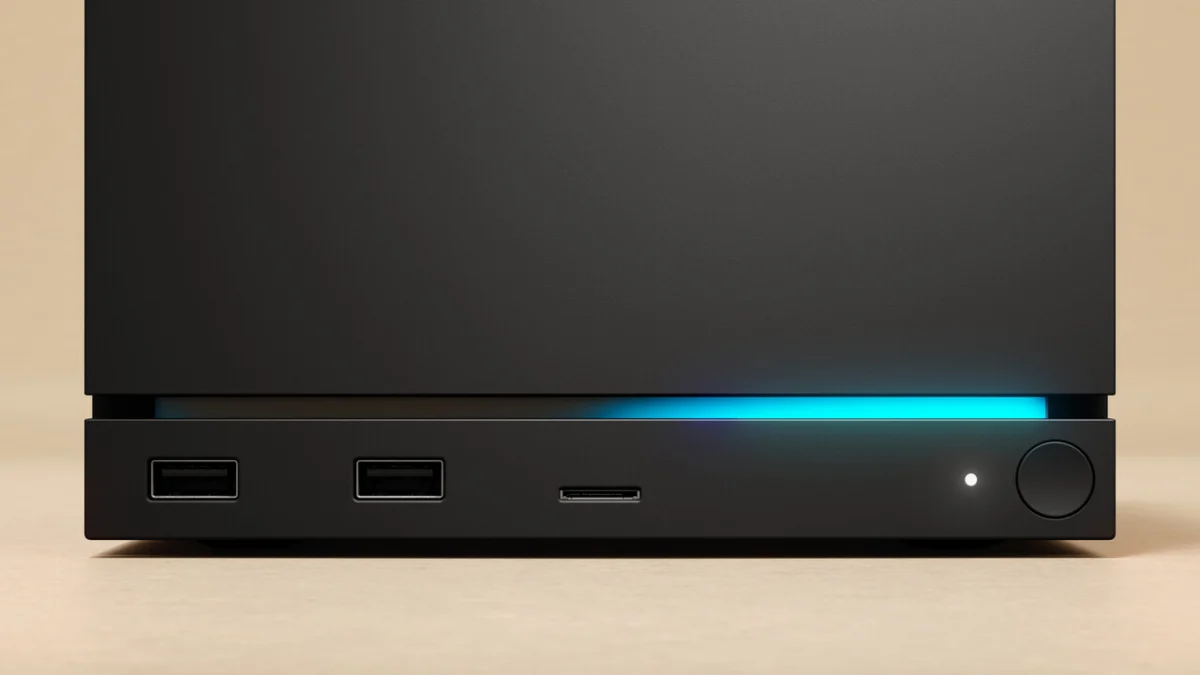
Valve has officially pulled back the curtain on its most ambitious hardware project in years. After weeks of speculation fueled by benchmark leaks and industry whispers, the official order page for the new Steam Machine is live. However, in a move that reflects both the scarcity of high-end components and Valve’s commitment to curbing scalpers, potential buyers are not merely clicking "add to cart." Instead, they are entering a high-stakes digital lottery, with the opportunity to purchase the device resting entirely in the hands of a randomized selection process.
Main Facts: Pricing, Configurations, and the Lottery System
The new Steam Machine arrives in two distinct configurations, catering to different storage needs and aesthetic preferences. The entry-level model, equipped with a 512 GB NVMe SSD, is priced at €1,039. For those requiring more space, a 2 TB variant is available for €1,359—a premium that reflects both the storage capacity and exclusive aesthetic inclusions.
Valve has smartly integrated the Steam Controller into these offerings. Customers can choose to purchase the hardware standalone or bundled with the iconic controller. Bundling adds approximately €70 to the price tag, which effectively saves the consumer €30 compared to purchasing the controller separately. The 2 TB model goes a step further in customization, shipping with two additional, swappable front panels—one crafted from premium walnut wood and another finished in a tactile red fabric, allowing users to tailor the console’s appearance to their living space.
The acquisition process, however, is the most notable aspect of this launch. Interested parties have until June 25 at 19:00 CEST to "throw their hat in the ring." Participation is strictly regulated:

- Account Eligibility: Only accounts in good standing—defined as those that have not triggered any fraud or policy flags—and those that made a purchase on Steam prior to April 27, 2026, are eligible.
- One-Per-Household: To ensure fair distribution, Valve is limiting purchases to one unit per household.
- The Random Selection: Once the deadline passes, a random number generator will shuffle all entries. The winners will receive an email notification confirming their place in the queue and granting them the exclusive right to purchase their selected configuration.
Chronology: From Geekbench Leaks to Official Launch
The path to this launch was paved with cryptic indicators. Roughly one week ago, observant enthusiasts spotted "Steam Machine" identifiers on Geekbench, which signaled that the hardware was not only functional but nearing mass production. These benchmarks teased impressive performance metrics, suggesting that Valve had moved past the prototype stage and was finalizing the software-hardware integration.
The history of the Steam Machine concept is a storied one. Valve’s initial foray into the living room space nearly a decade ago was met with mixed reviews, primarily due to the nascent state of SteamOS and the fragmentation of the hardware ecosystem. By taking full control of the design this time around—building a proprietary, compact, and high-performance cube—Valve is signaling a "do-over" that aims to unify the console experience with the vast library of PC gaming.
Following the close of the lottery on June 25, the logistical rollout begins immediately. Those lucky enough to be selected will receive their purchase links shortly thereafter, with the first units scheduled for shipment as early as June 29. Players who are not selected in the initial wave will be placed on a secondary notification list, waiting for the next batch of inventory to become available.
Supporting Data: Hardware Specifications and Performance
The hardware itself is a marvel of modern engineering, packing significant power into a chassis that measures roughly 15 centimeters on each side. The "cube" form factor is designed to be as inconspicuous as it is powerful.

Under the hood, the device is powered by an AMD Zen 4 architecture with 6 cores, paired with a custom AMD RDNA 3 GPU featuring 28 Compute Units (CUs). Valve claims that this combination, supported by the efficient SteamOS 3.8, allows for 4K gaming at 60 FPS. A critical component in achieving these frame rates is the integration of AMD’s FSR (FidelityFX Super Resolution) technology. Coincidentally, this launch aligns with AMD’s release of FSR 4.1 for the Radeon RX 7000 series, which provides the necessary upscaling prowess to allow this compact machine to punch well above its weight class.
The machine does not skimp on connectivity or convenience. The power supply is fully integrated into the chassis, removing the need for a cumbersome external "power brick." For networking, the device includes Wi-Fi 6E and Bluetooth 5.3, ensuring minimal latency for wireless controllers and stable downloads for large game libraries. Finally, a subtle LED strip on the front provides a touch of "gamer" flair without dominating the living room aesthetic.
Official Responses and Strategic Rationale
Valve’s approach to this release is rooted in a philosophy of "measured distribution." By avoiding a standard "first-come, first-served" model, they are attempting to prevent the bots and scalpers that have plagued the hardware industry since 2020.
In a statement provided on the store page, Valve clarified: "All entries will be shuffled after the deadline. The result will be communicated shortly thereafter via email. No late entries will be accepted."

This transparency is designed to manage expectations. By forcing users to register, Valve is creating a direct line of communication with their most loyal customers. This also allows them to manage logistics across international borders more effectively. The rollout is currently restricted to the EU, USA, Canada, the UK, and Australia, where fulfillment is handled directly by Valve. For the markets in Japan, Taiwan, and Hong Kong, Valve has partnered with Komodo to act as the official distributor, ensuring that support and warranty services meet local standards.
Implications for the Gaming Industry
The launch of this new Steam Machine has profound implications for both the PC and console markets. For years, the industry has operated under a binary: the user-friendly, closed-ecosystem console (PlayStation/Xbox) or the open, complex, but powerful PC. Valve is attempting to bridge this divide once more.
- The "Console-ization" of PC Gaming: By providing a standardized hardware platform with a bespoke OS (SteamOS 3.8), Valve is removing the friction that typically prevents console players from transitioning to PC. If the device performs as promised, the "plug-and-play" experience will be indistinguishable from a standard console, but with the massive, back-compatible library of the Steam Store.
- The Death of Hardware Exclusivity: If this machine succeeds, it challenges the dominance of closed-platform consoles. Valve is effectively demonstrating that a PC can be a living-room staple without the maintenance overhead of a traditional desktop.
- The Power of AMD’s Ecosystem: This device serves as a massive endorsement for AMD’s APU and RDNA technologies. By leaning heavily on FSR 4.1, Valve is validating the industry’s shift toward AI-driven upscaling as the primary method for maintaining performance in compact hardware.
- Market Discipline: The lottery model may set a new standard for high-demand tech launches. By prioritizing established accounts and limiting quantities, companies can ensure their products reach actual users rather than inventory warehouses run by resellers.
As June 25 approaches, the gaming community remains in a state of anticipatory tension. The new Steam Machine is not just another piece of hardware; it is a test of whether Valve can finally succeed where they once faltered. With a sleek design, aggressive performance targets, and a carefully controlled rollout, the Steam Machine represents a bold, if limited, step toward a future where the PC is the undisputed center of the living room.
For the lucky few who win the lottery, the arrival of the device on June 29 will be more than just a delivery—it will be the beginning of a new chapter in PC gaming history. For the rest, the waiting game continues, proving that in the world of high-end hardware, demand still significantly outweighs the capacity for innovation.


 Reynand Wu
 Pevita Pearce