Azzam Bilal Chamdy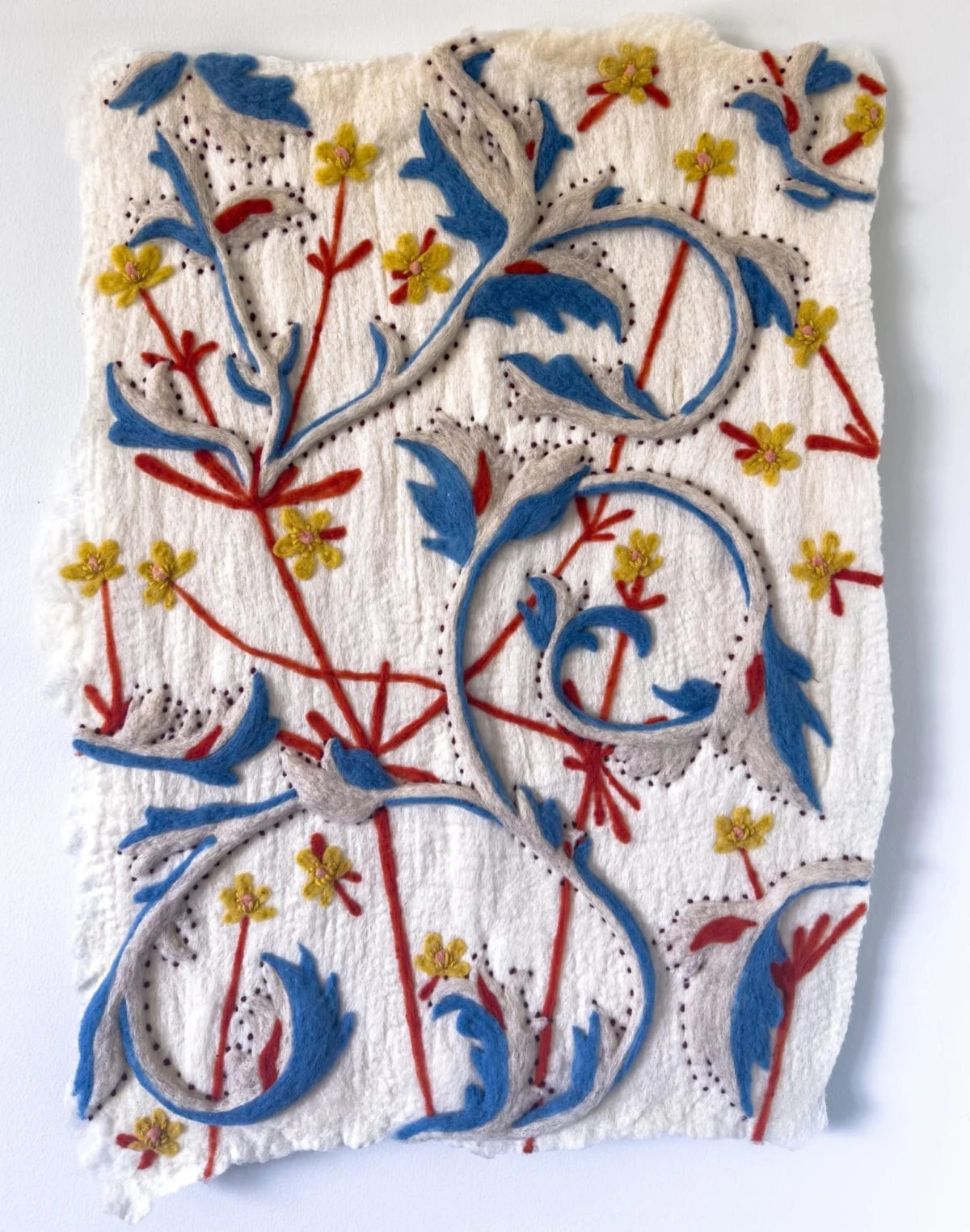
In the quiet, meditative intersection of textile craft and fine art, Holly Guertin is carving out a unique niche. By masterfully manipulating felted wool, intricate crochet, and delicate embroidery, Guertin creates works that do more than merely depict the natural world—they breathe life into it. Her practice, which centers on the quiet dignity of animals and the rhythmic complexity of flora, invites viewers to pause and witness the "spectacular ornament" hidden within the ordinary patterns of our ecosystem.
Main Facts: The Intersection of Flora and Fauna
Holly Guertin’s work is a testament to the versatility of fiber as a medium. Her process is a rigorous yet fluid dance between the softness of wool and the structural precision of needlework. Central to her portfolio are her signature lifelike lambs, which are often portrayed in moments of profound stillness—napping, grazing, or simply standing with a gentle, serene awareness.

These sculptures are frequently set against ornate, vibrant backgrounds, creating a dialogue between the organic, untamed beauty of the animal and the calculated, geometric beauty of human-made patterns. For Guertin, the distinction between "nature" and "ornament" is non-existent.
"The brilliant color work in a hummingbird’s feathers, the spots on a pufferfish, even the stripes in a blade of grass are all ordinary moments of spectacular ornament," Guertin notes. Her art serves to bridge this gap, elevating the textures of the natural world into the realm of high-concept textile design.

Chronology: A Trajectory of Artistic Growth
The evolution of Guertin’s work can be traced through her consistent commitment to the "slow art" movement. While she has been refining her technical skills for years, the recent body of work represented in her latest solo exhibition marks a significant maturation in her thematic exploration.
- Foundational Years: Early in her practice, Guertin experimented with traditional felting techniques, focusing on the basic anatomy of creatures and the properties of wool as a sculptural medium.
- The Shift to Complexity: Over time, she began incorporating embroidery and crochet, allowing her to add "layers" of narrative and texture to her pieces. This shift moved her work away from pure representation toward a more symbolic, decorative approach.
- The Hand in Hand Period (2026): The current pinnacle of her practice is reflected in her solo exhibition, Hand in Hand. This collection serves as a retrospective of her recent obsession with the relationship between the maker’s touch and the subject matter. The exhibition, hosted at the Waterworks Visual Arts Center in Salisbury, North Carolina, opened on July 6, 2026, and is scheduled to run through October 10, 2026.
Supporting Data: The Mechanics of Fiber Sculpture
To understand the weight of Guertin’s art, one must look at the technical rigor required to produce it. Unlike painting, where pigments can be layered quickly, felting and embroidery are additive, labor-intensive processes.

The Materiality of the Work
- Felted Wool: Guertin utilizes wool as a primary sculptural base. Through the process of needle felting, she compresses raw fibers into dense, durable shapes. This allows her to achieve an anatomical realism that is rarely seen in soft sculpture.
- Embroidery and Crochet: These elements serve as the "ornament" in her work. By integrating intricate, often floral-inspired stitching, she adds a layer of depth that contrasts with the matte finish of the wool.
- Scale and Scope: Her works vary from intimate, portrait-like details to large-scale textile panels. The attention to detail—such as the subtle shading in a lamb’s coat or the specific, delicate curve of a petal—indicates a practice that prizes patience over speed.
Comparative Analysis
In the broader context of contemporary fiber art, Guertin occupies a space shared by artists who prioritize the "tactile narrative." While artists like Sheila Hicks focus on the architectural nature of fiber, and others like Janet Echelman explore monumental scale, Guertin focuses on the intimate connection. Her work is designed to be viewed at a distance of a few feet, inviting the viewer to engage with the object almost as if they were touching it.
Official Responses and Artistic Philosophy
The reception to Hand in Hand has been overwhelmingly positive, with critics pointing to the emotional resonance of the pieces. The Waterworks Visual Arts Center, known for its commitment to both community engagement and high-caliber fine art, chose to highlight Guertin’s work precisely because of its accessibility and technical prowess.

Guertin’s philosophy, shared during interviews and reflected in her social media presence, centers on the idea of the "hand." She emphasizes that there is a specific type of wisdom found in manual labor. "What your hand has wrought," a sentiment echoed in the title of one of her key pieces, suggests that the process of creation is a form of prayer or meditation. By recreating the natural world with her own hands, she is effectively honoring the original design of that world.
The Role of Social Media
Guertin has effectively utilized platforms like Instagram to pull back the curtain on her process. By sharing process videos and close-up detail shots, she provides context for the labor-intensive nature of her craft. This transparency has helped build a community of followers who appreciate the nuances of her technique, from the specific grade of wool used to the complexity of her color palettes.

Implications: The Future of Fiber Art
The success of artists like Holly Guertin signals a broader cultural shift. In an era increasingly dominated by digital imagery and mass-produced goods, there is a burgeoning hunger for objects that possess "soul"—objects that are physically made, tactile, and imperfectly perfect.
1. The Revival of "Slow Art"
Guertin’s work is a rejection of the high-speed production cycles of the modern world. By choosing materials that require time to shape and manipulate, she encourages her audience to slow down. The implication is that if the artist takes 100 hours to create a work, the viewer is more likely to spend more than a fleeting second observing it.

2. The Blurring of Fine Art and Craft
For decades, the art world maintained a rigid, often elitist, distinction between "fine art" (painting, sculpture) and "craft" (textiles, ceramics). Guertin’s work helps dissolve this boundary. By exhibiting in established art centers and focusing on thematic, conceptual exploration, she forces a reassessment of what constitutes a "serious" medium.
3. Environmental Consciousness
Her focus on nature—lambs, foliage, and the inherent patterns of the wild—is not merely aesthetic. It is a subtle nod to the beauty of the natural world that is currently under threat. By placing these natural forms in a gallery setting, she frames them as precious, worthy of protection, and worthy of our undivided attention.

Conclusion: An Invitation to Reflect
Holly Guertin’s work, currently on display through mid-October at the Waterworks Visual Arts Center, is more than a display of technical skill; it is a profound meditation on the connection between the human hand and the natural world.
As viewers walk through Hand in Hand, they are not just looking at textile sculptures; they are entering a space of quietude. In a world that is increasingly loud, digital, and disjointed, Guertin’s work offers a tactile reminder of our place within the natural order. Whether it is the soft, peaceful posture of a felted lamb or the meticulous, vibrant embroidery of a floral flourish, her work reminds us that beauty is not an abstract concept—it is something that can be held, woven, and honored.

For those interested in exploring her work further, the artist maintains a consistent presence on her Instagram page, where she continues to document the intersection of her life and her art, one stitch at a time. Through her continued dedication to the fiber arts, Guertin ensures that the "spectacular ornament" of the natural world remains a visible, tangible part of our collective consciousness.


 Nana
Nana
 Basiran