Rifan Muazin
Netflix is significantly raising the stakes in its ongoing effort to redefine the interactive entertainment landscape. With the announcement of Unhinged, a high-concept, immersive horror experience arriving on June 30, 2026, the streaming giant is moving beyond traditional mobile gaming. By enlisting A-list talent and leveraging proprietary hardware-integrated technology, Netflix is attempting to bridge the gap between passive cinematic consumption and active, high-stakes gameplay.
The Genesis of Unhinged: A Narrative-Driven Nightmare
Developed by Night School Studio—the creative force behind the critically acclaimed supernatural thriller Oxenfree—Unhinged represents a departure from the studio’s previous indie-leaning projects. The game is designed as an interactive horror experience that demands physical engagement from the player.
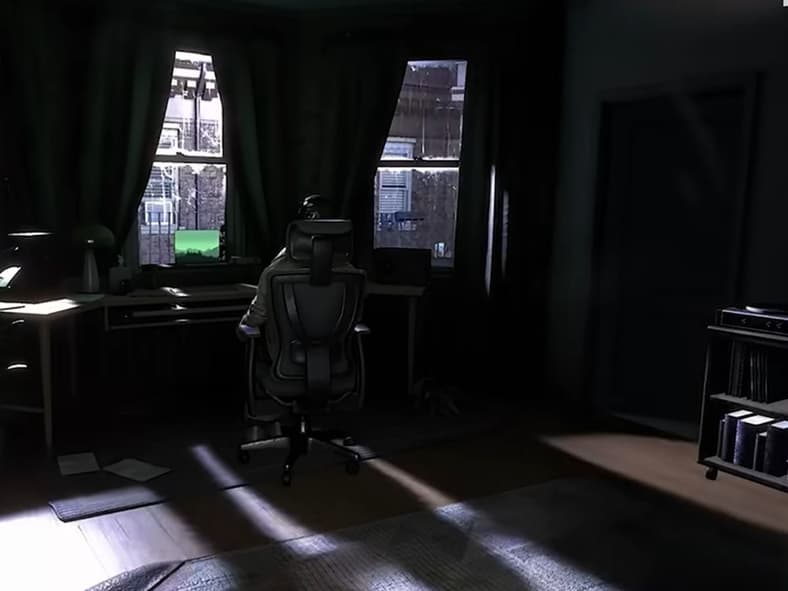
The premise is deceptively simple but executed with technical ambition: Players step into the shoes of Ava, voiced by Zoë Kravitz (The Batman, Caught Stealing). The story begins in the aftermath of a violent, apocalyptic-level storm that plunges a sprawling apartment complex into total darkness. Trapped and isolated, Ava’s survival depends on her ability to communicate and navigate the pitch-black corridors of her building.
The cast is bolstered by significant star power. Sadie Sink, best known for her role as Max Mayfield in Stranger Things, voices Ava’s friend Claire, while industry legend Troy Baker—the voice behind iconic characters in The Last of Us and Indiana Jones and the Great Circle—portrays the building’s superintendent. This casting choice is intentional; by utilizing actors familiar to Netflix’s core audience, the studio is signaling that Unhinged is intended to be consumed as a "playable movie" rather than a standard mechanical game.

Chronology of Development and Strategic Pivot
Netflix’s entry into the gaming sector began in 2021, initially focusing on a library of casual mobile titles. However, the company has spent the last three years refining its strategy to align with its primary business: streaming content.
- 2021: Netflix launches its first wave of mobile games, primarily leveraging existing IP and smaller indie titles.
- 2022-2023: The acquisition of Night School Studio signals an intent to produce higher-quality, narrative-heavy games. The studio begins work on Unhinged, a project designed to test the limits of "Play-on-TV" technology.
- 2024: Internal testing of the QR-code-to-smartphone controller interface begins. The project is positioned as a flagship title for the company’s push into "transmedia" entertainment.
- 2026 (Upcoming): The official launch date of June 30 is set. Marketing campaigns begin to emphasize the unique "real-world" integration of the player’s personal smartphone.
Technological Innovation: Your Phone as the Controller
The most compelling aspect of Unhinged is its departure from traditional input methods. Netflix has effectively turned the player’s smartphone into an extension of the game world. Rather than utilizing a plastic controller, players scan a QR code on their TV screen, which syncs their device to the game engine.
The integration is tactile and immersive. When Ava explores the dark hallways, the player physically tilts their smartphone to aim the in-game flashlight. If the game demands a quick reaction, the phone serves as the movement interface. Perhaps most innovative is the communication system: when characters like Claire or the superintendent call or text Ava, the player’s actual device rings, vibrates, and plays the audio. This creates a psychological layer of immersion that static consoles cannot replicate, effectively shattering the "fourth wall" by bringing the game’s tension directly into the player’s living room.
Supporting Data and Gameplay Mechanics
Night School Studio has recognized that not every player approaches horror games with the same appetite for stress. To accommodate a wider audience, Unhinged offers two distinct modes:

- Story Mode: Designed for those who want to experience the narrative without the pressure of failure. This mode removes time limits and "game over" states, allowing for a cinematic flow that prioritizes story beats and character development.
- Standard Mode: Built for enthusiasts of the horror genre. This mode introduces environmental threats, time-sensitive challenges, and survival mechanics that require precision.
Even in Standard Mode, however, Netflix is opting for a forgiving experience. If a player fails to navigate a sequence, they are returned to the most recent checkpoint rather than being forced to restart the entire chapter. This choice underscores the developer’s philosophy: the "show" must go on. The priority is maintaining the momentum of the story rather than punishing the player for a lack of mechanical skill.
Official Responses and Industry Context
Netflix executives have characterized Unhinged as a "pivotal moment" for the platform’s gaming division. In a recent press release, the studio noted: "When Ava receives a call or text, your actual phone rings, vibrates, and plays the audio directly through its speaker. It is designed to blur the line between television and gaming in a way that feels natural, yet deeply unsettling."
The gaming industry has reacted with cautious interest. Analysts have noted that while mobile-integrated gaming is not a new concept, the scale of this production—featuring major Hollywood talent and the infrastructure of a global streaming service—is unprecedented. By utilizing a "Play-on-TV" model, Netflix is effectively turning every household with a smart TV into a gaming console, bypassing the need for expensive hardware like a PlayStation 5 or Xbox Series X.
Implications: The Future of Interactive Streaming
The success or failure of Unhinged will likely determine the trajectory of Netflix’s gaming future. If the project resonates with subscribers, it could pave the way for a new genre of "interactive event television." Imagine a scenario where a popular Netflix series has an interactive episode, or a horror film where the audience’s collective decisions (via their phones) determine the survival of the protagonists.
Furthermore, Unhinged serves as a case study in how to utilize existing IP and talent to boost gaming engagement. Netflix has struggled to convert its massive streaming subscriber base into active gamers. By creating a product that feels like a natural evolution of watching a movie, the company is removing the barriers to entry that typically prevent casual viewers from engaging with video games.
However, the experiment carries risks. Technical latency issues, the barrier of requiring two devices (a TV and a phone) to play, and the potential for "gimmicky" gameplay are hurdles the development team must clear. If the phone-controller interface feels cumbersome rather than intuitive, it could alienate the very audience Netflix hopes to capture.
Ultimately, Unhinged is more than just a horror game; it is a declaration of intent. Netflix is betting that the future of entertainment isn’t just about watching a screen—it’s about interacting with it. As the June 30 launch approaches, the eyes of both the entertainment and gaming industries will be fixed on this apartment building in the dark, watching to see if Netflix can successfully bridge the gap between the living room couch and the digital frontier.


 Sagoh
Sagoh
 Ammar Sabilarrohman