Nila Kartika Wati
In the modern digital landscape, the paradox of social media marketing is sharper than ever. Marketing leaders are increasingly shifting budgets away from traditional channels and into social media, fueled by an instinctual understanding that this is where the customer lives. Yet, when it comes to measuring the tangible business value of these efforts, a profound disconnect remains.
According to The 2025 Impact of Social Media Marketing Report, only 44% of marketing leaders describe their teams as “experts” in measuring the business value of social. Despite this, 80% of those same leaders are aggressively reallocating funds toward social initiatives. We are currently witnessing a massive capital migration toward a medium that most organizations still struggle to quantify.
To unpack why this gap exists and how to bridge it, we sat down with Carmen Vicente, Social Media Manager at Gorgias, the leading conversational AI platform for e-commerce. Her insights reveal a fundamental truth: the business value of social media is not a static equation, but a living, breathing component of the enterprise that requires a shift in how we perceive data, strategy, and organizational silos.
The Evolution of Social ROI: A Chronology of Perception
The history of social media measurement has evolved through three distinct phases, each shaping the current challenges faced by modern CMOs.
- The "Vibe" Era (2010–2016): During the infancy of professional social media, success was largely anecdotal. Metrics were vanity-focused—likes, shares, and follower counts dominated the conversation. The goal was visibility, and the return was measured in sentiment and "vibes."
- The Conversion Era (2017–2023): As platforms introduced robust ad managers and tracking pixels, the focus shifted to performance marketing. The industry became obsessed with direct-response attribution, trying to force social into the same linear funnel as search engine marketing.
- The Intelligence Era (2024–Present): We are now in the age of "Social Intelligence." Brands are realizing that social is not just a broadcast channel or a direct-response engine—it is an unfiltered focus group that operates 24/7. The value today is found in predictive insights, customer retention, and cross-functional business strategy.
Supporting Data: The Metrics Gap
The struggle to define ROI is not for a lack of data, but a lack of alignment. The 2025 Impact of Social Media Marketing Report highlights a hierarchy of priorities that, for many, remains disconnected from actual revenue:
- Awareness: Two-thirds of leaders are confident social drives this, yet in a volatile economic climate, awareness alone is rarely enough to secure budget.
- Customer Acquisition & Loyalty: While over 50% of leaders believe social drives these outcomes, they lack confidence in their team’s ability to prove it.
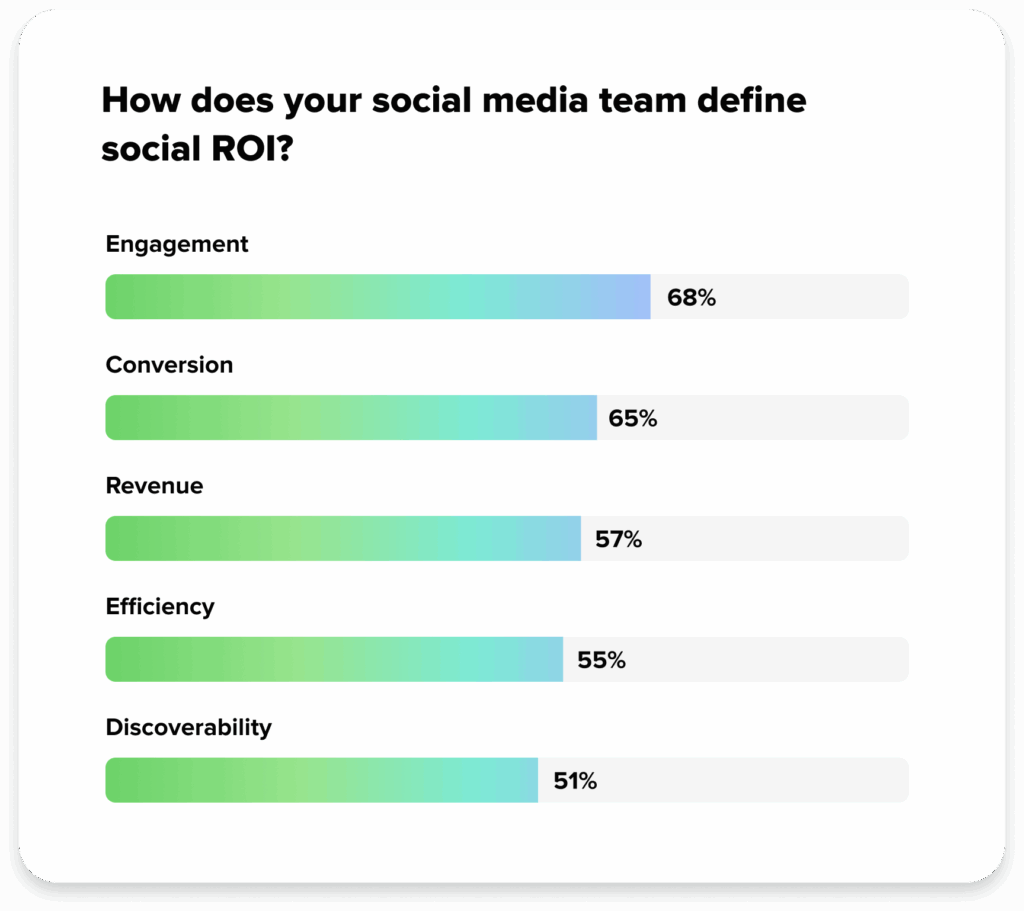
- Revenue: Surprisingly, only 57% of marketing leaders explicitly tie social impact to bottom-line revenue.
This data suggests that while social is a massive driver of business health, the reporting frameworks remain stuck in the past. When leaders define ROI primarily through engagement (68%) and conversion (65%) metrics, they ignore the deeper, high-level business impacts like R&D, product feedback, and competitive positioning.
The Gorgias Perspective: Moving Targets and Strategic Flexibility
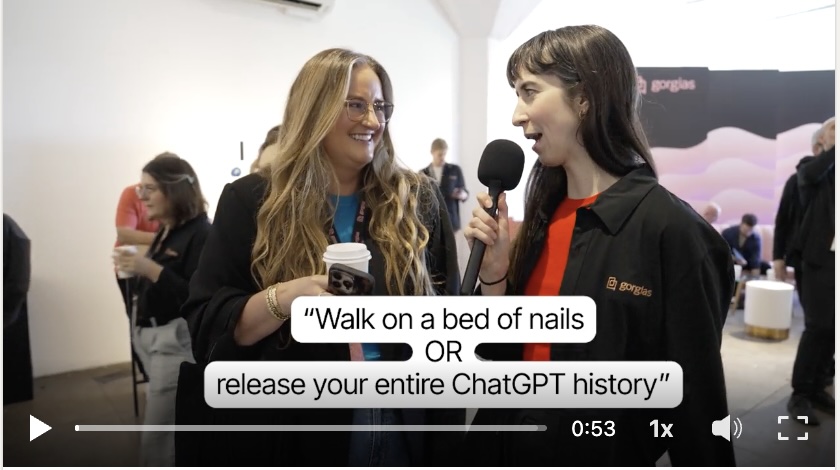
Carmen Vicente offers a unique perspective, having transitioned from B2C to the high-stakes world of B2B SaaS. "In B2C, my reporting was often emotional—storytelling-based," she explains. "In B2B, data is king. If you can’t tie your efforts to revenue, you’re going to struggle to contextualize your impact organization-wide."
Vicente argues that the "moving target" nature of social is a feature, not a bug. "Social media isn’t static. If the way you measure it is, then you have a problem. At Gorgias, ROI is an ongoing conversation. We’ve moved away from conventional, static KPIs toward project-based deliverables that ladder up to greater business objectives."
This shift in philosophy is critical. By aligning social activity with specific, high-level business goals—such as launching a new product line or reducing customer support tickets through AI-driven education—the social team becomes a strategic partner rather than a content factory.
The Untapped Power of Social Intelligence
Perhaps the most significant finding from The 2026 Social Intelligence Report is the massive disparity between the perceived importance of social data and its actual utilization.
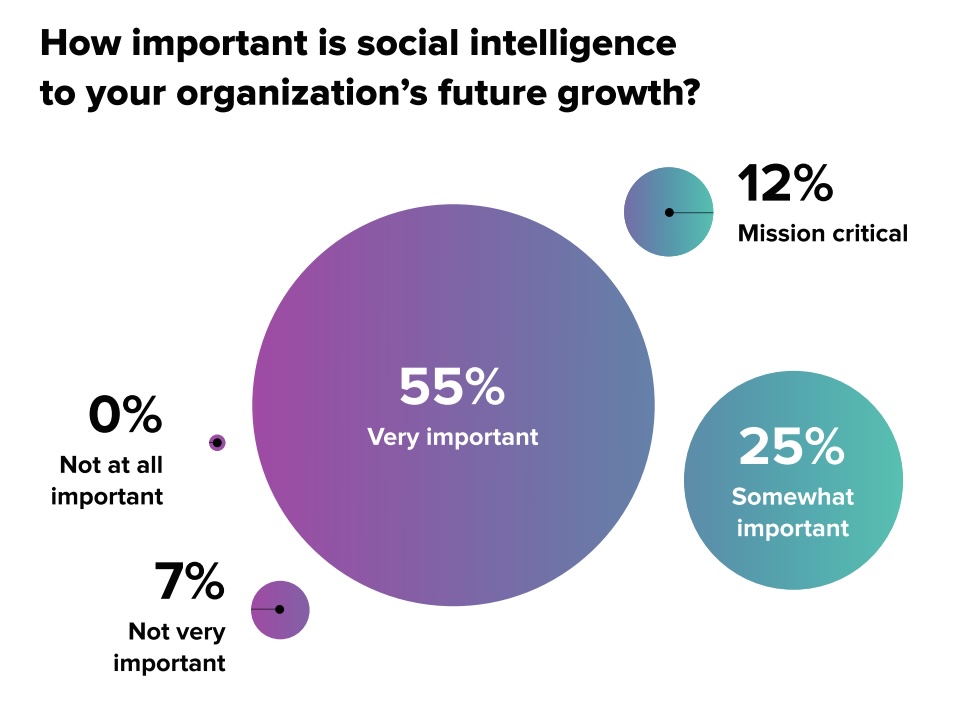
While 67% of marketers agree that social intelligence is "mission-critical" for long-term success, only 15% actively monitor real-time social intelligence dashboards. This represents a dangerous delay in market understanding. In an environment where consumer preferences shift daily, the organizations that fail to operationalize this data are effectively flying blind.
Breaking the Silos
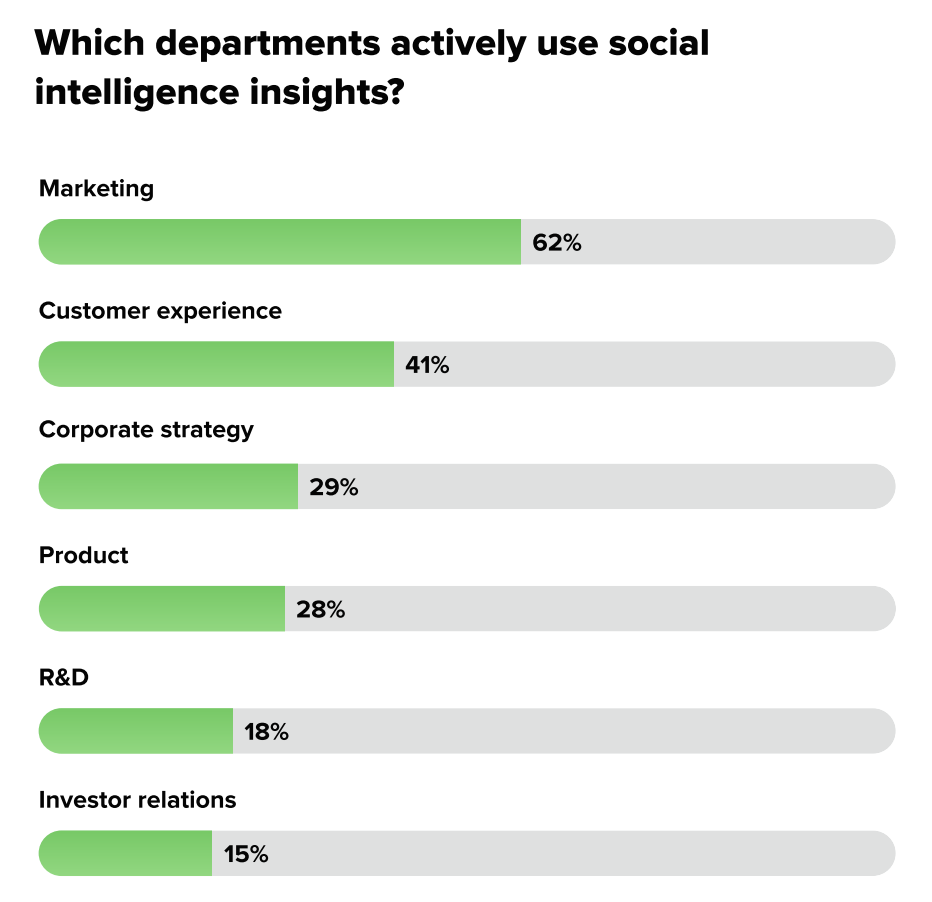
The true value of social intelligence is not contained within the marketing department. It belongs in:
- Product Teams: Using social sentiment to identify bugs or feature requests.
- Customer Experience (CX): Addressing complaints before they escalate.
- Corporate Strategy: Monitoring competitive threats and market sentiment.
However, only 18% of marketers review these insights on a quarterly basis. To unlock the value of social, organizations must democratize access to this data, moving it out of the "social media folder" and into the hands of those who build the products and manage the business strategy.
The Infrastructure Crisis: Why Technology Fails Us
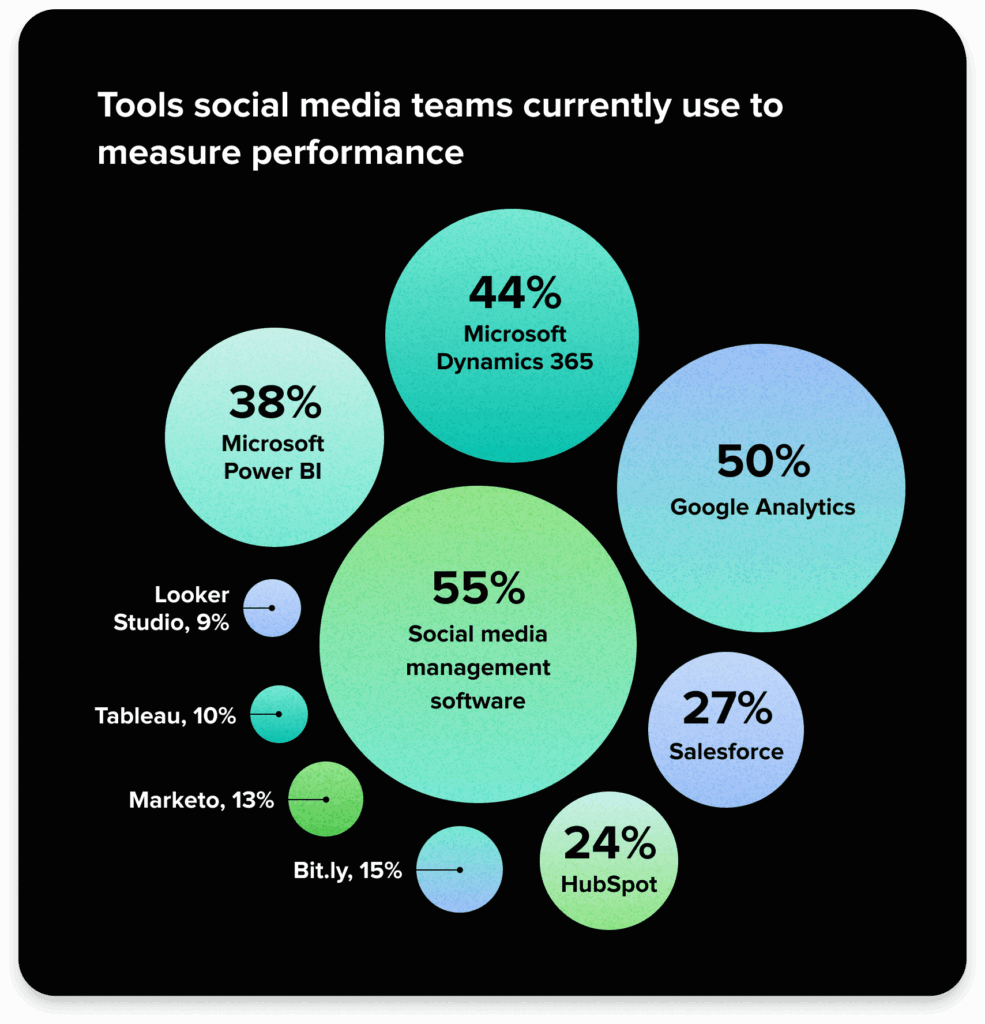
The most significant hurdle to proving ROI is, ironically, the technology stack itself. Over 50% of marketing leaders cite the incompatibility between their social management tools and their broader CRM/martech stacks as the primary reason for their measurement failures.
When social data lives in a vacuum, it cannot be mapped to the customer journey. If a customer engages with a viral TikTok, reads a LinkedIn thought-leadership post, and then converts through a web demo, that entire journey is often fragmented across three different, non-communicating systems. Without a unified view, the social touchpoints are relegated to the bottom of the attribution list, leaving the team under-funded and under-valued.

Executive Support as a Catalyst
The difference between teams that "get it" and those that don’t often comes down to C-suite involvement. Teams that are deemed experts in social ROI are significantly more likely to have executive sponsorship.
Vicente notes, "There is a lot that hinges on how much the C-suite believes in the impact of social. Because my CMO encourages experimentation and understands that we are measuring campaigns rather than just baseline impressions, I am able to act strategically rather than out of fear of failing to meet arbitrary KPIs."
The Path Forward: Less Volume, More Intention
There is a pervasive, outdated belief among many Directors and CMOs that social media success is tied to publishing volume. However, the data suggests otherwise. While 71% of marketing directors want more content, social media managers are often stretched to the breaking point, spending 50% of their time on operational tasks rather than strategic insights.
The path forward requires a shift from "always-on" broadcasting to "always-learning" experimentation.
Small Experiments, Big Wins: The Advocacy Model
Vicente’s success at Gorgias with an employee advocacy program serves as a blueprint. By running a small-scale beta test comparing personal account engagement to brand account performance, she was able to prove that personal voices drive higher trust and broader reach. That pilot, which started with just 20 employees, resulted in over 1 million impressions in a single quarter.
This "Proof of Concept" framework is how social marketers should approach all innovation. Don’t ask for a massive budget to launch a full-scale influencer program; run a micro-experiment. Don’t ask for a new analytics suite; demonstrate the value of one social intelligence insight by sharing it with the product team and tracking its impact on a feature release.
Conclusion: Redefining Value
Defining the business value of social media is not about finding the "perfect" attribution formula. It is about building a framework that mirrors the agility of the platforms themselves.
As the industry moves toward 2026, the brands that win will be those that stop treating social as a communications channel and start treating it as a primary source of business intelligence. The value is there—hidden in the comments, the mentions, and the shifting trends. It is up to marketers to translate those signals into the language of the boardroom: loyalty, growth, and competitive advantage.
By fostering internal data storytelling, investing in integrated tech stacks, and securing executive support for strategic experimentation, the social team can finally move from the "cost center" column to the "growth engine" column.
FAQs: The Business Value of Social Media
How does social media drive conversion and revenue?
Social media acts as both a discovery engine and a trust-building platform. By leveraging employee advocacy, social search, and community management, brands can guide customers through non-linear journeys. Furthermore, social intelligence acts as a real-time feedback loop, allowing product and R&D teams to fix issues and iterate on products, which directly protects and enhances the bottom line.
How do you measure social media ROI?
There is no single formula. Successful teams use a flexible, project-based framework. Instead of relying solely on engagement metrics, they tie social activity to business objectives (e.g., "reduce churn by 5% through social-led customer education"). Measurement should evolve as the business goals evolve.
What are the biggest challenges in proving the ROI of social?
The top barrier is tech stack incompatibility. Most social media tools do not integrate seamlessly with CRMs, creating fragmented data. Additionally, many organizations suffer from an "outdated philosophy" problem, viewing social as a PR tool rather than a strategic data function. Finally, the lack of executive support prevents teams from having the resources to build the necessary analytical infrastructure.


 Ammar Sabilarrohman
 Raul Delapena Setiawan