Evan Lee Salim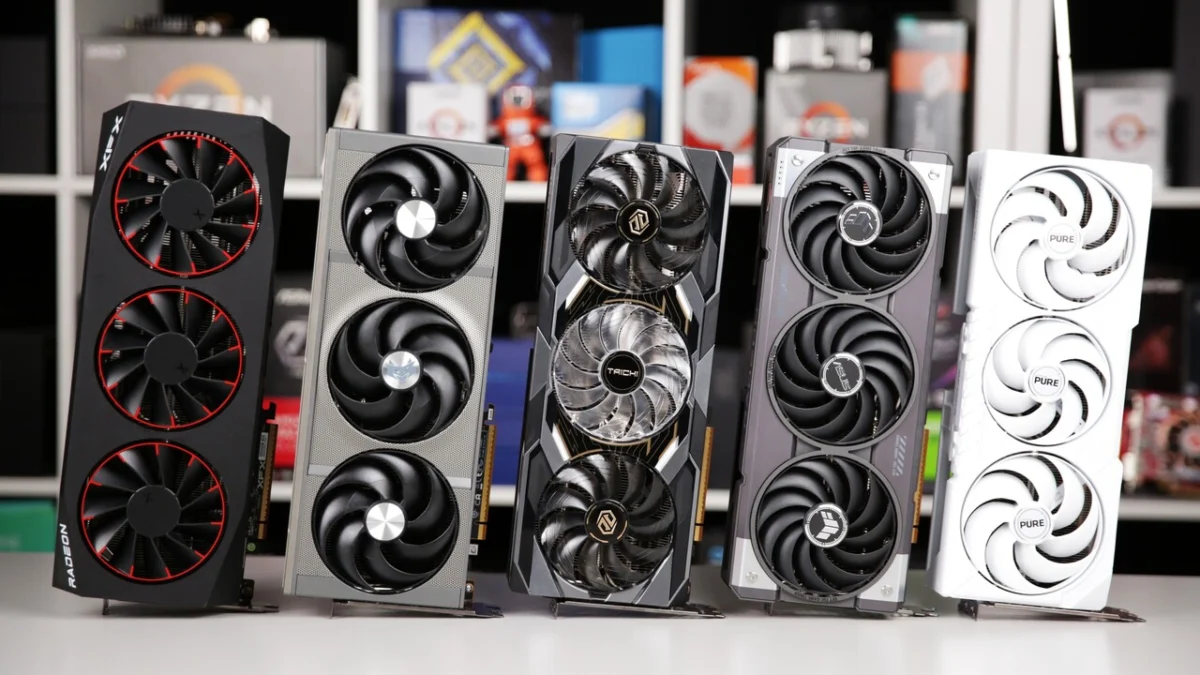
The global semiconductor market, and specifically the gaming graphics card sector, is bracing for a potential wave of price hikes as we enter the second half of 2026. Emerging reports from supply chain sources in Asia suggest that AMD is preparing to increase the costs of its GPU and VRAM bundles for its board partners (AIBs) starting in July. While the immediate impact on consumer pricing remains a subject of speculation, the structural shifts in component costs point toward a sustained upward trend in the retail price of Radeon RX 9000-series graphics cards.
The Core Issue: Escalating Component Costs
The latest rumors, originating from the industry forum BoardChannels and subsequently corroborated by VideoCardz, indicate that AMD has informed its primary partners—including major industry players such as Asus, Sapphire, and XFX—of an impending 10 percent increase in the cost of GPU and VRAM bundles.
In the complex manufacturing ecosystem of modern graphics cards, AMD does not simply sell a standalone silicon chip. Instead, they provide a "bundle" that includes the graphics processing unit (GPU) and the necessary high-speed video memory (VRAM). Because these two components are inextricably linked in the manufacturing process, a shortage or a price spike in the memory market acts as a force multiplier for the total bill of materials (BOM). As VRAM availability remains constrained and the cost per gigabit continues to rise, AMD is reportedly moving to pass these procurement costs down the supply chain.
Chronology of the Price Surge
To understand the current predicament, one must look at the trajectory of the market over the past year. Since late 2025, the graphics card market has been defined by a consistent, albeit fluctuating, upward trend.
- November 2025: The first major signals of instability appeared. Reports emerged that the Radeon RX 9000-series would see price adjustments due to the tightening supply of advanced memory modules.
- Early 2026: Market analysts noted that the cost per 8GB of VRAM was rising significantly, forcing AMD to add premiums to their wholesale pricing structure. At this stage, while Ryzen CPUs remained relatively stable, Radeon products were already showing signs of being tethered to the volatile memory market.
- June 2026: Mid-month rumors first surfaced, suggesting that a 10 to 15 percent price hike was being prepared for the third quarter of 2026. This period served as a "warning phase" for manufacturers, giving them time to adjust their inventory strategies.
- July 2026 (Current): The reported implementation date for the new pricing structure. Industry insiders claim that the direct notification to AIBs confirms that the burden of the current memory market reality is now being formally shifted from AMD to the card builders.
Supporting Data: Why Memory Matters
The price of a graphics card is not arbitrary; it is a calculated reflection of raw material costs, R&D amortization, logistics, and retail margins. When a company like AMD increases the price of a core component bundle by 10 percent, the downstream effect is rarely linear, but it is almost always inflationary.
The current market environment is characterized by a "VRAM squeeze." As the demand for AI hardware and high-performance computing (HPC) continues to dominate foundry capacities, the production of consumer-grade GDDR memory has faced competition for space on the wafers. When supply for memory modules is tight, the prices for those components spike. Because modern gaming demands higher VRAM capacities (12GB, 16GB, and beyond), the total impact of these price increases is more pronounced than it would have been in previous generations.
Retailers are currently selling stock that was produced months ago, which is why the consumer has not yet seen an immediate 10 percent jump in prices across the board. However, as older inventory is depleted and replaced by cards manufactured under the new, more expensive cost regime, the "new normal" will begin to manifest on store shelves.
Is the "GRE" a Preview of the Future?
A critical piece of the puzzle is the introduction of the Radeon RX 9070 GRE (Golden Rabbit Edition), which hit the Western market earlier this year. With an MSRP of approximately 560 Euros, the card was met with lukewarm reception from reviewers. Many analysts noted that its price-to-performance ratio was suboptimal compared to the standard RX 9070.
However, in hindsight, the pricing of the RX 9070 GRE may not have been a miscalculation by AMD’s marketing department, but rather an early adaptation to the very cost structure that is now being applied across the entire lineup. If the GRE is indeed a "template" for the future pricing of the RX 9000-series, it suggests that consumers should prepare for a landscape where mid-range performance carries a premium that was previously reserved for enthusiast-tier hardware.
Official Responses and Industry Sentiment
To date, AMD has maintained a policy of discretion regarding its wholesale pricing agreements. While the company has not issued a formal press release confirming the price hike, the lack of denial from the manufacturer—combined with the widespread corroboration from AIBs and industry supply chain experts—lends significant credibility to these reports.
Board partners are in a difficult position. On one hand, they need to maintain competitive pricing to capture market share; on the other, they cannot afford to absorb a 10 percent cost increase on the most expensive components of a graphics card without sacrificing their own profitability. It is highly probable that the industry will see a "phased" price increase, where partners gradually raise MSRPs as they launch new production batches.
Implications for the Consumer
What does this mean for the average gamer or PC enthusiast?
- Delayed Impact: Consumers should not expect a sudden price hike on July 1st. Retailers have existing inventory that was purchased at the old rates. The price increases will likely be felt in late summer and early autumn as replenishment orders arrive.
- Product Stagnation: If component costs rise, manufacturers may be tempted to reduce the VRAM capacity on entry-level cards or cut corners on cooling solutions and PCB quality to keep the final retail price within an "acceptable" range for the consumer.
- The Used Market: As new card prices rise, the value of the used market will likely become more attractive. Expect to see higher retention of value for older, high-performance cards as new hardware becomes more expensive.
- Strategic Purchasing: For those looking to upgrade, the next few weeks might be the final window to purchase current-generation hardware at "legacy" prices. Once the new cost structure is fully integrated, there is little expectation of a reversal in the near term.
Conclusion: A Market in Transition
The semiconductor industry is notoriously cyclical, and the current situation surrounding AMD’s Radeon pricing is a clear indicator of how closely tied consumer gaming products are to the broader, global supply chain of memory and silicon. While a 10 percent increase in component costs might sound manageable in a vacuum, the ripple effects through the supply chain—from the silicon foundry to the warehouse shelf—often result in higher prices for the end user.
As we move through the remainder of 2026, the focus will shift from the rumors of price hikes to the reality of the retail shelf. For now, the message to the market is clear: the era of cheap, high-capacity VRAM may be temporarily behind us, and the price of high-performance gaming is, once again, on the rise. Consumers are advised to monitor the market closely and act according to their specific needs before the supply chain shifts fully into this higher-cost paradigm.

 Asep Darmawan
 Laily UPN