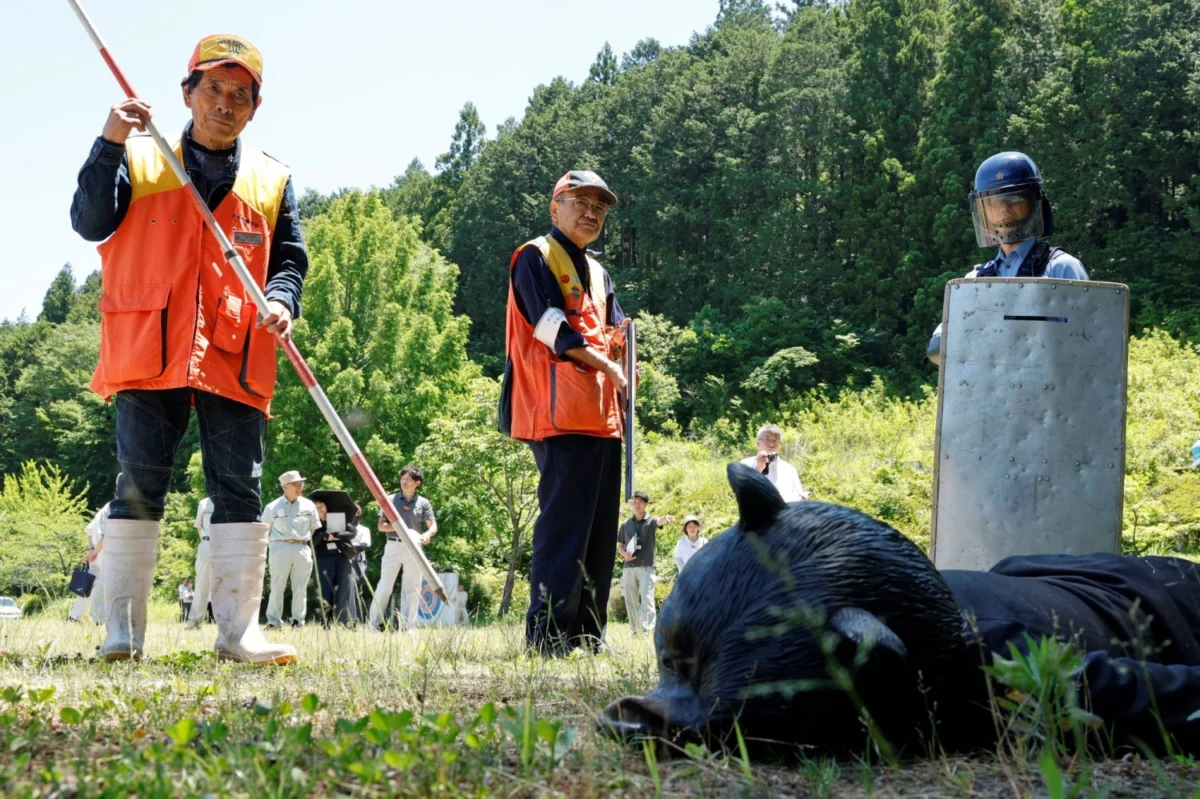
In an unprecedented effort to mitigate a rising tide of human-wildlife conflict, the Japanese government has launched a massive, nationwide surveillance operation aimed at tracking the country’s burgeoning bear population. With human fatalities mounting and sightings becoming a daily occurrence in urban centers, authorities are turning to technology to bridge the gap between rural development and encroaching wilderness.
The Escalating Crisis: A Pattern of Fatal Encounters
Japan is currently grappling with one of its most dangerous seasons for human-bear interaction in recorded history. Since April 1 of this year, at least five people have been confirmed dead following violent encounters with bears in the Tohoku region—a mountainous, northern area that has become the epicenter of the crisis.
This tragic toll follows a record-breaking fiscal year that saw 13 fatal bear attacks across the country. The frequency and intensity of these incidents have sparked widespread anxiety among residents, as local news networks provide near-constant updates on bear incursions into shopping arcades, public parks, and school grounds. The tension is palpable; in many rural prefectures, the simple act of walking to school or commuting to work has become a calculated risk.
The severity of the situation was further underscored this week, as authorities launched an investigation into a potential sixth fatality after the discovery of a man’s body in the Tohoku mountains. The corpse bore clear bite marks, adding to the grim statistics that have defined the current year.
Chronology of a Growing Threat
The current state of affairs is the culmination of years of shifting ecological and social dynamics. For decades, Japan’s rural population has been in steady decline. As villages empty and agricultural activity ceases, the "satoyama"—the traditional transition zone between wild forests and human settlements—has become overgrown and unmanaged. This loss of a buffer zone has allowed bears to roam closer to human infrastructure with less resistance.
- Pre-2023: A gradual increase in bear sightings is noted by local municipalities, though responses remain fragmented and localized.
- 2023 Fiscal Year: Japan records 13 fatal bear attacks, the highest number in modern history, signaling a systemic shift in bear behavior.
- April 2024: The new fiscal year begins with a flurry of attacks in the Tohoku region, prompting the Environment Ministry to prioritize a national monitoring framework.
- June 2024: An "extremely intelligent" bear captures national headlines after it successfully opened a window and turned on a tap during a multi-day spree, injuring four people across two factories in Fukushima.
- Mid-2024: A bear roaming through Utsunomiya, north of Tokyo, forces a massive multi-agency response involving police, hunters, and city officials, leading to four days of school closures and mass public lockdowns.
High-Tech Intervention: The Honey-and-Wine Strategy
To combat the growing uncertainty, the Japanese Environment Ministry has embarked on an ambitious project to install more than 800 motion-activated cameras across the northern mountains. This initial phase targets six major bear population clusters in Tohoku, with a goal to expand the surveillance network across the entire archipelago within the next four years.
Environment Ministry official Yu Takahashi explained that the methodology behind the surveillance is as ingenious as it is practical. "Until now, local governments surveyed bear populations in their jurisdictions at various times and using various methods," Takahashi noted. "Our plan is to conduct a more accurate survey by focusing on population groups rather than just administrative borders."
The surveillance stations are designed to bait the animals into revealing their specific identities. Jars containing a mixture of honey and wine are positioned at the height of a human head. When a bear stands on its hind legs to reach the sweet tonic, the cameras are positioned to capture high-definition images of the animal’s chest. Because many bears possess unique white chest markings, researchers can use these visual "fingerprints" to map populations, monitor movement patterns, and identify individual "problem" bears that may be responsible for repeated incursions into human zones.
The Human Factor: Public Safety and Misfortune
While the government works on long-term population management, the immediate safety of the public remains a volatile issue. The fear permeating society has led to a surge in the purchase of anti-bear sprays—aerosols containing capsaicin, the potent chemical found in chili peppers that causes severe eye and respiratory irritation.
However, the proliferation of these defense tools has introduced its own set of complications. On a Wednesday in Nagoya, a 22-year-old Vietnamese national, identified as Huynh Nhat Duy, accidentally discharged a canister of bear spray inside a post office. The incident caused a scene of chaos, requiring five people to be hospitalized for respiratory distress. While police arrested the man on charges of obstruction of business, the incident served as a stark reminder of the unintended dangers posed by the public’s heightened state of alert.
Implications for Rural Japan
The encroachment of bears into urban environments is forcing a national conversation about land use and conservation. With approximately 80% of Japan covered in mountainous terrain, the potential for interaction is nearly limitless.
Recommended Safety Protocols
Authorities have issued strict guidelines for those living in or visiting bear-prone areas:
- Avoid Solitude: Never hike alone in mountainous regions.
- Noise Signaling: Attach bells or carry noise-making devices to alert bears of human presence, as they are generally shy and will avoid conflict if given advance notice.
- Carry Deterrents: Bear spray should be accessible at all times, though users must be trained in its proper deployment to avoid accidents.
- Waste Management: Proper disposal of food waste is critical to prevent attracting bears to residential areas.
Future Outlook: Coexistence or Containment?
The move to implement a national surveillance network is a tacit admission that previous, localized efforts were insufficient. By centralizing the data, the Environment Ministry hopes to create a scientific basis for future culling or relocation policies.
However, experts caution that technology is only one part of the puzzle. The fundamental issue remains the abandonment of rural landscapes. As young people migrate to urban centers like Tokyo and Osaka, the human presence in the mountains—which historically kept wildlife at a distance through farming and forestry—is vanishing.
The success of the camera-monitoring program will be measured not just in the number of bears cataloged, but in whether the data can translate into actionable policy that restores a sense of safety to the residents of Tohoku and beyond. For now, the people of Japan must remain vigilant, sharing their space with an animal that has proven itself increasingly bold, intelligent, and dangerous. The four-year rollout of the camera network will be a critical period; if the incidents continue to rise, the government may be forced to move from monitoring to more aggressive population control measures, a prospect that brings its own set of ethical and ecological challenges.
As autumn approaches and bears begin to forage more aggressively in preparation for hibernation, the coming months will serve as the ultimate test for the new surveillance strategy. The mountains may be the bear’s domain, but as the boundaries of civilization blur, the path forward remains fraught with uncertainty.