The digital age has fundamentally altered the landscape of horror. For decades, the genre relied on the slow-churning gears of studio development, literary adaptations, or the localized spread of urban legends. Today, however, the "internet-to-Hollywood" pipeline is moving at breakneck speed. Following the massive success of the Backrooms phenomena—a surreal, liminal space born from a single Reddit post—major studios are now aggressively scouting the web for the next viral horror sensation.
Warner Bros. has officially signaled its entry into this new era by greenlighting a feature film adaptation of Siren Head. The project, which has already generated significant industry buzz, is set to be co-written by Zach Cregger (the visionary behind the hit horror film Barbarian) and Brian Duffield, with Duffield slated to direct. This move marks a pivotal moment, validating online creative subcultures as legitimate incubators for high-budget cinematic intellectual property.
A Chronology of a Digital Legend
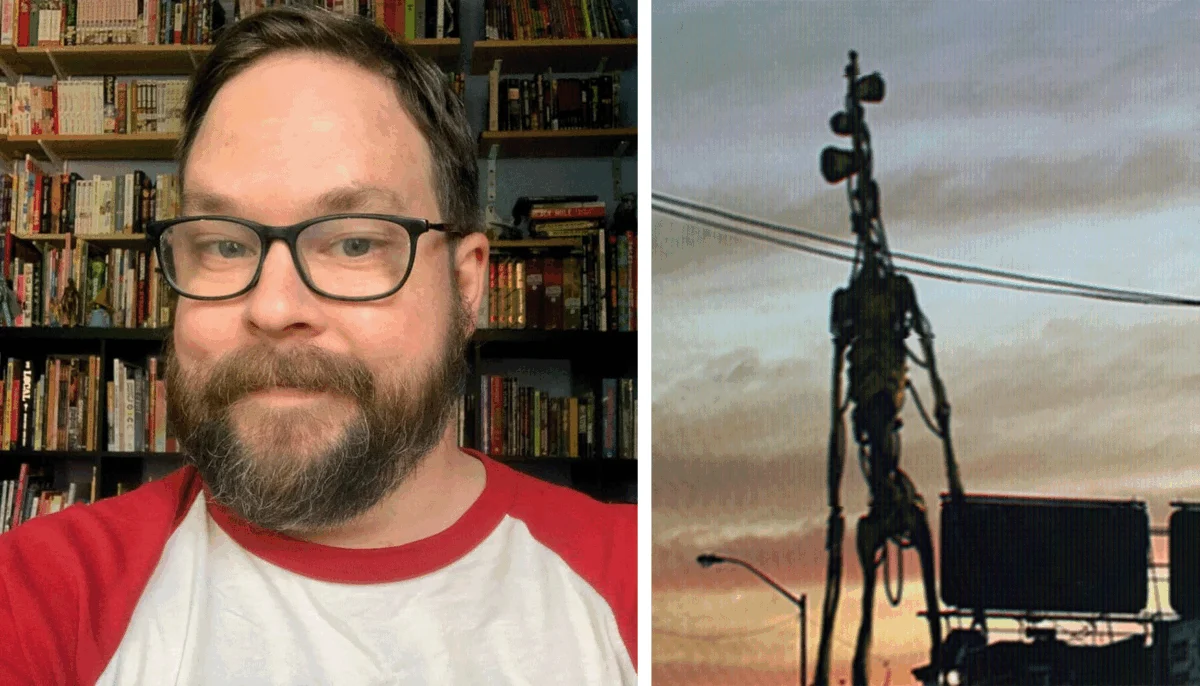
While the upcoming film may be the general public’s first formal introduction to the entity, Siren Head has been a fixture of internet folklore for nearly a decade. The creature—a towering, skeletal figure with rusted, dual sirens for a head—first entered the collective consciousness in 2018.
Its creator, artist Trevor Henderson, introduced the character through a series of "found-footage" style images posted to social media. Henderson’s original post described a harrowing encounter:
"She was on vacation with her husband and they were scoping out graveyards on the way, as you do, when she saw it. Rising out of the old cemetery, big as an old (macabre) telephone pole… the megaphones on its ‘head’ screeched to life. ‘NINE. EIGHTEEN. ONE. CHILD. SEVENTEEN. REMOVE. VILE.’ A buzzing, doubled voice screamed random words at her. At this point, it jerked into motion, striding down the hill towards her."
What followed was an organic explosion of popularity. Unlike traditional monsters with rigidly defined backstories, Siren Head acted as a canvas for the internet. Through fan-made games, short films, and Reddit-based creepypasta threads, the creature’s lore expanded. Its height, age, and motivation became fluid, morphing from storyteller to storyteller. This evolution solidified Siren Head not merely as an image, but as a genuine folk monster of the 21st century.
The Anatomy of an Online Phenomenon
Siren Head’s success is rooted in a rare confluence of aesthetic design and psychological ambiguity. In an interview, Henderson reflected on why his creation resonated so deeply with audiences, pointing specifically to the absence of traditional features.
"Any time something has eyes, you can read intent. You have this level of understanding," Henderson explained. "You remove the eyes from anything, and it becomes completely ambiguous in terms of its intentions or goals." This design philosophy echoes H.R. Giger’s work on the Xenomorph, relying on a lack of human connection to amplify the "uncanny valley" effect.
Furthermore, the character thrives on its association with the "surreal." The combination of a humanoid, decaying frame fused with industrial-age technology—specifically the emergency alert sirens—creates a sensory dissonance. For many, the character represents a manifestation of existential dread. As Henderson puts it, "It’s always represented a general ambiguous sense of oncoming doom. It’s a walking portent of both decay and disaster."
The medium of the delivery was equally vital. By utilizing "photobashing"—the act of blending artistic creations into real-world photography—Henderson tapped into the aesthetic of found-footage horror. This technique effectively tricks the "hindbrain," creating a sense of realism that traditional CGI often fails to replicate.
Official Responses and the Creative Process
The transition from a lone artist’s social media feed to a Warner Bros. production was an intense, whirlwind experience for Henderson. When asked about the speed of the deal, he noted that the process was remarkably fast, fueled by a bidding war following the Backrooms success.
"Everything with the movie announcement came together in like two weeks. It was boom, boom, boom," Henderson shared. "My rep, Josh Dove, has been shopping the pitch for over half a decade. When the Backrooms movie did so well, the demand became overwhelming. Suddenly, studios were interested, and then Zach Cregger came in with a pitch."
Despite the transition to big-budget filmmaking, Henderson remains optimistic about the project’s ability to retain the "mystique" of the source material. He expressed a strong desire for the film to avoid the pitfall of "over-explaining" the creature.
"I really hope that mystique is maintained… I would certainly hope there’s no ‘Here is the origin of the character, here’s where…’ because that’s completely not the point," Henderson stated. He noted that the Backrooms film managed to succeed by focusing on a specific, singular vision rather than a generic, corporate-friendly origin story.
Implications for the Future of Horror
The Siren Head adaptation is more than just a singular movie deal; it is a bellwether for the future of horror cinema. We are witnessing the emergence of an "internet-to-Hollywood" pipeline where the gatekeepers are no longer just literary agents or screenwriters, but viral content creators and independent digital artists.
Why Now?
The shift toward digital horror is driven by a hunger for "singular, specific visions." In an era where studio blockbusters often feel homogenized, the raw, ambitious, and sometimes flawed nature of online horror offers a refreshing alternative. As Henderson noted, audiences are responding to the confidence of these projects. "The weird, interesting, flawed, but ambitious, strange, confident version of that movie is what people are responding to."
The "Gateway" Effect
The success of characters like Siren Head also highlights a resurgence in interest for "gateway horror"—media that scares children and teens without patronizing them. Henderson draws a direct line between his work and the influence of Alvin Schwartz’s Scary Stories to Tell in the Dark. "Kids love monsters, and they love being scared… It has to kind of scare the shit out of them because it becomes this perfect, awful gem in their memory."
The Creative Pipeline
When asked what other projects might follow the path of Siren Head, Henderson pointed to "The Glendale Archives," a series that exemplifies the potential for character-driven, analog-style horror. This series, which balances existential dread with mundane activities like cooking, represents a breath of fresh air in the current horror climate.
Conclusion: A Coexistence of Lore
As the Siren Head film moves into production, the relationship between the original, decentralized lore and the centralized film narrative remains a subject of intense interest. Henderson appears remarkably zen about the process, recognizing that once a creation enters the public domain of the internet, it no longer belongs solely to the creator.
"When it embraces something, there’s a degree to which it stops being yours," he admitted. Yet, he sees the film as a unique opportunity. He hopes that the big-screen adaptation and the vast library of fan-made content will coexist, informing and elevating one another.
For now, the project stands as a testament to the power of the internet as a modern-day campfire. Whether or not the film can capture the lightning-in-a-bottle quality of Henderson’s original imagery remains to be seen, but one thing is certain: the era of the digital cryptid has arrived, and it is here to stay. Studios are listening, the audiences are waiting, and the sirens are already beginning to wail.