Muslim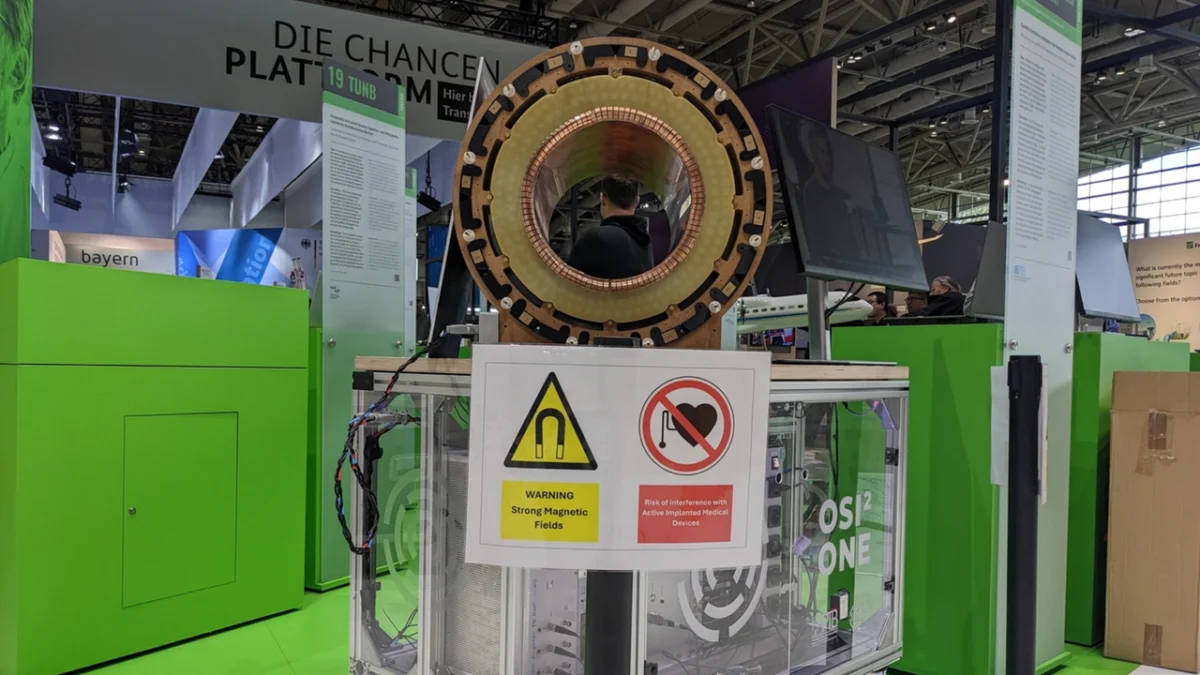
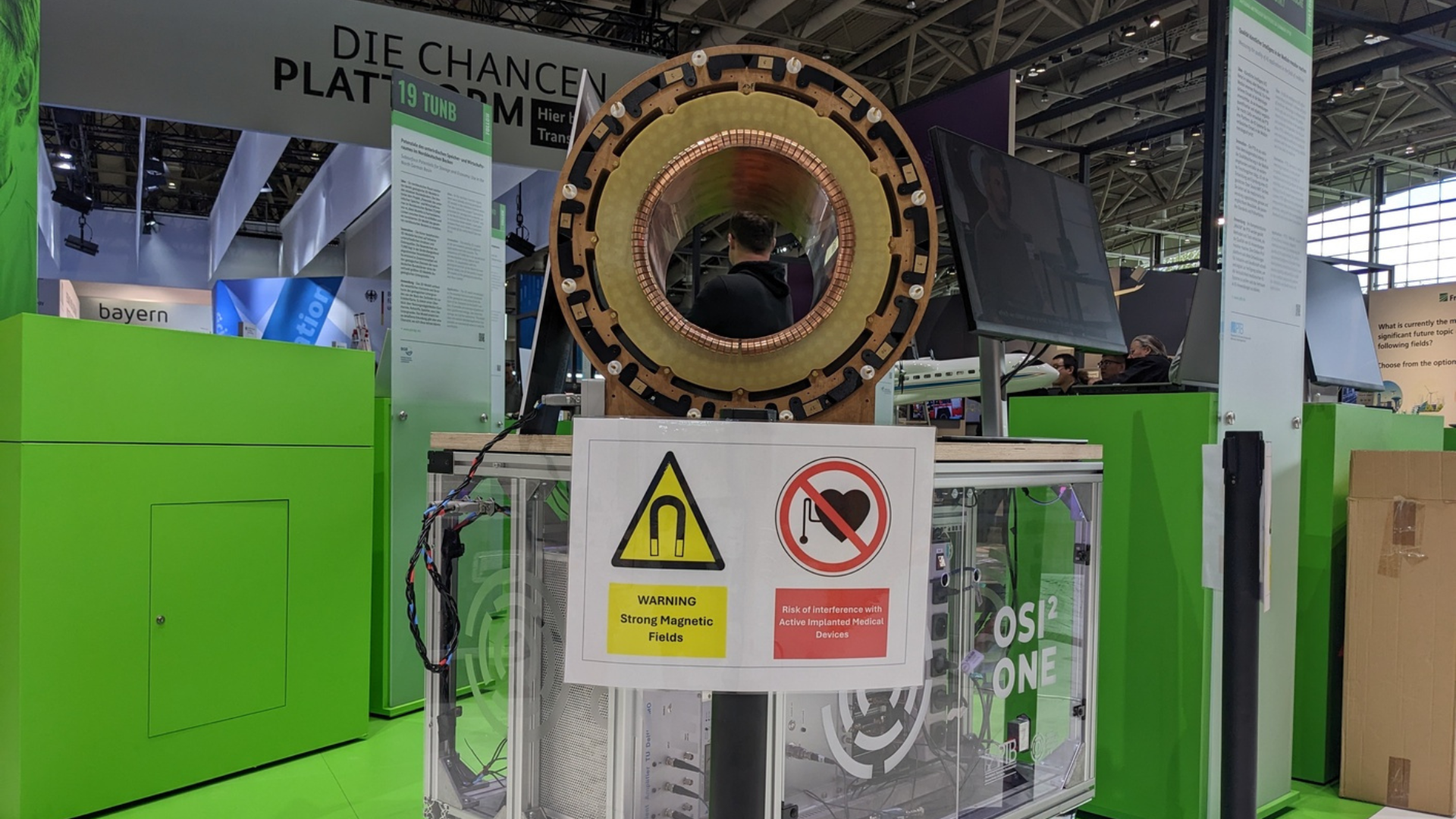
For decades, the Magnetic Resonance Imaging (MRI) machine has stood as a monolithic symbol of modern medicine’s high barrier to entry. With price tags ranging from $1.1 million for entry-level models to upwards of $3.4 million for high-end clinical systems, these devices are sequestered in elite hospitals and wealthy research institutions. However, a quiet revolution is unfolding in workshops and laboratories around the globe. The Open Source Imaging Initiative (OSI2) has successfully developed the "OSI2 ONE," a portable, partially 3D-printed MRI scanner that is challenging the status quo of medical technology. By combining accessible hardware with the transformative power of Artificial Intelligence, this project promises to bring life-saving diagnostic capabilities to underserved populations worldwide.
The Core Problem: Why MRI Access is a Global Crisis
The current medical imaging landscape is characterized by severe economic disparity. The prohibitive cost of a standard 1.5T to 3T MRI machine is not merely a capital expenditure issue; it is a logistical nightmare. These machines require specialized, heavily shielded rooms to prevent magnetic interference, cryogenic cooling systems for superconducting magnets, and a small army of technicians for maintenance.
Consequently, millions of people in developing nations—and even those in rural areas of developed countries—lack access to basic diagnostic imaging. A patient suffering from a neurological condition or internal trauma might have to travel hundreds of miles, if they can access an MRI at all. The OSI2 initiative identified this as a fundamental failure of the current medical supply chain, prompting a radical shift toward "democratized" medical hardware.
Chronology: From Concept to Open-Source Reality
The journey of the OSI2 project represents a significant shift in how medical hardware is developed.
- The Genesis (Circa 2010s): The initial concepts for open-source magnetic resonance imaging began as academic experiments, with researchers exploring low-field permanent magnet configurations that bypassed the need for expensive, liquid-helium-cooled superconducting magnets.
- The Prototype Phase: The Open Source Imaging Initiative (OSI2) was formally organized to aggregate these findings. The goal was to provide schematics, software, and hardware blueprints that anyone with the necessary engineering expertise could assemble.
- The Launch of OSI2 ONE: The release of the OSI2 ONE marked a turning point. By utilizing 3D-printed components to house the core magnet and RF (radio frequency) coils, the project demonstrated that the essential framework of an MRI could be built in a standard lab setting.
- Hannover Messe 2024: The project gained significant international attention at the Hannover Messe, where the machine’s potential to disrupt traditional med-tech conventions was put on full display.
- The AI Integration (Present Day): As the hardware reached its physical limitations, the focus shifted to computational imaging. By applying sophisticated machine learning models to the raw data, the project is now overcoming the "low-field" performance gap.
Technical Limitations and the AI "Force Multiplier"
The primary critique of the OSI2 ONE is its field strength. At a modest 50mT (millitesla), the device operates at a fraction of the intensity of clinical-grade machines (1,500mT to 3,000mT). In traditional physics, lower field strength results in a lower Signal-to-Noise Ratio (SNR) and decreased spatial resolution. Essentially, the raw images produced by such a device are "noisy" and blurry compared to the crisp, high-contrast scans clinicians expect.
This is where the intersection of AI and medical physics becomes critical. As tech analyst Brian Roemmele noted in his assessment of the technology, "Low-field MRI has historically been limited by lower signal-to-noise and greater field inhomogeneity. That is exactly the regime where modern AI thrives."
Modern deep learning architectures can perform "super-resolution" and denoising. By training neural networks on vast datasets of high-field MRI images (1.5T to 8T), researchers are teaching the AI to recognize the "patterns" of human anatomy even within the low-fidelity data produced by the OSI2 scanner. These models can effectively "reconstruct" the image, correcting for field inhomogeneities and pushing the resolution well beyond the raw hardware limits. Furthermore, the AI can perform real-time sequence adaptation, adjusting the machine’s RF pulses and gradients on the fly to optimize signal quality during the scan.
Supporting Data: Bridging the Resolution Gap
The feasibility of this approach is supported by recent advancements in computational medical imaging. Researchers have already successfully utilized large-scale datasets—such as the project that used 1.6 million brain scans to train AI for dementia detection—to prove that diagnostic precision can be achieved through software rather than just hardware brute force.
For institutions lacking access to massive, proprietary patient databases, the open-source nature of the OSI2 ONE provides an elegant solution: synthetic data. Because the exact specifications, electromagnetic properties, and geometry of the scanner are public knowledge, scientists can build highly accurate "physics models" of the device. They can then run simulations to generate synthetic "training data," which is used to teach the AI how to interpret the signals from that specific hardware. This creates a self-contained ecosystem where the hardware is perfected by the software.
Official Responses and Ethical Debates
The reception of the OSI2 project has been polarized. Supporters view it as an essential humanitarian tool, while traditionalists in the medical device industry express concerns regarding regulation and safety.
In highly regulated markets like the United States or the European Union, a device like the OSI2 ONE faces a mountainous regulatory path. The FDA and equivalent bodies require rigorous validation of diagnostic tools to ensure patient safety and data accuracy. Critics argue that an AI-enhanced image might introduce "hallucinations"—a phenomenon where the neural network misinterprets or creates patterns that do not exist—potentially leading to misdiagnosis.
However, proponents of the project argue that the regulatory framework should not be an absolute barrier to innovation, especially in regions where the alternative is no diagnostic imaging at all. As Roemmele famously remarked, "No one can stop us from building in garages." The intention is not necessarily to replace the 3T MRI at a top-tier research hospital, but to provide a viable "first-line" diagnostic tool for clinics in low-resource environments. The cost of a refurbished commercial MRI is often over $100,000, plus the massive costs of site preparation (shielding rooms, electrical upgrades, etc.). The OSI2 ONE offers a significantly cheaper, more portable alternative that can be maintained by local engineers.
Global Implications: A Paradigm Shift in Healthcare
The implications of the OSI2 ONE extend far beyond the scanner itself. We are seeing a broader trend where patients and practitioners are utilizing open-source AI to push back against the exorbitant costs of the healthcare industrial complex. Whether it is using AI chatbots to audit hospital billing—saving families hundreds of thousands of dollars in overcharges—or building diagnostic hardware from open blueprints, the message is clear: the monopoly on medical knowledge and technology is eroding.
The Future of Community-Based Imaging
If the OSI2 project succeeds in its goal of mass adoption, the future of radiology could look drastically different. Imagine a community clinic in a remote region equipped with a portable, AI-enhanced scanner that can perform basic screenings for strokes, tumors, or traumatic injuries, with the results transmitted to a centralized, AI-powered diagnostic cloud.
This model effectively shifts the cost from the hardware (the machine) to the software (the training and the algorithm). In the long term, this democratizes the infrastructure of health. When a critical diagnostic tool is no longer a luxury item protected by patents and million-dollar price tags, the fundamental standard of care for the global population rises.
Conclusion: Innovation in the Face of Convention
The OSI2 ONE MRI scanner is more than a piece of technology; it is a manifesto. It argues that if the current medical industry cannot provide affordable diagnostics to the world, the world will build its own. While the transition from a 3D-printed prototype to a clinical-grade diagnostic tool is fraught with technical and regulatory hurdles, the marriage of AI and open-source hardware provides a clear path forward.
As we move toward a future where "medical hardware" is defined by code as much as by steel and magnets, the barriers to entry will continue to collapse. The democratization of healthcare is no longer a utopian dream; it is an engineering challenge that is being met in labs, garages, and universities across the globe. By refusing to accept the status quo, the OSI2 initiative is not just building scanners—it is building a more equitable future for global health.

 Azzam Bilal Chamdy
 Sagoh
Sagoh