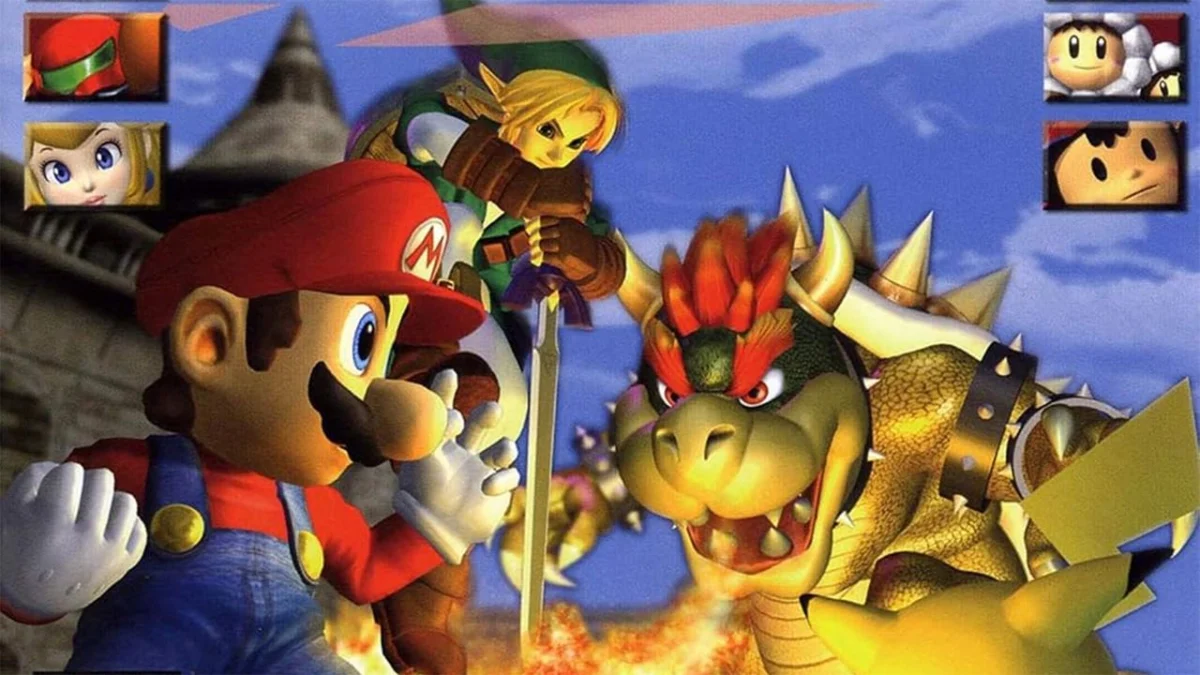
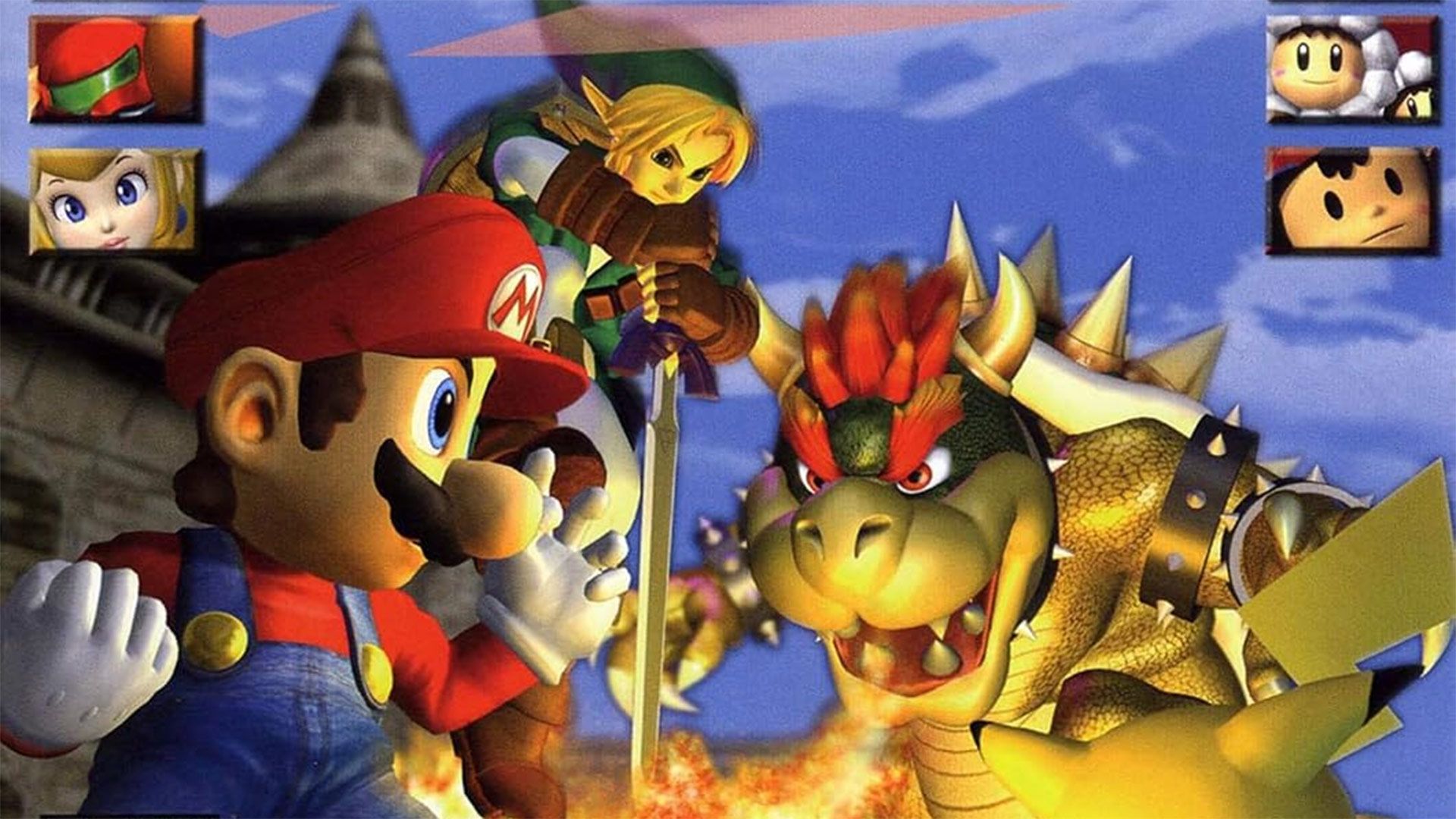
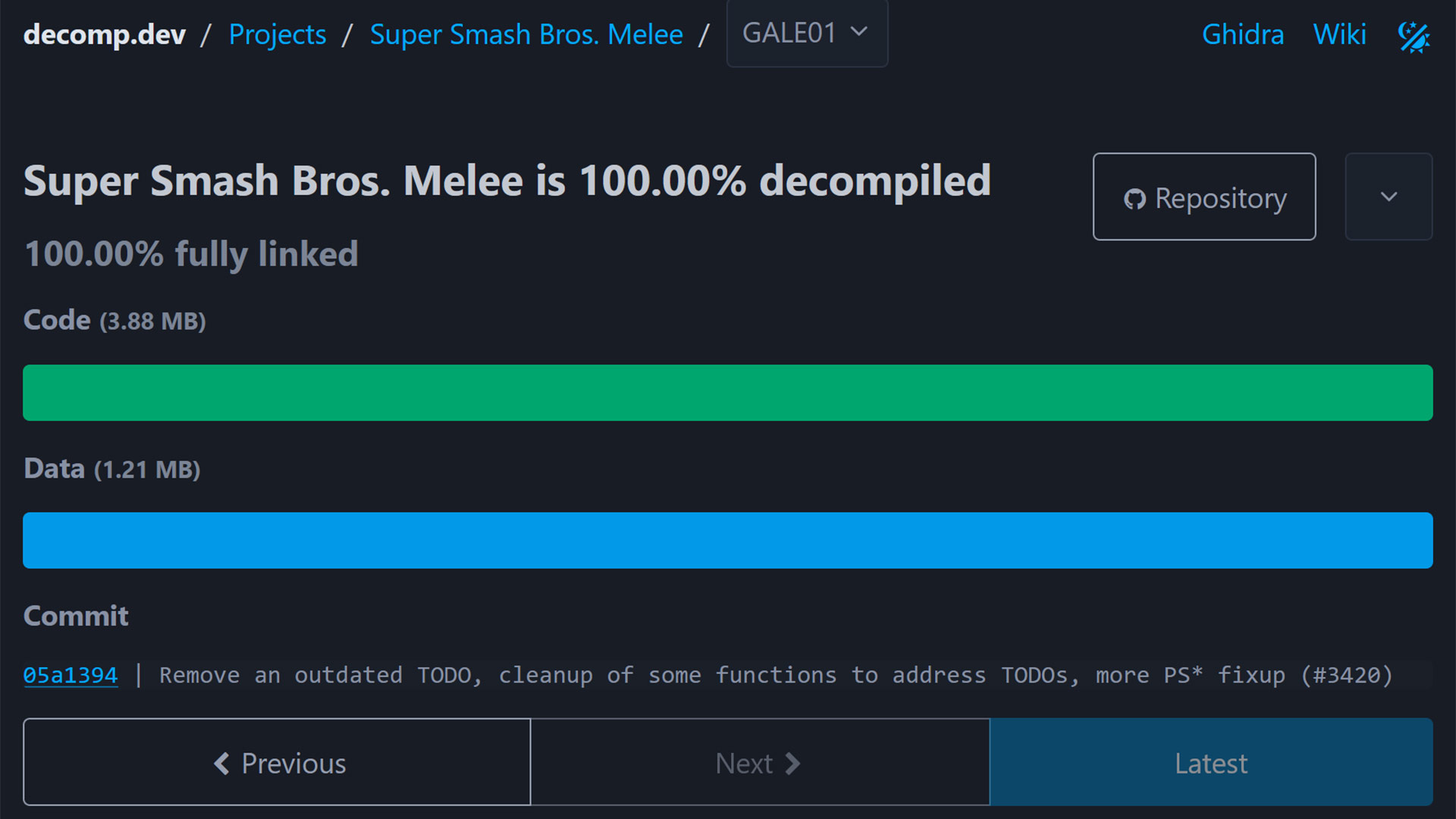
In a landmark achievement for the video game preservation community, the long-standing Super Smash Bros. Melee decompilation project has reached its ultimate goal. After more than six years of meticulous, labor-intensive work, a dedicated team of developers has successfully decompiled the entirety of Nintendo’s 2001 GameCube masterpiece. The project has reached a "100% parity" milestone, meaning the team can now compile their reconstructed C code into a binary file that is byte-for-byte identical to the original main.dol executable distributed by Nintendo over two decades ago.
This achievement is more than a technical curiosity; it represents a watershed moment in software preservation. As aging console hardware becomes increasingly difficult to maintain and original physical media begins to degrade, the ability to translate proprietary machine code into human-readable, compileable source code ensures that Super Smash Bros. Melee will remain accessible and modifiable for generations to come.
The Long Road to Parity: A Chronology of Development
The journey to decompile Melee was never intended to be a sprint. It was a marathon of reverse engineering that spanned over half a decade, requiring thousands of hours of collective effort from contributors across the globe.
The Genesis
The project began as an attempt to understand the internal architecture of the GameCube’s most iconic title. Because Melee was written in a mix of C and assembly, the decompilation process required developers to translate raw, low-level machine instructions back into high-level C code. The objective was not just to make the game "work," but to replicate the original logic so precisely that it would produce the exact same binary output as the original development kit.
The Middle Years: Incremental Gains
Between 2018 and 2023, the repository saw thousands of commits. Developers focused on individual functions, mapping out the game’s complex physics engine, AI routines, and input handling. This period was characterized by "stubbing"—a process where developers would replace unknown code blocks with placeholders that performed the same action, only to go back later and replace them with the actual, fully reverse-engineered code.
The Final Push: AI Integration
In its final phase, the project received an unexpected boost from modern artificial intelligence. The team utilized OpenAI’s Astra model to assist in deciphering complex code segments and accelerating the identification of patterns within the binary. While the foundational work was human-led, the integration of advanced LLMs helped the team clear the final hurdles of the project, allowing them to cross the finish line in a fraction of the time it would have taken using traditional manual methods alone.
Technical Implications: Understanding the "Main.dol"
To the uninitiated, a "100% decompilation" might sound like a simple emulation. However, the reality is far more profound.
Byte-for-Byte Accuracy
The main.dol file is the heart of the GameCube executable. Achieving byte-for-byte parity means that if a user compiles the project’s source code on a modern machine, the resulting file is functionally indistinguishable from the file found on a retail GameCube disc from 2001. This level of precision is the "Gold Standard" of reverse engineering. It confirms that the developers have successfully mapped every memory address, register instruction, and function call that Nintendo’s engineers wrote 23 years ago.
The Role of Modern Tooling
The project, hosted on GitHub, provides a toolkit that allows users to compile the game on contemporary hardware, including Windows, macOS, and Linux. However, it is vital to note that this is not a "port" in the traditional sense—it is a re-creation. To run the game, a user must still provide their own legally obtained game assets (textures, audio, and stage data) from an original disc, ensuring the project remains within the ethical and legal boundaries of software preservation.
Why Decompilation Matters: The Preservation Crisis
The motivation behind the Melee project is rooted in a growing concern over "digital decay."
Hardware Scarcity
GameCube consoles are now over 20 years old. Capacitors are leaking, optical disc drives are failing, and proprietary controller ports are becoming brittle. As the hardware required to run the game disappears, the software trapped within those physical formats risks being lost to time. Decompilation acts as a "digital lifeboat." By turning the game into modern, platform-agnostic code, developers ensure that Melee can be ported to modern operating systems, web browsers, and future hardware architectures without the need for traditional emulation.
The Insight into Game Engine Design
Beyond preservation, this project offers an unprecedented look into the "Black Box" of 2001-era game development. Researchers, students, and hobbyist developers can now study the C code that powered one of the most mechanically demanding games in history. Understanding how Nintendo managed frame-perfect inputs, complex collision detection, and character physics on the GameCube’s limited hardware is an invaluable educational resource for the industry.
The Future of Modding and Community Expansion
With the source code now fully exposed, the Super Smash Bros. Melee community is entering a new era.
The Modding Renaissance
In the past, modding Melee required "hex editing"—a tedious process of modifying binary files without having the source code. Now, modders can modify the game at the source level. This will likely lead to a surge in high-quality, stable, and creative mods, including:
- Built-in Netplay: Integrating low-latency, native online functionality directly into the engine.
- Visual Enhancements: Creating "HD texture packs" and native widescreen support that go beyond what external emulators can achieve.
- Custom Content: Easier implementation of new characters, stages, and game modes that were previously impossible to add due to memory constraints or technical limitations.
AI and the Future of Ports
The success of the Melee project using AI tools like GPT-6 Astra sets a precedent. As these models become more adept at understanding code, the time required to decompile other classic titles—such as Super Mario Sunshine or The Legend of Zelda: The Wind Waker—could shrink from years to months. We are approaching a future where the entire library of 6th-generation console gaming could be liberated from its original, aging hardware.
Conclusion: A Monumental Achievement
The 100% decompilation of Super Smash Bros. Melee is a testament to the passion and persistence of the gaming community. While Nintendo has historically been protective of its intellectual property, the work performed by these volunteers stands as a noble effort to ensure that a piece of cultural history does not vanish due to the inevitable obsolescence of silicon and plastic.
As the developers turn their attention toward documentation and the creation of user-friendly modding tools, the legacy of Melee is now more secure than ever. It has been transformed from a static relic of 2001 into a living, breathing codebase that can be ported, studied, and expanded upon for decades to come.
For those interested in exploring the architecture of one of the world’s most beloved fighting games, the project’s GitHub repository remains open, serving as a beacon of transparency in an industry that is often shrouded in proprietary secrecy. The "Smash" community, and indeed the broader gaming world, owes a debt of gratitude to the engineers who spent six years dismantling a masterpiece only to rebuild it—better, stronger, and immortal.